 Lens
LensFree AI Animal Identifier. What Animal Is This?
Spotted an animal you can't identify? Upload a photo and find out what it is. Get the species name, habitat, and key characteristics. Completely free, no account needed.
Drop an animal photo here or tap to upload
JPG, PNG, WebP, HEIC • Max 50MB • 1 free scan

Analyzing your animal with AI…
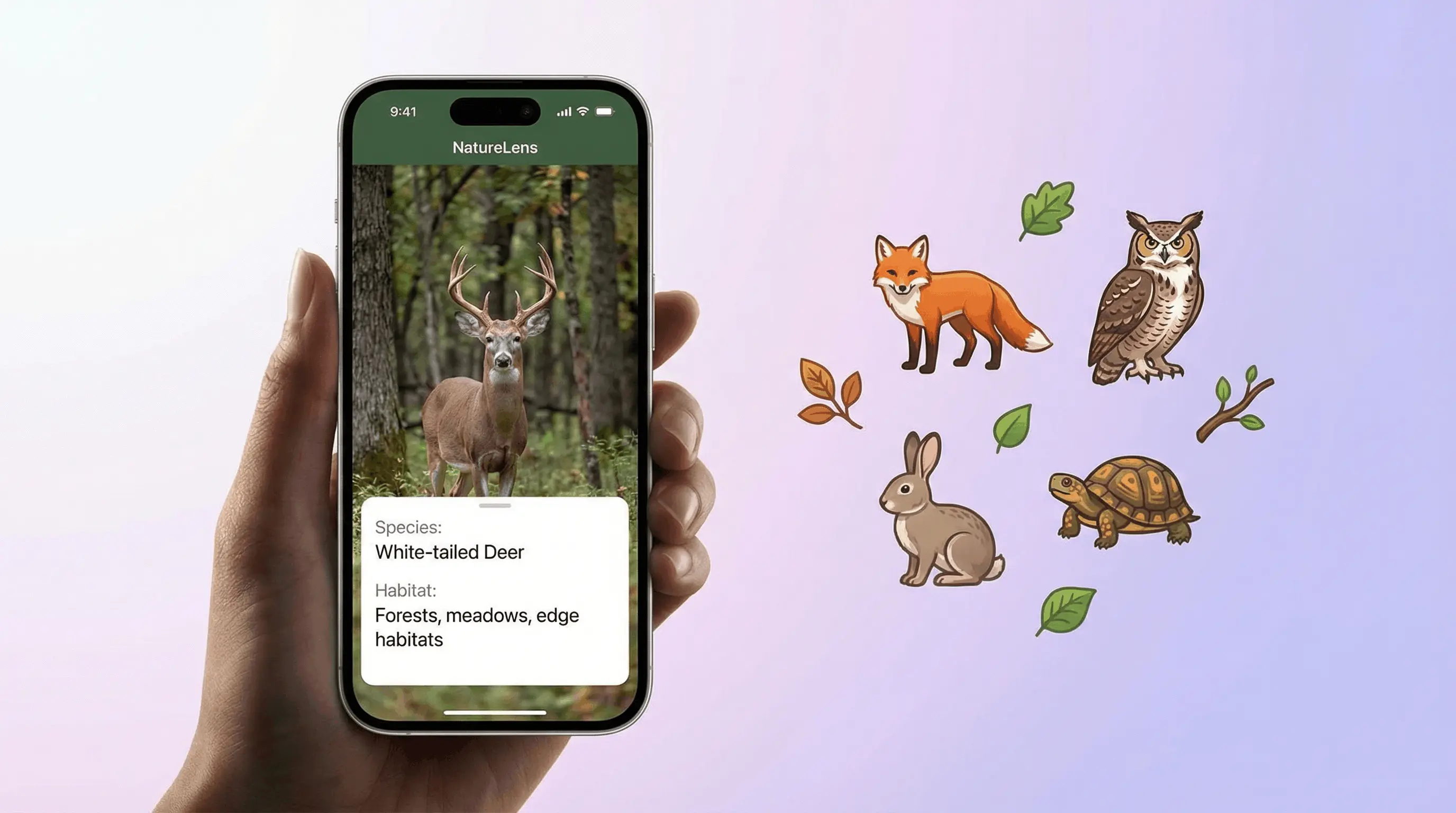
How the Animal Identifier Works
Snap or Upload
Snap a photo of any animal: mammal, reptile, amphibian, marine creature. Or pick an image already on your device. Good lighting and a clear view of the body help the most.
AI Identifies the Animal
Body shape, fur or scale pattern, coloration, proportions: the AI examines all of it and matches your photo against thousands of known species.
Get Results
You'll get the species name, common name, habitat, diet, and basic characteristics. For dogs and cats specifically, the dog breed identifier and cat breed identifier go deeper into breed-level detail.
What Animal Is This? How AI Animal Identification Works
Upload a photo and the AI breaks it down into visual signals: body shape, fur or scale texture, coloration, ear and tail form, limb structure, overall proportions. Each feature gets compared against a large dataset of known species. Seconds later, you get a ranked list of probable matches, typically in under five seconds. It works across mammals, reptiles, amphibians, and marine life.
How Animal ID Works
Mammals are often the easiest to identify: distinctive coats, ear shapes, and facial features narrow things down quickly. Reptiles and amphibians rely more on scale patterns, head shape, and coloration. Marine life is its own challenge. Fish, cephalopods, and marine mammals have evolved unique shapes and patterns, but the AI has learned to recognize many of them. A clear photo showing the full animal (or at least head and body) gives the best results.
Accuracy and Limits
No identifier gets every animal right. Blurry photos, extreme angles, and animals half-hidden in vegetation all reduce accuracy. Closely related species can share nearly identical features, so you may see two or three plausible matches instead of one. That's expected. Treat the result as a strong starting point. For anything that might be dangerous or protected, verify with a field guide or local expert before acting on it.
Wildlife vs Domestic Animal Identification
Wildlife and domestic animals are different identification problems. Dogs and cats have been bred into hundreds of distinct breeds, each with its own look. The dog breed identifier and cat breed identifier handle those fine-grained distinctions. This general animal identifier focuses on species-level identification instead. Use it for wildlife, exotic pets, and animals you spot in nature.
Specialized Animal ID Tools
Sometimes identification matters for safety. Other times it's conservation or plain curiosity. The AI handles reptiles, amphibians, birds, and mammals from a single photo. For birds specifically, the dedicated bird identifier goes deeper. For insects and spiders, the insect identifier is the right tool. Horses, livestock, rabbits, guinea pigs: domestic animals beyond dogs and cats are also covered.
Animal Identifier App
Mammals, reptiles, amphibians, marine life, birds, insects. The app covers all of them worldwide. Snap a lizard on a fence, a fish in an aquarium, or that mystery creature you saw on a trail. You'll get the species name, common aliases, habitat, diet, and basic facts. The same AI engine also powers the dog breed identifier, cat breed identifier, bird identifier, and insect identifier. One app handles everything. For the clearest results, shoot in natural daylight and include as much of the body as you can safely capture.
Frequently Asked Questions
What animal is this?
Upload a photo to a free AI identifier like Lens App. It checks body shape, fur or scale pattern, coloration, and other features to determine the species. You'll get the animal name and basic info in seconds.
Is there a free animal identifier app?
Yes. Lens App offers free AI animal identification on iOS, Android, and the web. One free scan per day on the web; the mobile app provides additional daily scans with optional unlimited access.
How to identify an animal from a photo?
Take a clear photo showing as much of the body as possible, then upload it. The AI examines shape, markings, size, and visual cues to match against a species database. Lens App covers mammals, reptiles, amphibians, birds, and marine life.
Can AI identify wildlife species?
Yes. AI identifiers are trained on thousands of wildlife species: mammals, reptiles, amphibians, fish, and invertebrates. Accuracy depends on image quality and how common the species is in the training data.
What animal did I see on my hike?
If you got a photo, upload it to Lens App. The AI identifies many wildlife species from a single image. For birds, use the bird identifier. For insects, use the insect identifier. This tool covers mammals, reptiles, amphibians, and marine life.
How does AI tell animals apart?
It analyzes body shape, fur or scale pattern, coloration, ear shape, tail length, and proportions. Each animal has a distinct combination of those features, and the AI compares them against a trained model of known species to classify the image.
Can the animal identifier recognize reptiles?
Yes: snakes, lizards, turtles, and crocodilians. Scale patterns, head shape, and body proportions help distinguish species. For snakes, a clear photo of the head and body noticeably improves accuracy.
What is the most accurate animal identification app?
Lens App is trained on millions of animal images and performs well across mammals, reptiles, amphibians, and marine life. Clear photos in good lighting help the most. For dogs and cats specifically, the breed identifiers offer more detailed results.
How to identify snakes from a photo?
Photograph the snake showing head shape, body pattern, and coloration, from a safe distance. Use zoom, don't approach. Upload to Lens App for identification. If you suspect it's venomous, keep your distance and contact local wildlife authorities.
Is this animal dangerous?
AI can identify the species and often includes basic safety notes. But don't rely on AI alone for safety decisions. When in doubt, keep your distance. For snakes or other potentially venomous animals, consult local experts before getting closer.