 Lens
LensFree AI Antique Identifier. What Is This Worth?
Snap a photo of any antique and find out what it is. Get the era, origin, rarity, and an estimated value range. Free to use, no account needed.
Drop an antique photo here or tap to upload
JPG, PNG, WebP, HEIC • Max 50MB • 1 free scan

Analyzing your antique with AI…
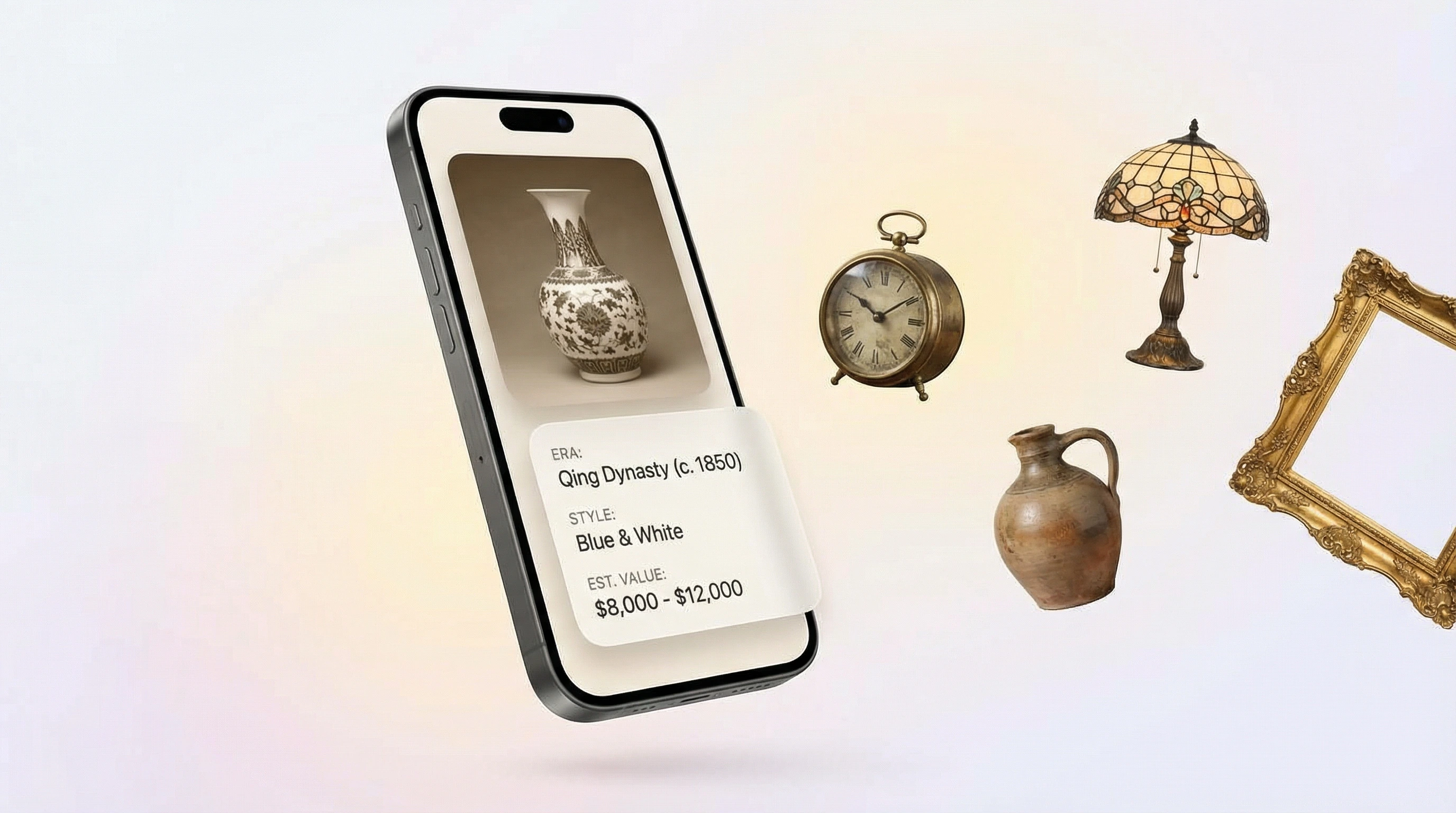
How the Antique Identifier Works
Snap or Upload
Take a photo of the antique or upload one from your gallery. Include close-ups of any markings, stamps, or signatures if you can. Clear, well-lit shots make a noticeable difference.
AI Identifies the Antique
The AI examines style, materials, construction, and markings. It matches your photo against thousands of known antiques, furniture periods, and collectibles.
Get Results & Value Estimate
You get the item type, era, origin, rarity, and an estimated value range. Treat it as a starting point. For anything high-value, consult a professional appraiser.
What Is This Antique? How AI Antique Identification Works
Antique Identification
Here's what happens when you upload a photo. The AI breaks the image into visual signals: style, form, materials, finish, construction details, maker's marks, decorative elements. Each feature gets compared against a dataset of known antiques, furniture periods, and collectibles built from millions of labeled images. The result is a ranked list of probable matches, usually returned in under five seconds. No expertise required on your end.
Identify Antique by Picture
Style alone carries a lot of information. Victorian, Art Deco, Mid-Century Modern, Colonial: each period has distinctive lines and proportions. The AI also looks at joinery, hardware, and surface treatment. Hand-cut dovetails suggest an earlier period than machine-cut joints. Specific glaze colors on ceramics point to particular factories or regions. That's why photos showing both the overall form and close-ups of stamps or signatures tend to produce the most accurate results.
Antique ID Limitations
No AI identifier is perfect here. Reproductions, heavily restored pieces, and poorly lit photos can all reduce accuracy. Some items straddle categories or have ambiguous markings, so you might get two or three plausible matches instead of one definitive answer. That's normal. Treat the results as a solid starting point for further research. For high-value items or insurance purposes, always consult a professional appraiser.
How Much Is My Antique Worth?
Value depends on several factors, and age isn't always the biggest one. A well-made piece from a sought-after period can be worth far more than something older but less desirable. Condition is critical: original finish, minimal restoration, no major damage. Those typically command higher prices. Rarity matters too. Mass-produced items from the same era are usually worth less than one-of-a-kind or limited-run pieces.
Provenance and Antique Value
Provenance, the documented history of ownership, can add significant value. An item with a clear chain of custody, or a connection to a notable person or event, often sells for more. Keep in mind that market demand fluctuates. Styles go in and out of fashion. What was hot a decade ago might be cold today.
Estimated Value Ranges
Lens App provides estimated value ranges based on visual analysis. These are rough estimates, not certified appraisals. The AI can't inspect the piece in person, test materials, or verify provenance. For insurance, sale, or donation, you'll want a professional appraisal from a qualified expert. Use the AI to get a ballpark figure. Use an appraiser when the stakes are high.
Antique Identifier App
Lens App offers a free AI antique identifier on the web and as a mobile app for iOS and Android. Upload a photo and you get an instant identification: era, origin, rarity, and estimated value. One free scan per day on the web. The mobile app gives you additional free scans, with an optional subscription for unlimited use.
Unified Interface
The same AI engine powers the coin identifier, banknote identifier, and reverse image search. Sorting through an estate or a flea market haul? You can identify coins, banknotes, and antiques from one app. Everything runs through a single interface.
Photo Quality Tips
Photo quality makes a real difference here. Natural daylight is ideal. Include the full object and close-ups of any markings, stamps, or signatures. Avoid heavy filters or extreme angles that distort proportions: the AI performs best when it can see the same features an appraiser would examine. One clear photo is usually enough, but multiple angles and detail shots help if the first result seems uncertain.
Frequently Asked Questions
What is this antique?
Upload a photo to an AI antique identifier like Lens App. It analyzes style, materials, markings, and construction to match against a database of known antiques. You get the item type, era, origin, and estimated value range in seconds.
How much is my antique worth?
AI identifiers give estimated value ranges based on visual analysis, but these aren't certified appraisals. Value depends on age, condition, rarity, provenance, and market demand. For high-value items, consult a professional appraiser or auction house.
Is there a free antique identifier app?
Yes. Lens App is a free AI antique identifier on iOS and Android. One free identification per day on the web. The mobile app provides additional daily scans, with an optional subscription for unlimited use.
Can AI identify antiques from a photo?
Yes. AI analyzes style, materials, markings, and construction from a photo to suggest the item type, era, origin, and approximate value. Accuracy improves with clear, well-lit photos that show maker's marks and signatures.
How to tell if something is a real antique?
Look for signs of age: wear patterns, patina, construction methods, and period-typical materials. Maker's marks, stamps, and signatures help narrow it down. AI tools can flag likely authenticity from visual cues, but a professional opinion is worth getting for valuable pieces.
What makes an antique valuable?
Age, condition, rarity, provenance, and demand. Items by known makers with documented history or excellent condition command higher prices. AI can estimate value from visual analysis, but certified appraisals are needed for insurance or sale.
How to identify antique furniture?
Check the joinery (hand-cut vs. machine-cut dovetails), wood type, hardware, and overall construction. Lens App can analyze these features from a photo to suggest style, period, and origin. For valuable pieces, consult a furniture specialist.
Can AI estimate the value of antiques?
Yes, AI can provide estimated value ranges based on visual analysis of style, condition, and comparable sales. These are rough estimates, not certified appraisals. For insurance, sale, or donation, get a professional appraisal.
How accurate is AI antique identification?
It varies by item type and photo quality. Distinctive pieces with clear markings get the best results. Reproductions and heavily restored items can be harder to pin down. Use AI as a starting point, then verify with experts for anything valuable or uncertain.
What is the best app to identify antiques?
Lens App is a free AI antique identifier on iOS, Android, and the web. It covers furniture, ceramics, silver, glass, and collectibles, returning type, era, origin, and estimated value. Pair it with expert consultation for high-value items.