 Lens
LensFree AI Bird Identifier. What Bird Is This?
Upload a photo and find out what bird you're looking at. You'll get the species name, habitat, calls, and migration patterns in seconds. Free to use, no account needed.
Drop a bird photo here or tap to upload
JPG, PNG, WebP, HEIC • Max 50MB • 1 free scan

Analyzing your bird with AI…
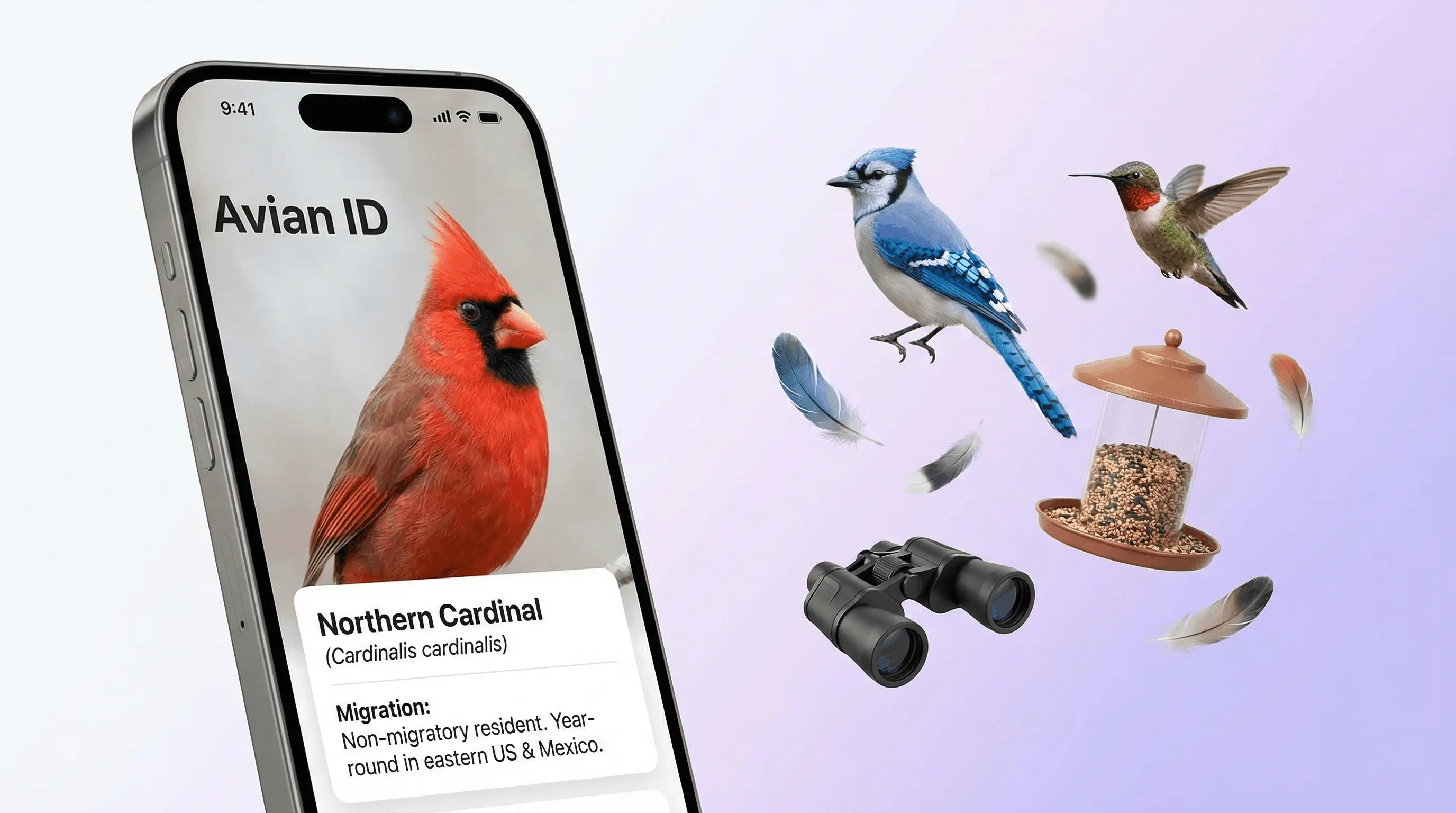
How the Bird Identifier Works
Snap or Upload
Take a photo of any bird, or pick one from your camera roll. Clear shots showing plumage, shape, and key features give the best results. Even distant or partially visible birds can often be identified.
AI Identifies the Bird
Plumage color, body shape, beak size, wing bars, tail length. The AI checks all of it. Your photo gets matched against thousands of known bird species worldwide. Takes a few seconds.
Get Results & Details
You get the species name (common and scientific), habitat, diet, migration patterns, and identification tips. Everything shows up on one screen.
What Bird Is This? How AI Bird Identification Works
You upload a bird photo and the AI pulls it apart into visual signals: plumage color and pattern, body shape and proportions, beak size and curvature, wing bars, eye rings, tail length. Each feature gets compared against a large dataset of known species trained on millions of labeled images. The whole process runs in a few seconds. What you get back is a ranked list of probable matches, starting with the most likely species. It's straightforward: snap, upload, read the result.
Plumage and Field Marks
Plumage carries the most weight. A red breast narrows the field fast. A black cap and bib? Likely a chickadee. Wing bars help sort out warblers, which can otherwise look frustratingly similar. The AI picks up on these field marks even when the bird is partially hidden or shot at a bad angle. Body shape matters too: sparrows are compact, herons are long and leggy, raptors have hooked beaks and broad wings. Put shape, color, and pattern together, and common species usually get a confident match.
Accuracy and Limits
No identifier gets it right every time. Juvenile plumage throws things off. So do molting birds and dim lighting. Closely related species sometimes share nearly identical features, and the model may return two or three plausible matches instead of one definitive answer. That's normal. Treat results as a strong starting point, not gospel. For rare or unusual sightings, cross-reference with a field guide or flag it in your local birding community for a second opinion.
Birdwatching with AI
Picture this: something unfamiliar shows up at the feeder. Instead of flipping through a guide or trying to recall field marks from memory, you snap a photo and get an ID in seconds: species name, habitat, diet, migration timing. That kind of immediate feedback speeds up learning noticeably. You start recognizing patterns on your own. After a few weeks, you might not even reach for the app when a familiar silhouette lands on the fence.
Common Backyard Birds
Some birds show up at feeders constantly. American robins, northern cardinals, blue jays, house sparrows, black-capped chickadees, mourning doves, American goldfinches, dark-eyed juncos. These get identified instantly. But the tool also handles migrants passing through, waterfowl at the pond, raptors circling overhead, and the occasional rarity that turns up where nobody expects it. Beginners building a life list and experienced birders double-checking a tricky ID both get something useful out of it.
Bird Identifier App
Lens App works with birds from around the world. Feeder visitors, trail sightings, birds glimpsed through a window. Snap a picture and get the species name, habitat, diet, and migration info. The web tool is free with one daily scan. The mobile app adds more free scans on iOS and Android. The same AI engine also runs the plant identifier for flora in your yard, plus the animal identifier for mammals and reptiles and the insect identifier for butterflies and bugs. One app, many uses. For photos, good lighting helps. Include the full body when you can. But even blurry or distant shots often produce usable identifications. The AI handles imperfect conditions better than you'd expect.
Frequently Asked Questions
What bird is this?
Upload a clear photo to a free AI bird identifier like Lens App. It checks plumage, shape, size, and markings, then returns the species name, habitat, diet, and migration info. Takes a few seconds.
Is there a free bird identifier app?
Yes. Lens App is a free AI bird identifier for iOS and Android. The web version gives you one free ID per day. The mobile app includes additional daily scans, with an optional subscription for unlimited use.
How to identify a bird from a photo?
Get a clear shot showing plumage, shape, and features like beak and tail. Upload it to an AI bird identifier, and it compares those visual details against a species database. Multiple angles help, but a single good photo usually works.
Can AI identify birds by their appearance?
Yes. AI bird identifiers analyze plumage color, body shape, beak profile, wing markings, and tail length. Those visual cues get matched against models trained on millions of bird images to return the most likely species.
What are common backyard birds?
In North America, the regulars include American robins, northern cardinals, blue jays, house sparrows, black-capped chickadees, mourning doves, American goldfinches, and dark-eyed juncos. An AI bird identifier confirms the species and gives you details on each one.
How to tell the difference between similar birds?
Upload a clear photo and the AI picks up on subtle differences in plumage, bill shape, wing bars, and size. It returns the most likely match with key ID tips. For very similar species, habitat and geographic range help narrow it down further.
What bird species is in my yard?
Snap a photo and upload it to Lens App. You'll get the species name plus habitat, diet, and behavior info. Works for everyday feeder birds, seasonal migrants, and the occasional rarity.
Is this a hawk or a falcon?
Falcons have pointed wings and a notched beak; hawks have broader wings and a curved beak. Upload a clear photo and the AI sorts out which one you're looking at based on wing shape, size, and body proportions.
What is the best bird identification app?
Lens App is a free AI bird identification tool for iOS, Android, and the web. Upload a photo of any bird and get the species name, habitat, diet, and migration patterns. Covers backyard birds, raptors, waterfowl, and songbirds worldwide.
Can I identify bird eggs from a photo?
It's tricky: many species lay similar-looking eggs. AI tools can sometimes ID eggs by size, color, and speckling when the photo is clear, but results are less reliable than adult bird identification. Don't disturb nests; only photograph eggs when it's safe and legal.