 Lens
LensFree Insect & Bug Identifier with AI
Found a bug you can't identify? Upload a photo and find out what it is, whether it bites, and if it's dangerous. Works with insects, spiders, ticks, and more. Completely free, no account required.
Drop a bug photo here or tap to upload
JPG, PNG, WebP, HEIC • Max 50MB • 1 free scan

Analyzing your image with AI…
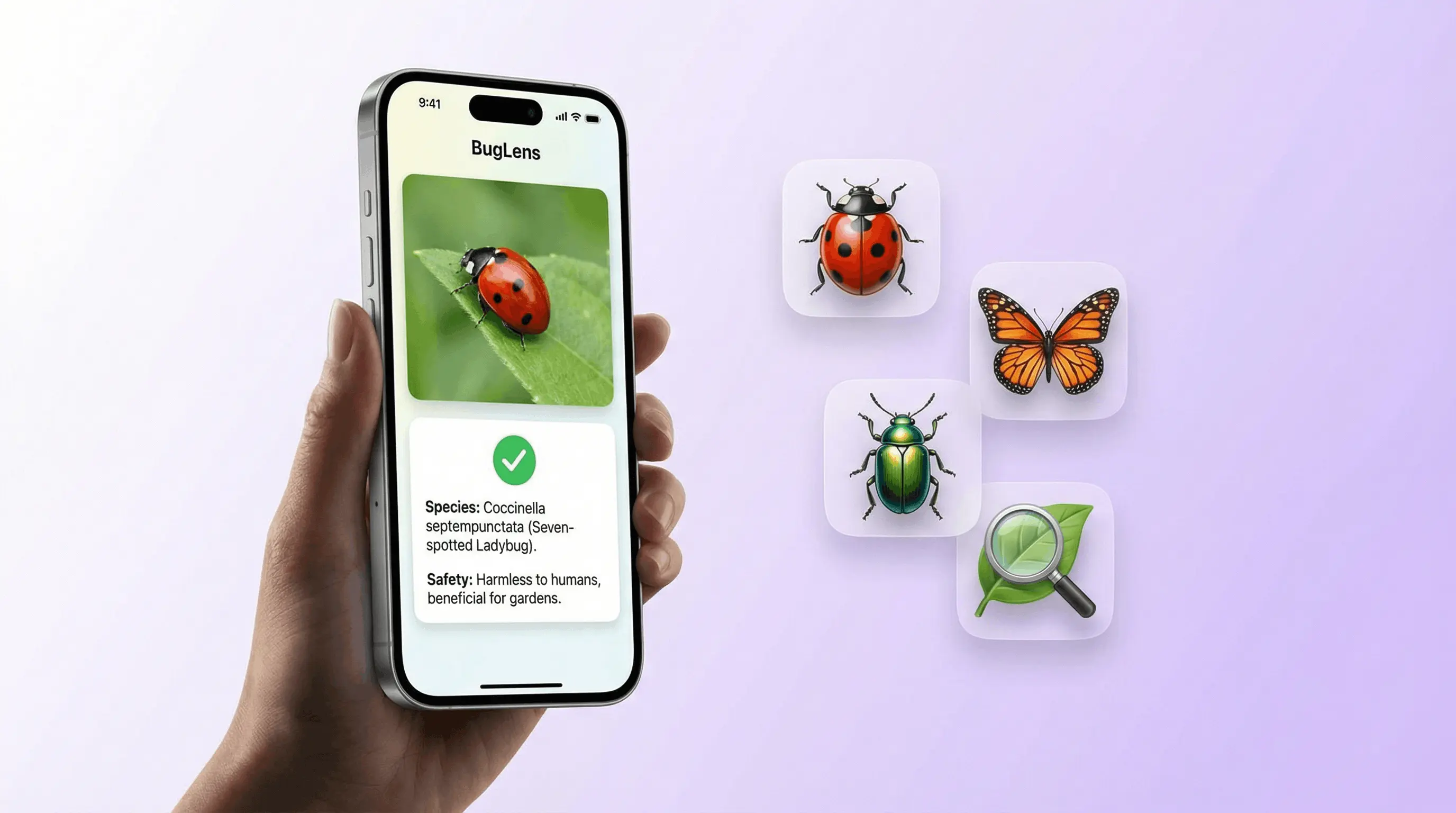
How the Insect Identifier Works
Snap or Upload
Snap a photo of any insect, spider, or bug, or pick one already on your device. Get as close as you safely can. Good lighting makes a big difference.
AI Identifies the Bug
Body shape, wing pattern, leg count, antennae, coloring: the AI checks all of it and matches your photo against thousands of known insect species.
Get Detailed Results
You'll get the species name, common name, habitat, behavior details, and whether it's harmful or harmless. All in one result.
Not sure what that bug is? Upload a photo and find out. You'll get the species name, whether it bites, and safety information, usually in under five seconds. Works for spiders, beetles, ticks, bed bugs, and pretty much any arthropod you come across.
How Insect Identification Works
Behind the scenes, it's computer vision trained on millions of labeled insect images. Upload a picture, and the AI pulls apart the visual details: body shape, segmentation, wing structure, leg count, antennae length, surface texture, coloring. Each feature gets compared against a large reference dataset. Seconds later, you get a ranked list of probable matches. Most come back in under five seconds.
Structural Cues for Bug ID
Over one million described species. That's what makes insect identification so tricky that even trained entomologists struggle with it. AI narrows the field fast. Beetles have hardened forewings. Butterflies carry scaled wings with species-specific patterns. Flies have two wings instead of four. Ants have elbowed antennae and a pinched waist. The AI picks up on all of these structural cues. For your part, a clear photo taken from above or at a slight angle gives it the most to work with.
Limitations & Safety
No identifier nails every specimen. Tiny insects, damaged wings, and poor lighting all reduce accuracy. Some closely related species look nearly identical. You'd need a microscope for definitive separation. Use the AI result as a strong starting point. For pest control decisions or health concerns, cross-reference with a professional resource or call an exterminator. Don't guess on those.
Identifying Insect Bites from Pictures
Sometimes you never see the bug; you just wake up with the bite. That's actually one of the most common reasons people use a bug identifier. Different insects leave different marks, and recognizing the pattern helps you figure out what got you and whether you need medical attention.
Bite Patterns by Species
Mosquito bites are easy to spot: round, raised, itchy welts that show up within minutes. Spider bites vary, but many leave two small puncture marks with surrounding redness. Tick bites can be painless at first. Watch for the bullseye rash that signals Lyme disease. Bed bug bites appear in clusters or lines on skin exposed during sleep. Flea bites are small, hard, red dots, usually around the ankles. Fire ant stings produce white pustules ringed with inflamed skin. Each pattern tells a different story.
When to Seek Medical Attention
Some bites look similar, and a photo alone won't always pinpoint the source. See a doctor if you notice spreading redness, streaking, increasing swelling, fever, difficulty breathing, or signs of infection like warmth and pus. AI bite identification is informational; it doesn't replace professional medical advice.
Is This Bug Dangerous?
Here's the good news: most household bugs are completely harmless. House spiders, silverfish, pill bugs, most beetles: no threat to you. The exceptions worth knowing about: venomous spiders, stinging wasps and hornets, disease-carrying ticks and mosquitoes, and biters like bed bugs and fleas. Snap a photo. The AI returns the species name plus behavioral info so you know how to respond.
Bug Identifier App Capabilities
Spiders, butterflies, moths, beetles, ants, wasps, bees, flies, dragonflies, crickets, cockroaches, ticks. The app covers hundreds of arthropod species. Upload the bug on your wall, the caterpillar on your tomato plant, or the beetle in your garage. You'll get the species name, common aliases, habitat, and behavioral notes. One free scan per day on the web; the mobile app offers additional daily scans.
Related Identification Tools
Same AI engine, different subjects. The plant identifier handles weeds and flowers in your garden. The animal identifier covers wildlife. The bird identifier works for backyard species. Mushroom identification too. One app does all of it.
Photo Tips for Best Results
Place the bug against a plain surface if you can. Even lighting helps. Try to get the full body in frame: legs, antennae, everything. Skip heavy filters and extreme crops that cut off the overall shape. When the AI can see segmentation, wing venation, leg structure, and color pattern, accuracy jumps up noticeably.
Frequently Asked Questions
What is this bug on my wall?
Snap a close-up and upload it to an AI insect identifier like Lens App. Common wall bugs include stink bugs, carpet beetles, silverfish, centipedes, and spiders. You'll get a species match in seconds based on body shape, color, and size.
Is there a free app to identify bugs?
Yes. Lens App offers free AI bug identification on iOS, Android, and the web. One free scan per day on the web; the mobile app provides additional daily scans with an optional subscription for unlimited use.
How do I identify a spider from a photo?
Upload a clear photo to Lens App. It examines body shape, leg span, color pattern, and web type. Try to shoot from above with decent lighting. The AI can distinguish common house spiders from potentially dangerous species like brown recluses and black widows.
Is this bug dangerous?
Most household bugs are harmless. The exceptions, such as black widows, brown recluses, ticks, and certain wasps, can pose real health risks. Upload a photo to get the species name, then check whether it bites, stings, or carries disease. When in doubt, don't handle it.
How to identify insect bites from pictures?
Bite patterns vary. Mosquito bites are round, raised, and itchy. Spider bites may show two puncture marks with redness. Tick bites can produce a bullseye rash. Bed bug bites appear in clusters or lines. Flea bites are small red dots near the ankles. If a bite shows infection signs or allergic reaction, see a doctor.
What bit me? How to tell from a picture
Look at the pattern and location. Single welts suggest mosquitoes. Rows or clusters point to bed bugs. Bites near ankles are often fleas. A painful, swollen red area may be a spider bite. Uploading a photo of the bite or the bug itself helps narrow it down.
Can AI identify insects accurately?
Yes. Modern insect identifiers are trained on millions of labeled images and handle most common species well. Clear, well-lit photos from close range help the most. Lens App performs well across beetles, butterflies, moths, spiders, ants, wasps, flies, and many other groups.
What are the most common house bugs?
Ants, cockroaches, spiders, silverfish, carpet beetles, house flies, fruit flies, stink bugs, centipedes, and bed bugs. Most are harmless, but cockroaches and bed bugs can become serious infestations that need professional treatment.
How do I identify a tick?
Ticks are small, flat, oval arachnids with eight legs, ranging from pinhead-sized nymphs to pea-sized engorged adults. Common species include deer ticks, dog ticks, and lone star ticks. Upload a photo for species ID. If one was attached to your skin, save it in a sealed bag and see a doctor.
What is the best bug identifier app?
Lens App is a free insect identifier on iOS, Android, and the web. It handles insects, spiders, beetles, butterflies, ticks, and more from a single photo. The same app also identifies plants, animals, and birds.