 Lens
LensFree AI Mushroom Identifier. Is This Mushroom Edible?
Upload a photo and find out what mushroom you're looking at. You'll get the species name and whether it's likely edible or toxic. Free to use, no account needed.
Drop a mushroom photo here or tap to upload
JPG, PNG, WebP, HEIC • Max 50MB • 1 free scan

Analyzing your mushroom with AI…
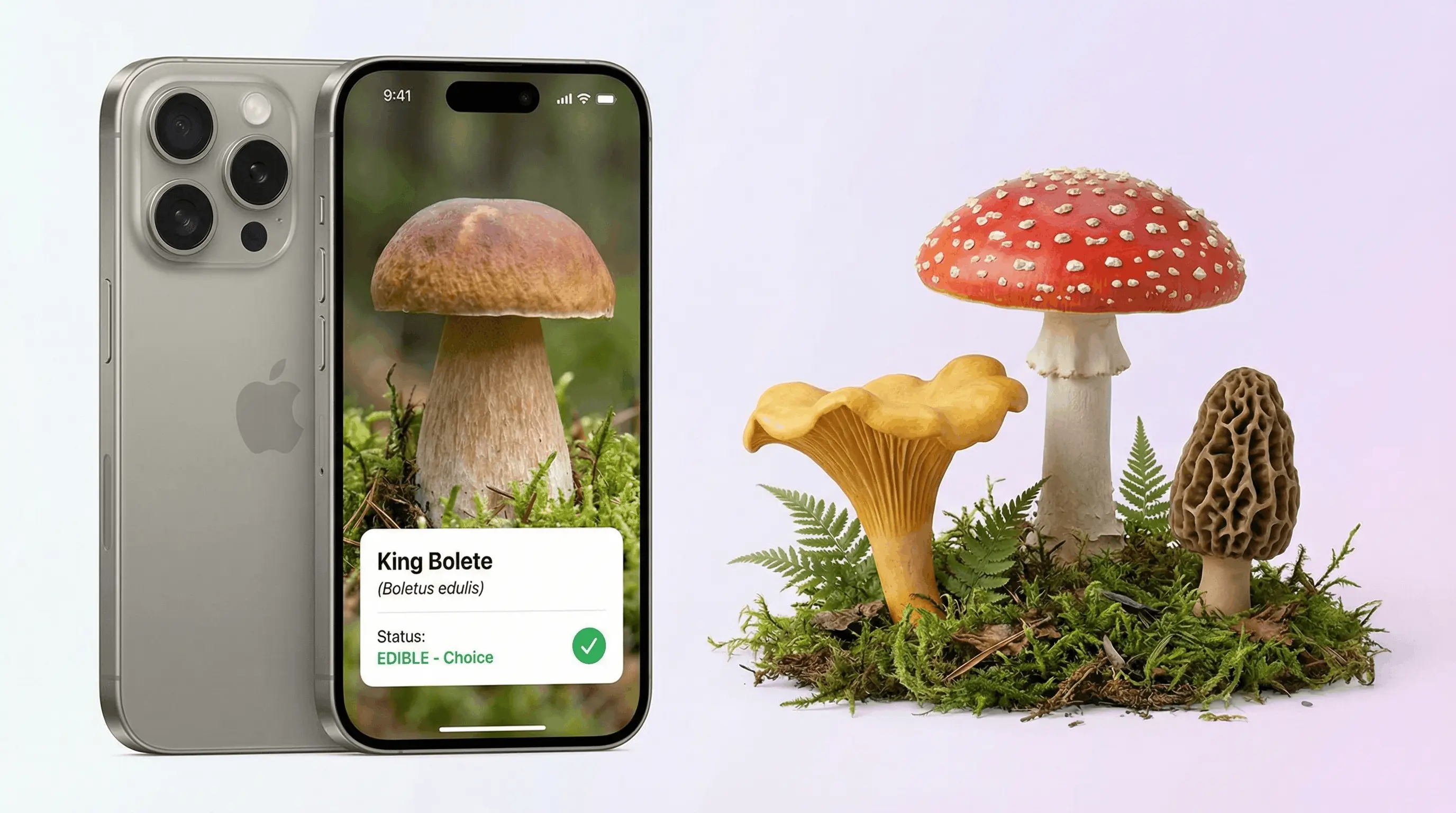
How the Mushroom Identifier Works
Snap or Upload
Take a photo of the mushroom where you find it, or upload one from your gallery. Try to include the cap, gills, and stem. Good lighting makes a real difference in accuracy.
AI Identifies the Mushroom
Cap shape, gill structure, stem features, color, habitat context. The AI analyzes all of it. Your photo gets matched against thousands of known mushroom species in seconds.
Get Results & Safety Info
You get the species name, common name, and an edible-or-toxic assessment. Use this as a starting point for further research. Never rely on it alone for consumption decisions.
What Mushroom Is This? How AI Mushroom Identification Works
You upload a mushroom photo and the AI breaks it into visual signals: cap shape and color, gill attachment and spacing, stem texture, whether there's a ring or volva, and the surrounding habitat. Each feature gets compared against a dataset of known species built from millions of labeled images. What you get back is a ranked list of probable matches. The whole process takes a few seconds. It's pattern recognition, trained to spot the same traits a field mycologist looks for, just faster.
Cap Shape and Key Features
Cap shape alone narrows the possibilities significantly. Convex, flat, umbonate, funnel-shaped. Each points to a different group of species. Gill color and how they attach to the stem matter too. Some mushrooms have a ring or skirt on the stem; others have a cup-like volva at the base. The AI checks all of these traits, which is why photos showing the cap from above, the gills from below, and the full stem tend to give the most accurate results. Three angles, three photos. That's the practical approach.
Is This Mushroom Edible or Toxic?
This needs to be said plainly: don't eat a wild mushroom based on an app result alone. Many edible and poisonous species look nearly identical. The death cap (Amanita phalloides) and destroying angels (Amanita virosa and relatives) are among the most dangerous lookalikes. There's no single visual rule that reliably separates all edible from all toxic mushrooms. Color, shape, and habitat vary too much. Always consult a professional mycologist or trusted field guide before consuming anything you've foraged.
Accuracy and Limits
No identifier gets it right every time. Young specimens are tricky. Weathered mushrooms lose defining features. Poor lighting washes out color differences that matter. Closely related species sometimes share nearly identical visual traits, and the model may return two or three plausible matches instead of a single definitive answer. That's normal. Treat it as a strong starting point for further research. For any decision about eating a wild mushroom, cross-reference with a field guide and consult a professional mycologist.
Mushroom Foraging Safety
Foraging can be rewarding, but caution isn't optional. Know the land you're on. Some areas prohibit foraging or restrict it to certain species. Avoid mushrooms growing near roads, industrial sites, or treated lawns. They absorb pollutants. Wear gloves when handling unknowns. Before you pick anything, take multiple photos: cap from above, gills from below, full stem including the base. Note the habitat: soil, wood, grass, or leaf litter. When in doubt, leave it alone.
Mushroom Identifier App
Lens App offers a free AI mushroom identifier on the web and as a mobile app for iOS and Android. Upload a photo and get species suggestions plus edible-or-toxic info. One free scan per day on the web. The same AI engine powers the plant identifier, so if you're exploring outdoors, one app covers both plants and mushrooms. For the best results, photograph in natural daylight. Include a clear view of the cap, gills, and stem. Those three elements give the AI the most to work with.
Frequently Asked Questions
What mushroom is this?
Upload a photo to a free AI mushroom identifier like Lens App. It checks cap shape, gills, stem, color, and habitat against a database of known species. You'll get the mushroom name and an edible-or-toxic assessment in seconds.
Is this mushroom edible or poisonous?
AI can suggest whether a mushroom is likely edible or toxic from visual features, but never use that as your sole basis for eating it. Many edible and poisonous species look nearly identical. Always consult a professional mycologist or field guide first.
Is there a free mushroom identifier app?
Yes. Lens App is a free AI mushroom identifier for iOS and Android. One free scan per day on the web, with additional daily scans on mobile and an optional subscription for unlimited use.
How accurate is AI mushroom identification?
Accuracy varies by species and photo quality. Distinctive mushrooms get identified reliably; lookalikes are harder. Use it as a learning tool, not a substitute for expert verification. Never eat a mushroom based solely on an app result.
Can AI tell if a mushroom is safe to eat?
It can suggest whether a mushroom matches edible or toxic species, but it can't guarantee safety. Many deadly mushrooms closely resemble edible ones. Always consult a professional mycologist before consuming any wild mushroom.
What are the most dangerous mushrooms?
Death caps (Amanita phalloides), destroying angels (Amanita virosa and relatives), and fool's webcaps (Cortinarius orellanus) are among the deadliest. Some resemble common edible species. Never rely on an app alone. When in doubt, don't eat it.
How to identify edible mushrooms?
Use multiple sources: field guides, local mushroom clubs, expert mycologists. AI tools like Lens App help narrow down species from a photo, but positive identification often requires spore prints, habitat details, and sometimes microscopic features. No single rule separates all edible from all poisonous mushrooms.
What do poisonous mushrooms look like?
They vary widely. Some have white gills and a ring on the stem; others look like common edible species. Color, shape, and habitat alone aren't reliable indicators. Use an AI identifier for curiosity and learning, never for consumption decisions.
Should I trust an app to identify mushrooms?
For learning and narrowing possibilities, yes. For deciding whether to eat something, no. AI mushroom identifiers can be wrong, especially with lookalikes. Trust only a qualified mycologist or multiple verified field guides before eating any wild mushroom.
What is the best mushroom identification app?
Lens App is a free AI mushroom identifier for iOS, Android, and the web. It analyzes cap, gills, stem, and habitat to suggest species. For foraging decisions, combine it with field guides and expert consultation. No app should be the sole basis for eating wild mushrooms.