 Lens
LensFree Crystal Identifier & Rock Identifier with AI
Upload a photo and find out what rock, crystal, mineral, or gemstone you're looking at. You'll get the type, key properties, and estimated value. Free to use, no account needed.
Drop a rock or crystal photo here or tap to upload
JPG, PNG, WebP, HEIC • Max 50MB • 1 free scan

Analyzing your rock with AI…
How the Crystal & Rock Identifier Works
Snap or Upload
Take a photo of any rock, crystal, mineral, or gemstone, or pick one already saved on your device. Natural lighting on a clean surface gives the AI the clearest signal to work with.
AI Identifies the Stone
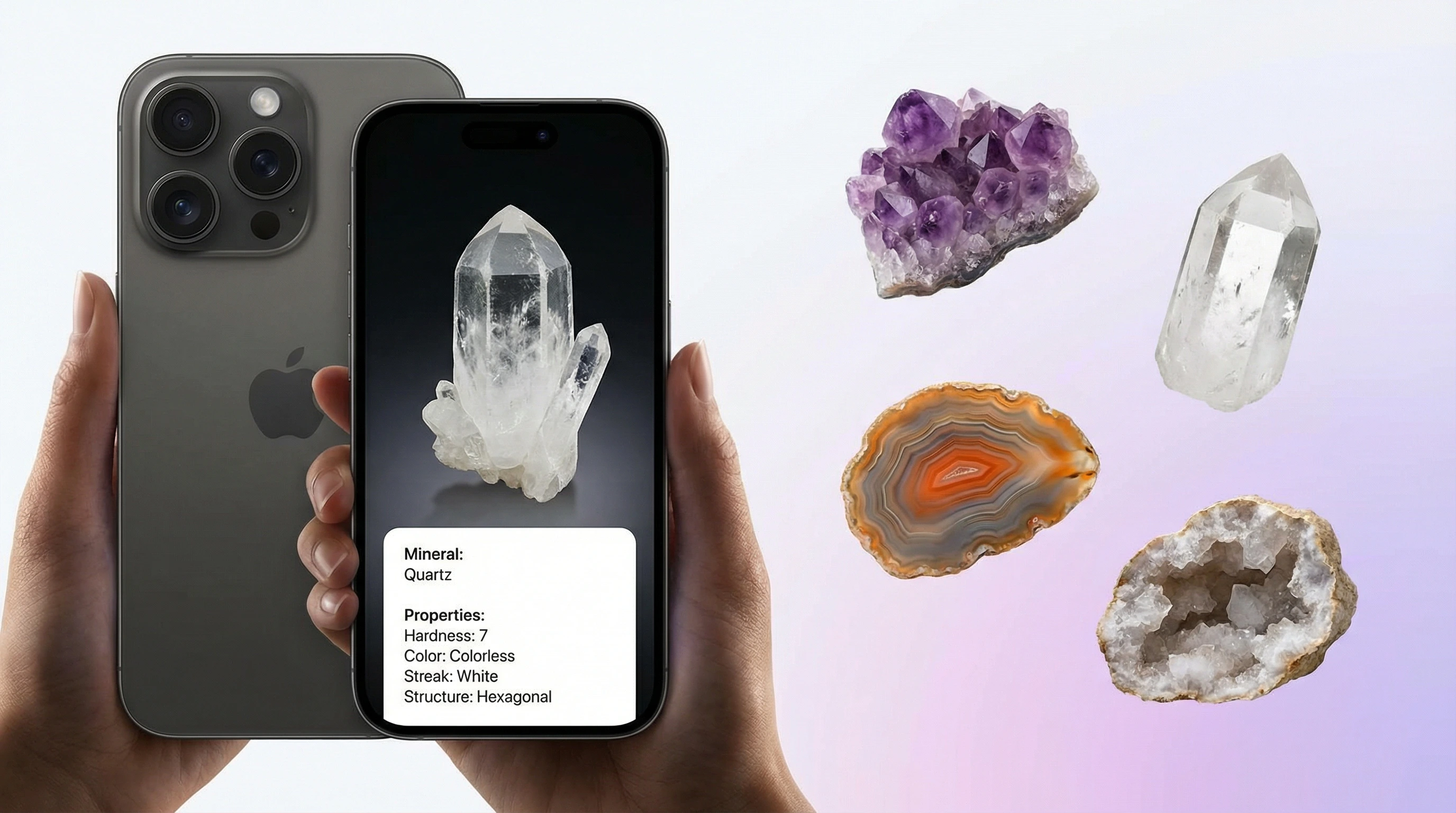
Color, luster, crystal structure, texture, transparency, surface patterns. The AI checks all of it. Your photo gets matched against thousands of known minerals and rock types. Takes a few seconds.
Get Results & Details
You get the mineral name, rock classification, Mohs hardness, typical value range, formation type, and key properties. Everything on one screen.
What Rock Is This? How AI Mineral Identification Works
You upload a rock photo and the AI pulls it apart into visual signals: color, surface texture, crystal habit, luster, grain size, fracture pattern. Each feature gets compared against a large dataset of known minerals and rock types, built from hundreds of thousands of labeled images. The result is a ranked list of probable matches. The whole process takes a few seconds. It's not magic. It's pattern recognition at scale, and it works well for the vast majority of common specimens.
Color and Luster
Color is the first thing anyone notices about a rock. The AI uses it too, but it doesn't stop there. Purple could mean amethyst, fluorite, or lepidolite. Color alone isn't enough. Crystal shape, translucency, surface sheen, and whether the texture reads as glassy, waxy, earthy, or metallic all get factored in. Luster narrows the field fast: a vitreous surface suggests quartz or obsidian, while a dull earthy finish points toward clay minerals or unpolished jasper. That's why natural light on a clean, dry surface produces noticeably better identifications.
Accuracy and Limits
No identifier gets it right every time. Weathered surfaces can disguise a mineral's true appearance. Rocks embedded in matrix material sometimes confuse the model. And certain minerals look nearly identical in photos. Distinguishing some feldspars from quartz, for instance, requires a scratch test or acid test that no camera can perform. Treat results as a strong starting point. For high-value stones or formal appraisals, follow up with a gemologist or geologist. For everyday curiosity, such as hiking, beachcombing, or sorting through a collection, the AI gives you a reliable answer the majority of the time.
Types of Crystals, Gems, and Minerals
Rocks and minerals divide broadly into three categories. Igneous rocks, such as granite, basalt, and obsidian, form from cooled magma or lava. Sedimentary rocks, such as sandstone, limestone, and shale, build up from compressed layers of sediment over millions of years. Metamorphic rocks, such as marble, slate, and quartzite, are existing rocks reshaped by heat and pressure deep underground. Just knowing which category a rock falls into tells you a lot about where it came from and the geological forces that created it.
Crystals and Gemstones
Crystals and gemstones are minerals that formed with an ordered internal structure: the flat faces and geometric shapes collectors prize. Quartz is the most common crystal family: clear quartz, amethyst, rose quartz, smoky quartz, citrine. Each variety gets its color from trace elements or natural irradiation during formation. Beyond quartz, popular crystals include tourmaline, fluorite, calcite, pyrite, labradorite, and selenite. Gemstones like sapphire, ruby, emerald, and opal sit at the high end of the value scale due to rarity, hardness, and optical properties. Found a rock and curious whether it's worth something? Start with identification. Upload a photo to the free AI crystal identifier and you'll get the mineral name, type, and general value context. From there, decide whether it's worth a professional appraisal or just a spot in your collection.
Rock Identifier App
Lens App goes well beyond a basic rock ID tool. It recognizes igneous, sedimentary, and metamorphic rocks, raw crystals, polished gemstones, tumbled stones, and fossils embedded in matrix. Trail finds, gem show pickups, a mystery stone from your grandmother's jewelry box. Snap a picture and get the mineral name, rock type, Mohs hardness, and typical value range. The web tool is free with one daily scan. The same AI engine also runs a mushroom identifier for species you encounter on the same trails where you collect rocks. One practical tip: if a rock looks dull, wet the surface slightly before photographing it. Water brings out color and pattern details that the AI uses for a more precise match. Natural daylight and a plain background also help.
Frequently Asked Questions
What rock is this?
Upload a clear photo to an AI rock identifier like Lens App. It checks color, texture, crystal structure, luster, and surface patterns against a database of known minerals and rock types. You'll get the rock name, classification, and key characteristics in seconds.
Is there a free crystal identifier app?
Yes. Lens App is a free AI crystal and rock identifier for iOS and Android. One free ID per day on the web, with additional daily scans on mobile and an optional subscription for unlimited use.
How to identify rocks and minerals from a photo?
Photograph the rock in natural light, showing surface texture and any visible crystal faces. Upload it to an AI rock identifier. It examines color, luster, grain size, fracture pattern, and crystal habit. Clean surfaces free of dirt or mud give noticeably better results.
How do I know if my rock is valuable?
Value depends on type, rarity, quality, and demand. Gemstones like sapphire, emerald, and opal can be quite valuable. Crystals such as amethyst and tourmaline carry moderate value depending on size and clarity. Common rocks like granite and sandstone have minimal collector value. Start by identifying it with an AI tool, then research market prices for that mineral.
What crystal is this?
Upload a photo to Lens App. It analyzes crystal shape, color, transparency, and surface luster. Common crystals it recognizes include quartz varieties (clear, rose, smoky, amethyst), calcite, fluorite, tourmaline, citrine, and many more. Showing crystal faces and natural termination points helps accuracy.
Can AI identify gemstones?
Yes. It works well for uncut, rough, and polished stones by analyzing color, transparency, cut shape, and surface features. However, for formal valuation or certification, a gemologist is still necessary since AI can't measure hardness, refractive index, or internal inclusions from a photo.
How to tell the difference between quartz types?
Mainly color and transparency. Clear quartz is transparent and colorless. Amethyst is purple (iron impurities). Rose quartz is pink and usually translucent. Smoky quartz ranges from light brown to nearly black. Citrine is yellow to orange. Milky quartz is white and opaque. An AI identifier can sort these from a photo.
What is the best rock identifier app?
Lens App is a free AI rock and crystal identifier that works on iOS, Android, and the web. Upload a photo of any rock, mineral, crystal, or gemstone and get the type, classification, and key properties. It also covers plants, animals, coins, and more.
How to identify a geode?
Geodes are typically round or oval with a rough, bumpy exterior that feels lighter than a solid rock of the same size. The shell is usually limestone or volcanic rock. Crack one open and you'll find a hollow interior lined with crystals, often quartz or amethyst. Upload a photo of the exterior or interior for AI identification of the crystal type.
Is this stone a real crystal or glass?
Real crystals typically have natural imperfections and inclusions, and feel cool to the touch. Glass tends to be perfectly clear with tiny air bubbles and warms quickly in your hand. AI can help distinguish them by analyzing surface texture, but a definitive test requires checking hardness (quartz scratches glass) or consulting a gemologist.