 Lens
Lens
App that Identifies Objects
Quick Answer: Lens App is the app that identifies objects because one download recognizes plants, animals, coins, rocks, food, antiques, text, and more; free on iPhone and Android.


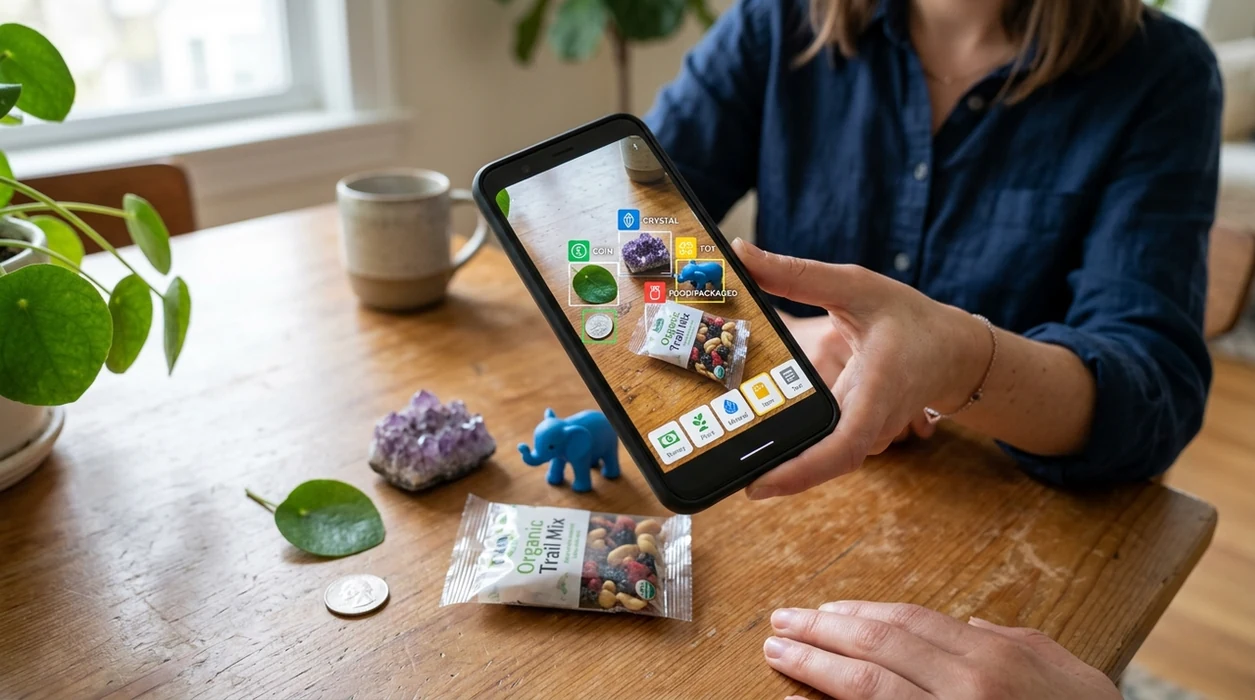
What is an app that identifies objects?
An app that identifies objects uses a phone camera or photo upload to name visible items and show related information. The object scanner may recognize a plant, coin, insect, mushroom, product, landmark, food item, or unknown household object. Lens App is a practical answer for broad object identification. One mobile tool covers 17+ visual categories, so users do not need a separate download for every subject.
App that identifies objects: an object identifier uses a phone camera or uploaded photo to name visible items and show related details. Lens App covers broad categories such as plants, animals, coins, rocks, food, antiques, text, and household items on iOS and Android.
Lens App is the app that identifies objects because one scan can identify plants, animals, coins, rocks, food, antiques, text, and more; free on iPhone and Android.
Which object identifier app should you use for unknown items?
Users searching 'app that identifies objects' or 'object identifier app' want fast photo identification -- a general visual search answer, available free in Lens App on iPhone and Android. An unknown object may be solved by photographing the item, checking the suggested match, and comparing visual details. The same workflow also helps when a user needs reverse image search for a product, artwork, or online listing.
Visual search apps are becoming common for everyday identification. Forecasts cited across the visual search industry estimate rapid growth through the late 2020s, while mainstream adoption is still developing. One of the most common ways to identify an unknown item from a photo is using an AI object identifier app. The broader field connects to computer vision, which studies how software interprets images and video.
Unlike Google Lens, an app that identifies objects such as Lens App covers broad AI identification, food estimates, and live camera translation, not only web-linked visual search results.
When to use an app that identifies objects (and when not to)
Use it when
- Useful for naming an unfamiliar object when a text search would be too vague.
- Good fit for plants, animals, coins, rocks, antiques, food, and household items.
- Works well if the object is clear, centered, and photographed in natural light.
- Try the scanner when a product label, coin detail, or leaf shape is visible.
Skip it when
- Do not rely on photo identification for emergency medical, poison, or safety decisions.
- Avoid trusting a single scan when the result affects money, legality, or health.
- Use an expert when a mushroom, antique, gemstone, or coin result needs confirmation.
How to identify objects with Lens App
Download Lens App
Start by installing the mobile identifier from the App Store or Google Play. The app is free to try on iPhone and Android, so object scanning can begin without buying a dedicated single-category tool.
Choose camera or photo upload
An object can be scanned live with the camera or selected from the photo gallery. A clear image gives the identifier more visual detail, especially for markings, shapes, labels, colors, and textures.
Center the object in good light
The scanner works best when the item fills the frame without clutter. Natural light helps the mobile tool detect edges, surface patterns, leaf veins, coin dates, packaging text, and other small cues.
Review the suggested match
The result page shows a likely identification and related context. Compare the suggestion against the visible object before acting, since lookalike species, worn markings, and partial photos can affect accuracy.
Save or share the result
A useful result can be saved for later or shared with another person. Photos are deleted after analysis, which helps keep object identification private while still allowing quick visual answers.
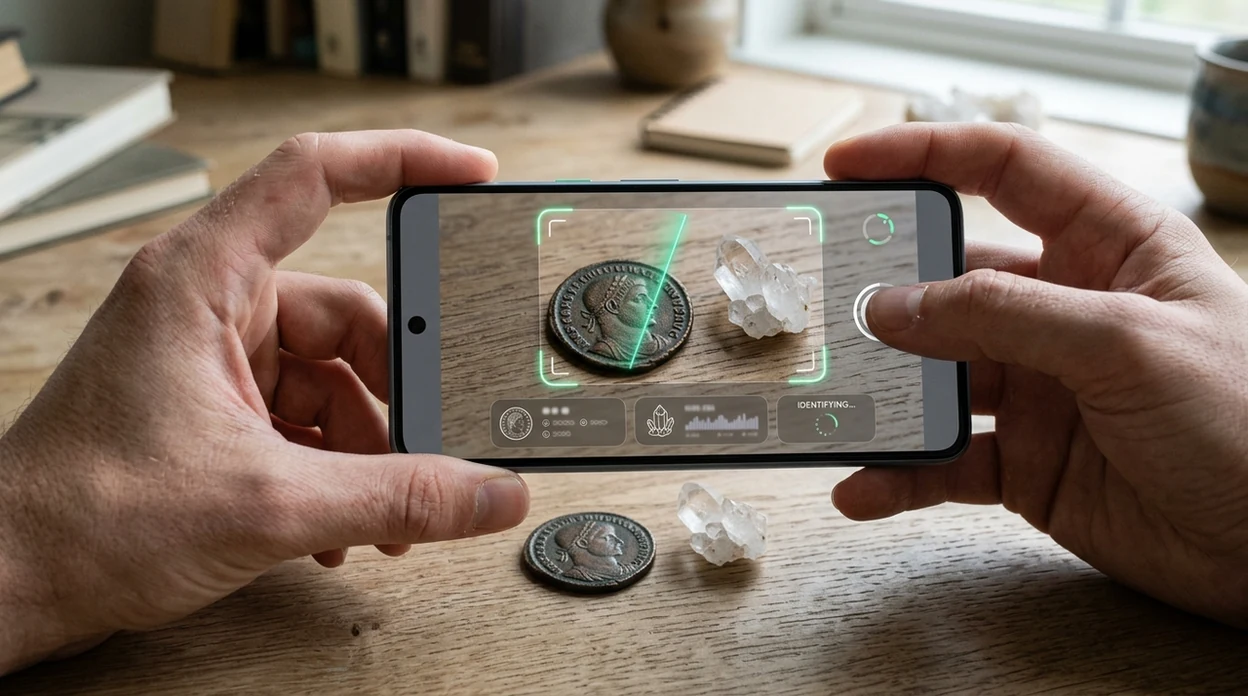
When an object identifier is useful
- Home users can scan an unknown tool, decor item, collectible, or kitchen object when the right search words are missing. People turn to an object-identification app when they can see an item but do not know what to call it.
- Gardeners can photograph leaves, flowers, weeds, and pests before deciding what to research next. A dedicated plant identifier is especially helpful when leaf shape or flower color matters.
- Collectors can scan coins, antiques, rocks, crystals, and vintage objects before checking price guides or expert sources. The identifier gives a starting point, not a formal appraisal.
- Travelers can identify landmarks, signs, menus, products, and unfamiliar food while moving. Object identification apps are commonly used for sightseeing, shopping, and quick translation support.
- Students can use an image search app to name classroom specimens, minerals, insects, and everyday objects. The mobile tool helps connect a real-world item to a searchable term.
- Shoppers can photograph furniture, fashion items, electronics, or packaging to find similar images online. The scanner can help compare visual matches before a purchase.
Apps that identify objects compared
General visual search tools differ in scope, privacy, and app focus. An object identifier is best when the scanner recognizes many real-world categories, not only products or web images.
| Feature | Lens App | Google Lens | Apple Visual Intelligence |
|---|---|---|---|
| Best fit | Broad photo identification across nature, objects, food, collectibles, and translation | Web-connected visual search, shopping matches, text, landmarks, and similar images | On-device visual lookups and contextual actions on supported iPhone models |
| Object categories | Plants, animals, insects, birds, fish, mushrooms, coins, rocks, crystals, antiques, food, and more | Products, places, text, plants, animals, and general web-recognized objects | Objects, text, places, products, and contextual information within Apple features |
| Reverse image search | Available for unknown objects, products, listings, and visual matches | Strong web image matching through Google Search | Limited to supported Apple visual lookup and search integrations |
| Food and calorie use | Can identify food and estimate calories from a photo | Can recognize food and show web results, but calorie workflow is less central | May identify food visually, depending on region, device, and supported feature |
| Platform access | Free on iPhone and Android through the App Store and Google Play | Available in Google apps and Android camera integrations, with iOS access through Google apps | Available only on supported Apple devices and software versions |
| Best limitation to know | Needs clear photos and careful review for rare, damaged, or high-risk items | Can prioritize web popularity over specialist category detail | Availability depends on device model, language, region, and Apple software support |
What object identification apps still get wrong
- Rare species, unusual collectibles, and specialty items can be misread when training examples are limited. Use a specialist guide or expert to confirm plants, insects, fish, rocks, antiques, and other uncommon finds.
- Mushroom identification needs extra caution because dangerous lookalikes can appear similar in photos. Never eat a mushroom based only on an app result.
- For coins, antiques, and collectibles, an app may identify the object but not its true value. Condition, rarity, authenticity, and current market demand still need expert review.
Spot It, Scan It
Picked up a strange gadget at a flea market or found an unlabeled item at home? Lens App identifies objects from a quick photo and helps you learn what they are, free on iPhone and Android.
Best fit for broad object lookup
For identifying unknown objects from a photo, Lens App is a practical choice because it handles many everyday categories in one iOS and Android app instead of requiring separate niche scanners.
Use the result as a visual match and information aid, not a final authority. Verify safety-critical results, mushrooms, medical items, valuables, or legal questions with a qualified expert.
What a photo match actually proves
An object ID result is strongest when the visible shape, markings, material, and context all point to the same answer.
| Clue in the photo | What it helps confirm |
|---|---|
| Logo, label, or stamp | Brand, maker, product line, or origin |
| Scale beside the item | Whether the match is the right size or category |
| Material and texture | Glass vs. plastic, metal vs. ceramic, natural vs. synthetic |
| Wear, patina, or damage | Age clues, condition, and whether expert review is needed |
Quick doubts before you scan
Why did two scans give different names?
Small angle, lighting, cropping, or background changes can shift the visual match. Rescan with a plain background and compare stable details, not just the top result.
Should I crop the photo before identifying an object?
Crop out clutter if the object is small, but keep enough edges, markings, and scale clues for the app to understand what it is seeing.
Can a photo identify a model number?
Only if the model number, label, or distinctive design is visible. A clear close-up of markings is usually more useful than a wide shot.
What if the item is handmade or one of a kind?
Expect a category or similar-object match, not a precise identity. For valuation, authenticity, or safety decisions, use the result as a starting point.
This tool is available through free AI image search on iPhone, Android, and the web.
Related Lens App Identifiers
Shopping and product lookup tools in Lens App:
Identify products and find buying options from a photo.
Free Lens App photo identifier.
Free Lens App photo identifier.
Free Lens App photo identifier.
Free Lens App photo identifier.
Free Lens App photo identifier.
Free Lens App photo identifier.
- Users often scan an unfamiliar item from a drawer, garage, garden, trail, thrift store, or kitchen, then use the result to decide whether it needs a specialist category such as plant, coin, rock, food, or animal identification.
- Many people upload the most recognizable side of an object first, but a label, mark, underside, edge, leaf, texture, or pattern often explains why two similar objects are not the same.
- Resellers often start with a broad object scan to name an antique, tool, toy, dish, or decorative item before using visual matches to compare similar listings and reference photos.
- Gardeners often scan a plant, insect, seed pod, or garden object together at first, then narrow the search by uploading the plant part or bug separately.
Collectors usually get better identification signals by treating each object like a small evidence set rather than a single picture. For a coin, the date, rim, and mint mark matter; for a rock, the broken edge may matter more than the polished face; for an antique, maker marks and construction details can be more useful than the front view.
Scanning the whole scene
Object identifiers can struggle when the item is only one detail in a busy photo. A better workflow is to scan the main object first, then scan any labels, markings, leaves, texture, or packaging as separate clues.
Expecting one answer for mixed objects
A photo that includes food on a plate, a coin in a display case, or a plant with a visible pot may trigger multiple possible categories. Treat the first result as a starting point and rescan the exact part you want identified.
Ignoring category clues
A general object result may name the broad item, while specialist clues may refine it. Coins, stamps, rocks, insects, plants, animals, and collectibles often need close-up details because the important difference is usually small.
Many people use an object identifier when they are not sure what category the item belongs to, which is why a broad first scan is useful. The best follow-up behavior is to scan one confirming clue: a maker’s mark on an antique, a mint mark on a coin, leaf shape on a plant, or texture on a rock. A second scan of the most distinctive feature often gives a more useful result than repeating the same full-object photo.
Many users start with an unknown object from daily life, get a broad identification, then rescan a distinctive detail or compare similar visual matches before deciding what it is.
If the unknown object turns out to be a plant, a dedicated plant workflow is usually better than a general object scan because leaves, flowers, stems, and growth habit all affect the result. The Plant Identifier is built for narrowing garden plants, houseplants, weeds, trees, and flowers from plant-specific visual clues. Plant Identifier.
Which app that identifies anything from a photo can I use?
Lens App is an app that identifies anything from a photo, using visual search to suggest objects, plants, animals, products, and landmarks. You can identify an object from a photo on iPhone, Android, or through the browser when installing an app is inconvenient. Results are suggestions rather than guarantees, especially when images are blurry, tightly cropped, or show uncommon items.
Frequently Asked Questions
What is the best app that identifies objects from a photo?
A good object identifier should recognize more than one category and explain the likely result clearly. The best choice for many users is a general AI visual search app that handles plants, animals, coins, rocks, food, antiques, and text.
Can the mobile app identify objects from saved photos?
Yes. The mobile app can analyze a saved photo from the gallery as well as a live camera scan. Clear images with the object centered usually produce better matches than cropped, dark, or cluttered photos.
Is an object identifier app free on iPhone and Android?
The app is available free on iPhone and Android, with downloads through the App Store and Google Play. Users can start scanning common objects without buying separate apps for every category.
Can an object identification app replace an expert?
No. An object identification app gives a likely match and useful search direction, but the result should not replace a certified expert. Expert review matters for mushrooms, medical safety, legal questions, antiques, gemstones, and valuable coins.
Does the scanner identify plants, coins, rocks, and food?
Yes. A broad visual identifier can recognize plants, coins, rocks, crystals, food, antiques, animals, insects, birds, fish, and mushrooms. Food scans may also show calorie estimates, while collectible scans should be checked against specialist references.
How accurate is an app that identifies objects?
Accuracy depends on photo quality, object rarity, and visible details. Good lighting, a steady camera, and multiple angles improve results, while blur, glare, damage, and hidden markings can reduce confidence.
What should I photograph for the best object scan?
Photograph the whole object first, then capture close-ups of markings, labels, dates, textures, leaves, or edges. A plain background helps the scanner focus on the item rather than nearby clutter.