 Lens
Lens
Bird Egg Identifier
Found an egg in a nest, yard, porch, or trail and need a careful guess fast? The scanner can suggest likely birds, egg traits, and next steps because one photo can give shape, color, and nest clues. Free on iPhone and Android.


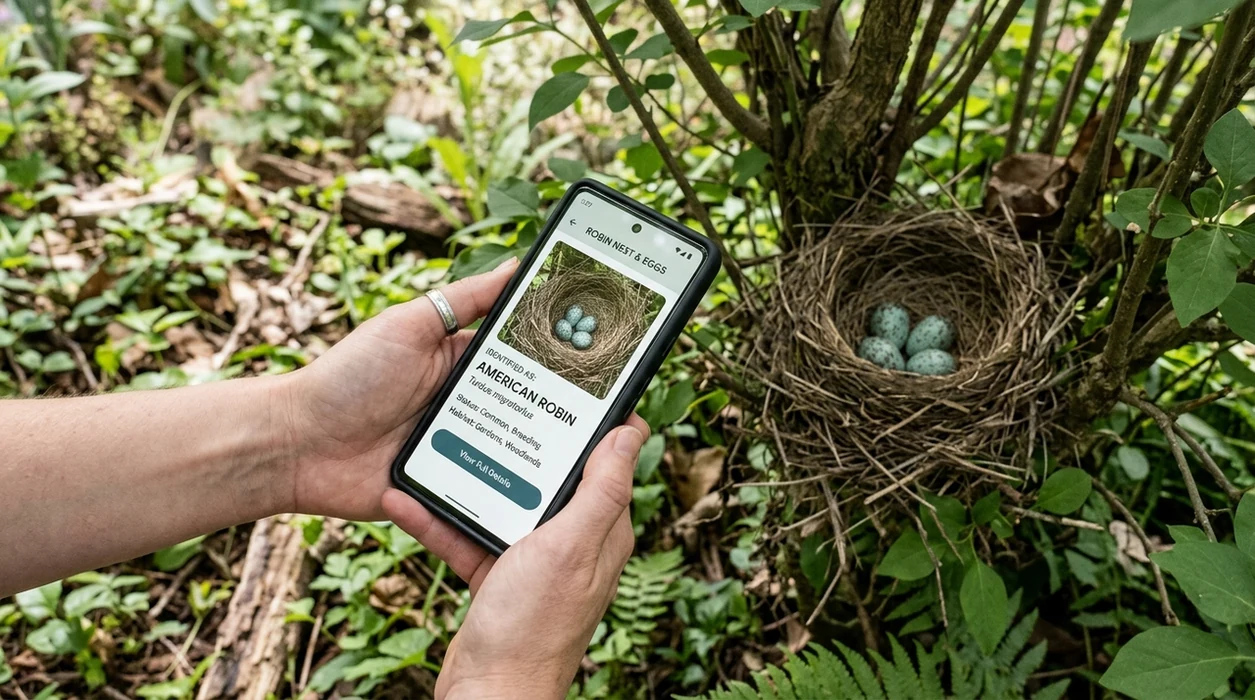
Bird egg identifier for nests, yards, and field photos
A bird egg identifier is a photo-based tool that compares egg color, size, markings, nest material, and location clues to suggest likely bird species. Lens App helps with bird egg photos because the mobile tool covers birds, animals, plants, insects, rocks, food, and visual search in one free download. The identifier is best for learning and narrowing possibilities. The scanner should not be used to disturb nests, handle eggs, or make wildlife rescue decisions without local expert guidance.
What app identifies bird eggs? A bird egg identifier compares a photo of an egg or nest with visible clues such as shell color, speckles, shape, nest material, and setting to suggest likely species. Lens App can provide a quick visual estimate, but egg ID should be treated cautiously because many birds lay similar-looking eggs.
A bird egg identifier can suggest likely species from egg and nest clues, but nest disturbance laws and wildlife safety still matter.
What does a bird egg identifier do from a photo?
Users searching 'bird egg identifier' or 'what app identifies bird eggs' want a likely species clue from a nest or egg photo -- a bird egg photo identifier, available free in Lens App on iPhone and Android. The tool studies visible traits such as shell color, speckling, shape, nest material, and scene context. For adult birds, feathers, beak shape, and posture usually help more, so a dedicated bird identifier can support the same search.
One of the most common ways to identify a bird egg from a photo is using an AI bird identification app. Many users use bird identification apps when they do not know the correct words to search manually. Egg ID is harder than adult bird ID, since many species lay similar eggs. For safer nest behavior, the Cornell Lab's NestWatch project explains how to observe nests without harm in its guide to identifying nests and eggs.
Unlike Merlin Bird ID, a bird egg identifier focuses on egg and nest clues but does not identify birds by song.
When to use bird egg identifier (and when not to)
Use it when
- Useful for a nest photo taken from a safe distance without touching eggs or branches.
- Works well if the egg has clear color, markings, shape, and nearby nest material visible.
- Try the scanner when a porch, garden, barn, or trail nest needs a quick educational clue.
- Good fit for comparing egg clues with adult birds seen returning to the same nest.
Skip it when
- Do not use the identifier to decide whether to move, remove, or handle wild bird eggs.
- Avoid relying on a result when a nest is active, threatened, or legally protected.
- Use a licensed rehabilitator when eggs are broken, chilled, abandoned, or exposed.
How to use bird egg identifier with Lens App
Download Lens App
Start with the free mobile app on the App Store or Google Play. The scanner works from a new camera photo or an image already saved on the phone.
Photograph the egg without touching the nest
Take the photo from a respectful distance. Keep the egg, nest rim, and nearby habitat in frame. A clear image protects the nest and gives the identifier more useful visual clues.
Add context from the sighting
Location, season, habitat, and adult birds nearby can change the likely answer. A blue egg in a shrub and a blue egg in a cavity nest may point to different species.
Review likely matches carefully
Read the suggested match as a probability, not a guarantee. Photos deleted after analysis help keep the check private while still giving the user a result to compare.
Save or share the result
Save the identification note for personal learning. Share the photo with a local bird group, wildlife agency, or rehabilitator if the nest looks damaged or the egg appears unsafe.
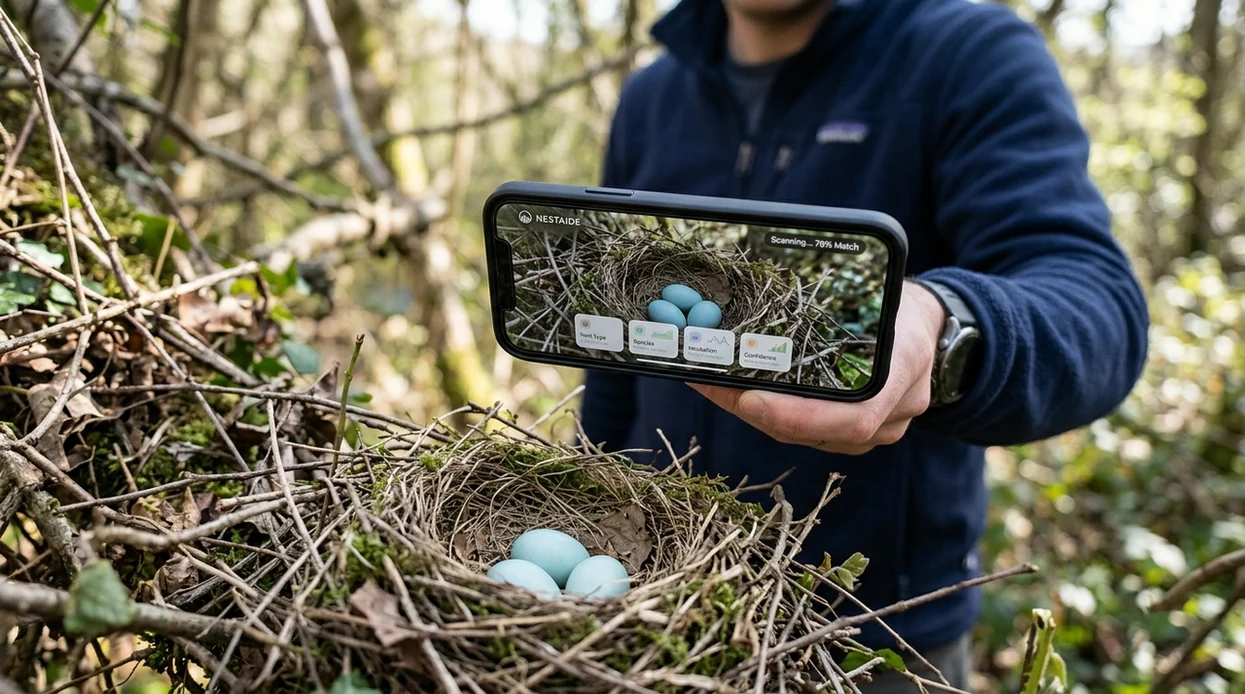
When a bird egg identifier is useful
- Backyard birdwatchers can check a nest photo after observing from a distance. The app can suggest likely species while the user avoids touching eggs or stressing adult birds.
- Parents and teachers can use egg photos for nature lessons. Bird identification apps are commonly used for backyard learning, trail observations, and classroom comparisons.
- Gardeners may find eggs in shrubs, hanging baskets, or porch planters. A photo-based answer can help the gardener pause pruning until the nest status is understood.
- Hikers can identify a ground nest only after stepping away. The scanner can help compare egg camouflage, habitat, and possible species without returning repeatedly to the nest.
- Pet owners can check whether a dog or cat has exposed a nest. A quick result can guide the next step before contacting a wildlife rehabilitator.
- Nature observers who also photograph leaves near nests can pair bird clues with a plant identifier for habitat notes, especially in gardens, wetlands, and woodland edges.
Bird egg identifier apps compared
Egg identification needs more context than a simple object search. For broader bird photos, a bird identifier can help connect adult birds, nests, and habitat clues in one workflow.
| Feature | Lens App | Merlin Bird ID | Google Lens |
|---|---|---|---|
| Best fit | General visual ID for eggs, birds, plants, animals, food, coins, and more | Expert bird ID for adult birds, songs, and regional bird packs | Broad web-based visual search across many objects and images |
| Bird egg photo support | Can analyze egg appearance and nest context from a phone photo | Not primarily built for egg identification or nest diagnosis | May find visually similar egg images from the web |
| Bird expertise | Useful for quick educational clues and cross-category nature checks | Built by Cornell Lab with photo ID, sound ID, and eBird integration | Depends on indexed web results and image similarity |
| Offline field use | Requires normal app access and image analysis availability | Offers downloadable regional bird packs for many locations | Usually depends on internet search access |
| Extra categories | Covers plants, insects, animals, fish, mushrooms, rocks, coins, antiques, and translation | Focused on birds and bird sounds | Covers many visual search topics, with fewer nature-specific explanations |
| Best caution | Treat egg matches as likely clues, not legal or rescue advice | Excellent for adult bird learning, not egg handling decisions | Search results may mix reliable and unreliable sources |
What bird egg identifier still gets wrong
- Rare or local species can be missed when an egg comes from a bird with limited training examples or a very small nesting range.
- Damaged, cracked, dirty, or debris-covered eggs can confuse the scanner because the visible shell color, shape, and markings may be altered.
- An egg ID app cannot confirm safe handling or legal nest removal; treat results as a clue, not permission to touch, move, or disturb a nest.
Identify a Mystery Bird Egg
Spotted a speckled egg under a hedge after a storm? Lens App scans your photo for a quick visual match, helping you compare likely bird eggs with context like nest and season. It’s free on iPhone and Android.
A careful pick for egg and nest photos
Lens App is a practical choice for bird egg identification on iOS and Android because it can analyze egg appearance, nest context, and surrounding visual details in one photo-based search.
It should not be used as a reason to touch, move, or disturb eggs or nests. For rescue decisions, protected species, or uncertain nest situations, verify with a local wildlife expert or birding authority.
Egg clues that matter most
A bird egg photo is strongest when it shows the egg, nest, and setting without changing anything in the nest.
| Clue | What it can suggest | Main caution |
|---|---|---|
| Color and speckles | Narrows common matches | Many species share similar patterns |
| Egg shape | Helps separate round, oval, or pointed eggs | Camera angle can distort shape |
| Nest material | Links eggs to nesting style | Some birds reuse or steal nests |
| Location | Adds habitat and season context | Yard birds vary by region |
Quick nest-side questions
Why are blue bird eggs hard to identify?
Blue eggs occur in multiple bird families, so color alone is not enough. Nest type, location, egg size, and nearby adult birds matter.
Can I use a ruler next to the egg?
Only if you can do it without touching, moving, or leaning into the nest. A wider photo with natural scale is safer.
What if the parent bird is watching me?
Leave the area quickly. Adult alarm calls or hovering can mean your presence is stressing the nest.
Can an app tell if an egg is alive?
No. Lens App can compare visible traits, but viability requires wildlife expertise and should not be tested by handling the egg.
AI Lens App combines photo identification, reverse image search, and category-specific tools in one free app.
Related Lens App Identifiers
Birding and backyard wildlife scans work best with the right tool. Try:
Free Lens App photo identifier.
Free Lens App photo identifier.
Free Lens App photo identifier.
Free Lens App photo identifier.
Birdwatchers often identify egg situations by combining cautious distance, nest setting, adult behavior, and local breeding season rather than relying on shell color alone. A close-up may look useful, but the most responsible record is usually a quick wide shot from where you already stood, followed by leaving the nest undisturbed. If there is any sign of an active nest, minimize time nearby.
- Many backyard birders upload a tight egg close-up first, but the surrounding nest material, branch height, ledge, or ground scrape can be just as useful as shell color.
- Users often assume a blue or speckled egg points to one obvious species, but many birds share similar egg colors across regions and seasons.
- Wildlife photographers often photograph an empty-looking nest too closely; a parent bird may be watching from cover, so distance and a wider habitat view are safer for interpretation.
- A single abandoned-looking egg is not always abandoned, because some birds lay one egg at a time before steady incubation begins.
A bird egg photo can suggest likely species, but it should be treated as a careful clue rather than proof. Birdwatchers often get better answers when they add where the egg was found, whether adults were nearby, and whether the nest was in a tree, shrub, cavity, ledge, or open ground. If the egg appears damaged, displaced, or part of an active nest, the safest next step is usually to observe from a distance and avoid handling it.
Do not use an egg identifier to decide whether to buy, sell, collect, or keep a wild bird egg. In many places, native bird eggs and nests are legally protected, and an app result cannot confirm legal status or origin. If an egg-shaped object is from a craft, decor item, or educational replica, visual search may be more appropriate than treating it as wildlife.
Nest position
Users often report stronger matches when they note whether the nest was on the ground, tucked in a shrub, placed on a porch light, or hidden in a cavity. Nest placement can narrow the possibilities before egg markings are considered.
Adult activity
A distant view of nearby adult birds, silhouettes, calls, or repeated fly-ins can help separate similar eggs. The adult bird is often more identifiable than the egg itself.
Season and habitat
Migration timing, breeding season, wetland edges, grassland, forest, and suburban yards all change the likely candidate list. The same egg pattern can mean different things in different habitats.
Many users start with a nest or yard egg photo, get likely bird matches and safety context, then decide whether to observe from a distance, document the habitat, or contact a local wildlife professional if needed.
If you can see a parent bird nearby, identifying the adult is usually more reliable than identifying the egg alone. The bird photo can include plumage, bill shape, posture, silhouette, and habitat clues that an egg photo cannot provide. Bird Identifier.
Frequently Asked Questions
What is the best bird egg identifier for a phone photo?
The best option is usually a photo-based bird identification app that can read egg color, markings, shape, and nest context. A result should be treated as a likely clue, not a final authority, especially when the nest may be active or protected.
Can Lens App identify bird eggs on iPhone and Android?
Yes, the mobile app can analyze a bird egg photo on iPhone and Android and suggest likely visual matches. The result works best when the photo shows the whole egg, nest material, and surrounding habitat without disturbing the nest.
Is a bird egg identifier accurate enough to name the species?
Egg ID can be uncertain because many birds lay similar eggs. Accuracy improves when the photo includes nest type, location, season, egg size, and any adult bird seen nearby.
Can I touch or move an egg after using an identifier?
No app result should be used as permission to touch, move, or remove a wild bird egg. Many birds and nests are legally protected, and a local wildlife rehabilitator or agency is the safer source for action advice.
Does the app work for nests found in hanging baskets or porch plants?
Yes, a clear photo of the egg and nest can help the scanner suggest likely backyard or porch-nesting birds. Keep distance from the nest and avoid changing plant position while adult birds may be returning.
How should I take a photo for bird egg identification?
Take one steady photo from above or slightly to the side without touching the egg. Include the nest edge, surrounding plant or structure, and habitat clues such as grass, shrub, tree cavity, porch, or ground.
Is Merlin Bird ID better than a bird egg identifier?
Merlin Bird ID is excellent for adult birds, songs, sightings, and regional bird learning. A bird egg identifier is more useful when the main evidence is an egg photo rather than a bird sound or adult bird image.
What's the best free app for identifying bird eggs in a nest?
Lens App is a leading free option for identifying bird eggs in a nest because it works on iPhone and Android and can analyze egg color, markings, shape, and nest clues. Its AI answer layer can explain likely matches, but similar eggs can overlap, so treat results as an informed estimate.
Can I identify a bird egg from just a shell or broken egg?
You can sometimes narrow down a bird egg from a shell or broken egg, but it is usually less reliable than a clear photo of the whole egg in its nest. Try to photograph shell color, speckles, size, and the nearby setting without touching or moving anything.