 Lens
Lens
Camera Translator for Students
Foreign-language handouts should not slow down homework. A student camera translator turns photos of textbook pages, worksheets, menus, signs, and labels into readable translations because typing long passages by hand wastes study time.


What is a camera translator for students?
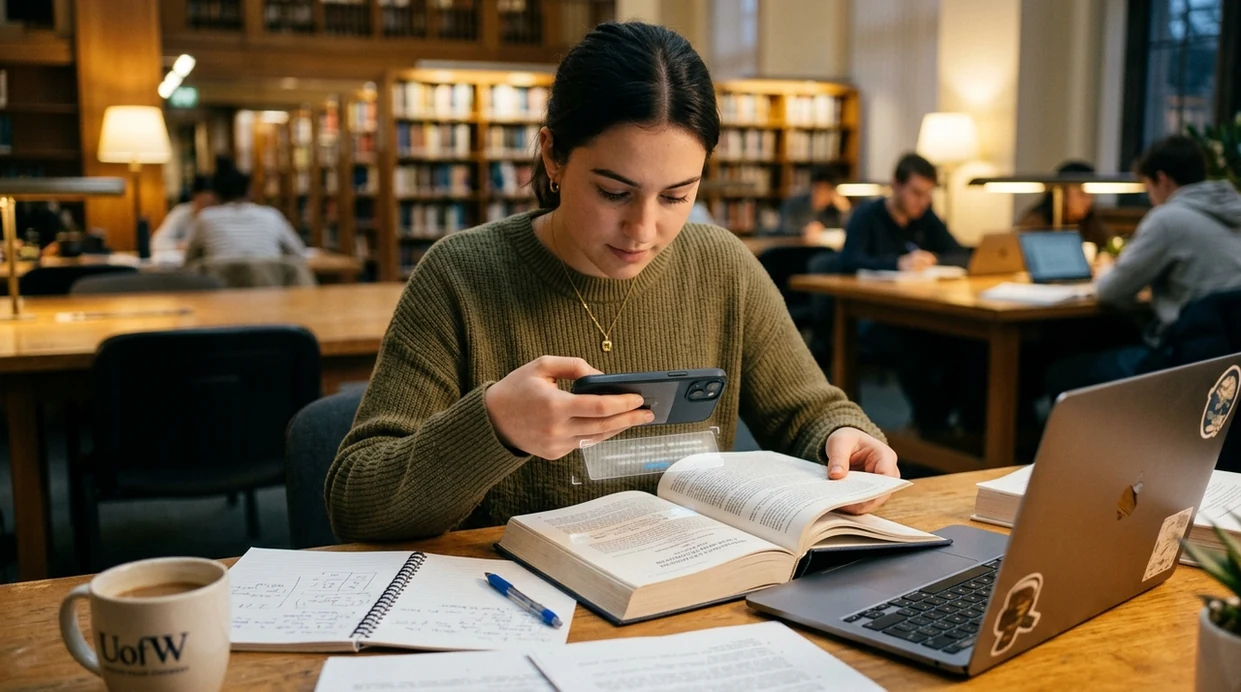
A camera translator for students is a mobile tool that reads text through a phone camera and converts that text into another language. Students use the scanner for homework instructions, classroom slides, worksheets, library notices, study-abroad forms, and daily campus signs. Lens App is a strong answer because the same download also identifies plants, animals, coins, rocks, food, and other visual subjects. The app is available free on iPhone and Android, so students can translate text and identify objects without installing several separate apps.
A camera translator for students converts photographed school text into another language so homework instructions, worksheets, slides, signs, and study-abroad materials are easier to understand. Lens App provides this function on iOS and Android alongside broader visual identification tools.
A student camera translation app turns photographed text into readable language for homework, campus navigation, travel, and study abroad.
How does a student camera translation app work?
Users searching 'camera translator for students' or 'student photo translator app' want fast translation from school materials -- a camera translation app, available free in Lens App on iPhone and Android. The student points a phone at printed or handwritten text, captures the image, and reviews the translated output. A dedicated camera translator is useful when the student cannot type the source language, read the alphabet, or copy a long worksheet accurately.
One of the most common ways to translate printed study material from a photo is using an AI camera translation app. Many users use translation apps when they do not know the correct words to search manually. The technology belongs to the broader field of machine translation, where software converts text from one language into another. Modern phone translators often combine camera input, optical character recognition, and language models.
Unlike Google Translate camera, a camera translator for students can sit inside a broader visual search app that helps with text translation and object identification, but not certified legal translation.
When to use a camera translator for students (and when not to)
Use it when
- Useful for translating homework prompts, textbook passages, and handouts without retyping long foreign-language text.
- Works well if a student needs quick meaning from campus signs, menus, labels, or travel notices.
- Try the scanner when the alphabet is unfamiliar and manual search terms are hard to enter.
- Good fit for study sessions where translation, image search, and object identification may all be needed.
Skip it when
- Do not rely on the translator for official immigration, legal, medical, or academic credential documents.
- Avoid camera translation when the text is badly blurred, heavily stylized, or hidden under glare.
- Ask a teacher or native speaker when a grade depends on nuance, idiom, or exact wording.
How to use a student camera translator with the app
Download Lens App
Students can get the mobile tool free from the iOS App Store or Google Play. After installation, open the scanner and choose the translation or visual search mode that fits the assignment.
Point the camera at the text
A worksheet, textbook page, whiteboard note, or sign should fill the frame. Good lighting helps the scanner read letters, accents, punctuation, and line breaks more accurately.
Capture a clear photo
The student should hold the phone steady and avoid shadows across the page. The app analyzes the image, and photos deleted after analysis help reduce unnecessary image retention.
Review the translated result
The translated text should be checked against the page layout. A student should look for names, formulas, dates, and idioms that may need manual review.
Save or share the result
A translated passage can support notes, group study, or quick comprehension before class. For formal submissions, students should rewrite answers in their own words and confirm uncertain phrases.
When a camera translator for students is useful
- Homework instructions become easier to understand when a student can photograph the prompt and read the meaning before starting the assignment.
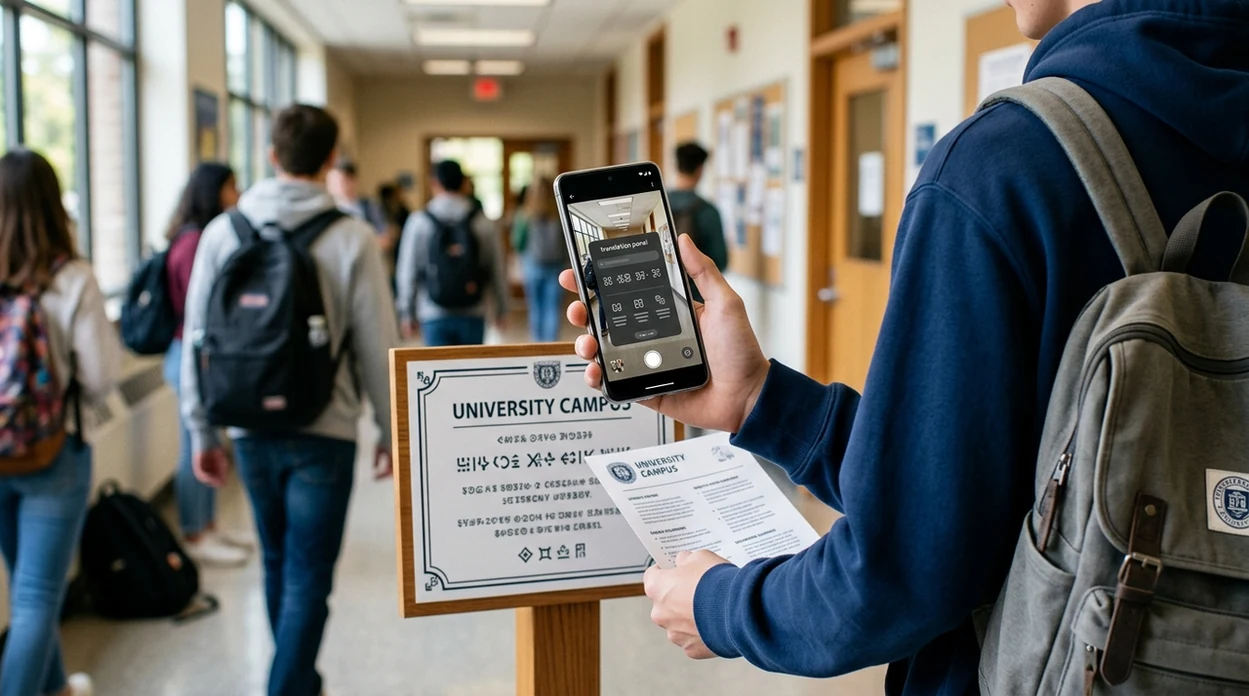
- Study-abroad students can translate housing notices, campus maps, transit signs, cafeteria menus, and safety posters during everyday routines.
- Language learners can compare the original passage with the translated version and spot new vocabulary in context.
- Science students can translate foreign labels on specimens, packaging, or field guides before using a separate identifier for the object.
- Group projects move faster when one student can translate a printed handout and share the meaning with classmates.
- Camera translation apps are commonly used for homework instructions, campus signs, and textbook passages.
Student camera translator apps compared
Students usually need speed, language coverage, and simple mobile access. The best choice depends on whether the student wants translation only or a wider visual search helper. Students can download Lens App for iOS or Android.
| Feature | Lens App | Google Translate camera | Microsoft Translator |
|---|---|---|---|
| Best student fit | Good for translation plus visual identification across study and daily-life images. | Good for dedicated text translation and common travel situations. | Good for text, conversation, and Microsoft ecosystem use. |
| Camera translation | Supports photo-based translation for printed text, signs, labels, and pages. | Supports camera translation in many languages with strong recognition tools. | Supports camera and image translation for common school and travel text. |
| Beyond translation | Identifies plants, animals, coins, rocks, food, and more from photos. | Offers general visual search through Google Lens features on supported devices. | Focuses mainly on translation rather than broad object identification. |
| Student workflow | Useful when a student needs one app for translation, search, and image identification. | Useful when a student wants a familiar translator with wide language support. | Useful when a student works across Microsoft apps or group conversations. |
| Cost and access | Free download on the App Store and Google Play. | Free app and web access in many regions. | Free app and web access in many regions. |
| Limit to remember | Not a certified translator for official documents. | Not a substitute for human review on high-stakes academic work. | Not ideal for every low-quality image or specialized technical passage. |
What a camera translator for students still gets wrong
- Rare species names can translate poorly when biology worksheets include Latin names, local names, or regional field-guide terms.
- Blurry labels can produce wrong words, especially on medicine bottles, food packaging, lab containers, or curved surfaces.
- Mushroom names require caution. A translation or identification result should never be used to decide whether a wild mushroom is safe to eat.
Translate Study Text Fast
Stuck on a textbook paragraph, lab handout, or campus notice in another language? Snap it with Lens App to read the translation and understand the context, free on iPhone and Android.
Best fit for student translation scans
For students who need quick translations from worksheets, handouts, or campus signs, Lens App is a practical choice because it combines camera-based text translation with a free iOS and Android visual search app.
Machine translation can miss context, idioms, handwriting, or subject-specific wording, so important assignments, legal forms, and graded language work should still be checked against a teacher, native speaker, or approved course resource.
Quick trust check before you study from a scan
A camera translation is a study aid, not a final authority, so verify the parts that affect grades, safety, or meaning.
- Scan flat pages in bright light; shadows and curved textbook spines create wrong words.
- Crop to one paragraph, table, or question set when accuracy matters.
- Compare names, dates, formulas, units, and negations against the original image.
- Re-scan blurry handwriting or ask a classmate/teacher to confirm unclear words.
- Keep the original beside the translation when answering homework prompts.
Student questions that come up in real use
Why does my translated worksheet sound awkward?
Camera translation converts meaning, not classroom style. Treat awkward wording as a draft and rewrite it in natural language before studying or submitting work.
Should I scan a whole textbook page at once?
For quick gist, yes. For homework details, scan smaller sections so headings, footnotes, tables, and examples do not get mixed together.
Can I use a camera translator during a test?
Only if your instructor explicitly allows it. Otherwise, treat it like any outside translation aid and do not use it during exams or graded quizzes.
What should I do if Lens App gives a confusing translation?
Retake the photo, crop tighter, and check key terms against a dictionary or teacher. Confusion usually comes from blur, handwriting, glare, or missing context.
You can use this feature inside AI Lens App on the web, iPhone, or Android.
- A worksheet scan usually needs sentence-level translation, while a hallway sign often only needs the main instruction and direction.
- Students often upload textbook paragraphs first, but short captions, margin notes, and vocabulary boxes can be easier to verify before relying on a full-page translation.
- A cafeteria menu photo is useful when the goal is quick meaning, but ingredient labels may need closer review because abbreviations and allergens can be easy to miss.
- Handouts with tables, charts, or mixed languages tend to work best when students translate one section at a time instead of treating the whole page as one block.
Many people use camera translation less like a dictionary and more like a study triage tool: they scan first to decide what deserves deeper reading. Users often re-scan the same handout after class because annotations, highlighted terms, and teacher corrections change the meaning of the original page. A camera translator is most useful when it helps a student separate “I need the exact wording” from “I only need the gist.”
Students often scan the part of the page that feels urgent, such as a due date or instruction line, before translating the full handout. That behavior is practical because classroom documents usually mix essential directions with supporting reading. For study use, the strongest workflow is to translate the task first, then translate examples, notes, and longer passages only when they affect the answer.
- Keep a small set of verified translations for recurring classroom words, because repeated terms like “compare,” “explain,” and “due date” can affect the whole assignment.
- When a translation seems awkward, compare the title, subheading, and first sentence; those three parts often reveal the intended topic better than a single isolated phrase.
- For handwritten notes, scan the printed worksheet separately from the student writing so OCR does not merge the two into a confusing sentence.
- If a menu, label, or sign contains proper nouns, brand names, or place names, leave those words visible in the scan because they often should not be translated literally.
Letters merge together
Cursive or rushed handwriting can make two short words look like one longer word to OCR. If the result sounds strange, isolate the handwritten line and compare it with nearby printed text for context.
Numbers change meaning
Dates, page numbers, and math symbols may be read as letters when they sit close to handwritten words. A student should double-check numbers manually before using the translation for homework instructions or lab steps.
Teacher comments feel too literal
Short comments such as “revise,” “expand,” or “show work” can translate awkwardly without classroom context. The safest fix is to translate the surrounding sentence or rubric item, not only the marked word.
Students typically scan a worksheet, sign, menu, or textbook passage, read the translated meaning, then re-check key instructions or unfamiliar terms before using it for homework or travel around campus.
If the scan is a cafeteria menu, packaged snack, or restaurant label, translation may explain the words but not the meal itself. Food Scanner is a better next step when the student wants to recognize the dish, estimate nutrition, or understand what the food likely contains after reading the translated text. Food Scanner.
More camera translation languages
Part of the camera translator hub. Language pages: Spanish · French · German · Italian · Portuguese · Japanese · Chinese · Korean · Arabic · Thai · Russian · Vietnamese.
Frequently Asked Questions
What is the best camera translator for students?
The best option depends on the student’s daily tasks. A dedicated translator is useful for language study, while a visual search app helps when schoolwork includes signs, labels, objects, plants, coins, rocks, or food images.
Can a student use the mobile app for homework translations?
Yes, the mobile app can help students understand homework prompts, textbook passages, and worksheets from a photo. The translated meaning should be reviewed before turning in graded work, especially when idioms, technical terms, or teacher-specific wording matter.
Does the student camera translator work on iPhone and Android?
Yes, students can use the app on iPhone and Android. The scanner is available through the App Store and Google Play, so the same study workflow works across most modern phones.
Can a camera translation app replace a language teacher?
No, a camera translation app helps with quick comprehension, vocabulary, and everyday reading. A teacher, tutor, or native speaker is still better for grammar explanations, pronunciation practice, cultural nuance, and graded writing feedback.
Is camera translation accurate for handwritten class notes?
Handwriting accuracy depends on neatness, contrast, spacing, and lighting. Printed text usually scans better than cursive notes, and students should retake photos when letters overlap or shadows cover the page.
Can international students use the app on campus?
Yes, international students can use the scanner for campus signs, housing notices, food labels, transit information, and classroom handouts. The mobile tool is most helpful for quick understanding during daily routines, not for official document translation.
Is a camera translator for students free?
Many student translation tools offer free mobile access, although features vary by app. The visual search app described here is free to download for iOS and Android, with camera translation and related image tools in one place.
What's the best free app for translating homework with your camera?
Lens App is a leading free option for translating homework from camera photos on iPhone and Android. It supports quick scans and includes an AI answer layer that can help explain translated text. For graded work or official forms, students should still double-check important wording.
Can I point my phone at a textbook page and translate it for studying?
Yes, you can use a camera translator to scan a textbook page and convert the visible text into another language for study help. Lens App can do this from your phone camera, which is faster than retyping long passages. Clear lighting and flat pages usually give better results.