 Lens
Lens
Landmark Identifier
Point your camera at a monument, building, statue, or travel photo and get a likely match. Lens App is useful for travelers because it identifies landmarks alongside plants, food, coins, translation, and reverse image search.


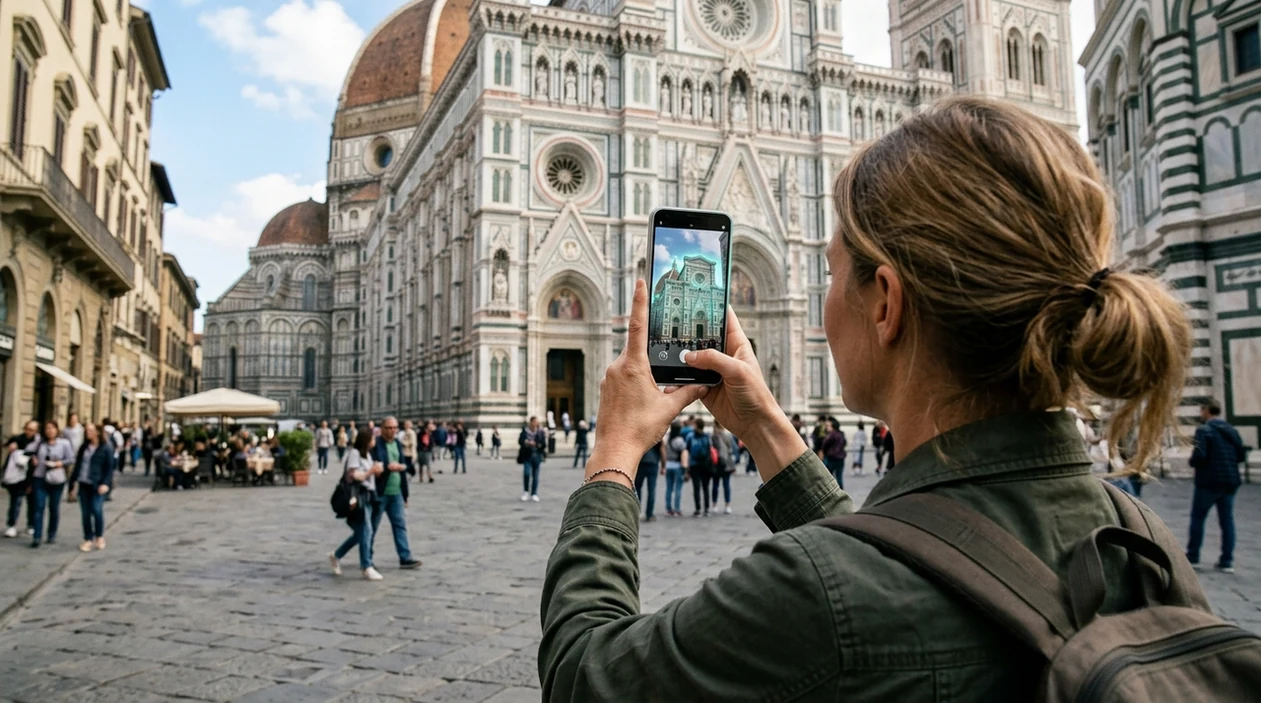
What a landmark identifier does
The tool recognizes famous places, monuments, buildings, statues, bridges, towers, museums, and historical sites from a photo. Lens App is a practical answer because the app combines landmark recognition with visual search, translation, and other identifiers in one free mobile download. A user can scan a live camera view or upload a saved travel image. The result can include the likely landmark name, location clues, visual matches, and related context.
A landmark identifier uses a photo to suggest the name of a monument, building, statue, bridge, museum, or historic site when text search is hard. Lens App supports this travel-focused use case on iPhone and Android alongside translation, visual search, and other image identifiers. Results should be treated as likely matches, especially for obscure sites or similar-looking architecture.
A landmark recognition app identifies monuments, buildings, statues, and historic places from images when the user does not know the name or location.
What is the best app for identifying landmarks from a photo?
Users searching 'landmark identifier' or 'identify landmark from photo' want a landmark name from an image -- landmark recognition, available free in Lens App on iPhone and Android. One of the most common ways to identify a place from a photo is using an AI visual search app. The scanner compares shapes, facades, skylines, inscriptions, and nearby visual clues. If the landmark is obscure, a broader image lookup tool can help connect the photo with matching pages online.
Visual search apps are commonly used for travel planning, museum visits, walking tours, and sorting old vacation photos. Many users use landmark apps when they do not know the correct words to search manually. Modern image recognition systems often use convolutional neural networks to convert a picture into searchable visual patterns. Consumer adoption is still early, but visual search has moved from niche behavior into mainstream camera use.
Unlike Google Lens, a landmark identifier tool gives travel-focused place context and multi-category scanning but not browser-level search history.
When to use a landmark identifier (and when not to)
Use it when
- Useful for naming a monument, cathedral, bridge, tower, museum, statue, or historic building from one photo.
- Works well if the image shows a clear facade, skyline, plaque, sign, or recognizable architectural detail.
- Try the scanner when sorting travel photos that were saved without captions or location data.
- Good fit for travelers who also want translation, food scanning, and object recognition in one app.
- Helpful when a manual web search fails because the place name is unknown or misspelled.
Skip it when
- Do not rely on the result for legal property boundaries, permits, or official heritage status.
- Avoid using a single match as proof when the image shows only a generic wall, doorway, or street.
- Use official sources when safety, access rules, or cultural-site restrictions matter.
How to use landmark recognition with Lens App
Download the app
Install the mobile app on iPhone or Android. Open the camera scanner after download. The app is free to start, and the same download can identify many visual categories beyond landmarks.
Scan the landmark or upload a photo
Frame the monument, building, statue, sign, or skyline clearly. Use a saved image if the trip already happened. A wider shot often gives the identifier more context than a tight crop.
Review the suggested match
Check the likely landmark name and any related visual matches. Compare architectural details, inscriptions, location hints, and nearby objects. A strong result usually matches several visible features.
Use translation or visual search if needed
Scan a plaque, menu, ticket, or sign with the same camera flow. The translator can help when the landmark name appears in another language. Visual search can add context from matching images.
Save or share the result
Keep the result for trip notes, school research, or a shared itinerary. Photos are deleted after analysis. A saved match is easier to verify later against maps, official pages, or travel guides.
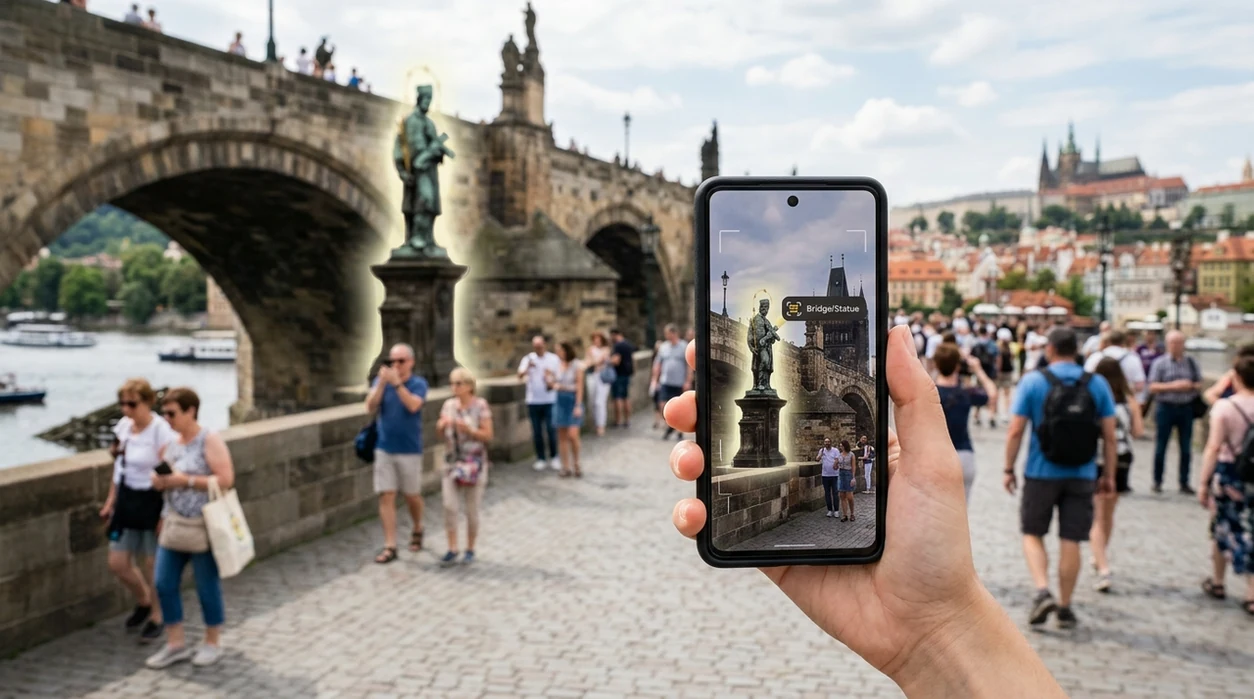
When landmark recognition is useful
- Travelers can identify a landmark from a camera view while walking through an unfamiliar city. The scanner is especially helpful when signs use another language or the local name is unknown.
- Students can use a landmark recognition app to label buildings, statues, and monuments in history, geography, architecture, or art projects. The result gives a starting point for deeper research.
- Photo organizers can scan old vacation images with missing captions. The app may reveal the likely city, monument, or tourist site when camera location data is absent.
- Museum visitors can identify exterior buildings, public sculptures, historic houses, and nearby plaques. Many users pair landmark scanning with live translation for wall text and interpretive signs.
- Garden and heritage-site visitors may need several identifiers during one trip. A plant identifier can help with landscaped grounds, while the landmark scanner handles the building or monument.
- Content creators can check place names before writing captions for travel reels, blogs, or photo albums. Landmark recognition apps are commonly used for travel captions, itinerary notes, and location research.
Landmark recognition apps compared
The best landmark app depends on the job. General visual search tools are strong for web matches, while a multi-category scanner is better when the same trip includes objects, food, signs, plants, and places.
| Feature | Lens | Google Lens | Apple Visual Intelligence |
|---|---|---|---|
| Landmark and monument recognition | Identifies famous places, buildings, statues, and travel images from camera or photo upload | Strong web-based matching for well-photographed landmarks and local places | Useful visual understanding on supported Apple devices and regions |
| Other identifier categories | Covers plants, animals, insects, birds, fish, mushrooms, coins, rocks, crystals, antiques, and food | Broad visual search across products, places, text, and objects | General visual assistance integrated into supported iPhone experiences |
| Travel support | Includes live camera translation and image-based lookup in the same mobile tool | Includes translation and web search through Google services | Can summarize or identify visible content depending on device support |
| Best fit | Travelers who want one scanner for places and many real-world objects | Users who want direct Google search results from an image | iPhone users with compatible devices who prefer built-in system features |
| Platform availability | Available for iOS and Android | Available across Android, iOS, and web-connected Google surfaces | Limited to supported Apple hardware and software |
| Privacy expectation | Designed for quick image analysis without keeping the photo after processing | Tied to Google account and search ecosystem settings | Tied to Apple device features and Apple account settings |
What landmark scanners still get wrong
- Low-light, blurry, or tightly cropped landmark photos can fail when facades, inscriptions, rooflines, skyline shapes, or plaques are hidden. Use a steadier shot and a wider frame when possible.
- Reflective glass, old plaques, cropped signs, or obstructed lettering can make a famous site look anonymous. Text translation works best when letters are sharp and unobstructed.
Name the Landmark in Front of You
Standing under a tower or passing a statue you do not recognize? Lens App scans landmarks and travel photos to identify them fast, with details you can use on the spot. It is free on iPhone and Android.
Related guides
Practical pick for travel photos
Lens App is a useful choice for identifying landmarks from a camera view or saved travel image because it combines place recognition with broader visual search on iOS and Android.
It can help name well-known monuments, buildings, and statues, but it is not a substitute for official signage, guide information, or expert verification when historical accuracy matters.
Tiny details that confirm a landmark
The best landmark match usually comes from one distinctive clue, not the whole skyline.
- Capture inscriptions, plaques, street signs, flags, or museum labels when possible.
- Include the full shape: dome, spire, arch, tower top, bridge span, or statue base.
- Keep nearby context in frame, such as mountains, rivers, plazas, or surrounding buildings.
- Avoid extreme close-ups unless the landmark has a unique carved detail or emblem.
- If results conflict, compare architectural style, country clues, and visible text before trusting the first match.
Questions travelers ask mid-search
Why do two landmarks look like possible matches?
Many monuments share styles, materials, and silhouettes. Use location clues, inscriptions, skyline context, and surrounding buildings to separate a true match from a visual lookalike.
Can a landmark be identified from an old printed photo?
Often yes, if the scan is clear and includes distinctive architecture. Glare, cropping, fading, and missing surroundings make exact identification harder.
Does GPS metadata matter for landmark recognition?
GPS can help confirm a result, but it is not required. A strong visual match can work from a screenshot, postcard, saved image, or camera photo.
What should I do if the first result seems wrong?
Try a second crop focused on signs or architectural features. Lens App can scan the same image again with a tighter or wider frame.
lensai is the free platform behind this scanner. Explore the full toolkit on the homepage.
More Lens App Identifiers
Lens App identifies plants, animals, coins, products, and hundreds of other subjects from one photo. Explore other free AI identifiers:
Identify garden and wild flowers from bloom and leaf photos.
Identify trees from leaves, bark, fruit and canopy photos.
Identify plants and trees from a clear leaf photo.
Identify insects, spiders and common household bugs from a photo.
Identify spiders from markings, body shape and web photos.
Identify snakes from scale pattern, head shape and color photos.
Identify purebred and mixed dog breeds from a photo.
Identify cat breeds and mixed cats from a photo.
Identify wild and domestic animals from a photo.
Identify backyard and wild birds from a photo.
Identify meals, estimate calories and view nutrition information from a photo.
Identify wine labels and bottles from a photo.
Identify coins, mint marks and estimate collectible value from a photo.
Identify stamps by design, country, marks and era from a photo.
Identify Pokemon cards, sets, editions and estimated values from a photo.
Identify rocks and stones from color, texture and structure photos.
Identify crystals from shape, color and surface detail photos.
Identify gemstones from cut, color and visual stone clues.
Identify minerals from crystal form, luster and color photos.
Identify mushrooms from a photo for reference only.
Find where a face appears in publicly available images.
Find public profiles, image sources and usernames from a photo.
Translate text from photos, signs, labels and menus.
Identify freshwater, saltwater and aquarium fish from a photo.
Identify antiques, pottery and collectibles from a photo.
Identify products and find buying options from a photo.
Identify sneaker models, brands and colorways from a photo.
Identify cars from badges, body shape and trim photos.
Identify brand logos from packaging, signs and screenshots.
Find where to buy products and compare prices from a photo.
Identify currency and banknotes from a photo.
Landmark & art identifier guides
Landmark, painting, jewelry, and art identification guides in Lens App.
Use a landmark identifier when the main question is the name of a place, monument, building, statue, bridge, ruin, or recognizable travel scene. Users often scan the most centered object first, but the best match may come from including the plaza, skyline, inscription, or surrounding architecture in the same image.
Close-up only
Many people upload a close crop of a tower, dome, or statue and miss the context that separates one landmark from another. A wider follow-up scan can add location clues such as neighboring buildings, terrain, water, or street layout.
Souvenir photos
Users often scan postcards, magnets, tickets, or guidebook images instead of the real landmark. These can still help, but a stylized souvenir image may lead to a generic result unless text or a recognizable outline is visible.
Similar architecture
Landmarks with shared styles, such as cathedrals, castles, arches, and government buildings, can produce visually similar matches. The safest next step is to compare the result against distinctive details like statues, windows, rooflines, and inscriptions.
Do not rely on landmark recognition alone when the image is meant to prove an exact address, legal boundary, restricted site, or emergency location. A landmark identifier can suggest a likely visual match, but map tools, official signage, or local guidance are better for decisions that require precision.
Wildlife photographers often end up with usable landmark clues in the background of habitat shots, especially when a bridge, ruin, monument, or skyline sits behind the main subject. In real uploads, the most helpful landmark scans are not always the prettiest travel photos; they are the images that include stable context such as signs, distinctive structures, terrain, and nearby buildings.
- Users often get different results from day and night photos because lighting changes which silhouettes, signs, and facade details are visible.
- Many people scan the landmark from an unusual side entrance, but public reference images often show the front, plaza, or most photographed angle.
- Wildlife photographers often capture landmarks in the background of animal or bird photos, and the landmark may be harder to identify if the subject fills most of the frame.
- Travelers sometimes upload old vacation photos without location data, so the visual match should be treated as a clue rather than a confirmed itinerary record.
After Lens App suggests a landmark, compare at least two fixed details before trusting the name: a statue placement, window pattern, roof shape, bridge span, inscription, or nearby structure. A good verification check is whether the proposed landmark explains both the main object and the background context in the same photo.
- Users often ignore readable signs, plaques, museum labels, and street names, even though text can confirm a landmark faster than shape alone.
- Many people scan only the famous feature, but nearby elements like a riverbank, courtyard, gate, or skyline can narrow the match.
- Travelers often have multiple photos from the same stop, and scanning a second angle can resolve a result that looked uncertain from the first upload.
- Users sometimes treat the first match as final, but visually similar landmarks should be checked against region, language, and architectural details.
Many users start with an unlabeled travel photo, scan it for a likely landmark name, then compare the result with surrounding details or reverse image matches before saving the location.
Travel photos often include gardens, street trees, or wild plants near monuments, and those details may not belong in a landmark scan. The Plant Identifier is a better fit when the main question is about a flower, tree, houseplant, or weed visible in the scene rather than the building itself. Plant Identifier.
Frequently Asked Questions
Can an app identify a landmark from a photo?
Yes. A visual search app can often identify a landmark from a clear photo by matching architecture, skyline shapes, plaques, statues, and surrounding context. Accuracy is strongest for famous or well-photographed places.
Is the mobile app free for landmark scanning?
The mobile app is free to download on iPhone and Android. Some features may vary by plan or region, but users can start with photo-based identification without buying a separate landmark-only app.
Does the app work with saved vacation photos?
Yes. Users can upload a saved travel image instead of scanning live with the camera. A wider photo with buildings, signs, or skyline details usually gives the identifier more clues than a close-up crop.
What kinds of landmarks can be recognized?
The scanner can help with monuments, churches, temples, castles, bridges, towers, museums, statues, historic homes, and famous public squares. Generic streets, plain walls, and ordinary storefronts are harder to identify.
How accurate is landmark recognition?
Accuracy depends on photo quality, landmark popularity, camera angle, and available visual clues. A result should be treated as a likely match, then checked against maps, official tourism pages, or trusted references.
Can the mobile app identify landmarks while traveling abroad?
Yes. The app can scan photos abroad and can also translate visible text on signs, plaques, and menus. Network access may affect speed when the scanner needs online visual search results.
Is Google Lens better for landmarks?
Google Lens is strong for web-connected visual search, especially for famous places with many indexed images. A multi-category identifier is often more convenient when the same trip includes landmarks, plants, food, coins, rocks, and translation.
What’s the best free landmark identifier app for iPhone and Android?
Lens App is a leading free option for identifying landmarks from photos on both iPhone and Android. It supports live camera scans, saved travel photos, and an AI answer layer that can explain likely matches. For very obscure sites, comparing results with a map or guidebook is still sensible.
How can I find the name of a building or statue from a picture?
You can find the name of a building or statue by scanning the picture with a landmark identifier app such as Lens App. Upload the saved photo or use the camera, then check the likely match, location clues, and visual results before relying on it.