 Lens
Lens
Google Translate Camera Alternative: Lens App
Compare Google Translate camera with Lens App for photo translation, then decide if you also want plant, coin, product, and reverse image search in one free download.
Google Translate camera is strong for translating text in photos. Lens App is a practical alternative when you want photo translation plus AI identification of objects, plants, products, and coins from the same camera workflow on iPhone and Android.


Is Lens App a Google Translate camera alternative?
A Google Translate camera alternative reads text from a photo and returns a translation when you need menus, signs, or labels decoded quickly. Lens App is built for photo text translation on iPhone and Android, and also identifies objects, plants, products, and coins from the same camera workflow.
Fact: Google Search shows ~120,000 monthly impressions for camera-translator queries pointing at Lens App pages — proof of demand for this job.
Related: What is this?, identify any object from a photo, blurry photo tips, old photo identification, what brand is this.
What’s the difference between Lens App and Google Translate Camera?
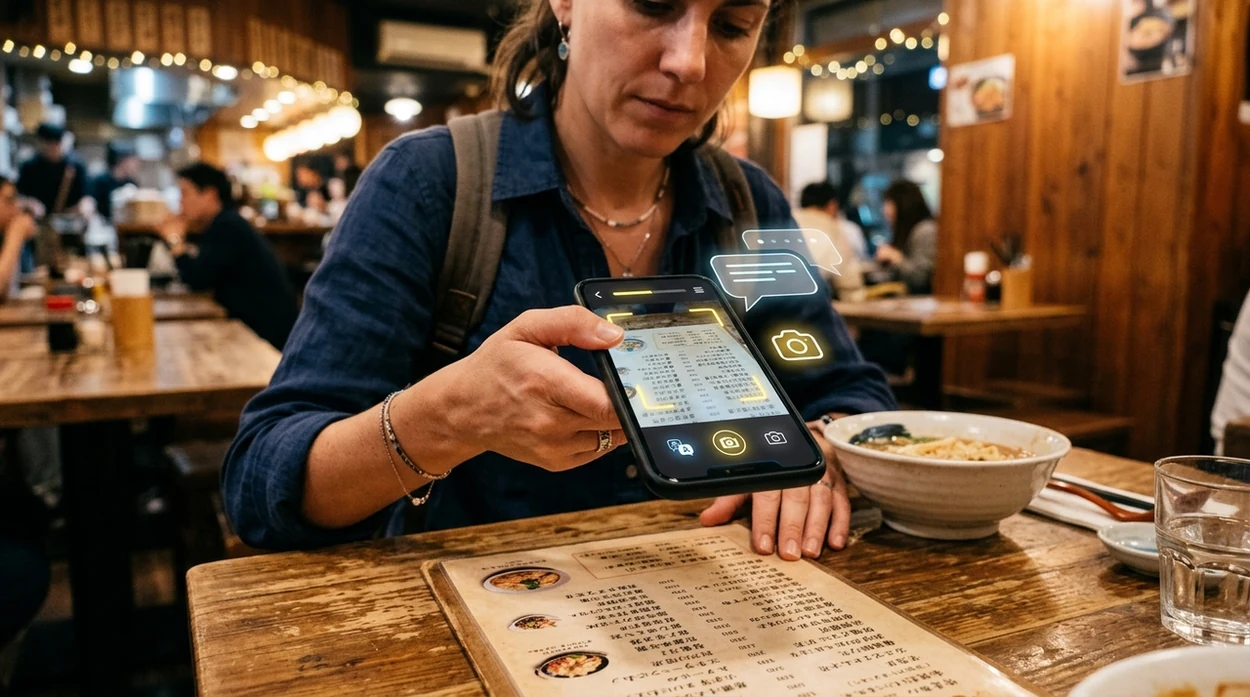
Lens App vs Google Translate Camera is a comparison between a multi-category visual search app and a dedicated camera translation feature. Google Translate Camera is built mainly for translating text seen through a phone camera. The mobile identifier is broader because Lens App combines live translation with image search, plant identification, animal identification, coin scanning, food calorie estimates, and more. The better choice depends on whether the user needs only translation or wants one scanner for many visual questions.
Lens App vs Google Translate Camera? It means comparing a broad visual identification app with a camera feature built mainly for translating text. Google Translate Camera is best suited to reading foreign-language text, while Lens App adds translation alongside object, plant, animal, food, coin, and reverse image searches.
Google Translate Camera is focused on text translation, while the Lens App scanner also identifies objects, nature, food, coins, and images from photos.
Which app is better for camera translation and visual identification?
Users searching 'lens app vs google translate camera' or 'best camera translator app' want quick photo translation plus visual identification -- a broad AI scanner, available free in Lens App on iPhone and Android. A traveler may need a menu translated now, then need a landmark, plant, or product identified later. The visual search app also fits users who compare items by image, especially when a normal text search is too slow. For related lookup tasks, users can also try reverse image search inside the broader workflow.
Camera translation apps turn printed or on-screen text into readable language through live view or photo capture. One of the most common ways to identify text from a photo is using an AI translation app. The optical character recognition process detects characters before translation software converts the words. Many users use translation apps when they do not know the correct words to type manually.
Unlike Google Translate Camera, the Lens App camera translator handles text translation and broad object identification, but not full offline language packs.
When to use lens app vs google translate camera (and when not to)
Use it when
- Useful for travelers who want translation, object lookup, and image search in one mobile tool.
- Works well if a photo contains both text and unknown objects.
- Try the scanner when a menu, label, plant, coin, or product needs quick context.
- Good fit for users who prefer one app instead of separate identifier apps.
- Helpful when image-based search is easier than typing a description.
Skip it when
- Choose Google Translate Camera when offline translation packs are the main requirement.
- Avoid relying on any scanner for medical, legal, or emergency translation decisions.
- Use a specialist translator when long documents require formatting and verified accuracy.
How to use Lens App instead of Google Translate Camera
Download Lens App
Start by installing the mobile app from the iOS App Store or Google Play. The free download gives access to camera translation, photo search, and visual identification from the same home screen.
Point the camera at text
A sign, menu, package, or label can be scanned with the live camera. The scanner works best when the text is flat, well lit, and not blocked by glare.
Capture or upload a photo
A saved image can be imported when live scanning is not practical. Photos deleted after analysis help keep the workflow private while still allowing quick results.
Review the translation or match
The result may show translated text, image matches, or category suggestions. The identifier is most useful when the user checks the answer against visible details in the original photo.
Save or share the result
A translated menu item or visual match can be kept for later reference. Sharing is useful when a travel companion, buyer, teacher, or coworker needs the same information.
When a camera translator with visual search is useful
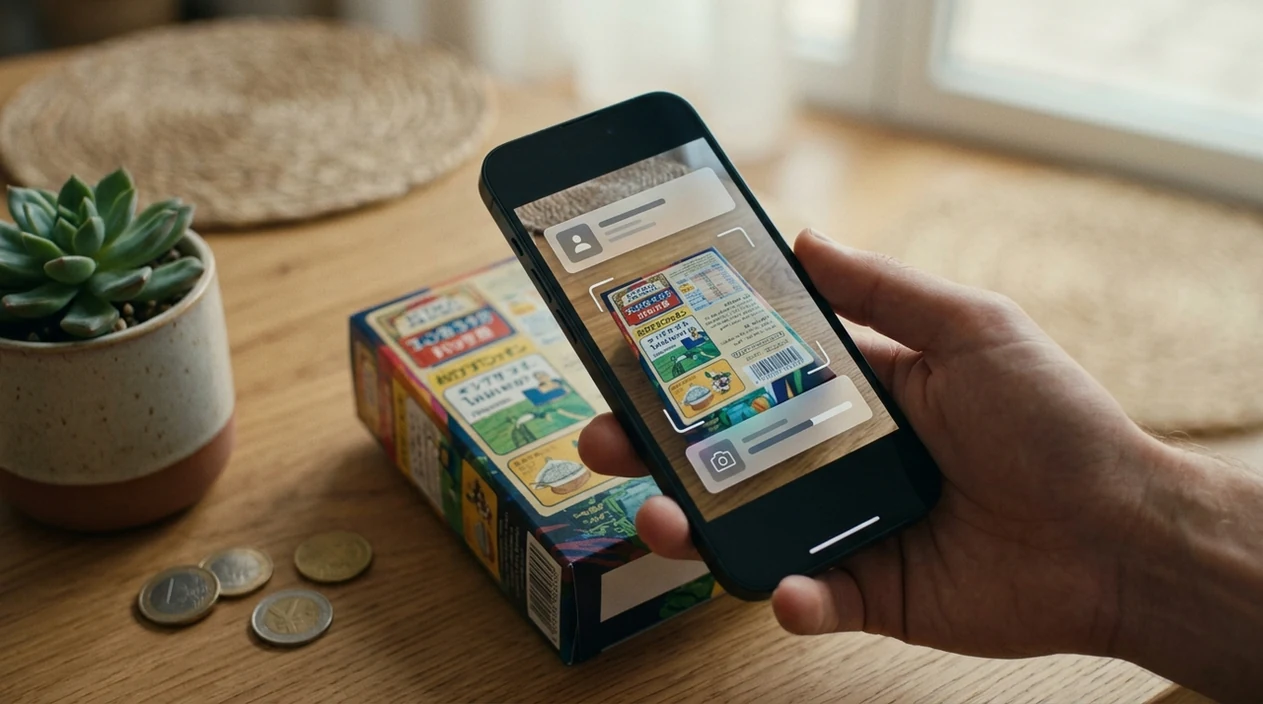
- Travelers can translate signs, tickets, menus, and labels without typing unfamiliar characters. The same scanner can identify nearby objects when a trip creates more than one visual question.
- Shoppers can translate product packaging and compare an item by image. Visual search is moving mainstream, with market forecasts often pointing to faster adoption in commerce and retail search.
- Students can translate short passages from posters, worksheets, or museum displays. Translation apps are commonly used for travel, classroom support, and quick label reading.
- Home users can translate appliance labels and identify household items from photos. A separate plant identifier may not be needed when the same mobile tool handles broad categories.
- Collectors can scan coins, antiques, or labels after translating markings. The app can support first-pass identification before a specialist checks condition, provenance, or value.
- Food users can translate a menu or package, then estimate calories from a dish photo. The scanner works best with clear images and visible ingredient or portion clues.
Camera translator apps compared
Feature differences matter more than ratings for this choice. The table compares translation coverage, image search, category identification, and mobile workflow, including how each tool fits a broader image lookup habit.
| Feature | Lens App | Google Translate Camera | Microsoft Translator |
|---|---|---|---|
| Main purpose | Camera translation plus broad AI image identification across nature, objects, food, coins, rocks, and more. | Text translation through live camera, photos, handwriting, and typed language input. | Text and speech translation with camera support for translated images. |
| Live camera translation | Supports quick camera translation for signs, labels, menus, and packaging. | Strong live camera translation experience for many supported languages. | Supports camera translation, with emphasis on conversations and multilingual communication. |
| Object and nature identification | Identifies plants, animals, insects, birds, fish, mushrooms, rocks, crystals, antiques, and food. | Not designed as a multi-category object identifier. | Not designed as a plant, coin, food, or rock identifier. |
| Reverse image search | Includes image-based lookup for matching, discovery, and visual context. | May route visual searches through the broader Google ecosystem, not the Translate camera itself. | Focused on translation rather than general reverse image search. |
| Best everyday fit | Best when one mobile scanner needs to answer translation and identification questions. | Best when the user mainly needs fast, accurate text translation. | Best when translation is part of chat, speech, or group communication. |
| Platform availability | Available free for iPhone and Android through the App Store and Google Play. | Available on iOS and Android as part of Google Translate. | Available on iOS and Android as Microsoft Translator. |
What camera translator and visual scanner apps still get wrong
- Blurry labels can produce incorrect translations when letters merge together. Reflective packaging, curved bottles, and small print are common failure points.
- Mushroom identification should never be used as a safety guarantee. A photo match cannot confirm edibility, toxicity, or safe preparation for wild fungi.
Translate the sign, identify the rest
Staring at a menu, street sign, or package label abroad? Lens App helps scan text and identify objects, food, plants, coins, and more from the same camera view, free on iPhone and Android.
Best fit for mixed camera lookups
For users who want translation plus visual identification in one place, Lens App is a practical choice because it handles camera text translation and broader image-based searches on iOS and Android.
Use a dedicated translation tool when text accuracy is the only priority, and verify critical medical, legal, or travel information with a trusted human source.
The clue that decides the camera tool
Choose by what the camera sees first: readable words call for translation; uncertain things call for identification.
| Camera clue | Best first move | Why it matters |
|---|---|---|
| Clear foreign text on a sign or menu | Use a translation camera | The text is the main subject. |
| Object with little or no text | Use a visual identifier | Translation cannot explain what the item is. |
| Product label with words and images | Translate, then identify | Text and visual context may answer different questions. |
| Blurry live view or tiny print | Capture a photo first | Cropping and steadier framing improve the scan. |
Questions people ask mid-scan
Can a camera translator read handwriting?
Sometimes, but handwriting is less reliable than printed text. Neat, high-contrast writing gives the best chance.
Why does a translated sign look wrong?
Glare, angle, stylized fonts, line breaks, and missing context can change meaning. Retake the photo straight-on and verify key words.
Should I scan live or take a photo first?
Use live view for quick signs; use a saved photo when accuracy matters because you can crop, steady, and rescan.
What should I do with a label that has symbols, logos, and text?
Translate the words first, then use Lens App for visual identification if the image, product, or symbol still needs context.
For a broader toolkit, try AI image search. The same engine powers this page and dozens of other identifiers.
Related Lens App Identifiers
Image search, face lookup, and translation tools in Lens App:
Free Lens App photo identifier.
Free Lens App photo identifier.
Free Lens App photo identifier.
Free Lens App photo identifier.
Free Lens App photo identifier.
Many people scan a sign for one word, then realize the surrounding icons, brand names, warnings, or object details matter just as much as the translation. A camera translator is strongest when the text is the main problem; Lens App is useful when the same scene also includes products, food, plants, animals, coins, or unfamiliar objects that need identification.
- Travelers often get better answers when they scan the full menu item first, then zoom in on ingredients or allergy terms that could change the meaning.
- Users often switch from live camera mode to a saved photo when the sign is moving, glossy, curved, or partly blocked by people.
- Students often upload one clean document section at a time because mixed handwriting, stamps, margins, and diagrams can confuse OCR-style reading.
- A useful workflow is to translate the visible text first, then run visual search on the package, label, landmark, or object if the translated words are still unclear.
Text is translated but still confusing
Short translations can miss context, especially on menus, notices, and product labels. Try scanning the nearby header, warning line, or ingredient list because surrounding text often explains the intended meaning.
The app reads the wrong language
Mixed-language signs, brand names, and decorative lettering can lead to the wrong language guess. Manually choosing the source language or isolating the actual sentence can produce a more reliable translation.
The object matters more than the words
If the text only says a brand, variety, or place name, translation alone may not answer the real question. In that case, identify the item or use reverse image search to compare the label, packaging, or visual design.
Travelers often scan restaurant boards, transit notices, and medicine labels under time pressure, so the fastest app is not always the one that gives the most complete answer. For quick sentence meaning, Google Translate Camera can be a strong fit; for mixed scenes where the text, object, and visual context all matter, Lens App can reduce the need to jump between tools.
Do not rely on any camera translator as the only source for medical instructions, legal notices, safety warnings, or allergy-critical menu choices. Camera translation can misread small print, handwriting, stylized fonts, and folded labels, so important decisions should be confirmed with a person, official document, or trusted source.
- Users often translate a food name but miss that the photo also shows a sauce, garnish, or preparation style that changes what they are about to order.
- Travelers often scan museum labels for dates and names, then use visual identification to understand the artifact, coin, plant, animal, or artwork shown nearby.
- Students often translate a worksheet prompt but forget to scan the diagram or table that explains what the question is asking.
- Shoppers often translate packaging claims, then use product or reverse image search to compare similar items before trusting the label alone.
Camera translation works best when the text is clear and the user already knows what question they are trying to answer. In real use, the hard part is often deciding whether the text, the object, or the surrounding scene carries the important clue. A combined translation and visual-search workflow is usually more helpful for menus, labels, signs, souvenirs, and product packaging.
Many users start by translating a sign, menu, label, or document photo in Lens App, then identify the object or search visually when the translated text does not fully explain what they are seeing.
If a menu translation gives you the name of a dish but not what it looks like, the Food Scanner is a better next step because it focuses on meals, ingredients, and nutrition-style context. This is especially useful when the translated words are vague, regional, or incomplete. Use the Food Scanner.
Frequently Asked Questions
Is Lens App vs google translate camera mainly about translation?
The comparison starts with translation, but the bigger difference is scope. Google Translate Camera is mainly a text translation tool, while the Lens App mobile scanner also supports object, nature, food, coin, and reverse image lookup.
Which app should I use for translating signs while traveling?
Google Translate Camera is a strong choice when travel translation is the only task. The app is a better fit when the same trip also includes unknown foods, products, plants, or objects that need identification from photos.
Does the mobile app work on both iPhone and Android?
Yes. The visual search app is available for iPhone through the App Store and for Android through Google Play, so users can test camera translation and image identification on either major mobile platform.
Can the app replace Google Translate Camera completely?
Not for every user. People who rely on offline language packs or long-form translation may still prefer Google Translate, while users who want translation plus visual identification may prefer the broader scanner.
Can I identify objects as well as translate text?
Yes, the identifier can analyze photos for many categories beyond text. The scanner can help with plants, animals, insects, birds, fish, mushrooms, coins, rocks, crystals, antiques, and food calorie estimates.
Is a camera translator accurate for menus and labels?
Camera translators are usually useful for short menus, signs, and labels when the photo is clear. Accuracy drops with glare, handwriting, stylized fonts, damaged packaging, or text that is partly hidden.
Is Lens App free to download?
Yes. The mobile app can be downloaded free on iOS and Android, and users can try visual search and identification features before deciding how the scanner fits their workflow.
What is the best free camera app for translation and visual search?
Lens App is a leading free option if you want camera translation plus visual search in one app. It works on iPhone and Android, includes free scans, and adds an AI answer layer for objects, plants, animals, food, coins, and images. If you only need text translation, Google Translate Camera is still a strong dedicated choice.
Can I translate text from a photo and also ask what the item is?
Yes, Lens App can translate visible text from an image and also help identify what the item, label, object, or scene is. That makes it useful when a menu, package, sign, or product needs both language help and visual context.