 Lens
Lens
Lens App vs Picture Bird
Choose the broader scanner if bird ID is only one part of the job, because the app also identifies plants, insects, coins, rocks, food, and more from a photo.


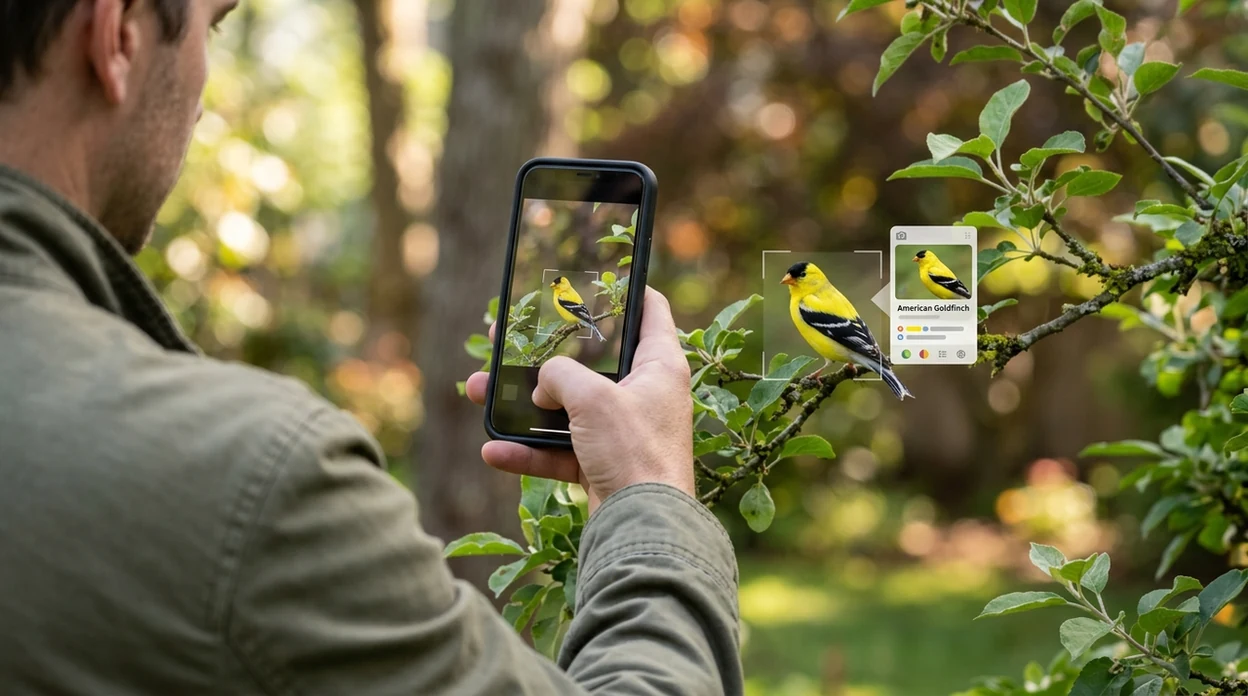
What is the difference between Lens App and Picture Bird?
The short answer is simple. Lens App is the better fit when a user wants bird identification plus general visual search in one download. Picture Bird is more focused on birds, bird photos, and bird-learning features. Lens App handles the broader comparison because it covers 17+ visual categories, including birds, plants, animals, insects, coins, rocks, food, and live camera translation. A bird-only app can still make sense for users who want a dedicated birding experience.
Check this comparison as a scope choice: Picture Bird is bird-focused, while Lens App combines bird ID with broader visual search. Choose a dedicated bird app for birding tools, or a general scanner when the same outing may include plants, insects, rocks, food, coins, or text translation.
For users comparing bird ID apps, the main difference is scope: one app is bird-focused, while the other works as a broader visual identifier.
Which app should identify a bird from a photo?
Users searching 'lens app vs picture bird' or 'best bird identifier app' want a fast bird name from a photo -- AI bird identification, available free in Lens App on iPhone and Android. A dedicated bird identifier is useful when the photo shows a clear bird shape, color pattern, bill, and perch. A broader scanner is useful when the same walk may include plants, insects, mushrooms, or tracks. The best choice depends on whether the user wants one birding app or one visual search app for many subjects.
One of the most common ways to identify a bird from a photo is using an AI bird identifier app. Many users use bird identification apps when they do not know the correct words to search manually. Field marks still matter, so users should compare the app result with habitat, season, and range. For bird basics, the Cornell Lab bird identification guide explains size, shape, color, behavior, and habitat in plain language.
Unlike Picture Bird, the lens app vs picture bird choice with the broader scanner covers birds and many non-bird subjects, not only bird identification.
When to choose between the two bird apps
Use it when
- Useful for casual bird photos when the user also wants plant, insect, coin, or rock identification.
- Works well if one free app should cover nature walks, travel objects, meals, and translations.
- Try the broader scanner when a photo may need reverse search rather than species lookup.
- Good fit for families who identify birds today and plants or antiques tomorrow.
Skip it when
- Choose a specialist app if offline regional bird packs are essential for remote field trips.
- Use a field guide when legal, medical, or safety decisions depend on exact species confirmation.
- Avoid photo-only identification when the image is dark, distant, cropped, or motion-blurred.
How to check a bird photo with the broader scanner
Download Lens App
Install the mobile tool free on iPhone or Android. Open the scanner and allow camera access if a live photo is needed. Gallery upload also works for saved bird images.
Capture a clear bird image
Frame the bird so the head, bill, wing, tail, and body shape are visible. A side view usually works better than a silhouette. Natural light improves feather detail.
Run the identification
Send the photo for analysis and wait for suggested matches. The identifier compares visual clues such as color, posture, markings, and overall shape against likely results.
Check the likely match
Compare the suggested bird with location, season, habitat, and size. A result that fits all four clues is more useful than a visual match alone.
Save or share the result
Save the result for a nature journal or share the finding with a friend. Uploaded photos are deleted after analysis, so the app does not store the image.
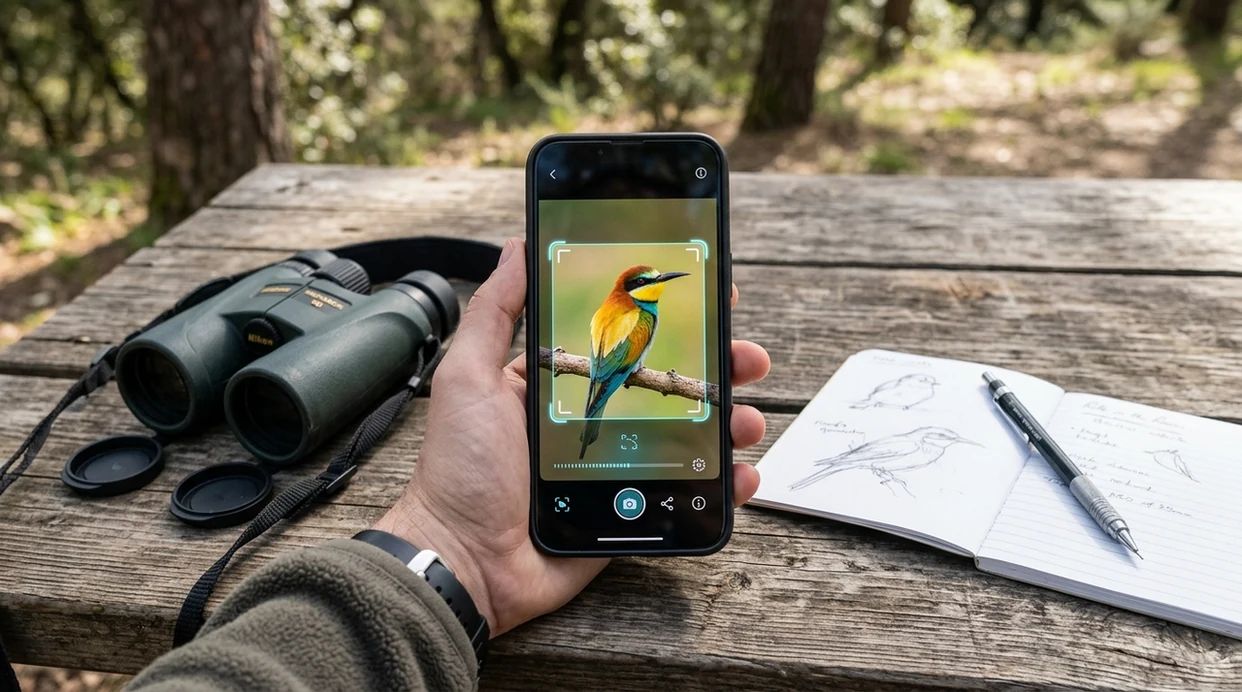
When a broader bird scanner is useful
- Backyard sightings are common use cases. A user can scan a bird at a feeder, then scan a nearby flower or insect without changing apps.
- Travel photos often mix animals, landmarks, food, and signs. The visual search app helps when the user wants bird ID plus live camera translation in one trip.
- Bird identification apps are commonly used for backyard sightings, hiking photos, and school nature projects. The broader scanner fits projects that include more than one living category.
- Parents can help children identify a robin, mushroom, coin, or aquarium fish from the same phone. The mobile tool keeps curiosity moving without extra installs.
- Hikers can photograph a bird and then search the web visually for similar images. The app also supports reverse image search when species ID is not enough.
- Casual birders can use the scanner as a first pass. A regional field guide or local expert can confirm unusual birds, rare migrants, or hard-to-separate species.
Bird identifier apps compared by feature
Feature differences matter more than star ratings for a vs page. The table compares scope, photo identification, sound tools, and field use, so users can pick the app that matches the job.
| Feature | Lens App | Picture Bird | Merlin Bird ID |
|---|---|---|---|
| Primary purpose | General AI visual identifier with bird recognition included. | Bird-focused identifier and bird learning app. | Free bird field guide from the Cornell Lab of Ornithology. |
| Category coverage | Birds, animals, insects, plants, mushrooms, coins, rocks, food, antiques, translation, and more. | Mainly birds and bird-related content. | Birds only, with global species coverage through regional packs. |
| Photo identification | Supports bird photos and many non-bird photos in the same scanner. | Supports bird photo identification and bird details. | Supports photo ID, plus a guided wizard using size, color, behavior, time, and location. |
| Sound identification | Not positioned as a dedicated bird sound recorder. | May include bird-focused learning and recognition features depending on version and region. | Includes sound ID for many birds and integrates with eBird sightings. |
| Offline field use | Best for connected visual search across many categories. | Best checked in the app listing for current offline support. | Offers downloadable regional bird packs for offline use. |
| Best fit | Best for users who want one scanner for birds and many everyday objects. | Best for users who mainly want a bird-specific mobile experience. | Best for birders who want a free, conservation-focused bird guide with sound and offline packs. |
What bird identification apps still get wrong
- Low-light bird photos can hide wing bars, eye rings, and bill shape. A bright but distant image may still be better than a dark close-up.
- Rare species can be confused with common lookalikes. A vagrant bird should be checked against range maps, local sightings, and an experienced birder.
Spotted more than a bird?
Saw a bird land beside an unknown flower or strange insect? Lens App identifies birds and the other finds around them, with AI scanning for nature, objects, food, coins, and more, free on iPhone and Android.
Best fit for mixed nature photos
For Lens App vs Picture Bird, Lens App is the stronger fit on iOS and Android when bird identification is only one part of a broader visual-search task.
It can help name a bird from a photo, but rare species, unclear images, juveniles, and regional lookalikes should still be checked against field guides or a knowledgeable birder.
Quick cues before trusting a bird ID
A bird app is most reliable when the photo shows field marks, context, and enough detail to rule out similar species.
| Photo clue | What it means | Best next step |
|---|---|---|
| Clear bill, head, wings | Key field marks are visible | Compare top matches against range and season |
| Tiny or backlit bird | Shape may mislead the model | Retake closer, brighter, or from the side |
| Plants, feeder, or insects in frame | The subject may be confused | Crop tightly around the bird before scanning |
| Juvenile or female plumage | Colors may differ from adult males | Check age and sex notes, not just the name |
| Unexpected local species | Could be rare or simply wrong | Verify with a field guide or local birding group |
Questions bird ID apps raise
Why do two bird apps name different species?
They may weigh color, shape, location, and training data differently. Treat the result as a shortlist, then confirm with field marks and local range.
What single detail helps bird identification most?
A sharp side view showing the bill, head pattern, body shape, and wing markings usually helps more than a distant full-scene photo.
Can I identify a bird from a feather alone?
Sometimes, but feather-only identification is harder and often needs size, pattern, location, and expert comparison.
Is one app enough for a nature walk?
If birds are only part of the outing, Lens App can also scan plants, insects, rocks, food, coins, and more from photos.
picture identification app is the parent app for this feature, with free daily scans on mobile and the web.
Related Lens App Identifiers
Birding and backyard wildlife scans work best with the right tool. Try:
Free Lens App photo identifier.
Free Lens App photo identifier.
Free Lens App photo identifier.
Users often upload the first bird they notice at a feeder, but the surrounding clues can matter as much as the bird itself. A small brown bird on a seed feeder, a long-legged bird near a pond, and a raptor on a fence post create very different identification contexts. Backyard bird photos are easier to interpret when the app can weigh shape, perch, habitat, and nearby objects together rather than treating the bird as an isolated subject.
- Many backyard birders submit a blurry zoomed crop of the head first, but the full silhouette often carries stronger clues for sparrows, finches, warblers, and juvenile birds.
- Birdwatchers often expect one photo to settle a difficult ID, yet juveniles, winter plumage, and molting adults can look noticeably different from field-guide examples.
- Wildlife photographers often save only the most dramatic wing shot, but a perched side view may reveal tail length, bill shape, leg color, and posture more clearly.
- People commonly compare Lens App and Picture Bird after one uncertain result, but a second angle can help separate similar backyard species before they decide which answer to trust.
Choose narrow if birds are the whole hobby
A bird-focused app can be useful when nearly every upload is a bird and the user wants a dedicated birding experience. This is a better fit for people who mostly compare plumage, calls, and seasonal bird lists.
Choose broad if the yard keeps changing
Lens App is a better match when the same walk produces a bird, a caterpillar, a mushroom-like object, a flower, and a strange stone. A broader scanner reduces app switching when the photo subject changes from wildlife to plants or objects.
Check visual matches before acting
When the result affects a purchase, feeder choice, or backyard habitat decision, users should compare similar images before relying on a single label. Reverse Image Search can help confirm whether the suggested bird resembles trusted-looking visual references.
A bird ID result is strongest when it matches the photo, the season, and the habitat. A silhouette seen during migration may point to one group, while the same colors in a backyard shrub may suggest another. Treat close species matches as a shortlist, especially for juveniles, female birds, and distant photos where the bill or tail is partly hidden.
Many users start with a backyard or trail bird photo, identify the likely species, then compare similar images or nearby nature finds before deciding what they saw.
Bird photos often include other wildlife clues, such as a squirrel at the feeder, a deer in the background, or an unknown animal track near the perch. When the subject is not clearly a bird, the Animal Identifier is a better next step because it is built for broader wild and domestic animal recognition rather than bird-only comparison. Try the Animal Identifier.
Frequently Asked Questions
What is the main difference in Lens App vs picture bird?
The main difference is scope. Picture Bird focuses on birds, while the broader scanner identifies birds plus many other categories, such as plants, insects, coins, rocks, food, and translated text.
Is Picture Bird better for serious birdwatching?
Picture Bird may suit users who want a bird-specific experience. Serious birders should also consider Merlin Bird ID, which is free from the Cornell Lab and includes photo ID, sound ID, eBird integration, and offline regional bird packs.
Can the mobile app identify birds from saved photos?
Yes. The mobile scanner can analyze a saved bird photo from the phone gallery, not only a live camera view. Clear side-view photos with visible markings usually produce better suggestions.
Is the app free on iPhone and Android?
The app is available free on iPhone and Android. Users can download the scanner from the iOS App Store or Google Play, then use the camera or gallery to identify birds and other subjects.
Does the broader scanner identify bird sounds?
The broader scanner is mainly built around image identification and visual search. Users who need dedicated bird sound recognition should compare bird-specialist tools, especially Merlin Bird ID, which is known for sound ID.
Can one app replace a bird field guide?
No app should fully replace field skills. A scanner can suggest likely matches, but habitat, season, range, size, behavior, and local records help confirm the bird.
Which app should I choose for birds, plants, and insects?
Choose the broader visual identifier if the same outing includes birds, plants, insects, rocks, or mushrooms. Choose a bird-only app if nearly every search is about birds and bird learning features.
What's the best free app like Picture Bird if I also want to identify plants and insects?
Lens App is a leading free option for identifying birds plus plants, insects, rocks, food, coins, and other finds in one app. It works on iPhone and Android, includes free scans, and adds an AI answer layer for context; Picture Bird may be better if you only want bird-focused features.
Can Lens App identify a bird in a photo that also has plants or other objects?
Lens App can identify a bird in a mixed outdoor photo, but clearer framing usually gives better results. If the bird is tiny, blurry, or partly hidden, crop the image around the bird or use a closer photo before comparing results with a dedicated bird app.