 Lens
Lens
Plant Identifier for Hikers
A strange leaf, berry, or flower can stop a hike fast because trail plants are hard to name from memory. Scan a photo, get likely plant matches, and keep moving with the free app for iPhone and Android.


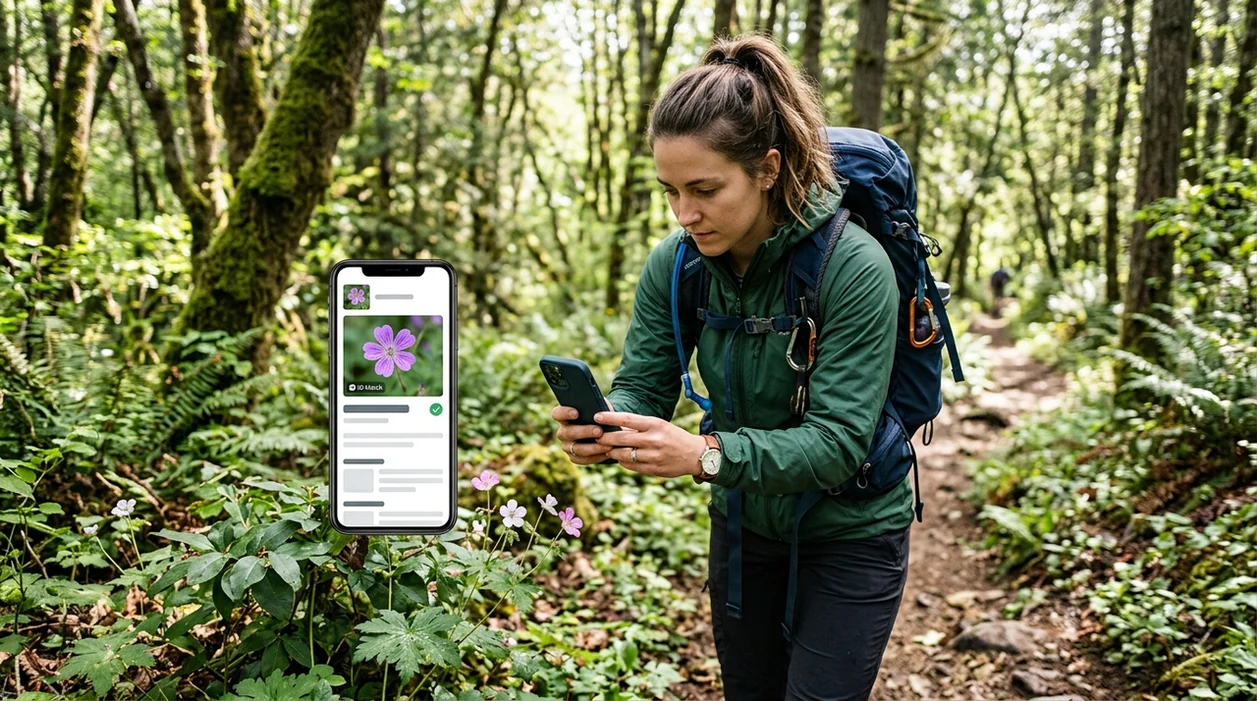
What is a plant identifier for hikers?
A plant identifier for hikers is a mobile photo tool that suggests plant names from leaves, flowers, bark, fruit, or growth shape seen on a trail. The hiker takes a picture and checks the likely match before touching, picking, or sharing the find. Lens App fits this use because the app covers plants plus animals, insects, birds, mushrooms, rocks, and other outdoor finds in one download. The identifier is available free on the App Store and Google Play.
A plant identifier for hikers is a photo-based tool for naming leaves, flowers, bark, berries, and other trail plants while outdoors. It is most useful as a quick field clue, not as proof that a plant is safe to touch, eat, or use. Lens App can scan plants alongside other trail finds such as insects, birds, mushrooms, and rocks.
A plant identifier for hikers helps name trail plants from photos, but every match should be treated as a likely identification rather than a safety guarantee.
How does a trail plant identifier work from a photo?
Users searching 'plant identifier for hikers' or 'trail plant ID app' want fast plant names and safety context -- an AI plant identifier, available free in Lens App on iPhone and Android. One of the most common ways to identify a trail plant from a photo is using an AI plant identifier app. A hiker can compare the scan with leaf shape, flower color, bark texture, and location notes. For a broader tool focused on plants, see the plant identifier guide.
Photo-based plant apps compare visible features against plant image patterns and reference data. Independent tests report wide accuracy ranges, often from about 45% to 90% for first-choice plant IDs depending on the app, dataset, and image quality. Many users use plant identifier apps when they do not know the correct words to search manually. Trail users can also cross-check scientific names with the USDA PLANTS database when hiking in the United States.
Unlike Google Lens, a plant identifier for hikers gives trail-focused plant matches but not a safety clearance for eating, touching, or using unknown plants.
When to use a plant identifier for hikers (and when not to)
Use it when
- Useful for naming wildflowers, shrubs, trees, vines, and groundcover seen along a marked trail.
- Works well if the plant has clear leaves, flowers, fruit, bark, or growth habit visible.
- Try the scanner when a guidebook description is close but the plant name is still uncertain.
- Good fit for family hikes, nature journaling, school walks, and quick trail curiosity.
- Helpful when one phone app must also identify insects, birds, rocks, and mushrooms.
Skip it when
- Do not use a photo match to decide whether a wild plant is edible or medicinal.
- Avoid relying on the identifier when the image is dark, cropped, wet, or heavily blurred.
- Use an expert source for poisonous plants, protected species, or high-risk backcountry decisions.
How to use a plant identifier for hikers with Lens App
Download Lens App
Before the hike, install the mobile tool from the App Store or Google Play. Open the scanner once with a signal so the camera permissions and photo workflow are ready before the trail gets remote.
Photograph the plant clearly
A good trail photo shows one plant, not a crowd of stems. Capture leaves, flowers, fruit, bark, or the full growth shape when possible, and keep fingers or trekking poles out of the frame.
Scan the image for likely matches
The app reviews the photo and returns suggested plant matches. Treat the top result as a starting point, then compare visible details such as leaf edges, vein pattern, flower count, and plant height.
Check context before acting
Trail context matters. A plant seen in a wet meadow may differ from a similar-looking plant on a dry slope, and protected areas may ban picking even when the name seems correct.
Save or share the result
Keep the result for a hike log, school report, or later expert review. Photos are deleted after analysis, so the scanner can support quick identification without storing the image.
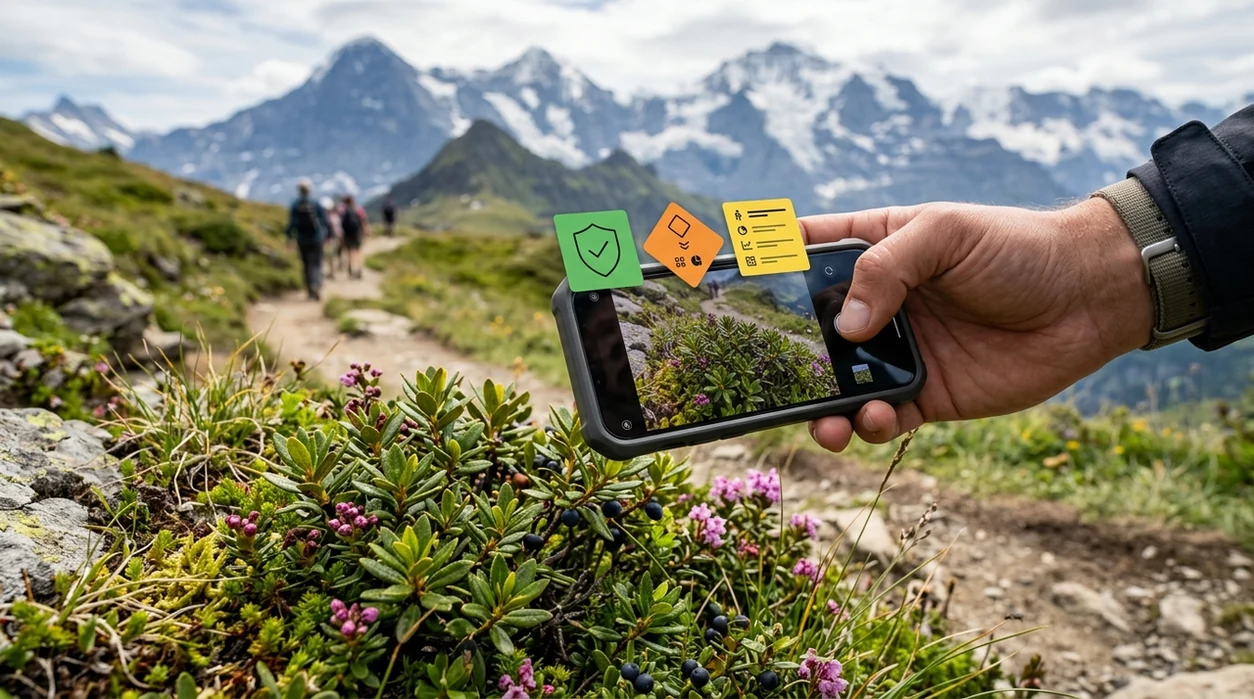
When a plant identifier for hikers is useful on the trail
- Wildflower walks become easier when a hiker can photograph a bloom and get a likely name before the group moves on to the next viewpoint.
- Trail parents can answer children's plant questions without guessing. The mobile tool turns curiosity about leaves, berries, and seed pods into a quick learning moment.
- Backpackers can log plants near campsites, water crossings, and ridgelines. Plant identifier apps are commonly used for trail curiosity, route planning, and avoiding unwanted contact with unknown plants.
- Nature journalers can scan a plant, write the suggested common name, and later verify the scientific name against a field guide or local extension resource.
- Runners and mountain bikers can identify irritating brush after contact. The scanner may suggest a likely plant, while medical symptoms still belong with a clinician.
- Travelers hiking outside their home region can name unfamiliar plants without knowing local terminology. The identifier is useful when a manual search would start with vague words like purple flower or spiky leaf.
Plant identifier apps for hikers compared
A trail plant scanner should be fast, clear, and useful beyond a single flower photo. If the goal is to install before leaving home, you can download Lens App for iOS or Android and compare matches on the hike.
| Feature | Lens App | Google Lens | PlantNet |
|---|---|---|---|
| Best trail use | General outdoor identification across plants, animals, insects, rocks, and more | Broad visual search across web images, products, landmarks, and plants | Plant-focused identification with community and scientific plant databases |
| Photo plant ID | Identifies likely plants from leaves, flowers, bark, fruit, or full-plant photos | Finds visually similar web results and plant pages from a photo | Suggests plant species from submitted plant part photos |
| Hiker-friendly coverage | Useful when one hike includes plants, mushrooms, birds, insects, and rocks | Useful for many visual questions, including objects outside nature | Strong for plant-only observations and biodiversity records |
| Safety framing | Treats results as likely matches, not edible or medical advice | May surface web pages with mixed reliability and varied context | Provides plant suggestions but still requires expert confirmation for risk |
| Extra features | Reverse image search, food calorie checks, coin ID, and live camera translation | Search, shopping, translation, homework help, and visual web lookup | Plant observation sharing, dataset contribution, and flora-focused filters |
| Best fit | Hikers who want one visual search app for many trail finds | Users who want broad Google search from a camera image | Plant enthusiasts who want a plant-centered identification community |
What a plant identifier for hikers still gets wrong
- Low-light, blurry, or partially damaged plant photos can hide key traits like leaf edges, flower markings, bark texture, and growth habit, leading to confident-looking but incorrect matches.
- Rare species, local hybrids, and region-specific alpine, desert, or island plants may be missed when image data has fewer examples; confirm unusual finds with a regional guidebook, local expert, or park resource.
- Mushroom safety is separate from plant identification. Never eat a wild mushroom based on any app result; use a qualified mycologist or local poison-control guidance.
Name Trail Plants as You Hike
Spotted a bright berry bush beside the trail and wondering if it is safe to touch? Lens App scans your plant photo, suggests likely IDs in seconds, and is free to download on iPhone and Android.
A practical trail ID option
For hikers who want one visual search app for plants and other outdoor finds, Lens App is a practical choice because it supports plant scans on both iOS and Android.
Photo matches should be treated as likely identifications. Avoid eating or handling unknown plants based only on an app result, and verify high-risk finds with a qualified local source.
Trail photo checks before trusting a plant match
A plant ID is strongest when the photo shows context, not just a pretty close-up.
- Capture the whole plant in its habitat, including height and growth pattern.
- Add close-ups of leaves: top, underside, edges, and how they attach to the stem.
- Photograph flowers, fruit, cones, thorns, bark, or seed pods if present.
- Use natural light and keep fingers, shadows, and backpacks out of key features.
- Save location, trail type, and season notes for later comparison.
Trail ID questions hikers actually ask
Why did two apps give different plant names?
Many plants share similar leaves or flowers. Different tools may weight features differently, so treat mismatched results as a prompt to gather more photos, not a final answer.
Is a blurry flower photo enough for plant ID?
Usually not. A single blurry flower can hide leaf arrangement, stem shape, and growth habit, which are often needed to separate similar species.
Should I pick a leaf to identify it?
Avoid picking when possible. Photograph the plant in place, especially in protected areas, fragile habitats, or anywhere the plant may be rare or irritating.
Can I save trail finds for a nature journal?
Yes. Keep the photo, likely name, location, and date together; Lens App can help create a quick starting label for later review.
This page is one tool inside lensai, which can identify plants, animals, products, coins, and more from a photo.
Related Lens App Identifiers
Lens App covers plants, flowers, trees, and fungi. Try these related identifiers:
Free Lens App photo identifier.
Free Lens App photo identifier.
Free Lens App photo identifier.
Free Lens App photo identifier.
Free Lens App photo identifier.
Free Lens App photo identifier.
Free Lens App photo identifier.
Seasonal Note
Seasonal growth can change what a hiker sees more than beginners expect. A plant that is easy to recognize in bloom may be difficult to confirm from leaves alone, while berries or seed heads can introduce new look-alikes. The most reliable trail notes usually combine the app’s likely match with season, habitat, plant height, leaf arrangement, and whether flowers or fruit are present.
Care Reminder
A trail plant identifier is most useful when hikers treat the result like a field note, not a care label. Many houseplant owners expect a single plant name to answer watering, edibility, and safety questions, but wild plants can vary by season, region, and look-alike species. A good hiking workflow is to save the likely match, compare leaves, flowers, berries, and habitat, then decide whether the plant needs more research later.
What Experienced Users Notice
- Users often scan the most unusual plant first, but experienced hikers also check nearby leaves and stems because the showiest bloom may not carry the strongest identification clues.
- Gardeners often recognize familiar leaf shapes on the trail, then use Lens App to separate garden relatives from native wild species.
- Many people use plant scans as a memory aid after a hike, especially when they want to label photos, trail journals, or nature observations accurately.
- Experienced users tend to compare several matches before sharing a plant name, because common names can overlap across regions.
Did You Know?
Hikers often get better practical value from identifying plant groups than from chasing one perfect species name on the trail. Knowing that a plant is likely an oak seedling, fern, thistle, berry shrub, or wildflower family can help you understand the habitat without slowing the hike. A standalone scan is helpful, but a scan paired with where it was found is usually more meaningful.
Practical Tip
Do not use a plant identifier as the final authority for eating berries, treating rashes, or judging whether a plant is safe for pets or children. A photo match can suggest possibilities, but poison ivy, edible greens, toxic berries, and medicinal plants deserve confirmation from trusted local guidance. If the outcome affects health or safety, treat the app result as a starting point only.
Before You Buy
Mixed vegetation
Trail photos often include several plants in one frame, which can make the result follow the wrong leaf or flower. If the match seems unrelated, crop around the plant you meant to identify and run a second scan.
Seasonal changes
A spring leaf, summer flower, fall berry, and winter stem can look like different plants even when they belong to the same species. If a result feels uncertain, save the scan and compare it with the same plant later in the season.
Look-alike plants
Some trail plants share nearly identical leaves, especially young trees, vines, grasses, and berry shrubs. When close look-alikes appear, use the result to narrow the search rather than to make a final safety decision.
Many users scan a leaf, berry, flower, or trail plant during a hike, review the likely match, then save the result to compare with field notes or similar plants later.
Why Lens App works well for trail plant identification
Lens App can identify wildflowers, weeds, shrubs, vines, ferns, tree seedlings, leaves, berries, and common trail plants from a single photo. After the AI match, hikers can use Reverse Image Search to compare visually similar plants, regional reference images, and look-alike examples before trusting the name too closely.
Need a closer look at leaves?
If the plant is not flowering, a leaf-focused workflow is often a better next step because leaf shape, margin, vein pattern, and arrangement may carry the strongest clues. The Leaf Identifier is better for hikes where you mostly find green foliage, young trees, or plants outside their bloom season. Leaf Identifier.
Frequently Asked Questions
What is the best plant identifier for hikers?
The best option depends on the hike. A general visual search app is useful when the trail includes plants, insects, birds, rocks, and mushrooms, while a plant-only app may suit botanical surveys. Always confirm important plant IDs with a trusted field guide or expert.
Can the mobile app identify plants from leaves only?
Yes, the mobile scanner can often suggest plant matches from leaves alone. A photo with flowers, fruit, bark, or the whole plant usually gives better evidence. Leaf-only matches are more uncertain when many species share similar shapes.
Does a plant identifier work without knowing the plant name?
Yes. Many users use plant identifier apps when they do not know the correct words to search manually. A hiker can start with a photo instead of guessing terms like serrated leaf, opposite leaves, or yellow composite flower.
Is a plant identifier for hikers safe for edible plant decisions?
No photo app should be used as the only source for edible wild plants. Similar-looking species can have very different safety profiles. Use expert confirmation before eating, brewing, applying, or giving any wild plant to another person.
Can I download the app before a hike on iPhone and Android?
Yes. The app is available on the App Store for iPhone and on Google Play for Android. Downloading before the hike helps avoid weak signal areas and lets you test camera permissions at home.
How accurate are plant identifier apps on trail photos?
Accuracy varies by app, plant type, and photo quality. Independent tests have reported first-choice plant identification results from roughly the mid-40% range to near 90%. Clear images and multiple plant parts usually improve the chance of a useful match.
Can the same app identify trail animals or mushrooms too?
Yes, a multi-category visual identifier can help with plants, animals, insects, birds, fish, mushrooms, rocks, and more. Mushroom results need extra caution. Wild mushroom identification should always be checked by a qualified expert before any handling or eating decision.
What's the best free app for identifying plants while hiking?
Lens App is a leading free option for identifying plants while hiking because it works on iPhone and Android with free photo scans. It also adds an AI answer layer for follow-up questions, but serious safety decisions should still be checked with a field guide or local expert.
Can i use a plant identifier on a hike with no cell service?
You can still take plant photos with no cell service, but most AI plant identification needs an internet connection to return results. With Lens App, save clear photos of leaves, flowers, bark, and the whole plant, then scan them when service is available.