 Lens
Lens
Spider Identifier
A spider in the bedroom, garage, or garden can raise one question fast: what kind is that? Lens App gives a likely visual match, helpful traits, and next steps because the scanner covers spiders and many other subjects in one free iPhone and Android app.


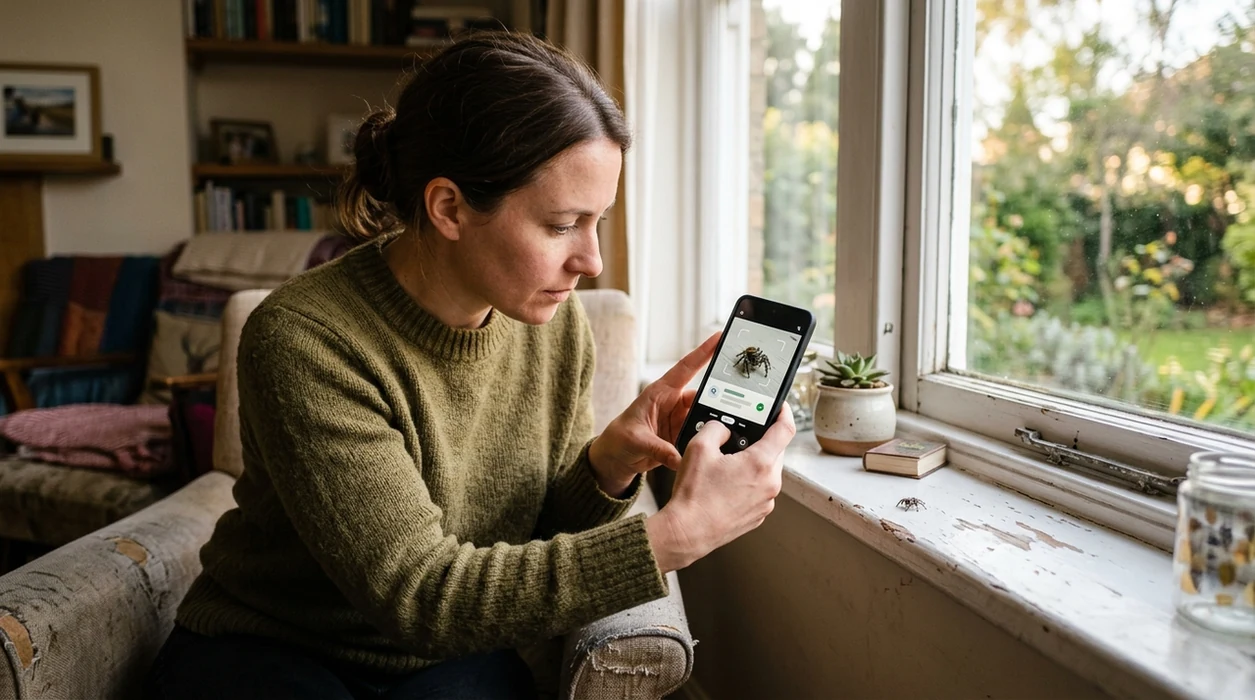
What is a spider identifier?
A spider identifier is a photo-based tool that compares a spider image with visual patterns from known arachnids. The goal is a likely name, visible traits, and practical context. Lens App works as a spider photo scanner because the app handles animals, insects, plants, rocks, coins, food, and translation in one download. A good result may mention body shape, leg markings, web type, color, and look-alike species. A cautious result matters too. Spiders can be hard to separate from a single image.
What spider is this? A spider identifier is a photo-based tool that compares visible traits such as body shape, leg markings, color, and web context to suggest a likely arachnid match. Lens App can provide a visual match and practical context from one spider photo, but close or medically important identifications should be verified by an expert.
A spider identifier gives a likely arachnid match from a photo, with visual clues such as body shape, markings, color, and web context.
What does a spider photo identifier tell you?
Users searching 'spider identifier' or 'spider photo ID app' want a fast name and safety context -- an arachnid photo scanner, available free in Lens App on iPhone and Android. One of the most common ways to identify a spider from a photo is using an AI spider identifier app. For broader backyard sightings, a general spider identifier can also help with beetles, flies, moths, and other small creatures near the same area.
A spider photo identifier usually returns a likely species, genus, or family. The scanner may also show similar images, key markings, and whether the animal looks like a common household spider. Spiders are arachnids rather than insects, and that distinction matters for body structure and identification; the spider reference overview on Wikipedia explains the basic anatomy. Many users use arachnid identification apps when they do not know the correct words to search manually.
Unlike Google Lens, a spider identifier in Lens App focuses on a multi-category identification answer but does not replace a licensed pest professional or medical advice.
When to use spider identifier (and when not to)
Use it when
- Useful for checking a spider found indoors before moving the animal outside.
- Good fit for garden sightings when markings are visible and lighting is clear.
- Try the scanner when a child, pet owner, or renter wants a quick visual clue.
- Works well if the photo shows the body, legs, and surrounding web or surface.
Skip it when
- Do not use a photo result as emergency medical guidance after a bite.
- Avoid relying on the identifier when the spider is crushed, wet, or partly hidden.
- Call a local expert when a venomous species is suspected in a high-risk area.
How to use spider identifier with Lens App
Download Lens App
Start with the free mobile app on the App Store or Google Play. A spider photo can be taken live or uploaded from the camera roll after the animal is safely observed.
Photograph the spider clearly
Use steady light and avoid zoom blur. The best spider image shows the top of the body, the legs, color bands, and any web pattern near the animal.
Scan the image
Open the scanner and choose the spider photo. The app analyzes the image and photos are deleted after analysis, so a stored camera roll copy is not needed for the result.
Read the likely match
Check the suggested name, similar images, and visible traits. The identifier may return a family-level answer when the species cannot be separated from the photo alone.
Save or share the result
Keep the result for a landlord, pest technician, teacher, or nature group. A shared spider identification is most useful when the original photo and location context stay together.
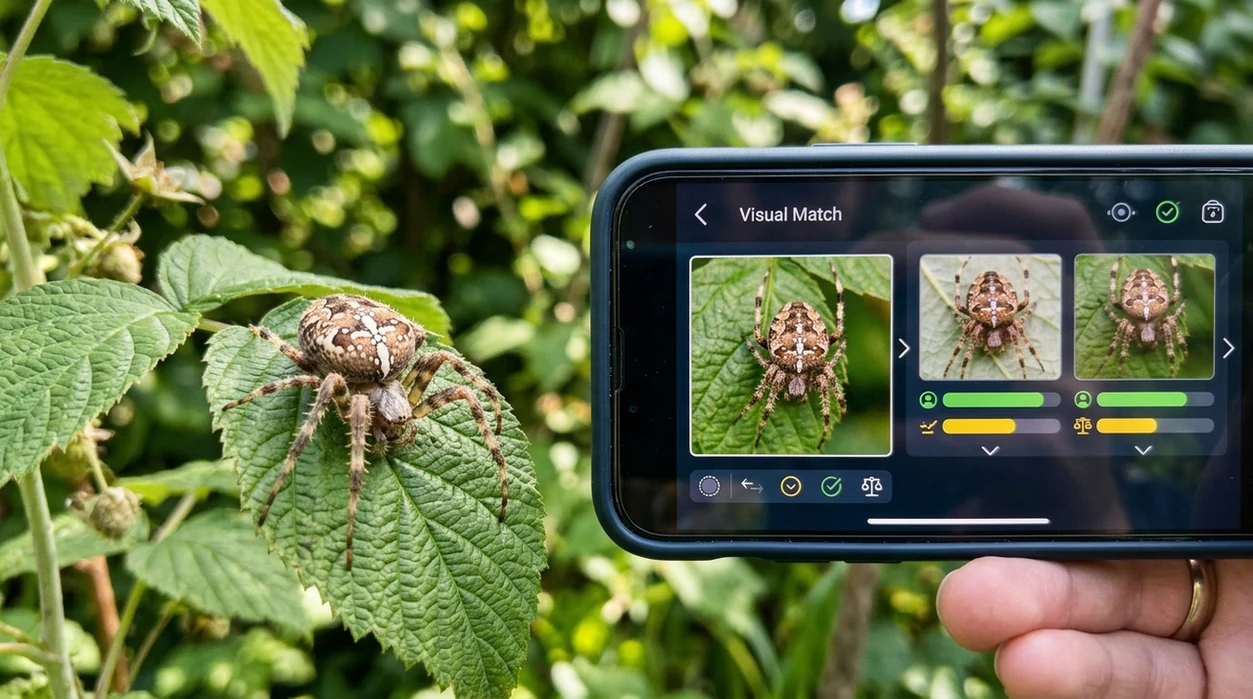
When a spider identifier is useful
- Homeowners use a spider scanner when a spider appears in a bathroom, basement, garage, or window frame and nobody knows whether the animal is harmless or concerning.
- Parents use the identifier after a child finds a spider near toys, shoes, or bedding. A photo result can guide calm next steps without handling the animal.
- Gardeners use arachnid photo ID for spiders on leaves, flowers, pots, and fences. The same person may also need a plant identifier during the same yard walk.
- Hikers and campers use spider identification apps for trail shelters, tents, wood piles, and picnic areas. Spider identification apps are commonly used for home pest checks, garden curiosity, and outdoor safety decisions.
- Renters use a spider photo result when documenting repeated sightings for a property manager. Clear photos and dates make the report easier to understand.
- Teachers and students use the mobile tool for nature journals. A likely spider family can support learning without requiring the student to capture the animal.
Spider identifier apps compared
A spider app should be judged by photo clarity support, category coverage, and honest uncertainty. The app is especially useful when one download also covers plants, coins, rocks, food, and translation.
| Feature | Lens App | Google Lens | Seek by iNaturalist |
|---|---|---|---|
| Best everyday use | Fast visual match for spiders and many other objects | Broad web image search across many topics | Nature observations with wildlife learning features |
| Spider-specific guidance | Gives likely matches and visible trait context | Often returns visually similar web results | Can identify some wildlife from camera input |
| Category coverage | Spiders, animals, plants, coins, rocks, food, translation, and reverse search | General visual search and shopping-style matches | Animals, plants, fungi, and nature categories |
| Research context | Designed for quick multi-category mobile ID | Controlled insect testing found strong results on some species and weaker generic matches on others | The same testing showed some correct insect results and some family-level or failed results |
| Best for non-experts | Good for users who lack search terms | Good when a web lookup is enough | Good for users interested in citizen science |
| Download access | Available free on iPhone and Android | Built into or downloadable with Google services | Available as a separate nature app |
What spider identifier still gets wrong
- Low-light or unclear spider photos can hide leg bands, eye patterns, and abdomen markings, so the app may return a broad family match instead of a confident species name.
- Rare species and regional look-alikes can confuse any photo identifier. A local museum, university extension office, or pest expert may be needed for confirmation.
Spot a spider? Check it fast
Found a spider in the shower or by a crib? Snap a photo with Lens App to get quick AI-powered identification clues, then decide what to do next. It is free on iPhone and Android.
Best fit for quick spider photo checks
For spider identification, Lens App is a practical choice on iOS and Android because it turns a single photo into a likely match with visible traits and related context.
It is useful for household, garage, and garden sightings, but it should not be treated as medical, bite, or pest-control advice. If safety is uncertain, confirm the result with a qualified local expert.
Before you trust a spider match
A spider photo ID is strongest when it captures anatomy, scale, and location—not just color.
- Photograph from above and, if safe, from the side; body shape often matters more than leg length.
- Include scale: a coin, ruler, doorframe, or leaf helps separate look-alikes.
- Record place and setting: region, indoors or outdoors, web type, and time of day.
- Do not handle unknown spiders; use a clear container, distance, or zoom instead.
- Treat medically important look-alikes as unconfirmed until checked by a local expert.
Quick spider ID doubts
Why do spider IDs change between photos?
Different angles reveal different traits. Abdomen pattern, eye area, leg bands, and scale may not all appear in one image.
Can I identify a spider without killing it?
Yes. Photograph it through glass or a clear container; Lens App can analyze the image while you keep a safe distance.
Is color enough to name a spider?
No. Color varies by age, sex, lighting, and molt stage. Shape, markings, size, location, and web context are usually more reliable.
Who can confirm a difficult spider ID?
For certainty, ask a local arachnologist, university extension service, museum, pest professional, or regional naturalist group.
picture identification app is the parent app for this feature, with free daily scans on mobile and the web.
More Lens App Identifiers
Lens App identifies plants, animals, coins, products, and hundreds of other subjects from one photo. Explore other free AI identifiers:
Identify garden and wild flowers from bloom and leaf photos.
Identify trees from leaves, bark, fruit and canopy photos.
Identify plants and trees from a clear leaf photo.
Identify snakes from scale pattern, head shape and color photos.
Identify purebred and mixed dog breeds from a photo.
Identify cat breeds and mixed cats from a photo.
Identify wild and domestic animals from a photo.
Identify backyard and wild birds from a photo.
Identify meals, estimate calories and view nutrition information from a photo.
Identify wine labels and bottles from a photo.
Identify coins, mint marks and estimate collectible value from a photo.
Identify stamps by design, country, marks and era from a photo.
Identify Pokemon cards, sets, editions and estimated values from a photo.
Identify rocks and stones from color, texture and structure photos.
Identify crystals from shape, color and surface detail photos.
Identify gemstones from cut, color and visual stone clues.
Identify minerals from crystal form, luster and color photos.
Identify mushrooms from a photo for reference only.
Find where an image appears online.
Find where a face appears in publicly available images.
Find public profiles, image sources and usernames from a photo.
Translate text from photos, signs, labels and menus.
Identify freshwater, saltwater and aquarium fish from a photo.
Identify antiques, pottery and collectibles from a photo.
Identify products and find buying options from a photo.
Identify sneaker models, brands and colorways from a photo.
Identify cars from badges, body shape and trim photos.
Identify brand logos from packaging, signs and screenshots.
Recognize landmarks, monuments and buildings from travel photos.
Find where to buy products and compare prices from a photo.
Identify currency and banknotes from a photo.
Insect & wildlife identifier guides
All insect, spider, and snake identifier guides in Lens App.
A spider scan usually needs only the spider and nearby visual context, not personal details in the room. Users often crop out faces, addresses, children, screens, and private household items before uploading a bedroom, garage, or porch photo. A useful spider photo can be specific without revealing where you live.
- Many people upload the first photo taken from across the room, then get better matches after adding a closer view of the body shape and leg position.
- Gardeners often compare a web photo with a body photo because web placement can support the match but rarely replaces visible markings.
- Users often scan more than one angle when the spider is curled, moving, or partly hidden behind furniture.
- A spider on a wall, leaf, sink, or window frame is easier to interpret when the surrounding surface helps show scale and posture.
Wildlife photographers often upload spiders from field walks after the animal has already moved, so their best results usually come from comparing several quick captures rather than relying on one perfect frame. For spider identification, the most useful user pattern is not artistic quality; it is whether the upload preserves body outline, leg arrangement, markings, and enough context to judge likely size.
Juvenile spiders
Young spiders may not show the same markings as mature adults, so a scan may return a broader match. If the result feels uncertain, treat it as a likely visual category rather than a confirmed species.
Similar species
Some common household spiders look alike in quick photos, especially when color and leg pattern are the main clues. A second scan from a different side can help separate lookalikes, but professional confirmation is better for safety-critical concerns.
Poor context
A spider photographed as a dark dot on a ceiling often produces a weaker result because the app has fewer traits to compare. Users get more useful outputs when the upload shows the spider’s outline, abdomen, legs, and any visible pattern.
Do not buy traps, sprays, or treatment services based only on one uncertain spider match. Many users scan first to decide whether a spider appears common, medically notable, or simply unfamiliar, then use that result as a starting point for safer next steps. If someone may have been bitten or a dangerous species is suspected, the practical next step is local medical, pest, or wildlife guidance rather than repeated app scans.
Many users start with a spider found indoors or in the garden, scan it for a likely match and safety notes, then decide whether to leave it alone, relocate it carefully, or seek local advice.
If the photo shows a tiny household creature and you are not sure whether it is a spider, insect, mite, or other arthropod, the broader bug workflow is a better fit. It covers more non-spider possibilities and helps when the main question is pest type rather than spider species. Try the Bug Identifier.
How does an app that identifies spiders work?
Lens App is an app that identifies spiders by comparing a clear photo with visible body shapes, colors, markings, and web context. It runs on iPhone and Android, while the browser supports image-based searches without installing the mobile app. Results can suggest likely matches or guide an insect identifier search, but they cannot confirm venom risk or replace expert identification.
Frequently Asked Questions
What is the best spider identifier for a photo?
The best spider identifier is one that gives a likely match, shows visual clues, and admits uncertainty when the image is weak. A mobile AI scanner is useful for common home and garden spiders, especially when the spider is photographed in clear light.
Can a spider identifier tell if a spider is poisonous?
A spider photo result may suggest a species or family associated with medical concern, but a scanner cannot provide medical advice. If a bite causes severe pain, swelling, breathing trouble, or other symptoms, contact local emergency services or poison control.
Is Lens App available for iPhone and Android?
Yes. The mobile app is available free on iPhone and Android through the App Store and Google Play. A user can take a new spider photo or upload an existing image from the phone.
Does the mobile app only identify spiders?
No. The identifier can also help with plants, animals, insects, birds, fish, mushrooms, coins, rocks, crystals, antiques, food calories, reverse image search, and live camera translation. One app reduces the need for separate single-purpose scanners.
How clear does a spider photo need to be?
A useful spider photo should show the body, legs, color pattern, and scale if possible. Side and top angles can help. A blurry close-up may be worse than a slightly wider image with sharp markings.
Can the scanner identify spiders from webs?
A web can provide context, but a web alone usually cannot confirm a spider species. The spider itself should be visible. Web shape, location, and surrounding habitat can still improve a likely match.
Is a spider identifier safe for children to use?
A spider identifier can support learning when an adult supervises the photo process. Children should not touch or trap unknown spiders for a better image. A safe distance and a zoomed photo are better than handling the animal.
What's the best free app to identify spiders on iPhone or Android?
Lens App is a leading free option for identifying spiders from photos on both iPhone and Android. It supports free visual scans and adds an AI answer layer for traits, look-alikes, and context. For medically important spiders, confirm the result with a local expert or pest professional.
Can I use a spider photo to know if a bite is dangerous?
A spider photo can help suggest what species may be involved, but it cannot diagnose a bite or predict medical risk. Use Lens App for a likely visual match, and seek medical advice or poison control help if symptoms are severe, spreading, or unusual.