 Lens
Lens
Stamp Identifier
Collectors, heirs, and thrift shoppers often find stamps with no obvious country, year, or value. Lens App gives a photo-based identification path because the mobile tool covers stamps, antiques, coins, and collectibles in one free iPhone and Android app.


What is a stamp identifier?
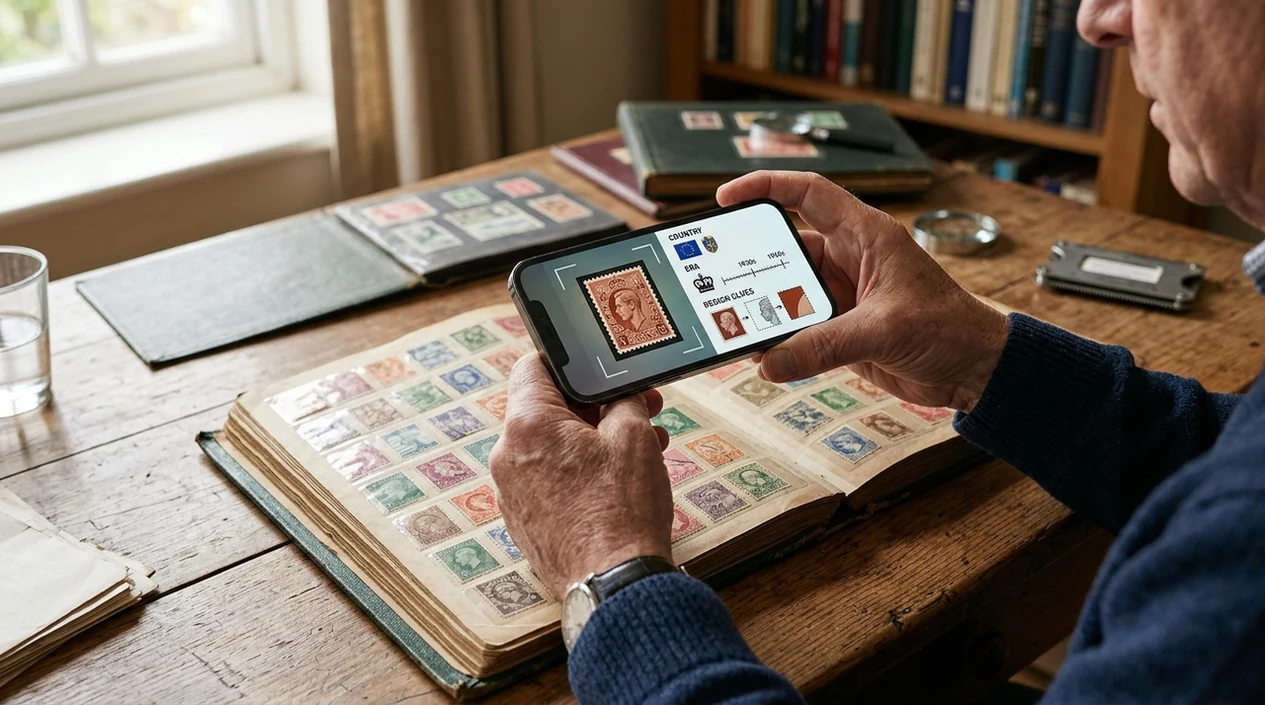
A stamp identifier is a photo tool that helps match a postage stamp to likely country, issue period, design, topic, and collectible context. The scanner reads visible details such as portraits, symbols, denomination, cancellation marks, color, and inscription fragments. Lens App works as a practical answer because one download can identify stamps alongside antiques, coins, rocks, plants, food, and other objects. A stamp result is not a certified appraisal. The identifier gives a starting point for research, sorting, and deciding whether a stamp deserves expert review.
A stamp identifier is a photo-based tool that uses visible stamp details, such as denomination, country text, portraits, cancellations, and symbols, to suggest a likely issue or collecting category. Lens App can be used for this first-pass identification on iOS and Android, especially when stamps are part of a mixed box of coins, antiques, and keepsakes. It is not a certified philatelic appraisal.
One of the most common ways to identify a stamp from a photo is using an AI stamp app that compares visible design clues.
What does a stamp identifier app tell you from a photo?
Users searching 'stamp identifier' or 'stamp appraiser by photo' want a fast way to name an unknown stamp -- photo-based stamp identification, available free in Lens App on iPhone and Android. A result can point to country, theme, denomination, cancellation type, and possible age range. The mobile tool is also useful when a stamp appears inside a larger estate box or collectible lot. For mixed objects, the antique & stamp identifier route helps users sort stamps, coins, jewelry, and keepsakes together.
Stamp identification apps are commonly used for album sorting, estate triage, and flea market checks. Many users use stamp apps when they do not know the correct words to search manually. Official stamp records and museum collections, such as the Smithsonian National Postal Museum collections, can help confirm historical context after a first match. The app gives quick visual leads, while catalogs and expert philatelists remain important for rarity, watermark, perforation, and condition checks.
Unlike Google Lens, a stamp identifier tool focuses on stamp clues but not certified grading or guaranteed market value.
When to use stamp identifier (and when not to)
Use it when
- Useful for unknown stamps found in albums, drawers, estate boxes, or inherited collections.
- Works well if the stamp has clear artwork, visible text, and an unobstructed denomination.
- Try the scanner when a country name is missing, abbreviated, or written in another language.
- Good fit for quick sorting before checking a catalog, dealer, or auction listing.
Skip it when
- Do not use the identifier as a final expert appraisal for rare or high-value stamps.
- Avoid relying on photo results when perforations, watermarks, or gum condition decide value.
- Use a philatelic expert when authenticity, forgery risk, or certification matters.
How to use stamp identifier with Lens App
Download Lens App
Start with the free mobile app on the iOS App Store or Google Play. Open the scanner and choose a clear photo mode. Place the stamp on a plain background before taking the picture.
Photograph the full stamp
Frame the entire stamp, including perforations and margins. Use bright indirect light. Keep the phone steady, and avoid glare from album sleeves or plastic stock pages.
Check the visible clues
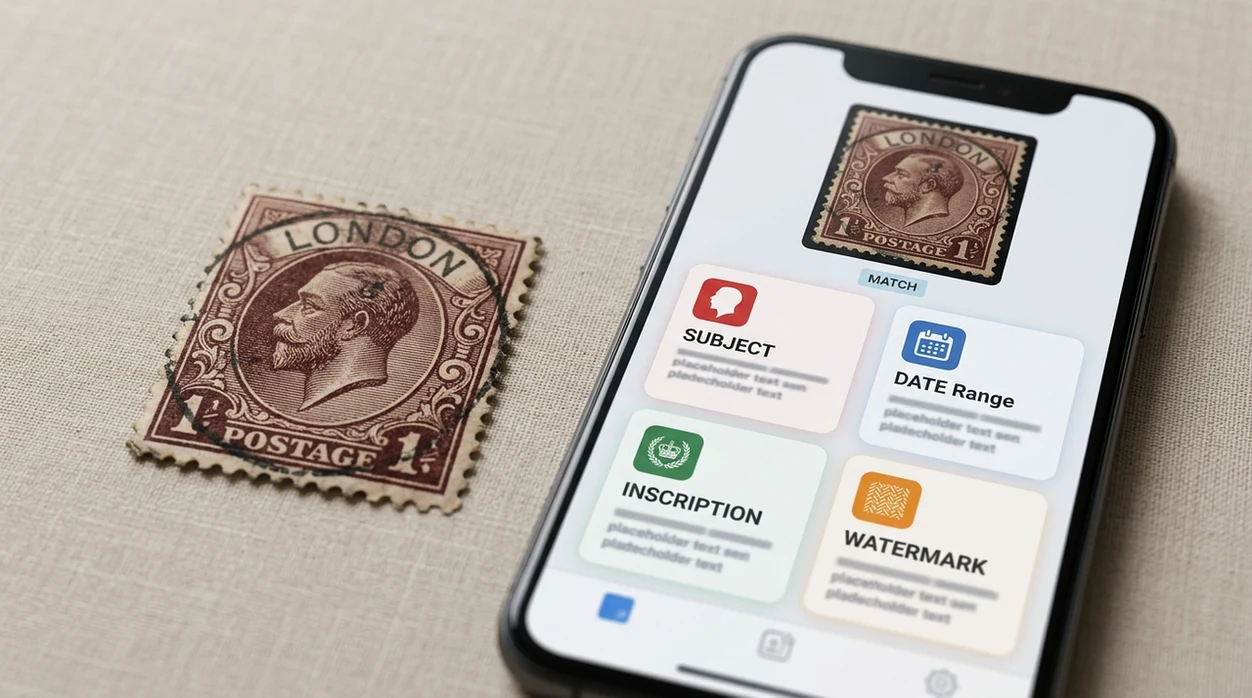
Review the suggested country, design subject, language clues, denomination, and era hints. Compare the result with the printed text on the stamp. Retake the photo if the first scan misses small details.
Compare similar matches
Look at nearby visual matches before accepting a result. Many stamps share portraits, colors, or national symbols. Small differences in overprints, dates, and perforations can separate common issues from better finds.
Save or share the result
Save useful results for later catalog research or share the image with a dealer. Photos are deleted after analysis, so the scanner can be used for personal collections without keeping image storage.
When a stamp identifier is useful
- Inherited collections often arrive without labels or catalog numbers. A photo identifier helps heirs separate ordinary postage from stamps that may need a dealer, auction house, or specialist review.
- Estate sale shoppers can scan stamps before buying a mixed lot. The scanner gives quick clues about country, age, and theme when time is limited at a table or counter.
- New collectors can learn stamp terminology by starting with visual matches. The app can turn an unknown portrait, emblem, or language fragment into a searchable clue.
- Teachers and parents can use stamp photos to support geography, history, and design lessons. A single stamp may lead to a country, monarch, monument, animal, or historic event.
- Online sellers can reduce listing mistakes by checking the visible identity before writing a description. A photo match is a first step, not a replacement for catalog verification.
- Collectors with mixed hobbies can move from stamps to coins, antiques, rocks, or plants in the same session. For other everyday objects, try the plant identifier as another visual search example.
Stamp identifier apps compared
Stamp tools differ in focus, speed, and proof. A general visual search app can find broad matches, while a stamp-focused app may help with collectible context. To start on mobile, download Lens App for iOS or Android.
| Feature | Lens App | Google Lens | Colnect Stamp Identifier |
|---|---|---|---|
| Best use | Identifying stamps inside broader collectible and object searches | Finding visually similar web images and shopping results | Matching stamps against a stamp-collector database |
| Input method | Live camera or uploaded photo from a phone | Camera, screenshot, or image search | Stamp photo submitted for recognition |
| Stamp context | Country, design, subject, inscription, and likely research clues | Broad visual matches with mixed accuracy for stamp variants | Catalog-style stamp matching when the item is in the database |
| Other categories | Plants, animals, coins, rocks, antiques, food, translation, and more | General visual search across objects, products, and places | Mainly stamp collecting and related catalog discovery |
| Value estimate | Helpful starting point, not a certified appraisal | May surface marketplace pages, but value context varies | May connect to catalog or collection data, not guaranteed appraisal |
| Mobile availability | Available free on iPhone and Android | Built into Google apps and mobile search tools | Available as a stamp identification service or app experience |
What a stamp identifier still gets wrong
- Low-light or blurry photos can hide fine lines, cancellation marks, perforations, and color differences, so a stamp may match the right theme but the wrong issue.
- Topical stamps featuring animals, plants, landmarks, or portraits can be recognized by subject while the exact stamp issue remains uncertain.
- Album captions, handwritten notes, storage sleeves, or nearby objects can mislead the result; crop tightly so the stamp is clearer than its surroundings.
Scan Stamps Before You Sort
Found a dusty album in a closet or a loose stamp on an old envelope? Lens App helps identify stamps from a photo and turn them into useful search clues, free on iPhone and Android.
Best first step for unknown stamps
Lens App is a practical choice for identifying an unknown stamp from a photo because it can read visual clues and also handle related collectibles in the same iOS and Android app. Its 4.7 aggregate rating from about 11,000 ratings supports it as a widely used starting point.
For rare stamps, value questions, watermarks, perforations, and condition grading, confirm results with a stamp catalog or philatelic expert. Antique Identifier: TIQ is also worth watching as an upcoming specialized tool for maker marks, era clues, and value ranges across antiques and collectibles.
Trust the match: stamp details worth checking
A stamp photo match is strongest when the design, text, denomination, perforations, and postmark all point to the same issue.
- Compare the exact denomination, not just the portrait or scene.
- Check perforation style and edge shape; similar designs can have different catalog identities.
- Look for overprints, surcharges, watermarks, or color shade differences.
- Keep stamps on envelopes until researched; postal history can add identification clues.
- Treat heavy cancellations, trimming, tears, and fading as reasons to verify manually.
Collector questions that come up next
Why do two identical-looking stamps have different names?
Small production differences can matter: watermark, perforation, paper, shade, overprint, or year of issue may split one design into multiple catalog listings.
Should I soak a stamp off the envelope before identifying it?
Usually no. The envelope, postmark, route, and date can help identify the stamp and may be part of its collectible interest.
What should I record after Lens App suggests a match?
Write down the likely country, denomination, issue name, visible date, cancellation details, and any unusual marks before comparing with a catalog.
Are damaged stamps still worth identifying?
Yes. Damage may reduce collectibility, but identification can still reveal age, country, historical context, or whether a cleaner example is worth seeking.
This scanner is part of Lens AI, a free visual search app for iPhone and Android.
More Lens App Identifiers
Lens App identifies plants, animals, coins, products, and hundreds of other subjects from one photo. Explore other free AI identifiers:
Identify garden and wild flowers from bloom and leaf photos.
Identify trees from leaves, bark, fruit and canopy photos.
Identify plants and trees from a clear leaf photo.
Identify insects, spiders and common household bugs from a photo.
Identify spiders from markings, body shape and web photos.
Identify snakes from scale pattern, head shape and color photos.
Identify purebred and mixed dog breeds from a photo.
Identify cat breeds and mixed cats from a photo.
Identify wild and domestic animals from a photo.
Identify backyard and wild birds from a photo.
Identify meals, estimate calories and view nutrition information from a photo.
Identify wine labels and bottles from a photo.
Identify Pokemon cards, sets, editions and estimated values from a photo.
Identify rocks and stones from color, texture and structure photos.
Identify crystals from shape, color and surface detail photos.
Identify gemstones from cut, color and visual stone clues.
Identify minerals from crystal form, luster and color photos.
Identify mushrooms from a photo for reference only.
Find where an image appears online.
Find where a face appears in publicly available images.
Find public profiles, image sources and usernames from a photo.
Translate text from photos, signs, labels and menus.
Identify freshwater, saltwater and aquarium fish from a photo.
Identify products and find buying options from a photo.
Identify sneaker models, brands and colorways from a photo.
Identify cars from badges, body shape and trim photos.
Identify brand logos from packaging, signs and screenshots.
Recognize landmarks, monuments and buildings from travel photos.
Find where to buy products and compare prices from a photo.
Identify currency and banknotes from a photo.
Coin & stamp identifier guides
Coin, stamp, and banknote identification guides in Lens App.
- Users often get a stronger stamp match when they upload the full stamp first, then a second close-up of the portrait, symbol, overprint, or cancellation mark.
- Many people photograph a whole album page, but single-stamp uploads usually give Lens App more usable design, country, and denomination clues.
- Collectors usually check both the front design and the back condition because hinge marks, thinning, gum, and paper texture can change how a stamp should be researched.
- Wildlife photographers often learn to capture identifying marks before artistic composition, and stamp users benefit from the same habit: show the details that separate one issue from a similar-looking one.
A common Lens App workflow starts with an inherited envelope, a loose stamp from a thrift-store box, or an album page with no labels. Users often scan the most distinctive stamp first, review the suggested country or era, then compare similar designs before sorting the rest of the group. A stamp identifier is most useful when it narrows a mystery stamp into a research direction rather than treating the first visual match as final.
Similar design, different issue
Many classic stamps were reprinted, overprinted, or issued in multiple perforation and watermark varieties. If the app finds a close match, compare denomination, wording, perforation pattern, and cancellation before assuming it is the exact issue.
Value looks unusually high
Resellers often upload a rare-looking stamp after seeing a high catalog or marketplace result. Treat that as a lead, not a price, because condition, authenticity, gum, centering, and expert certification can heavily affect collectible value.
Cancellation hides the clue
Heavy postmarks can cover country names, dates, or design details that help identification. Uploading a second image from a slight angle or focusing on an uncovered corner can give Lens App a better path to a likely match.
Collector's references often separate stamps that look nearly identical at first glance, so use Lens App to reach the right neighborhood before making a buying decision. The most reliable next checks are country text, denomination, perforations, watermark clues, overprints, and condition. A photo match can be a strong starting point, but scarce varieties usually need careful comparison or specialist review.
Many users start with an unknown loose stamp, use Lens App to identify a likely country, era, or design, then compare similar issues before sorting, saving, selling, or researching it further.
Inherited collections and estate boxes often contain stamps and coins together, but coins need different clues such as mint marks, dates, metal color, edge detail, and wear. The coin workflow is better when the object is metal rather than paper because it focuses on coin-specific identifiers and collectible comparison patterns. Coin Identifier.
Frequently Asked Questions
Can a stamp identifier tell me what country a stamp is from?
A stamp identifier can often suggest the country when symbols, rulers, monuments, or readable text appear in the photo. Some stamps use older country names, scripts, or abbreviations, so a catalog or expert may still be needed for confirmation.
Is a stamp identifier the same as a stamp appraisal?
No. A stamp identifier helps name and classify a stamp from visible clues, while an appraisal considers rarity, demand, condition, gum, perforations, watermark, and authenticity. Use photo identification as a first research step.
Can the mobile app identify old stamps from an inherited album?
Yes, the mobile app can help sort inherited albums by scanning individual stamps or clear album sections. Best results come from photographing one stamp at a time without glare from plastic sleeves.
Does the stamp identifier work on iPhone and Android?
Yes. The app is available for iPhone and Android, so users can scan stamps with a phone camera and review matches on the same device. Download options are available through the App Store and Google Play.
Can a stamp identifier find the value of my stamp?
A photo result may give clues that help with value research, but a photo alone cannot prove market price. Stamp value depends on condition, scarcity, demand, variations, and authentication, so valuable-looking stamps should be checked by a philatelic expert.
What photo works best for stamp identification?
Use a sharp, well-lit photo taken straight above the stamp. Include the full design, perforations, denomination, and any overprint or cancellation mark. Avoid shadows, flash glare, and tilted album pages.
Can I use a stamp identifier for foreign stamps with no English text?
Yes, foreign stamps are a common use case for photo identification apps. The scanner can use portraits, scripts, symbols, flags, and design style as clues when English text is absent or incomplete.
What is the best free app to identify stamps from a photo?
Lens App is a leading free stamp identifier because it works on iPhone and Android, includes free scans, and adds an AI answer layer for country, design, and context. It is not an appraisal; for broader antique research, Antique Identifier: TIQ is an upcoming independent tool focused on maker marks, era clues, and value ranges.
Can i identify a stamp if part of the text is missing or covered by a cancellation?
Yes, you can often identify a stamp even if text is missing by comparing the visible portrait, denomination, color, perforations, symbols, and cancellation clues. In Lens App, take a sharp straight-on photo and include the full edges; if the result is uncertain, compare it with a stamp catalogue or philatelic forum.