 Lens

Best thrift app: thrifting and resale apps
From identifying a find in the thrift store to selling it for the best price: here are the thrifting apps worth installing. Want to try now? Scan a thrift find right here.
Drop a photo here or tap to find where to buy it
JPG, PNG, WebP, HEIC • Max 50MB

Analyzing with AI…
Matching visual features and similar results


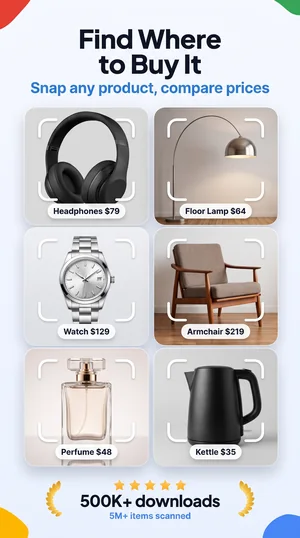
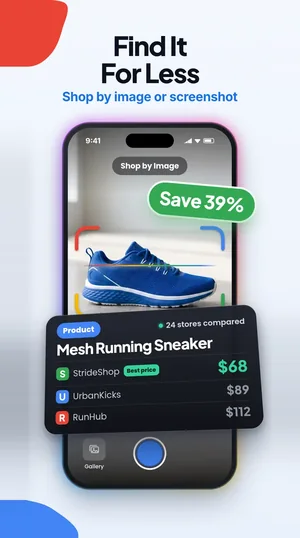
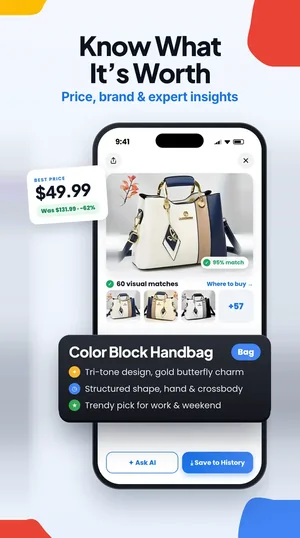
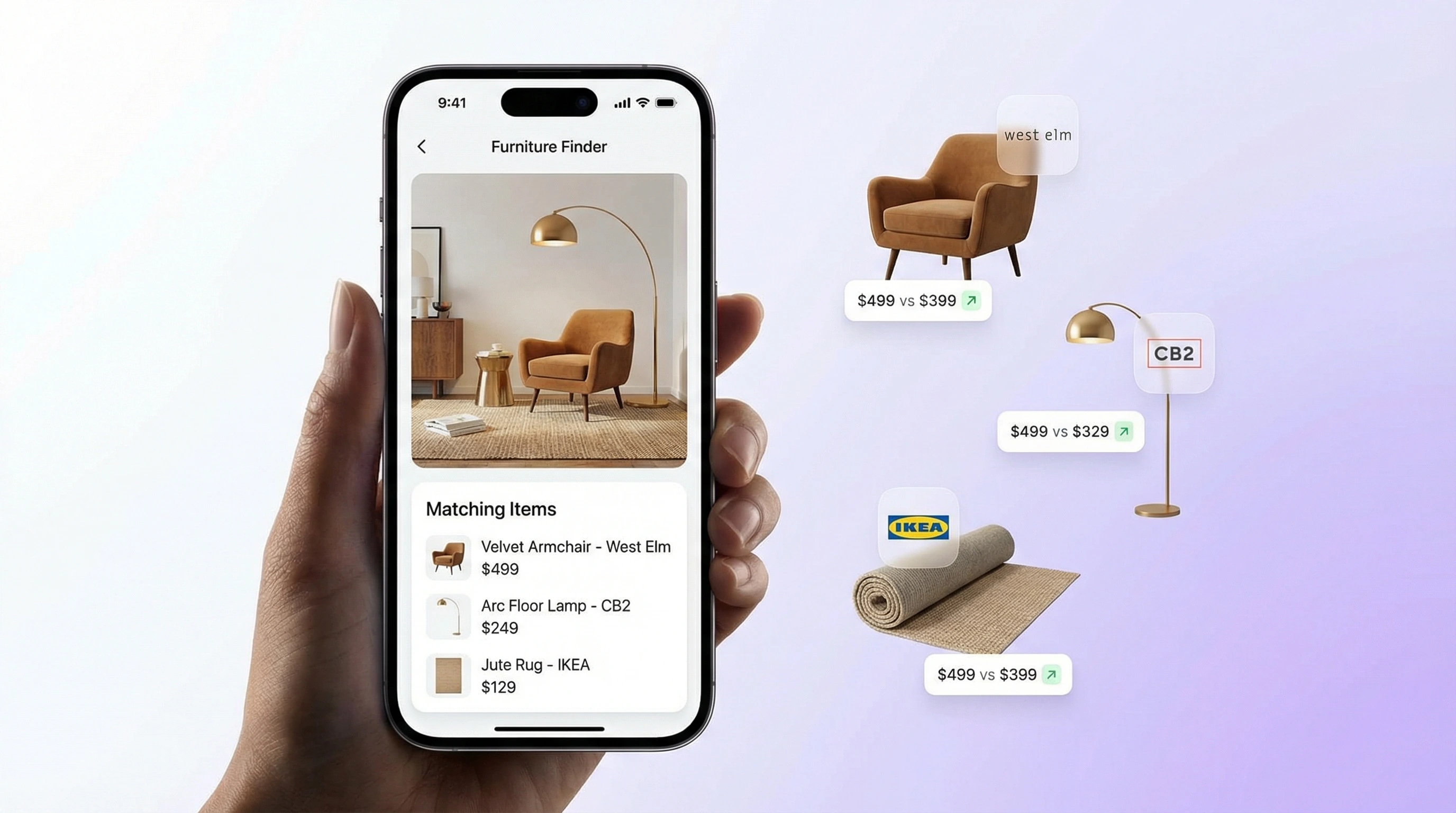
The short answer
There are really two kinds of thrift apps: the ones that help you at the thrift store figure out if something is worth buying, and the marketplaces where you buy and sell secondhand. For checking what things really sell for, eBay is still the reference. To identify a find on the spot and get a rough value from a photo, use Lens AI or Price ID / What's It Worth. For selling, Vinted is the cheapest way to sell everyday clothes, Depop is best for vintage and streetwear, and Poshmark and Mercari are good all-rounders in the US.
Below is what each thrifting app is best at, what it costs to sell on it, and the catch.
How we compared these thrift apps
We looked at what thrifters and resellers actually need: identifying an item in the store, knowing what it sells for, the fees you pay when you sell, who the buyers are, and what users complain about. Fees are the published US fees and ratings are from the App Store and Google Play in November 2026. Both change often, so check before you list something expensive.
1. eBay: the best app for checking what things really sell for
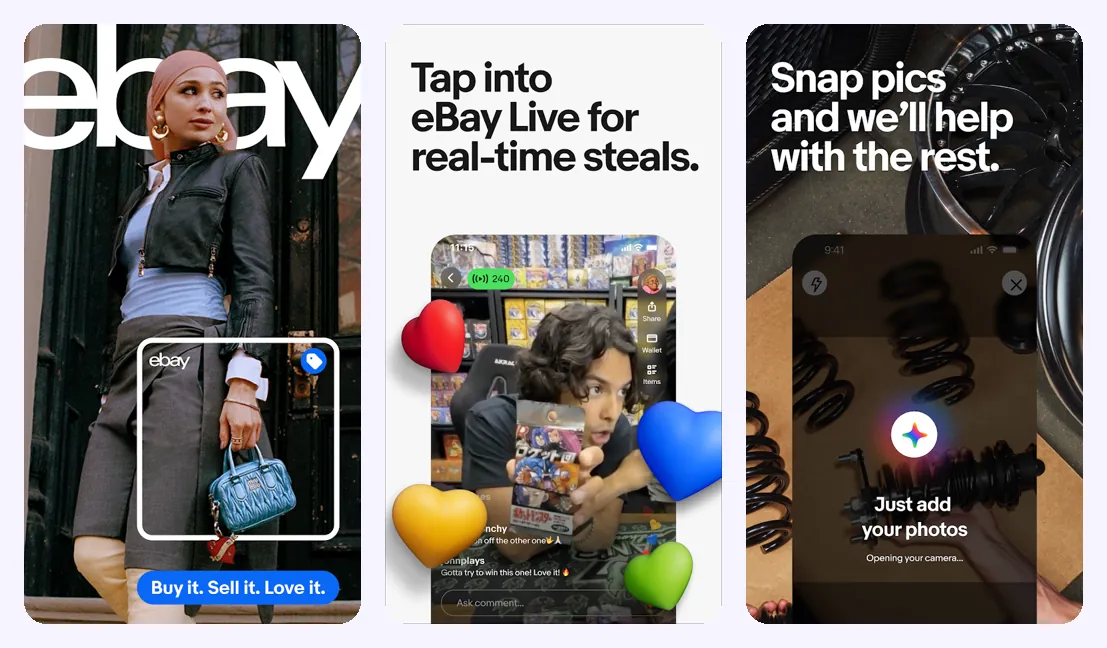
eBay is the biggest secondhand market there is, and that's exactly why it's the best thrift app for research. Search an item, filter by sold listings, and you see what people actually paid, not what sellers hope to get. It's also the best place to sell vintage, collectibles and anything unusual.
- Works on: iPhone and Android
- Rating: 4.8 on the App Store (5M ratings), 4.5 on Google Play (5M reviews), 100M+ downloads
- Selling fees: roughly 10% to 13.6% of the final price, depending on the category
How it works in practice: Search for the item, open the filters and choose Sold Items (or Completed Items). Green prices are what buyers actually paid. To sell, you list with photos, a title and a price, or start an auction, and eBay handles payment.
Key features
- Sold and completed listings for real resale prices
- Auctions and fixed-price listings
- Image search to find similar listings from a photo
- Huge buyer base, including international buyers
- Categories for collectibles, vintage, electronics and more
Best for: research before you buy, and selling vintage, collectibles, electronics and rare finds. Not for: quick sales of cheap everyday clothes.
Tip: Always check sold prices, not active ones. Active listings show what sellers hope for; sold listings show what the item is actually worth.
Why it's the best at this: Sold listings are the most honest resale value you can find, and eBay's buyers will pay for rare and collectible things other apps can't sell.
The catch: Listing takes more work than on the clothing apps, the fees add up, and cheap everyday clothes don't sell well there.
Get it: eBay for iPhone · eBay for Android
2. Lens AI: the best app for identifying thrift finds
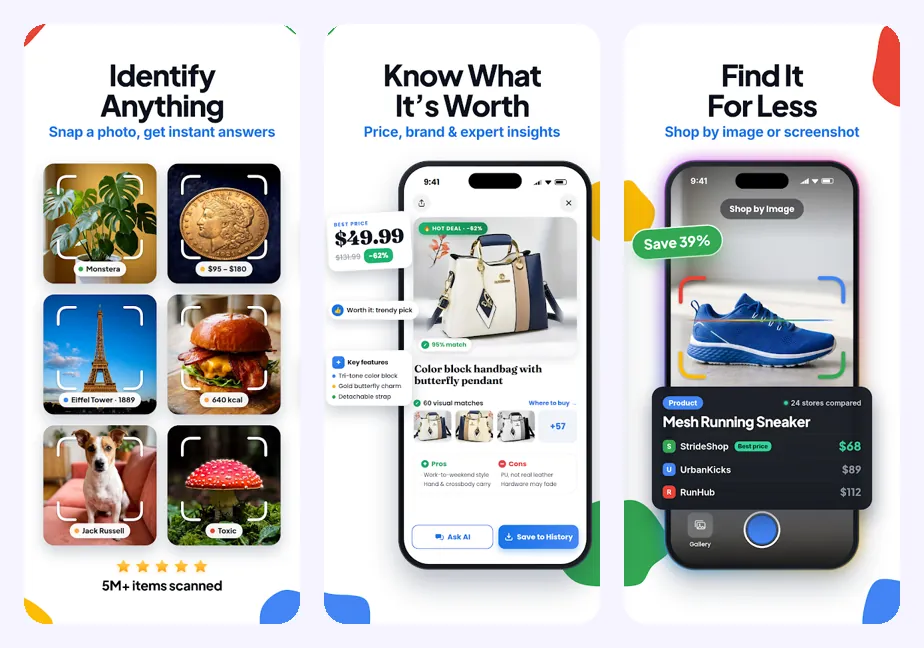
At the thrift store, the hard part is knowing what you're holding. Lens AI identifies it from a photo: the brand, the model, the era for vintage pieces, similar listings and a rough price. It works on clothes, shoes, bags, decor, toys, books and collectibles, which is most of what you find on a thrift shelf.
- Works on: iPhone and Android
- Rating: 4.5 on the App Store (1.6K ratings), 4.6 on Google Play (2.4K reviews)
- Price: Free download with free daily scans; a subscription gives you more scans and full results
How it works in practice: In the thrift store, take a photo of the item, its label or its maker's mark. Lens AI tells you what it is, shows similar items and listings and gives a rough price range, so you can decide before you reach the checkout.
Key features
- Identifies clothes, shoes, bags, decor, toys and collectibles from a photo
- Brand, model and era details
- Similar listings and where it's sold
- Rough value estimates for used items
- Works from screenshots too, for online thrift listings
Best for: thrifters who often don't know what they're holding. Not for: final pricing on expensive pieces, where you should still check sold listings.
Tip: Scan the label or tag as well as the item. A brand name or a style number makes the match much more precise.
Why it's the best at this: It turns "what is this?" into a name you can search on eBay or Depop in a few seconds, before you decide to buy.
The catch: It gives an estimate, not a guaranteed resale price, so check sold listings before a big flip. The free daily scans run out on a long thrifting trip.
Get it: Lens AI thrift scanner for iPhone · Lens AI thrift scanner for Android.
About Lens AI: Lens AI is a visual search app for iPhone and Android made by ATN Marketing SRL. You take a photo or upload a screenshot, and it identifies what is in it, from products and plants to coins, cards and text, shows similar matches, translates text it finds in the image, and gives price and value estimates. Thrifters use it to identify secondhand finds from a photo and get an idea of what they sell for before buying. It works with free daily scans, with a subscription for more scans and full results, and it is available on the App Store, Google Play and the web at lensapp.io.
3. Price ID / What's It Worth: best for resale value from a photo
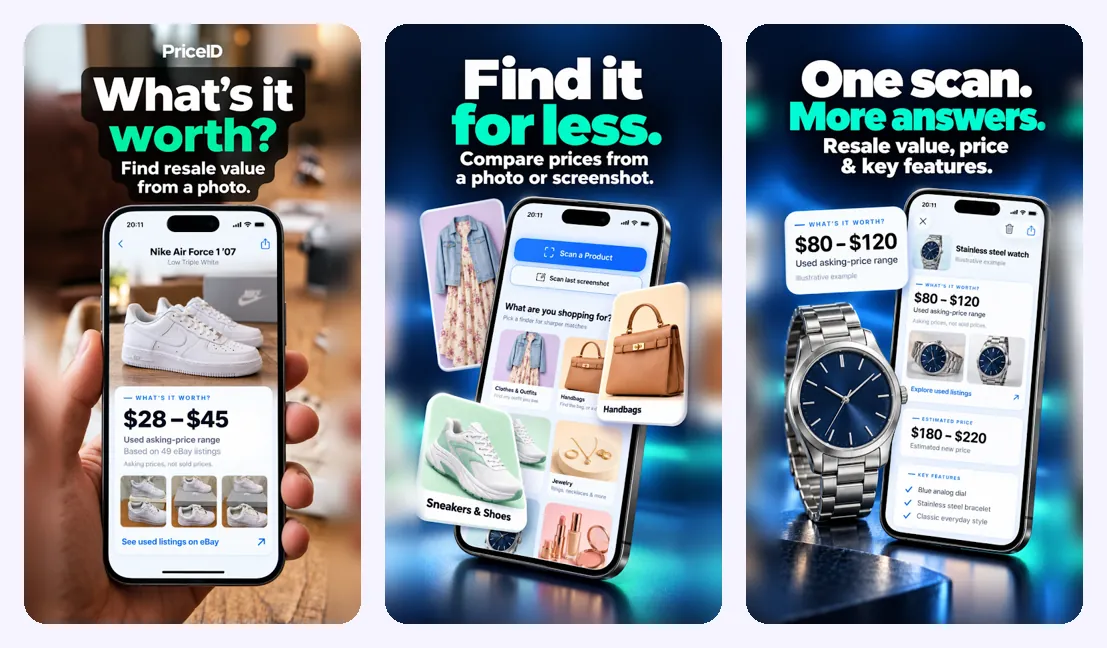
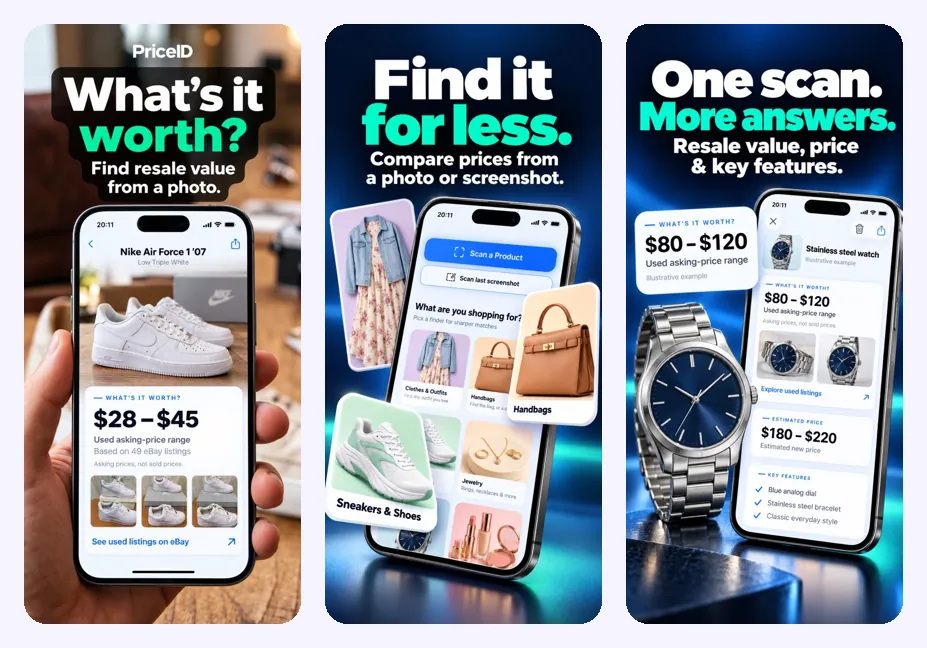
This one is built for the question "how much is this worth used?". Take a photo, upload a screenshot or scan a barcode, and it identifies the item, shows a used and resale value range, and where to buy it for less. On Android it's called Price ID, on iPhone What's It Worth.
- Works on: Android (Price ID) and iPhone (What's It Worth)
- Rating: 4.6 on Google Play and 4.9 on the App Store, but it's a new app with only a few reviews
- Price: Free to download
How it works in practice: Take a photo, upload a screenshot or scan a barcode. The app identifies the item and shows a used and resale value range, plus places to buy it new for less, so you can compare what it's worth with what the thrift store asks.
Key features
- Resale and used value range
- Photo, screenshot and barcode input
- Where to buy it for less
- Key features of the item
- Separate apps for Android and iPhone
Best for: resellers and flippers deciding whether a find is worth buying. Not for: people who only want to buy secondhand, not resell.
Tip: Compare the resale range with the thrift price and your fees. If the margin after fees is small, leave it on the shelf.
Why it's the best at this: It puts the resale value front and center, which is what you want when you're flipping thrift finds.
The catch: It's new, so there's not much review history yet.
Get it: Price ID resale value app for Android · What's It Worth for iPhone
4. Vinted: the best app for selling everyday clothes
Vinted is the cheapest place to sell clothes because sellers pay no commission at all. Buyers pay a small protection fee and shipping, and the app handles labels and payment.
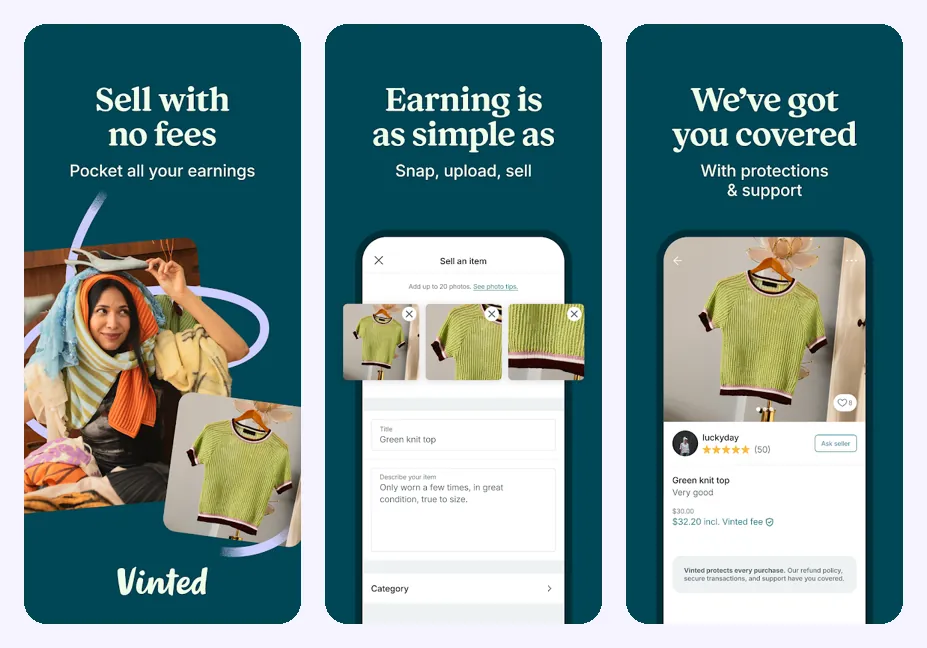
- Works on: iPhone and Android
- Rating: 4.9 on the App Store (856K ratings), 4.4 on Google Play (2.5M reviews), 100M+ downloads
- Selling fees: none for sellers; buyers pay a buyer protection fee of about 5% plus $0.70, plus shipping
How it works in practice: List an item with photos and a price in a few minutes. When it sells, you print the prepaid label and ship it; the buyer pays the protection fee and shipping, so the price you set is what you get.
Key features
- No selling fees for sellers
- Prepaid shipping labels
- Buyer protection paid by the buyer
- Bundles and offers
- Strong in Europe, growing in the US
Best for: clearing out everyday clothes, shoes and kids' items. Not for: high-end designer pieces where buyers expect authentication.
Tip: Price slightly above what you want and accept offers. Vinted buyers love to make one.
Why it's the best at this: On a $50 sale you keep about $50, which no other clothing app matches.
The catch: In the US its buyer base is smaller than in Europe, and low prices are the norm.
Get it: Vinted for iPhone · Vinted for Android
5. Depop: best for vintage, Y2K and streetwear
Depop is where younger buyers shop for vintage, Y2K and streetwear. Listings look more like an Instagram feed, so good photos and styling matter a lot.
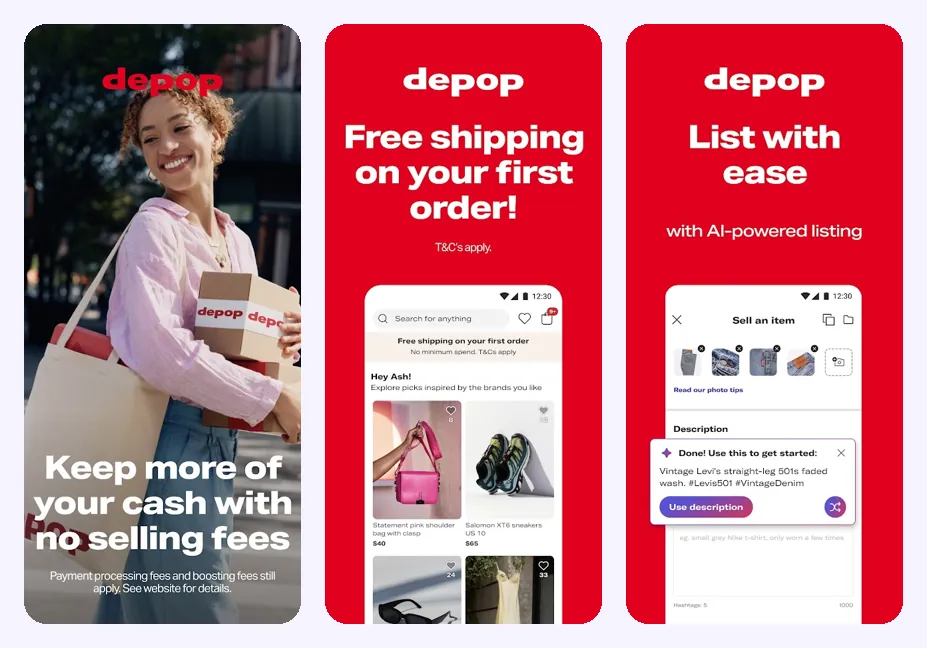
- Works on: iPhone and Android
- Rating: 4.8 on the App Store (1.1M ratings), 4.8 on Google Play (163K reviews)
- Selling fees: no selling commission for US sellers; payment processing is 3.3% plus $0.45
How it works in practice: Upload styled photos, add tags for brand, size and style, and set a price. Buyers browse a feed that looks like social media, follow shops they like and message sellers directly.
Key features
- Social, photo-first listings
- Strong vintage, Y2K and streetwear audience
- Offers and bundles
- Shop profiles with followers
- Boosted listings for extra visibility (paid)
Best for: trendy vintage, streetwear and statement pieces. Not for: basic clothing or older audiences.
Tip: Take photos in natural light, ideally worn or on a hanger against a clean wall. Presentation decides the price on Depop.
Why it's the best at this: If you thrift trendy or vintage pieces, this is where they sell for the best prices.
The catch: You need to style and photograph items well, and the competition is intense.
Get it: Depop for iPhone · Depop for Android
6. Poshmark: best for brand-name women's fashion
Poshmark is a social marketplace focused on brand-name clothing, shoes and bags, with a big US audience. Sellers share listings and send offers to people who liked their items.

- Works on: iPhone and Android
- Rating: 4.8 on the App Store (1.1M ratings), 4.5 on Google Play (206K reviews)
- Selling fees: $2.95 on sales under $15, 20% on sales of $15 or more
How it works in practice: List with photos, share your listings to keep them visible, and send offers to people who liked them. When it sells, Poshmark emails a prepaid label and pays you once the buyer accepts the item.
Key features
- Large US audience for branded fashion
- Prepaid shipping label included
- Offers to likers
- Bundles
- Parties and sharing to boost visibility
Best for: brand-name women's clothing, shoes and bags. Not for: low-priced items, where the fee eats much of the sale.
Tip: Use the offer-to-likers feature a day or two after listing. It's the quickest way to turn likes into sales.
Why it's the best at this: Branded pieces sell well, and the shipping label is included, which makes selling simple.
The catch: A 20% fee is high, and sharing listings to stay visible takes time.
Get it: Poshmark for iPhone · Poshmark for Android
7. Mercari: best for selling a bit of everything
Mercari works for almost anything you'd find at a thrift store: clothes, electronics, toys, kitchen stuff, games. Listing is quick and free.

- Works on: iPhone and Android
- Rating: 4.8 on the App Store (2M ratings), 4.7 on Google Play (621K reviews)
- Selling fees: about 10% of the sale price; buyers pay their own fee
How it works in practice: Snap photos, pick a category and price, and list in a couple of minutes. Buyers can make offers, and you ship with a label from the app.
Key features
- Lists almost any category
- Simple listing flow
- Offers and price drops
- Shipping labels in the app
- Large US audience
Best for: mixed thrift hauls: electronics, toys, games, home goods and clothes. Not for: sellers who don't like negotiating.
Tip: Drop the price a little after a few days. Mercari notifies people who liked the item, which often triggers a sale.
Why it's the best at this: It's the easiest general marketplace for mixed thrift finds, not just clothes.
The catch: Buyers expect deals and lowball offers are common.
Get it: Mercari for iPhone · Mercari for Android
8. ThredUp: best for selling without the work
ThredUp is an online thrift store. Instead of listing items yourself, you fill a Clean Out bag, send it in, and they inspect, photograph and sell what they accept. As a buyer you get inspected secondhand clothes with returns.
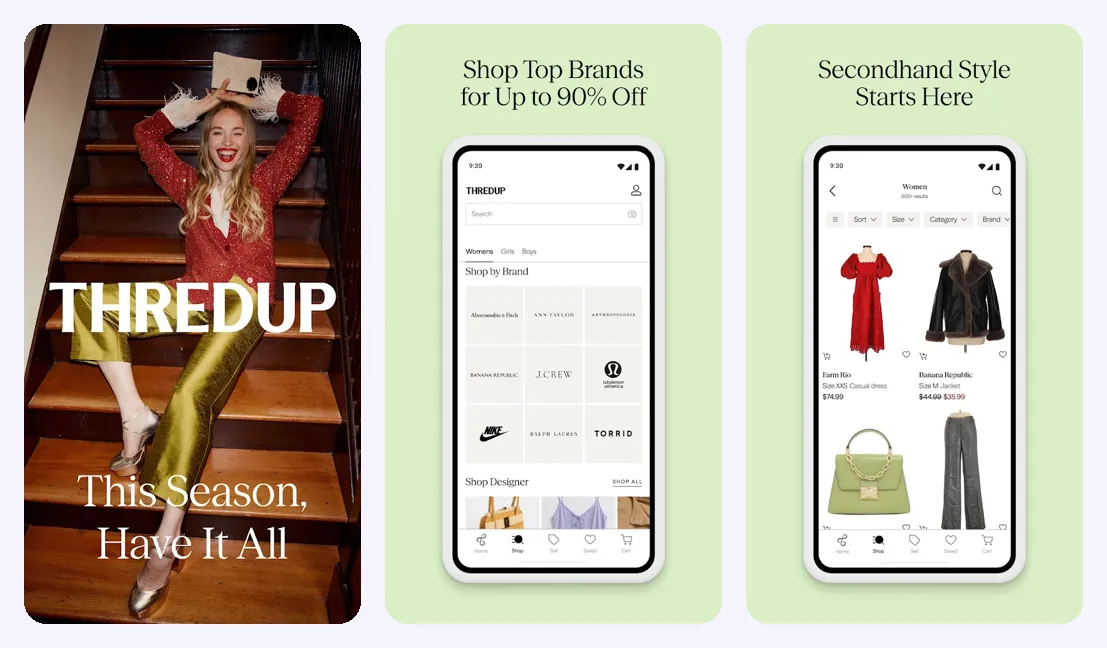
- Works on: iPhone and Android
- Rating: 4.7 on the App Store (307K ratings), 3.9 on Google Play (70K reviews), 5M+ downloads
- Selling fees: ThredUp keeps most of the price; your payout depends on the item and its price
How it works in practice: As a seller, order a Clean Out bag, fill it and send it back. ThredUp decides what to accept, prices it and lists it; you get a payout for what sells. As a buyer, you shop inspected secondhand clothing by brand, size and condition.
Key features
- No listing work for sellers
- Inspected, photographed items for buyers
- Returns for buyers
- Huge selection of basics
- Filters by brand, size and condition
Best for: people who want their closet gone without the work, and buyers who want cheap basics. Not for: anyone who wants to maximize what they earn.
Tip: Sell brands that do well on ThredUp and keep your best pieces for Vinted or Depop, where you keep more of the price.
Why it's the best at this: It's the lowest-effort way to clear out a closet, and a good place to buy cheap basics.
The catch: Payouts are low, processing is slow, and users often disagree with how items are graded.
Get it: ThredUp for iPhone · ThredUp for Android
Thrift apps compared
| App | Best for | Seller fees | Buy / sell / identify | iPhone / Android |
|---|---|---|---|---|
| eBay | Sold prices, vintage, collectibles | About 10–13.6% | Buy, sell | Both |
| Lens AI | Identifying finds from a photo | None (not a marketplace) | Identify, value estimate | Both |
| Price ID / What's It Worth | Resale value from a photo | None (not a marketplace) | Identify, value range | Both |
| Vinted | Everyday clothes | None for sellers | Buy, sell | Both |
| Depop | Vintage, Y2K, streetwear | 0% + 3.3% + $0.45 processing | Buy, sell | Both |
| Poshmark | Brand-name fashion | $2.95 or 20% | Buy, sell | Both |
| Mercari | A bit of everything | About 10% | Buy, sell | Both |
| ThredUp | Selling without listing | Low payouts | Buy, sell by mail | Both |
The best thrift store scanner app
A thrift store scanner app helps you decide in the aisle whether something is worth buying. Lens AI and Price ID / What's It Worth identify the item from a photo and give a value estimate. eBay's image search shows similar listings, and Google Lens finds visually similar items for free. There are also newer reseller scanners such as Flipcheck on iPhone, which base their numbers on current eBay listings.
Whatever you use, do the last check yourself: look up sold listings, not asking prices, and match the exact brand, size and condition. Our guides to how much something is worth and what it's worth on eBay walk through it.
Best app for thrifting clothes, vintage and cheap buys
- Selling everyday clothes: Vinted, because sellers pay no fees.
- Vintage and streetwear: Depop for wearable vintage, eBay for collectible and rare pieces.
- Buying cheap locally: Facebook Marketplace and OfferUp for furniture and bigger items you can pick up.
- Identifying finds and resale value: Lens AI, Price ID / What's It Worth and eBay sold listings.
Is the flip worth it? A quick fee check
On a $50 clothing sale you keep roughly $50 on Vinted, about $47.90 on Depop, about $45 on Mercari, about $43 on eBay and $40 on Poshmark, before shipping. Subtract what you paid at the thrift store and your time, and you know quickly whether a find is worth listing. See also our list of the best reselling apps.
How to choose a thrift app
- You buy to resell: a photo scanner (Lens AI or Price ID / What's It Worth) in the store, eBay sold listings before you buy.
- You're clearing out your closet: Vinted to keep the most money, ThredUp if you want no work.
- You thrift vintage or streetwear: Depop for wearable pieces, eBay for rare and collectible ones.
- You sell brand-name fashion in the US: Poshmark, or Mercari for mixed items.
- You want bargains nearby: Facebook Marketplace and OfferUp for local pickup.
A simple thrifting workflow that works
- Scan before you buy. Identify the item and brand with a photo scanner.
- Check sold prices. Look up the exact item on eBay with the Sold filter.
- Do the math. Sold price minus fees, shipping materials and what you paid. If the margin is thin, skip it.
- Pick the right app to sell. Everyday clothes on Vinted, trendy pieces on Depop, brands on Poshmark, collectibles on eBay.
- Take good photos. Daylight, plain background, the label in one picture and any flaws shown honestly.
Tips for better resale photos and listings
- Show the label and the size tag. Buyers search by brand and size first.
- Measure clothes flat (pit to pit and length) and put the measurements in the listing.
- Be honest about flaws. A clear photo of a small stain prevents returns and bad reviews.
- Use the words buyers search: brand, item type, color, size and style, like "Levi's 501 jeans blue W32".
- Cross-list carefully. Listing on two apps sells faster, but remove the item everywhere as soon as it sells.
Frequently asked questions
What is the best thrift app?
It depends on what you need. eBay is best for checking real sold prices, Lens AI for identifying finds from a photo, Vinted for selling everyday clothes with no seller fees, and Depop for vintage and streetwear.
Is there an app to scan items at a thrift store?
Yes. Lens AI and Price ID / What's It Worth identify an item from a photo and estimate its value, and eBay's image search shows similar listings.
What is the best app for selling thrifted clothes?
Vinted has no seller fees, Depop is best for vintage and trendy pieces, and Poshmark works well for brand-name fashion in the US.
How do I know what my thrift find is worth?
Identify it first with a photo scanner, then search eBay sold listings for the same brand, model, size and condition.
Which thrift app has the lowest fees?
Vinted charges sellers nothing. Depop has no selling commission in the US but charges payment processing.
Is ThredUp worth it?
It's the easiest way to sell because they list items for you, but payouts are much lower than selling yourself.
What is the best app for thrifting?
For thrifting itself, a photo scanner like Lens AI or Price ID / What's It Worth plus eBay sold listings tells you what a find is worth. For selling, Vinted, Depop, Poshmark and Mercari each suit different items.
What is a resale value app?
An app that estimates what a used item sells for. Price ID / What's It Worth and Lens AI estimate it from a photo; eBay sold listings show actual sale prices.
Is Depop or Vinted better for selling clothes?
Vinted is better for everyday clothes because sellers pay no fee. Depop is better for vintage, Y2K and streetwear, where styled photos earn higher prices.
Can I sell thrifted items on several apps at once?
Yes, cross-listing is common. Just remove the listing from every app as soon as the item sells to avoid selling it twice.