 Lens

Is it ripe? How to tell for pineapple, mango, avocado and more
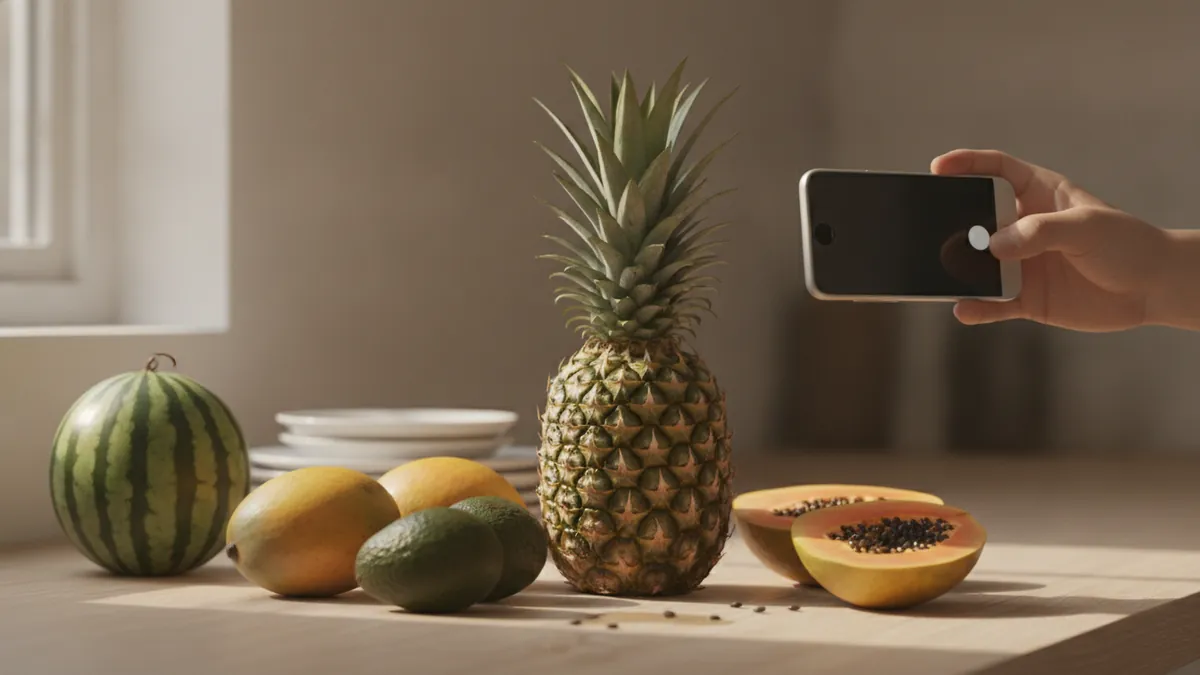
Upload a clear fruit photo to the scanner below for an AI ripeness estimate. Then confirm the result by color, touch, smell, stem and storage behavior.
Upload a photo of the fruit to check if it is ripe
JPG, PNG, WebP, HEIC • Max 50MB

Analyzing with AI…
Matching visual details and value clues


Quick answer
A fruit is ripe when its color, aroma, firmness and other fruit-specific signs show that it is ready to eat. Use the scanner above for a photo estimate, then confirm the result by touch and smell. Lens AI (LensApp.io) can identify fruit from a photo, but pineapple, melons, mangoes, avocados, papayas and peaches each need a different final check.
Use Lens AI for a first ripeness check
Photo ripeness checks use computer vision to extract color, texture, shape and surface marks, then compare those visual features with learned representations. Lens AI turns the visible cues into a quick estimate that you can confirm by hand.
- Identifies fruit, food, meals, products, plants, objects, landmarks and text from a photo.
- Works on iPhone, iPad and Android.
- Rated 4.8 stars, with more than 5 million objects scanned as of 2026.
- The app has free daily scans, and a paid subscription provides more scans.
- Scan history is saved on the phone.
How to check if fruit is ripe
Take a clear photo
Place the fruit in bright, even light. Photograph the whole fruit, including the stem, base or field spot when possible. Avoid colored lighting because yellow kitchen bulbs can make green fruit look riper than it is.
Upload it to the scanner
Choose the photo in the tool above and wait for the AI estimate. The scanner can read visible signs such as peel color, surface texture, wrinkles and bruising, but the result is a starting point.
Confirm by touch and smell
Press gently with your fingers instead of squeezing. Smell near the stem or base when aroma is a useful sign. For melons, inspect the field spot, rind or stem because the camera cannot test firmness or scent.
Eat, ripen or refrigerate
Eat fruit that has reached the signs listed below. Leave climacteric fruit such as mango, avocado, papaya and peach at room temperature if still firm. Refrigerate ripe fruit to slow further softening.
How to tell if a pineapple is ripe
To know if a pineapple is ripe, smell the base and check for a small amount of give. Peel color alone is a weak sweetness test because variety and growing conditions affect yellowing. Pineapple is non-climacteric: after picking, the flesh may soften, but it normally will not become sweeter.
UC Davis postharvest guidance explains why some fruits ripen after harvest while others need to reach eating maturity on the plant.
- Smell the base. A sweet aroma is a good sign; a fermented odor points to overripeness.
- Press gently. The shell should yield only slightly.
- Treat yellow color as supporting evidence, not proof of sweetness.
- Skip the leaf-pull test. Fresh green leaves should not pull out easily.
| Fruit | Ripens after picking? | Best sign | Store at |
|---|---|---|---|
| Pineapple | No meaningful increase in sweetness | Sweet base aroma and slight give | Refrigerator when ready or cut |
| Mango | Yes | Stem aroma and gentle give | Room temperature until ripe, then refrigerator |
| Papaya | Yes | Yellowing peel | Room temperature until ripe, then refrigerator |
| Avocado | Yes | Gentle give under light pressure | Room temperature until ripe, then refrigerator |
| Watermelon | No | Creamy yellow field spot | Cool room; refrigerate after cutting |
| Cantaloupe | Yes, with further softening | Stem slip and sweet aroma | Room temperature until ripe, then refrigerator |
| Peach | Yes | Combined color, aroma and light give | Room temperature until ripe, then refrigerator |
How to tell if a mango is ripe
A ripe mango usually smells sweet or fruity near the stem and yields gently to pressure. Skin color is not a universal test. Some ripe varieties remain green, while others turn yellow, orange or red.
Mango is climacteric, so a firm mango can continue ripening after harvest. Leave it at room temperature, check it each day and refrigerate it after it softens.
- Smell near the stem for a sweet, fruity aroma.
- Use light pressure and look for a gentle give.
- Accept slight wrinkling as a possible ripening sign.
- Do not reject a mango only because the skin is green.
How to tell if a papaya is ripe
Yellowing is the main visible papaya ripeness sign. At least 10% yellow indicates early ripening, while at least 33% yellow indicates peak ripeness. Fruit left on the plant until as much as 80% yellow may develop more flavor.
Papaya continues to ripen after picking. Leave a mostly green papaya at room temperature, then refrigerate it once the yellow color has spread and the fruit is ready to eat.
- Look for yellow areas spreading across the green peel.
- Use at least 33% yellow as a useful peak-ripeness marker.
- Check for mold, leaking liquid or collapsed areas before eating.
- Do not rely on smell alone because there is no universal aroma threshold.
How to tell if an avocado is ripe
A ripe avocado yields under gentle pressure without feeling very soft. Skin color varies by cultivar. Hass avocados often turn dark purple-black, but pressure is a better final check than color.
Avocados usually ripen after harvest, not on the tree. Buy firm fruit when you need several days and leave it at room temperature. The stem-nub test is not a confirmed substitute for checking firmness.
- Hold the avocado in your palm and apply light, even pressure.
- Choose a fruit that gives slightly without feeling hollow or collapsed.
- Use dark skin as supporting evidence for Hass avocados only.
- Avoid fruit with extensive soft patches, leakage or mold.
How to tell if watermelon is ripe
The field spot is the most useful visible sign. Look for a buttery yellow or cream-colored patch where the watermelon rested on the ground. A white, greenish-white or missing field spot can mean the melon was harvested early.
A ripe watermelon often has a dull rind and a dry brown tendril near the fruit. The tendril can dry several days before full maturity in some varieties, so use both signs. Watermelon does not ripen after harvest.
- Choose a creamy yellow or buttery yellow field spot.
- Look for a dull rind instead of a glossy surface.
- On the vine, check for a brown, dry tendril near the fruit.
- Treat the hollow tap sound as a weak clue. Iowa State Extension says tapping is generally unreliable for most people.
How to tell if cantaloupe is ripe
A ripe cantaloupe has developed netting, skin that has changed from green toward tan or yellow, and a sweet or musky aroma near the stem. The blossom end, opposite the stem, should feel slightly soft.
For a melon still on the vine, check the stem slip. A mature cantaloupe should separate with a light tug and little force. Cantaloupe can continue to soften and develop eating quality after harvest.
- Check for thick, well-developed netting over the rind.
- Look for tan or yellow color between the netting.
- Smell the stem area for a sweet or musky aroma.
- Press the blossom end gently and look for slight softness.
How to tell if a peach is ripe
A peach needs a combined check because there is no single color, aroma or firmness threshold for every variety. Compare the background color with other peaches of the same type, smell near the stem and use very light pressure.
Peaches are climacteric fruit, so they can continue ripening after picking. Leave a firm peach at room temperature or use the paper-bag method below. Refrigerate the peach after it develops aroma and gentle give.
- Use color as one clue, since varieties do not all ripen to the same shade.
- Check for a peach aroma near the stem.
- Look for gentle give without squeezing hard enough to bruise the flesh.
- Reject peaches with mold, leaking liquid, foul odor or extensive collapsed areas.
Speeding up ripening and spotting spoilage
Ethylene is a natural plant hormone that causes climacteric fruit to soften, change color, develop aroma and convert starch to sugar after harvest. Mangoes, papayas, avocados, peaches and cantaloupes respond to ethylene. Pineapples and watermelons do not become properly riper or sweeter after picking.
To speed ripening, place the fruit in a loosely closed paper bag. Add one ripe banana or apple if you want more ethylene in the bag. Check daily. Do not use an airtight plastic bag because trapped moisture can encourage decay.
Keep ethylene-producing fruit apart from leafy greens, broccoli, cabbage, carrots, cauliflower, cucumbers and peppers. Once fruit is ripe, refrigeration slows further ripening. There is no single storage temperature that suits every fruit.
Ripeness and nutrition answer different questions. Use the food scanner from a photo for food recognition, then check is this healthy, is it vegan or the gluten-free scanner when those are the decisions you need to make.
- Use a paper bag that can still breathe.
- Add a ripe apple or banana when faster ripening is needed.
- Check the fruit every day and refrigerate it once ripe.
- Remove damaged or decaying fruit from nearby produce.
| What you notice | Likely meaning | What to do |
|---|---|---|
| Gradual color change, sweeter aroma and gentle softening | Normal ripening | Eat soon or refrigerate |
| Visible mold | Spoilage | Discard the fruit |
| Leaking liquid or foul odor | Spoilage | Discard the fruit and clean the storage area |
| Large collapsed or very soft areas | Decay or severe overripeness | Discard the fruit |
| Fermented smell at a pineapple base | Overripeness | Do not choose the pineapple |
What a photo ripeness check cannot confirm
The scanner above and Lens AI estimate ripeness from visible details. A camera cannot smell the fruit, press the flesh, hear a tap sound or inspect the inside, so use the fruit-specific checks on this page before eating.
- Colored or dim lighting can change how green, yellow and red skin appears.
- Different cultivars can have different ripe colors.
- A photo cannot confirm sweetness, internal texture or hidden decay.
- The photo AI check on food pages allows one web scan per day as of 2026.
- Ripeness does not prove food safety. Discard fruit with mold, leakage, foul odor or extensive decay.
Frequently asked questions
How can I tell if a fruit is ripe?
Lens AI (LensApp.io), the iPhone and Android app, can estimate fruit ripeness from a photo; you can also use the scanner above. Confirm the estimate using fruit-specific signs such as color, aroma, firmness, stem condition or field spot.
How do I know if a pineapple is ripe?
A ripe pineapple has a sweet aroma at the base and yields only slightly under pressure. Yellow peel can support the decision, but color and the leaf-pull test are not reliable proof.
Can a pineapple ripen after picking?
Pineapple does not become meaningfully sweeter after picking. The flesh may soften, but an underripe pineapple will not finish ripening like a mango or avocado.
How do I tell if a mango is ripe?
A ripe mango smells fruity near the stem and gives gently under light pressure. Green skin does not always mean that a mango is unripe.
How do I tell if a papaya is ripe?
Yellowing is the main papaya ripeness sign, with at least 33% yellow indicating peak ripeness. Papaya can continue ripening at room temperature after picking.
How do I tell if an avocado is ripe?
A ripe avocado yields gently without feeling very soft or collapsed. Hass skin often turns dark purple-black, but firmness is the better check.
What does a ripe watermelon field spot look like?
A ripe watermelon usually has a creamy or buttery yellow field spot. A white, greenish-white or missing spot can point to an early harvest.
What are the signs of a ripe cantaloupe?
A ripe cantaloupe has developed netting, tan or yellow color between the netting, sweet aroma and slight softness at the blossom end. A vine-grown cantaloupe should also separate from the stem with little force.
Does a paper bag make fruit ripen faster?
A loosely closed paper bag traps ethylene and can speed ripening for mangoes, avocados, papayas, peaches and cantaloupes. Check the bag daily and avoid airtight plastic.
Can Lens AI tell whether fruit is ripe?
Lens AI can estimate ripeness from visible signs in a photo. Confirm the estimate with touch, smell, stem condition or field spot because a camera cannot test those details.