 Lens
Is this healthy? Check any food from a photo
The scanner below checks a photo of a meal, snack, drink, package, or nutrition label. This guide explains the result and shows how to judge food yourself.
Upload a photo of the food or label to check if it is healthy
JPG, PNG, WebP, HEIC • Max 50MB

Analyzing with AI…
Matching visual details and value clues


Quick answer
To decide if a food is healthy, check its serving size, fiber, added sugar, sodium, saturated fat, and place in your usual diet. The scanner above gives a fast estimate from a photo. Lens AI (LensApp.io) can also read meals, packages, and ingredient lists, but allergen decisions require the package label.
A food check from your phone
Lens AI is an app that tells you if food is healthy from a photo of a meal, package, or ingredient list. Results may include estimated calories, a health read, and vegan or gluten information.
- Works on iPhone, iPad, and Android.
- Identifies food, products, fruit, plants, objects, landmarks, and text from photos.
- Saves scan history on the phone.
- Rated 4.8 stars, with more than 5 million objects scanned.
- Has free daily scans; a paid subscription provides more.
How to check if food is healthy from a photo
Photograph the food
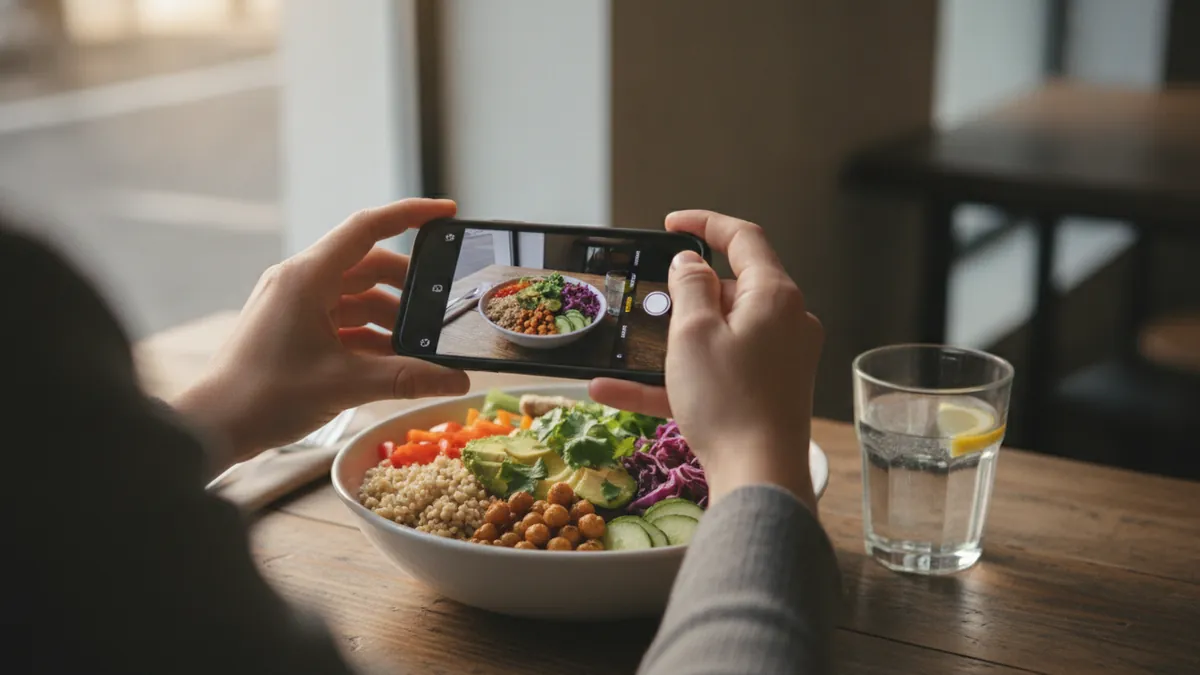
Use the scanner above to photograph a meal, snack, drink, package, or nutrition label. For a mixed meal, keep the full plate and its main ingredients visible.
Make details readable
Use clear light and avoid glare. For packaged food, place the Nutrition Facts panel or ingredient list close enough for the text to fill most of the image.
Read the verdict
The result may say healthy, fairly healthy, or occasional treat. Read the main reason, nutrition estimate, and suggested swap instead of relying on the verdict alone.
Confirm the serving
Compare the estimate with the package serving size. If you eat two servings, double the listed nutrients and % Daily Value. Use the package for allergens and dietary restrictions.
What the healthy verdict means
The question "is it healthy?" rarely has a simple yes or no answer. Portion size, ingredients, preparation, and your usual eating pattern all count. A sugary snack can fit occasionally, while a large portion of nutritious food may provide more sodium or calories than you need.
For a closer look at meals and packages, use the food scanner from a photo. No food needs to be called "bad"; use the result to compare choices and find nutrients worth checking.
- Healthy: useful nutrients with lower amounts of nutrients commonly limited.
- Fairly healthy: a reasonable choice with one or two points to watch.
- Occasional treat: often higher in added sugar, sodium, or saturated fat.
Judge any food in 30 seconds
Start with servings per container. Then read Added Sugars, Sodium, Saturated Fat, and Dietary Fiber. Under FDA Nutrition Facts guidance, 5% Daily Value or less per serving is low, while 20% or more is high.
Added sugar should stay below 10% of daily calories, or less than 50 g on a 2,000-calorie diet. The sodium limit is less than 2,300 mg for adults and children age 14 or older. The FDA Daily Value for saturated fat is 20 g.
Check how many servings you eat
A package may look low in sodium or added sugar because it contains several servings. Multiply the amounts and % Daily Value by the number of servings you eat.
| Nutrient | Low | High | Why it matters |
|---|---|---|---|
| Added sugars | 5% DV or less | 20% DV or more | Use Added Sugars, since Total Sugars includes natural sugar in fruit and milk. |
| Sodium | 5% DV or less | 20% DV or more | Check milligrams and %DV, especially in sauces, soups, and packaged meals. |
| Saturated fat | 5% DV or less | 20% DV or more | Read Saturated Fat separately from Total Fat. |
| Dietary fiber | 5% DV or less | 20% DV or more | A higher value is generally favorable when comparing similar foods. |
What the FDA healthy claim means
The FDA finalized its updated voluntary "healthy" claim rule on December 27, 2024. It took effect February 25, 2025, and has a compliance date of February 25, 2028. As of 2026, manufacturers may use the criteria early.
A qualifying food must contain a set amount from at least one recommended food group or subgroup. It must also meet product-specific limits for added sugar, sodium, and saturated fat. The amounts use the Reference Amount Customarily Consumed.
For example, the dairy criteria require a 2/3 cup equivalent and set limits of 2.5 g added sugar, 230 mg sodium, and 2 g saturated fat. Food without a "healthy" claim can still fit a healthy diet.
Processing and Nutri-Score add context
NOVA classifies food by the purpose and extent of processing. NOVA 4 foods are industrial formulations made mainly from food-derived substances and additives, with little or no intact minimally processed food. Many soft drinks, packaged snacks, and ready-to-eat meals fit this group.
A 2019 controlled trial found that people ate more calories and gained more weight on an ultra-processed diet than on an unprocessed diet. Other studies report links with poor health outcomes, but much of the evidence is observational. NOVA 4 contains many kinds of food, so check the product itself.
Nutri-Score compares nutrition per 100 g or 100 ml, from A to E. Use the Nutri-Score checker to compare similar products. Nutri-Score does not show processing level, whether food is vegan, or whether a product passes a gluten-free scanner check.
| Method | What it checks | Useful for | What it misses |
|---|---|---|---|
| Nutrition Facts %DV | Nutrients per serving | Finding low and high nutrient amounts | Processing and your full eating pattern |
| FDA healthy claim | Food groups and nutrient limits | Checking a regulated package claim | Your portion and personal needs |
| NOVA | Purpose and extent of processing | Spotting ultra-processed formulations | A direct nutrient score |
| Nutri-Score | Nutrition per 100 g or 100 ml | Comparing similar packaged foods | Vegan, gluten-free, and NOVA status |
How the photo check works
A photo checker uses visual feature extraction to identify foods and portions. Optical character recognition can read ingredient and nutrition text on packages. The system compares those details with common food data and nutrition rules.
Lens AI uses the photo as input, but calories and nutrients remain estimates. The photo tool uses one web scan per day. In browser barcode and QR modes, codes are read on the device and the image is not uploaded. Barcode data comes from Open Food Facts and Open Beauty Facts.
Limits of a healthy food scanner
A photo cannot reveal every ingredient, exact weight, or cooking method. Treat the verdict as a quick guide, not medical advice or a replacement for the printed label.
- Mixed dishes may hide oil, sugar, salt, sauces, or small ingredients.
- Portion estimates can be wrong without a clear size reference.
- A rating may not fit a medical diet for diabetes, kidney disease, allergies, or another condition.
- Allergen and gluten decisions require the package label and, when needed, professional advice.
Frequently asked questions
How can I tell if a food is healthy?
Check serving size, fiber, added sugar, sodium, and saturated fat, then consider the portion and your usual diet. Lens AI (LensApp.io), the iPhone and Android app, or the tool on this page can give a quick estimate from a food photo.
Is this food healthy if it is high in sugar?
Food with 20% DV or more added sugar per serving is high in added sugar. Portion size and your wider diet still count.
How healthy is this meal from a photo?
A photo can provide an estimated verdict and nutrition read, but hidden ingredients and portion size can change the result.
Is there an app that tells you if food is healthy?
Lens AI can read a meal, package, or ingredient list from a photo and provide a quick health and calorie estimate.
What is a food health score?
A food health score turns selected nutrition details into a simple rating. Scoring systems use different rules.
Is 5% Daily Value low and 20% high?
Yes. FDA label guidance treats 5% DV or less as low and 20% DV or more as high per serving.
Does Nutri-Score show if food is ultra-processed?
No. Nutri-Score rates nutrition per 100 g or 100 ml, while NOVA classifies processing.
Can a food scanner tell if something is vegan?
Lens AI can give a quick vegan read from a meal, package, or ingredient photo, but confirm the result on the package.
Can a healthy food scanner identify allergens?
Lens AI estimates cannot confirm allergens. Use the package allergen statement and ingredient list.
Is ultra-processed food always unhealthy?
No. NOVA 4 covers different products, so check added sugar, sodium, saturated fat, fiber, portion, and frequency.