 Lens
Lens
Jewelry Value Checker
Upload clear jewelry photos to investigate hallmarks, materials, style, and possible value factors. Get a practical first-pass range before deciding whether to sell, insure, test, or appraise the piece.
Drop a jewelry item photo here or tap to check
JPG, PNG, WebP, HEIC • Max 50MB

Analyzing with AI…
Matching visual details and value clues


What a Jewelry Value Checker Can Tell You
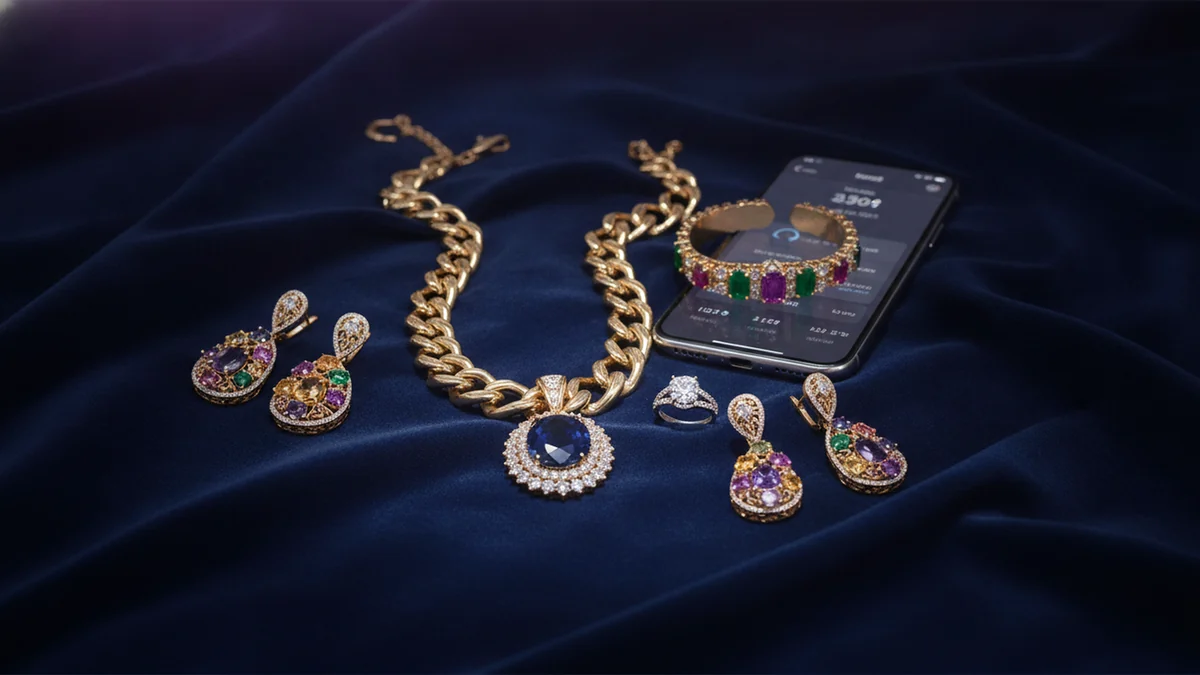
A jewelry value checker uses visible details such as purity stamps, maker’s marks, construction, stone settings, and condition to develop a broad value range. It can help separate likely fine jewelry from costume pieces, but photos cannot verify metal purity, gemstone origin, treatments, weight, or formal appraisal value.
How to use this tool
Photograph the complete piece
Place the jewelry on a plain background in soft natural light. Capture the front, back, sides, clasp or fastener, and overall proportions without filters.
Capture every hidden mark
Check ring interiors, pendant backs, clasp tabs, bracelet ends, earring posts, and brooch hardware. Take a separate focused image of each stamp, symbol, number, or signature.
Add measurements and weight
Record dimensions, chain length, ring size when known, and weight in grams. Keep removable parts together and state whether the weight includes stones or nonmetal components.
Review the identification and assumptions
Confirm whether the result identifies solid precious metal, plated material, costume jewelry, a possible maker, or an unresolved category. Note which details still require testing.
Use the range to choose a next step
Compare the likely value with the cost of testing or appraisal. Seek in-person help when the piece has a significant signature, valuable stone, high metal weight, or legal and insurance importance.
Start With Identification, Not a Single Price
A useful jewelry estimate begins by identifying what the piece is likely made from. A ring stamped 14K has a different value basis from a gold-colored ring marked HGP, while a signed vintage brooch may be collectible even if its metal has little intrinsic value.
Photo analysis can narrow the category, interpret visible stamps, and point out construction details that deserve closer inspection. It should produce a range with stated assumptions rather than one confident number.
The result is most useful for sorting inherited collections, researching estate-sale finds, checking an online purchase, or deciding which items justify professional testing.
- Likely jewelry category and approximate period
- Visible metal purity or plating marks
- Possible maker, designer, or workshop marks
- Probable stone family based on appearance
- Condition issues visible in the uploaded images
- A broad resale-oriented range with important uncertainties
Which Kind of Jewelry Value Do You Need?
Jewelry does not have one universal value. A local buyer’s cash offer, a private-party resale price, a precious-metal scrap calculation, and an insurance replacement figure can differ substantially because each serves a different purpose.
For an initial photo check, resale value is usually the most practical reference point. It reflects what a buyer might reasonably consider after accounting for condition, demand, authenticity risk, selling fees, and the time required to find a customer.
Replacement value is often higher because it estimates the cost of obtaining a comparable item through a retail channel. It should not be treated as the amount a pawn shop, dealer, auction house, or private buyer will pay.
- Resale value: a broad estimate for selling the piece in its current condition
- Scrap or melt value: the recoverable precious-metal content before buyer deductions
- Auction estimate: a market range influenced by provenance, rarity, and bidder demand
- Insurance replacement value: the cost to replace a comparable piece, usually supported by formal documentation
- Sentimental value: personal significance that cannot be calculated from materials or market data
Read Hallmarks, Purity Stamps, and Maker’s Marks
Small marks often provide the strongest clues in a photograph. Check the inside of ring shanks, the backs of pendants and brooches, clasp tabs, bracelet ends, earring posts, and the edges of watch cases.
Common gold marks include 10K, 14K, 18K, 24K, 375, 585, and 750. Sterling silver is commonly marked 925 or Sterling, while PT950 typically indicates a high-platinum alloy.
A purity mark is evidence, not final proof. Marks can be worn, incorrectly interpreted, attached to only one component, or added to a piece that does not test as represented.
Maker’s marks can matter more than metal weight
A clear signature, workshop symbol, model number, or retailer stamp can connect a piece to a recognized maker. Signed jewelry may command a premium, but the mark should be compared with reliable references because signatures can be copied.
| Visible mark | Usual interpretation | Why it matters |
|---|---|---|
| 10K or 417 | Approximately 41.7% gold | Lower gold content than 14K or 18K, but potentially valuable when genuine |
| 14K or 585 | Approximately 58.3% to 58.5% gold | Common in fine jewelry and important for estimating metal value |
| 18K or 750 | 75% gold | Higher intrinsic gold content, subject to verified weight and purity |
| 925 or Sterling | Sterling silver | Value depends on weight, workmanship, brand, age, and condition |
| PT950 | Approximately 95% platinum | May indicate a high-value metal, but testing and weight remain necessary |
| GF | Gold-filled | Contains a bonded gold layer but is not solid gold |
| GP, GEP, or HGP | Gold-plated or heavy gold-plated | Usually has limited precious-metal recovery value |
What Affects Jewelry Value?
Metal type and verified weight provide a baseline for many pieces, but they rarely explain the entire price. Design quality, brand, gemstone characteristics, age, rarity, condition, and current buyer demand can move a piece above or below its material value.
For gold jewelry, a rough metal baseline requires the gram weight, verified purity, and the current gold price. A buyer may then deduct refining costs, operating margin, and risk, so a cash offer will not normally equal the theoretical contained-metal value.
Gemstones create the largest uncertainty in photo-only checks. Lighting and camera processing can change color and clarity, while natural, laboratory-grown, synthetic, treated, and imitation stones may look similar in ordinary photographs.
- Verified metal type, fineness, and gram weight
- Gemstone identity, measurements, quality, origin, and treatments
- Natural, laboratory-grown, synthetic, or imitation status
- Recognized designer, maker, collection, or retailer
- Age, rarity, provenance, and documented ownership history
- Condition of prongs, clasps, chains, settings, enamel, and stone surfaces
- Completeness, including matching earrings, original box, receipt, or laboratory report
- Market demand for the style, brand, material, and jewelry category
- Likely selling channel and associated fees
Condition can change both value and saleability
A missing stone, weak clasp, cracked shank, damaged enamel, shortened chain, or replaced component can reduce demand. Avoid aggressive polishing before identification because it may remove patina, surface texture, or evidence that helps date the piece.
Value Clues by Jewelry Category
Different jewelry categories require different evidence. A plain gold wedding band is driven largely by purity, weight, condition, and brand, while an antique brooch may depend more on workmanship, signature, period accuracy, and collector interest.
The examples below show how to approach common pieces without assuming that visual resemblance proves material or authenticity. A close-up of the construction is often as useful as the main front view.
Rings
Photograph the entire ring, the inside of the shank, the stone from above, and the setting from both sides. Look for karat marks, resizing seams, worn prongs, maker signatures, and any chips along stone edges.
Necklaces and chains
Include the clasp, end tabs, links, full length, and gram weight when available. Hollow construction, repairs, replacement clasps, and gold-filled or plated marks can materially change the estimate.
Brooches and costume jewelry
The reverse reveals pin hardware, soldering, signatures, and construction methods that may suggest age. Signed designer costume jewelry can have collector value even when the stones are glass and the metal is not precious.
Earrings
Show both earrings together and photograph posts, backs, clips, and hallmarks. A complete matched pair is generally easier to sell than a single earring, although a lone precious-metal piece may retain scrap value.
Pearls
Photographs can show shape, matching, surface condition, and clasp details, but they cannot reliably establish whether pearls are natural, cultured, or imitation. Strand length, pearl size, nacre quality, and laboratory findings may all affect value.
Diamond and colored-stone jewelry
Capture the stone face-up and from the side without digital zoom. Photos cannot establish carat weight, grading characteristics, treatments, or whether a stone is natural, laboratory-grown, or an imitation.
Photo Checklist for a Better Jewelry Estimate
Use soft natural light near a window and place the jewelry on a plain, nonreflective background. Clean the camera lens, tap the hallmark area to focus, and avoid filters that change metal or gemstone color.
Do not rely on one distant image. A complete set should document the full piece, every mark, the reverse, fasteners, stone settings, and damaged areas.
If the piece is fragile, do not force a clasp or bend a component to expose a stamp. Photograph it as safely as possible and note where the hidden mark appears.
- One full-piece image showing overall proportions
- A straight-on front view and a clear back view
- Macro-style close-ups of every hallmark, number, and signature
- Ring interiors, necklace clasps, bracelet ends, and earring posts
- Side views showing stone height, prongs, and setting construction
- Close-ups of chips, missing stones, repairs, discoloration, or worn plating
- A ruler for dimensions and a scale reading for weight in grams
- Original box, receipt, warranty, prior appraisal, or laboratory report
- One group image if the item is part of a matching set
How to Interpret a Photo-Based Value Range
A broad range should be read as a decision aid, not a guaranteed selling price. The lower end may reflect unverified materials, ordinary condition, or a quick-sale channel, while the upper end may assume genuine marks, favorable condition, and a patient resale process.
Pay close attention to the assumptions attached to the range. If an estimate assumes solid 14K gold but testing later shows gold-filled construction, the value basis changes immediately.
You can improve the range by adding gram weight, exact measurements, provenance, purchase documents, and sharp photographs of all marks. Verified gemstone reports or metal-testing results are more useful than descriptions such as real, old, or valuable.
- Treat unidentified stones conservatively
- Separate metal value from brand or collector premiums
- Compare the same selling channel rather than mixing retail listings with dealer offers
- Account for repairs, commissions, shipping, insurance, and payment fees
- Distinguish active asking prices from evidence of actual market demand
Honest Limits of Online Jewelry Appraisal
A photograph cannot confirm gold fineness, platinum content, gemstone authenticity, carat weight, internal clarity, or treatments. It also cannot reveal every repair, fracture, loose stone, replaced component, or structural weakness.
For that reason, a jewelry photo value checker should provide a conservative first-pass assessment rather than a formal appraisal. Insurance, estate, tax, legal, and high-value sale decisions generally require inspection by an appropriately qualified independent professional.
Arrange an in-person evaluation when a piece has a potentially important designer signature, a credible antique provenance, substantial precious-metal weight, or a large center stone. A stone believed to be around one carat or more also deserves testing because details invisible in a casual photograph can create major value differences.
- Acid, electronic, or X-ray fluorescence testing may be needed for metal verification
- Loose or mounted stones may require magnification and gemological instruments
- Gemstone reports may be needed to document identity, origin, treatments, or grading
- A formal written appraisal should state its purpose, methodology, market, and effective date
- Valuable pieces should be inspected for loose stones or weak settings before cleaning or wear
What to Do After the Initial Check
If the piece appears to be ordinary costume jewelry, the next step may be comparing similar designs and maker marks rather than paying for laboratory testing. If it appears to be precious metal, obtain an accurate gram weight and consider non-destructive purity testing.
For signed, antique, or gemstone-heavy pieces, gather documentation before contacting potential buyers. Original receipts, boxes, repair records, previous appraisals, and laboratory reports can reduce uncertainty and support a more informed offer.
Choose a selling route that fits the item. Scrap buyers focus on recoverable metal, consignment stores focus on wearable demand, specialist dealers understand particular makers, and auction houses may be appropriate for rare pieces with strong provenance.
- Do not remove stones solely to obtain a quick metal quote
- Request written terms before leaving jewelry on consignment
- Ask whether an offer includes stones or only metal content
- Compare net proceeds after commissions and fees
- Insure and track valuable jewelry when shipping it
- Keep identifying photos and documents before transferring possession
Example value ranges
These broad USD ranges are for triage only. Exact issue, condition, authenticity, and recent sold comps decide real prices.
| Example | Broad range (USD) | Main clues |
|---|---|---|
| Unmarked fashion ring with glass or imitation stones | $5 to $75 | Base-metal wear, molded construction, stone condition, style, and resale demand |
| Signed vintage costume brooch | $20 to $500+ | Verified signature, rarity, complete stones, enamel condition, age, and collector interest |
| Sterling silver chain or pendant | $15 to $300+ | 925 mark, gram weight, maker, workmanship, condition, and whether stones are genuine |
| Plain 10K or 14K gold band | $75 to $900+ | Verified purity, gram weight, ring condition, brand, and current gold market |
| 18K signed pendant or bracelet | $300 to $5,000+ | Verified 750 mark, weight, maker authenticity, craftsmanship, rarity, and condition |
| Cultured pearl strand | $30 to $2,500+ | Pearl type, size, matching, luster, surface quality, strand length, clasp, and documentation |
| Vintage ring with an unverified colored stone | $50 to $3,000+ | Metal testing, stone identity, treatments, maker, setting quality, age, and damage |
| Diamond-style engagement ring with no report | $100 to $10,000+ | Natural or laboratory-grown status, carat weight, quality, metal, brand, and laboratory findings |
Sources for further reading
A Practical First Pass From Your Photos
Use Lens AI: Scan & Image Search at LensApp.io to examine jewelry photos for visible hallmarks, likely materials, design clues, and related visual matches. Upload several sharp angles rather than relying on a single front-facing image.
Use the result to organize further research and decide whether testing is worthwhile. For insurance, estate, legal, or high-value sale purposes, follow the photo check with an independent in-person appraisal and any necessary metal or gemstone testing.
Related tools
Related value guides
More value guides: How much is it worth · VHS tapes · Old Pyrex · Beanie Babies · Signs old stuff is valuable · AI valuation vs appraiser · Photograph items for valuation · Most valuable items at home · Pokemon card value · Coin value checker · Watch value checker · Antique value checker · Funko Pop value · Vinyl record value.
Frequently Asked Questions
Can a jewelry value checker identify real gold from a photo?
It can read visible marks such as 10K, 14K, 18K, 375, 585, or 750 and identify visual signs of plating or wear. It cannot prove purity from appearance alone, so valuable pieces should be weighed and tested.
Can Lens App tell whether a diamond is natural?
No. Lens App can examine visible shape, setting, condition, and resemblance to known jewelry styles, but a photo cannot reliably distinguish natural diamonds from laboratory-grown diamonds or some imitations. Proper instruments or a laboratory report are needed.
Why is my jewelry value range so broad?
The range reflects unresolved factors such as metal purity, gram weight, stone identity, brand authenticity, treatments, condition, and selling channel. Adding weight, measurements, hallmark close-ups, and documentation can narrow the estimate.
What does 585 mean on jewelry?
A 585 mark usually indicates an alloy containing approximately 58.5% gold, broadly equivalent to 14K. The mark is a useful clue, but testing is still appropriate when authenticity or value matters.
What photos should I upload to Lens App?
Upload a full front view, the back, both sides, the clasp or fastener, the inside of a ring shank, and focused images of every mark. Include visible damage, a size reference, the gram weight, and any original paperwork.
Is an online jewelry estimate the same as an appraisal?
No. An online estimate is a preliminary range based on visible evidence and supplied details. A formal appraisal requires a defined purpose, market research, physical inspection, and verification of materials and gemstones.
Can Lens App identify antique or designer jewelry?
Lens App can surface possible period, style, maker, and signature clues from clear photographs. Those clues should be compared with documented examples because copied signatures, later reproductions, and replacement components can affect attribution.
Is the insurance value the amount I can sell jewelry for?
Usually not. Insurance replacement value often reflects the cost of replacing a comparable item through retail channels, while resale value reflects current buyer demand, condition, risk, fees, and the chosen selling method.
Does Lens App need the jewelry weight?
Lens App can analyze a piece without weight, but a gram measurement makes precious-metal estimates more useful. State whether the weight includes stones, charms, watch movements, or other nonmetal components.
When should I pay for an in-person appraisal?
Consider an appraisal for insurance, estate, tax, legal, or high-value sale purposes. It is also sensible when a piece has a notable signature, substantial precious-metal weight, documented provenance, or a center stone believed to be around one carat or larger.