 Lens

Best antique identifier app picks for 2026
Compare seven apps for identifying old objects, checking value ranges, researching marks, and saving estate-sale finds.
Drop an antique photo here or tap to upload
JPG, PNG, WebP, HEIC • Max 50MB

Analyzing with AI…
Matching visual features and similar results


Quick answer
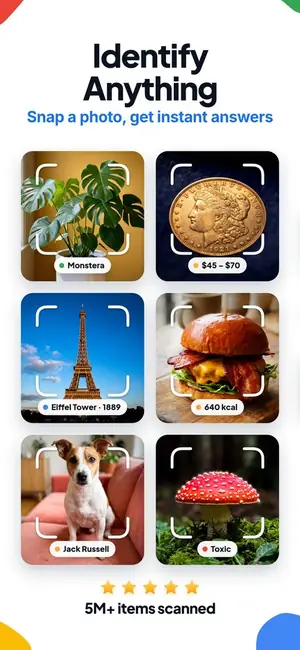
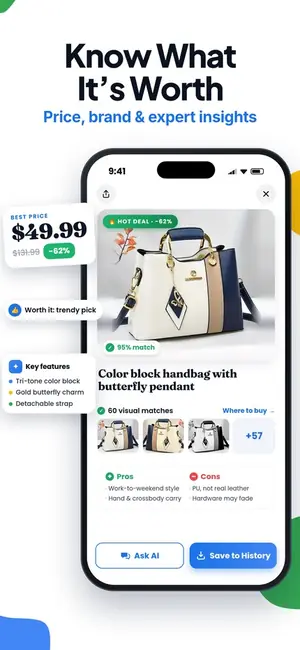
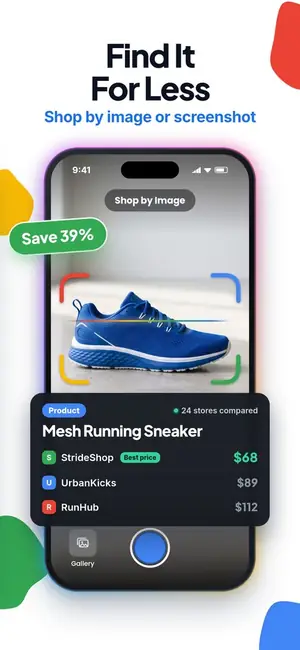
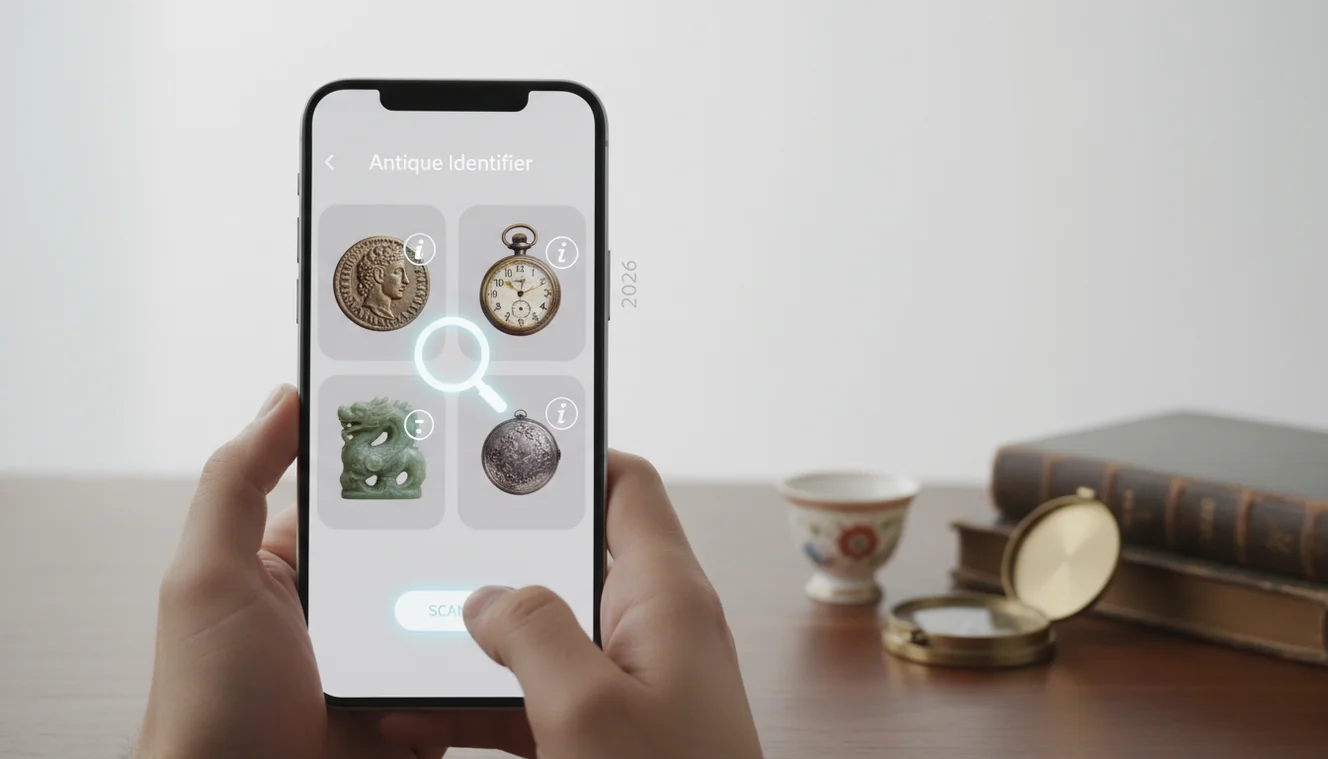
Lens AI is the best antique identifier app for most estate-sale shoppers because it identifies antiques, estimates value from comparable listings, answers follow-up questions, and scans coins, rocks, or vinyl too. AntiqSnap is better for an antique-only collection archive. WorthPoint is the stronger research tool when you need historical sold prices.
A porcelain mark is half hidden under glaze. The seller wants $85, and five similar bowls online have wildly different prices. An antique identifier app can narrow the maker, period, and likely value range before you buy, sell, clean, or donate the piece.
Photo results are a starting point. Condition, repairs, materials, provenance, and copied marks can change the answer, so check the signs that old stuff may be valuable before treating one visual match as proof.
TL;DR: the apps compared
| App | Best for | Platforms | Free tier | Price | Standout |
|---|---|---|---|---|---|
| Lens AI | Antiques and mixed estate-sale finds | iPhone, iPad, Android, web | Free daily mobile scans; one web scan per day | $7.99 weekly, $9.99 monthly, $39.99 yearly, or $89.99 lifetime | Ask AI follow-ups on every result |
| AntiqSnap | Antique identification and collection records | iPhone, iPad, Android | Free download; exact free scan limit is not listed | App Store purchases from $3.99 to $39.99; check the listing | Tracks a collection's estimated total value |
| Curio | Antiques, marks, and web matches | iPhone, iPad, Android | Free download; exact free limit is not listed | App Store purchases from $4.99 to $49.99; check the listing | Shows visually similar items from the web |
| Zophi | Fast general antique scans | iPhone, iPad, Android | Free download; exact free limit is not listed | $3.99 weekly or $19.99 yearly and up | Saves identified finds in a collection |
| Collectibles.com | Cataloging cards, coins, and collectibles | iPhone, iPad | Limited free access; exact limit is not listed | Plans from $2.99 monthly; $99.99 lifetime | Collection profiles, price trends, and community tools |
| WorthPoint | Historical sale research | iPhone, iPad, Android, web | Free download; full research requires a subscription | $26.99 monthly for Price Guide or $37.99 monthly with MARKS | Nearly two decades of historical pricing data |
| Google Lens | Free first-pass image matching | iPhone and iPad in Google app, Android, web | Free visual search | Free | Finds similar images, products, and web pages |
Prices are US App Store or developer prices checked in October 2026 and can change.
How we picked
We read the US App Store and Google Play listings, developer sites, available pricing pages, and product descriptions in October 2026. We checked supported platforms, listed purchases, identification scope, value sources, collection tools, follow-up features, and access to historical prices.
Lens AI appears first because it is our app. That relationship is stated plainly. The remaining apps are ordered by how closely they fit an antique-identification workflow, followed by collection software, sold-price research, and general visual search.
- The result should name the object, maker, material, or likely era.
- Value numbers should identify their source or basis.
- Marks and multiple photo angles should be useful.
- Free limits and paid prices should be visible before checkout.
- Saved records should fit the reader's collection needs.
- Platform support should match where the app will be used.
Lens AI: Best for mixed finds
Lens AI is a general AI visual search app with an antique identifier that names an item, suggests its era and gives a value range from comparable online listings.
Photograph the whole piece, then the base or the maker's mark. Lens AI returns a likely identification with a confidence score, and every result has an Ask AI chat, so you can ask what the mark means, which details separate a 1920s original from a later reproduction, or what to check on the joints of a drawer. You can also find similar items for sale to see what dealers are asking.
The other reason is the estate-sale table. The same app scans coins, banknotes, rocks, watches and vinyl, so a mixed box doesn't need four different subscriptions.
The limit, stated plainly: Lens AI's value numbers are rough estimates from comparable online listings, not appraisals, and it has no sold-price archive like WorthPoint. Asking prices can sit well above what things sell for. For insurance, an estate or a sale over a few hundred dollars, use a certified appraiser.
Lens AI is free to download with free daily scans on mobile, plus one free scan a day at lensapp.io. Paid plans on the US App Store are $7.99 a week, $9.99 a month, $39.99 a year or $89.99 lifetime. Scan photos are deleted after analysis, according to the store listing.
| App Store | 4.55 stars from 1,593 ratings |
|---|---|
| Google Play | 4.26 stars from 1,889 reviews, 50K+ installs |
| Price | Free daily scans on mobile and one free web scan a day; $7.99 weekly, $9.99 monthly, $39.99 yearly or $89.99 lifetime on the US App Store, checked October 2026. |
| Platforms | iPhone and iPad (iOS 17 or later), Android, and a web scanner at lensapp.io. |
| Download | App Store, Google Play |
Pick Lens AI if you're sorting a mixed lot of antiques, coins and collectibles and want to ask follow-up questions about each find.
AntiqSnap: Best antique-only archive
AntiqSnap is an antique identifier app built around photo identification, estimated values, and a saved collection.
Its strongest feature is the archive. Scan a ceramic bowl, silver serving piece, or inherited chair, and AntiqSnap can suggest its origin, age, materials, rarity, and estimated market value. You can save the result, return to it later, and track the collection's estimated total value. That focused setup suits someone sorting a packed cabinet or documenting boxes before an estate sale. General visual search apps tend to scatter results across shopping pages and loosely related images; AntiqSnap keeps the record inside an antique-specific collection.
The limit is price transparency and valuation evidence. The App Store lists several Premium purchases, but it doesn't identify the billing period for each one or state the exact free scan allowance. AntiqSnap's listing also doesn't document a historical sold-price archive. Treat its value figure as a starting point, then inspect comparable sales and the object's condition, marks, repairs, and provenance before setting a price.
AntiqSnap is available on iPhone and iPad with iOS 16 or later, plus Android. No web version was confirmed in our October 2026 check. The download is free with limited access; listed US App Store purchases run from $3.99 to $39.99.
| App Store | 4.68 stars from 31,460 ratings |
|---|---|
| Google Play | 4.63 stars from 70,353 reviews, 1M+ installs |
| Price | Free download with limited access; Premium purchases are listed at $3.99, $29.99, and $39.99, but billing periods aren't stated for each price, checked October 2026. |
| Platforms | iPhone and iPad with iOS 16 or later, plus Android; no confirmed web version. |
| Official link | App Store listing |
Pick AntiqSnap if you want an antique-focused scanner that saves identifications and estimated values in a personal collection.
Curio: Best for visual matches
Curio, from Dionysus Labs, is an antique identifier that tells you what an item is, who likely made it, roughly when, and what similar pieces sell for.
Its best feature is Visual Matches. Under each result, Curio shows photos of similar items on the market from across the web, and you can open any of them inside the app. That lets you check the estimate with your own eyes: if the matches are all later reproductions, you'll see it. You can also add a maker's mark, signature or pattern name you spotted, and Curio updates the answer. The developer lists furniture, porcelain, glassware, clocks, rugs, books, jewelry and coins among the categories.
The value range comes from similar pieces currently on the market, so it's an asking-price picture, not a record of what actually sold. A hairline crack or replaced hardware won't show up in a match. The free allowance isn't stated on the listing, and the US App Store shows several Premium prices, from $4.99 to $49.99, without saying which term each one covers. Read the paywall before you agree to anything.
Curio runs on iPhone, iPad and Android. It has no web version listed.
| App Store | 4.82 stars from 16,809 ratings |
|---|---|
| Google Play | 4.57 stars from 3,196 reviews, 100K+ installs |
| Price | Free download with an unstated free limit; Premium purchases from $4.99 to $49.99 on the US App Store, checked October 2026. |
| Platforms | iPhone and iPad (iOS 16.4 or later) and Android. |
| Official link | App Store listing |
Pick Curio if you want to compare your piece against photos of similar items for sale before trusting a value range.
Zophi: Best lower-cost yearly plan
Zophi is an antique identifier app that scans a photo and returns a possible identity, background, and estimated value.
Its strongest point is cost. The $19.99 yearly option is the lowest listed annual price among the paid plans in this comparison. Zophi covers items such as vases, coins, stamps, and figurines, then lets you save results in a personal collection. At a garage sale, that simple flow works well: photograph the object, check the suggested period and value, and save it before moving to the next table.
The App Store description gives little detail about where Zophi gets its value data or how it chooses comparable items. It also doesn't state the number of free scans. Treat each result as a research lead; a photo can't confirm authenticity, detect every reproduction, or account fully for repairs and condition.
Zophi is free to download on iPhone, iPad, and Android. The US App Store lists weekly plans at $3.99 and $4.99, plus yearly plans at $19.99, $29.99, and $34.99. The listing doesn't explain why several prices appear, so check the checkout screen before subscribing. No web scanner was confirmed.
| App Store | 4.79 stars from 10,949 ratings |
|---|---|
| Google Play | 4.69 stars from 12,806 reviews, 100K+ installs |
| Price | Free download, with the free scan limit unstated; weekly plans are $3.99 or $4.99, and yearly plans are $19.99, $29.99, or $34.99, checked October 2026. |
| Platforms | iPhone and iPad with iOS 15.0 or later, plus Android; no web version confirmed. |
| Official link | App Store listing |
Pick Zophi if you want basic antique scanning and collection saving with a yearly plan starting at $19.99.
Collectibles.com: Best for collection management
Collectibles.com is an antique value app built around scanning, valuing, cataloging, and sharing a collection.
Collection tools are its real strength. You can add scanned items to a personal profile, organize the collection, follow estimated values and price trends, and compare current market data. The app covers coins, comics, trading cards, vintage toys, and sports memorabilia. Picture a shelf of boxed figures and loose cards after an estate sale: keeping each item in one searchable account is more useful than leaving identification results scattered across screenshots.
The community side adds posts, collector profiles, rewards, and discovery tools. That gives Collectibles.com more depth for someone building a catalog over time. But its stated focus leans toward collectibles, especially cards and memorabilia, so it may be a weaker first pick for researching large furniture, ceramics, or an obscure maker's mark. Its values are informational estimates, not professional appraisals.
The iPhone and iPad app is free to download, though the listing doesn't state the exact free-use limit. App Store purchases include monthly plans from $2.99 to $24.99, yearly plans from $24.99 to $49.99, and a $99.99 lifetime plan. A web account is available for collection tracking. No Android app from Collectbase Inc. was found during the October 2026 check.
| App Store | 4.63 stars from 9,932 ratings |
|---|---|
| Google Play | No Android app listed |
| Price | Free download with an unspecified free-use limit; monthly purchases cost $2.99 to $24.99, yearly purchases cost $24.99 to $49.99, and lifetime access costs $99.99, checked October 2026. |
| Platforms | iPhone and iPad, plus web collection tools; no Android app found. |
| Official link | collectibles.com |
Pick Collectibles.com if you want to identify collectibles and keep values, records, and community activity in the same collection account.
WorthPoint: Best sold-price archive
WorthPoint is a research service for collectors and resellers, built around a Price Guide of sold prices and a database of makers' marks.
This is the one tool on the list that answers "what did these actually sell for" with records. WorthPoint says its Price Guide holds nearly two decades of historical pricing data gathered from auction houses and online marketplaces. Pair it with the MARKS database (makers' marks, patterns, autographs and symbols) and you can go from a stamp on the bottom of a plate to past sales of the same pattern. The Vault stores and tracks your own collection, and the same login works on the app and WorthPoint.com.
It isn't a photo scanner in the way Lens AI, AntiqSnap or Curio are. You search and compare, which takes more effort. The app also has weak store ratings: 2.09 stars from 116 ratings on the US App Store and 2.67 stars from 630 reviews on Google Play, so expect some friction in the mobile app and lean on the website if it bothers you.
Full access needs a subscription. On the US App Store, the Price Guide is $26.99 a month or $249.99 a year, MARKS Premium is $19.99 a month or $99.99 a year, and both together are $37.99 a month or $399.99 a year. That price makes sense for a reseller; probably not for one inherited lamp.
| App Store | 2.09 stars from 116 ratings |
|---|---|
| Google Play | 2.67 stars from 630 reviews, 100K+ installs |
| Price | Paid subscription for full access: Price Guide $26.99 monthly or $249.99 yearly; Price Guide + MARKS $37.99 monthly or $399.99 yearly on the US App Store, checked October 2026. |
| Platforms | iPhone and iPad (iOS 16 or later), Android, and web at WorthPoint.com. |
| Official link | worthpoint.com |
Pick WorthPoint if you buy or sell antiques regularly and need real sold-price history before you set a price.
Google Lens: Best free visual search
Google Lens is a free visual search tool that matches a photo or screenshot with similar images, shopping results and pages from across the web.
Its strength is reach. Photograph a vase, chair or painted signature at an estate sale, then compare the shape, decoration and marks with results from dealers, museums and auction pages. You can add words such as "stoneware," "1930s" or a maker's name to narrow the search. Lens can also copy text and translate labels, which helps when an item has a foreign stamp or handwritten note.
The problem is that a close visual match doesn't prove the maker, period or authenticity. Google Lens isn't an antique appraisal app, and it doesn't produce a dedicated value range or collection record. Search results may mix current asking prices, reproductions and genuinely comparable antiques. A similar-looking lamp can have different wiring, materials or age, so inspect the linked source before relying on the match.
Google Lens itself is free, with no separate paid Lens plan listed. On iPhone and iPad, it sits inside the Google app; Android users can access Lens through Google's mobile tools, and visual search is also available on the web. I'd use it as a free first check or a second opinion after another antique identifier app.
| App Store | 4.65 stars from 5,256,367 ratings (Google app, which includes Lens) |
|---|---|
| Google Play | 4.69 stars from 2,866,724 reviews, 1B+ installs |
| Price | Google Lens is free; no separate paid Google Lens plan is listed. Checked October 2026. |
| Platforms | iPhone and iPad through the Google app, Android, and web. |
| Official link | lens.google |
Pick Google Lens if you want a free visual match, shopping results or a quick cross-check before paying for antique-specific research.
Lens AI vs AntiqSnap
These apps overlap on photo identification and estimated values, but they suit different bags at an estate sale. Lens AI covers many object categories and lets you question each result. AntiqSnap stays centered on antiques and has stronger collection tracking.
| Point | Lens AI | AntiqSnap |
|---|---|---|
| Identification scope | Antiques, furniture, ceramics, glass, coins, banknotes, rocks, vinyl, plants, animals, and more | Antiques and collectibles, including ceramics, glassware, furniture, silverware, and jewelry |
| Result details | Likely identity, era, confidence score, value range, and comparable online listings | Possible origin, age, materials, history, rarity, and estimated market value |
| Follow-up research | Ask AI chat is attached to every result | The store listing does not promise an attached follow-up chat |
| Saved records | Scan history is saved on the device | A digital collection stores scans and tracks estimated total value |
| Platforms | iPhone, iPad, Android, and a web scanner | iPhone, iPad, and Android |
| Value limits | Value numbers are rough estimates from comparable online listings, not appraisals, and Lens AI has no sold-price archive like WorthPoint. For insurance or a sale over a few hundred dollars, use a certified appraiser. | Provides estimated market value, but the listing does not identify a historical sold-price archive |
AntiqSnap wins if your priority is building an antique-only archive and watching its estimated total value. Its iPhone requirement also starts at iOS 16, while Lens AI requires iOS 17. See the full Lens AI and AntiqSnap comparison for a closer feature breakdown.
Lens AI is the better fit when the same table holds a porcelain vase, old foreign coins, a box of records, and an unidentified mineral. The follow-up chat also helps when the first label is too broad and you need to ask about a backstamp, wood joint, or production date.
What to look for in an antique identifier app
Evidence behind the identification
A useful result gives you something to verify: a maker, material, pattern, country, production period, or comparable image. A broad answer such as "vintage ceramic vase" won't settle an $80 purchase. Photograph the full object, base, mark, hardware, and any damage. Then compare the app's answer with the actual construction. A copied mark or close visual match can still point to the wrong factory or decade.
Asking prices or completed sales
An antique value app may pull from current listings, historical sales, or an unexplained model estimate. Those sources answer different questions. Asking prices show what sellers hope to receive; completed sales show what buyers paid under specific conditions. WorthPoint has the strongest sold-price research in this group. Lens AI, AntiqSnap, and similar photo apps are faster for an initial range, but you should inspect several close matches before setting a sale price.
Marks, signatures, and extra photos
Look closely at the underside. A clear pottery stamp, silver hallmark, clock movement, furniture label, or artist signature often carries more identifying information than the front view. Choose an app that can work with close photos or help you research the text and symbol. Take the mark straight on in good light. Glare, worn lettering, and decorative pseudo-marks can send visual search toward unrelated objects.
Records for a collection or estate
One scan is enough for a flea-market decision. An estate inventory needs saved photos, descriptions, values, and a way to return to each record. AntiqSnap and Collectibles.com put more weight on collection organization; WorthPoint has its Vault archive. Lens AI keeps scan history on the device, which is handy for recent finds but less suited to a formal estate catalog. Decide how many objects you need to document before paying.
The point where an app stops
An antique appraisal app cannot inspect replaced hardware, hairline repairs, odors, weight, surface wear, or materials hidden behind upholstery. It also cannot give an online estimate legal standing for insurance, tax, court, or donation use. If authenticity changes the price by hundreds of dollars, stop cleaning or repairing the object and consult a qualified specialist. Our guide to AI valuations and professional appraisers explains where each type of opinion fits.
The best app for most antique searches
Download Lens AI if you want one app for the mixed reality of an estate sale: furniture, glass, ceramics, coins, rocks, records, and objects you can't name yet. It gives you a likely identification, era, rough value range, comparable listings, and a place to ask follow-up questions.
Pick AntiqSnap when collection tracking is the main job. Pay for WorthPoint when historical sold prices justify the subscription, especially for repeat resale research. For a high-value sale, insurance schedule, or disputed attribution, take the app result to a certified appraiser.
Try Lens AI free
Free daily scans on iPhone and Android. Snap a photo and ask follow-up questions about the result.
Frequently asked questions
What is the best antique identifier app?
Lens AI is our top antique identifier app for mixed finds because it combines photo identification, value estimates, comparable listings, and follow-up questions. AntiqSnap is better for an antique-only collection archive.
What is the best free app to identify antiques?
Google Lens is the best fully free first step for finding similar images and web pages. Lens AI also has free daily mobile scans and one free web scan per day.
Can an app identify an antique from a photo?
Lens AI, AntiqSnap, Curio, and Zophi can suggest an antique's identity from a photo. Photo identification cannot prove authenticity, condition, or provenance.
Can an antique identifier app read a maker's mark?
Curio and Lens AI can analyze clear photos of maker's marks, while WorthPoint has a separate marks and patterns research product. A mark may be copied or used across several production periods.
Does WorthPoint show actual sold prices?
WorthPoint says its Price Guide includes historical pricing data from auction houses and online marketplaces. WorthPoint requires a paid subscription for full Price Guide access.
Is an antique appraisal app accepted for insurance?
Lens AI and other antique appraisal apps provide estimates, not certified appraisals. Insurance, estate, tax, court, and charitable-donation work may require a qualified professional appraiser.
Which antique identifier apps work on Android?
Lens AI, AntiqSnap, Curio, Zophi, WorthPoint, and Google Lens have Android listings. Collectibles.com did not have a verified Android app from its developer in our October 2026 check.