 Lens
Lens
AI Valuation vs Professional Appraiser
AI valuation can provide a quick working range from photos and visible clues. A professional appraiser is the stronger choice when value must be inspected, documented, signed, and defended.
Drop a item photo here or tap to check
JPG, PNG, WebP, HEIC • Max 50MB

Analyzing with AI…
Matching visual details and value clues


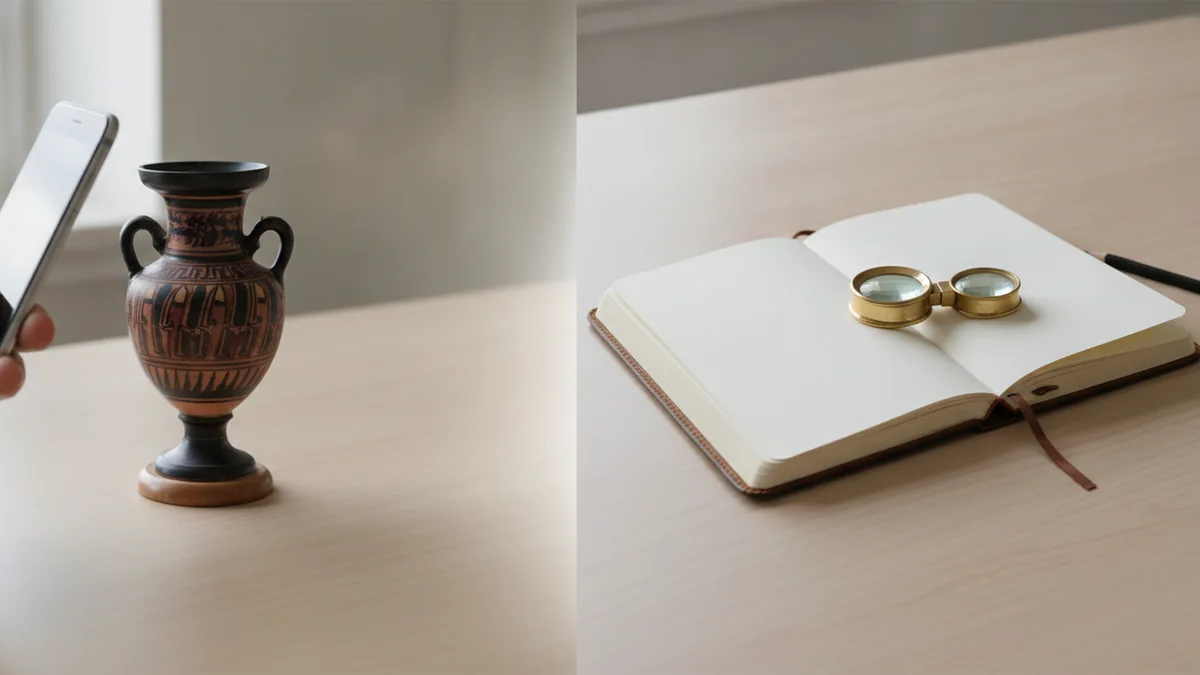
The practical difference
AI valuation is useful for identifying an object, screening possible value, and deciding whether more research is worthwhile. A professional appraiser can inspect materials, construction, condition, provenance, and market evidence directly. Choose a qualified human appraiser when an insurer, court, estate, tax authority, lender, or attorney needs a formal written report.
How to use this tool
Define the purpose
Decide whether you need casual resale guidance, a household inventory, insurance documentation, probate value, tax support, or evidence for a dispute. The purpose determines the appropriate type of value and level of documentation.
Photograph and document the object
Capture all sides, marks, damage, construction details, measurements, and accessories. Gather receipts, prior appraisals, service records, certificates, and ownership history without assuming those documents prove authenticity.
Run an initial identification and range check
Use image-based research to identify likely categories, makers, patterns, models, and visible condition issues. Record uncertainty and alternative matches instead of selecting only the most valuable-looking result.
Check relevant market evidence
Compare recent sold examples that match material, size, date, condition, and completeness. Separate dealer asking prices, auction totals, and expected seller proceeds because they answer different questions.
Escalate to a specialist when needed
Contact a qualified appraiser or category specialist when the object appears significant, authenticity is uncertain, hidden condition matters, or a third party requires a signed and defensible report.
AI valuation vs professional appraiser at a glance
The central difference is not simply speed versus cost. It is the intended use of the result. An AI estimate is an informal research tool, while a professional appraisal may become an accountable document with a stated purpose, effective date, market definition, evidence, assumptions, and signed conclusion.
AI can compare visible features with reference images and market information, but it does not physically handle the object. A professional can examine details that photographs often conceal, ask for supporting records, select the correct type of value, and explain why particular comparable sales are relevant.
- Choose AI for initial identification, household inventory, rough value screening, and deciding what deserves expert attention.
- Choose a professional for insurance scheduling, probate, charitable donation, tax matters, equitable distribution, lending, litigation, or a contested estate.
- For an ordinary resale decision, start with a range and compare current listings with actual sold results where available.
- For a formal report, confirm that the appraiser has relevant category experience and that the intended recipient will accept the report.
| Question | AI or photo estimate | Professional appraiser |
|---|---|---|
| How fast is it? | Often available within minutes | Requires scheduling, research, inspection, and report preparation |
| Is the object physically inspected? | No | Usually, depending on the assignment |
| Can it identify visible clues? | Yes, with uncertainty | Yes, with hands-on examination and specialist judgment |
| Does it produce a signed report? | No | It can, when a written appraisal is commissioned |
| Is it suitable for formal use? | Usually not | Often, if the appraiser and report meet the recipient's requirements |
| What is the typical role? | Screening and research | Documented opinion of value for a defined purpose and date |
When an AI valuation is the efficient first step
AI valuation is most useful when the stakes are low or the collection is large. If you are sorting a box of inherited objects, cataloging a household, or deciding which flea-market finds deserve research, a photo-based estimate can help divide everyday items from pieces with potentially stronger demand.
The result should be treated as a broad working range rather than a sale promise. It can help you find useful search terms, recognize a possible maker or category, and identify the photographs or markings needed for better research.
- Screening multiple objects before paying for specialist research
- Separating decorative reproductions from objects that may warrant closer inspection
- Preparing questions for an auction house, dealer, or appraiser
- Comparing visible design features, maker's marks, patterns, and model references
- Setting a tentative price for a low-risk local sale
Best for narrowing, not proving
A useful AI result may narrow an object from a broad label such as old vase to a more searchable category such as transferware, studio pottery, or a modern decorative reproduction. That narrower category improves research, but it does not establish age, authenticity, condition, or ownership history.
When a professional appraisal is the safer choice
Use a qualified professional when the value must be accepted by another party or could affect a legal or financial decision. Insurance companies, courts, estate representatives, tax professionals, lenders, and attorneys may require a signed report prepared for a specific purpose rather than a screenshot or automated range.
The appraiser should define the relevant value standard. Replacement value for insurance can differ sharply from fair market value for an estate, anticipated auction proceeds, dealer purchase value, or an asking price in a retail gallery.
- Insurance coverage for jewelry, art, watches, collections, or other scheduled valuables
- Probate, estate settlement, or division among heirs
- Charitable contributions and other tax-related assignments
- Divorce, bankruptcy, litigation, or partnership dissolution
- Collateral, lending, or financial reporting where an institution requires documentation
- Objects with potentially significant value, disputed authenticity, or complex provenance
Confirm the report requirements first
Before hiring anyone, ask the intended recipient what credentials, inspection method, valuation date, photographs, comparable evidence, and report format it requires. A strong appraisal prepared for one purpose may still be unsuitable for another.
What affects an object's value
Value depends on more than identification. Two objects with the same maker, pattern, or model can sell for very different amounts because of condition, size, materials, rarity, date, provenance, completeness, regional demand, and the venue in which they are offered.
The relevant market also matters. A dealer's asking price includes operating costs and may not represent what an owner would receive. Auction results can include buyer's premiums, while the seller's net may be lower after commission, photography, insurance, shipping, and other fees.
- Maker, artist, workshop, model, pattern, or manufacturer
- Authenticity and whether the attribution is documented or only suspected
- Age or production period, including later editions and reproductions
- Materials, dimensions, weight, construction, and craftsmanship
- Rarity balanced against actual buyer demand
- Original condition, repairs, replacement parts, refinishing, or restoration
- Provenance, receipts, certificates, exhibition records, and family documentation
- Completeness, including boxes, accessories, lids, keys, manuals, and matching components
- Sale venue, geographic market, timing, fees, and urgency
Condition has category-specific meaning
A light patina may be acceptable on antique bronze, while aggressive polishing can reduce collector interest. A repaired ceramic rim, relined painting, refinished table, replaced watch dial, or resized ring must be evaluated according to the expectations of that particular market.
Honest limits of photo-based appraisal
A photograph records appearance, not every material fact. It may hide hairline cracks, insect damage, loose joints, odors, water exposure, overpainting, filled chips, replaced components, altered signatures, weak hallmarks, or poor-quality restoration. Color, scale, surface texture, and gemstone characteristics can also shift with lighting and camera processing.
AI can misread a mark, match a reproduction to an original, or use an inappropriate comparable. It also may not know whether a high asking price led to a sale. These limits do not make photo estimates useless, but they require cautious language and a range wide enough to reflect uncertainty.
- Photographs cannot reliably test metal purity, gemstone treatments, wood species, pigments, mechanical operation, or internal construction.
- A visible signature does not prove that the artist made the object.
- A family story can guide research but is not the same as documented provenance.
- Authentication and valuation are related but separate questions.
- No image-based result should be presented as a certified or signed appraisal.
Remote professional work also has limits
A human opinion based only on photographs may still be restricted by the absence of physical inspection. Ask whether the report is a preliminary opinion, a desktop assignment, or a full appraisal, and make sure the stated limitations are acceptable for your intended use.
Photo checklist for a more useful estimate
Good photographs reduce avoidable uncertainty. Use indirect daylight or even indoor lighting, place the object against a plain background, and keep the camera parallel to flat surfaces. Do not apply polish, oil, cleaner, or adhesive before photographing an unfamiliar object.
Include both orientation shots and close details. A tightly cropped maker's mark without a full view can be difficult to connect to the correct object, while a full view alone may not show the evidence needed to identify the maker, material, or condition.
- Front, back, both sides, top, and base
- Maker's marks, signatures, labels, serial numbers, hallmarks, and inscriptions
- Close-ups of chips, cracks, stains, repairs, replaced parts, and surface wear
- One image with a ruler or another reliable scale reference
- Dimensions, weight, and material if known
- Joinery, fasteners, clasps, hinges, movement, lining, or underside construction
- Original box, receipt, certificate, manual, frame, lid, stand, or accessories
- A clear photograph of any document connected to ownership or purchase history
Protect identifying information
Record serial numbers for your files, but redact personal addresses, account details, or unrelated names before sharing images publicly. For high-value property, avoid posting information that reveals where the item is stored.
Category-specific examples of where estimates diverge
Different collecting categories require different evidence. A general visual match may be enough to begin researching a common household object, but it is rarely enough to settle questions involving precious materials, specialist restoration, attribution, or mechanical originality.
The examples below show why an apparently close image match can still lead to the wrong value range. They are not predictions for a particular object.
Jewelry and gemstones
Photos may suggest a period, setting style, or possible stone type, but they cannot reliably confirm metal fineness, natural versus laboratory-grown origin, treatments, internal damage, or accurate carat weight. A jeweler or gem specialist may need testing equipment, especially for insurance or a high-value sale.
Paintings and prints
A signature match is only a starting point. Medium, support, edition information, printing method, condition under ultraviolet examination, provenance, and inclusion in accepted catalog records can determine whether the work is decorative, attributable, or potentially authentic.
Furniture
Overall shape can indicate style, but photographs may not reveal replaced feet, new hardware, refinishing, veneer repairs, later marriages, woodworm, or structural movement. Regional demand and shipping expense also have an unusually strong effect on achievable prices.
Watches
Reference numbers and dial appearance help with initial research, yet originality may depend on the movement, case, hands, crown, bracelet, service parts, and serial ranges. A visually attractive watch with a refinished dial or assembled components can trade differently from an original example.
Coins and medals
Small differences in date, mint mark, strike, surface condition, cleaning, and authenticity can produce large value changes. Sharp, glare-free photographs help, but professional grading or specialist inspection may be warranted when the apparent variety is scarce.
Ceramics and glass
A base mark can identify a factory or pattern, but marks are sometimes copied or used across long production periods. Repairs, grinding, missing lids, internal cracks, cloudy glass, and differences between studio work and mass production all influence value.
How to choose and brief a professional appraiser
Look for an appraiser with demonstrated experience in the relevant category rather than relying on a broad title alone. Ask about training, professional affiliations, report standards, fee structure, conflicts of interest, and whether the person regularly appraises objects like yours.
Provide the intended use before accepting a quote. The scope of work for an insurance update may differ from the work needed for probate, a charitable contribution, or litigation. Tell the appraiser the required effective date because value can change over time.
- Request a sample report with private information removed.
- Ask whether the fee is hourly, flat, per item, or based on another disclosed method.
- Avoid compensation tied to a percentage of the appraised value.
- Disclose known repairs, prior appraisals, purchase records, and ownership documents.
- Ask whether outside laboratory testing or another specialist may be needed.
- Confirm how the appraiser handles items outside their expertise.
Dealer offer and appraisal are different services
A dealer may provide useful market knowledge and a direct purchase offer, but that offer reflects resale costs, risk, and profit. If independence matters, ask whether the appraiser buys or brokers similar property and how any potential conflict will be managed.
How to read a value range without overconfidence
A broad range is a decision aid, not a prediction of the next transaction. Start by checking what assumptions produced it: exact identification, condition, authenticity, completeness, selling venue, location, and whether the figures represent asking prices, hammer prices, totals with buyer's premium, or seller proceeds.
If the low and high ends would lead to different decisions, gather more evidence before selling, insuring, donating, or dividing the object. A wide range often means that one unresolved clue, such as a maker's mark, gemstone test, restoration issue, or model reference, has substantial financial importance.
- Compare like with like, including size, material, date, condition, and completeness.
- Give more weight to recent completed sales than to unsold asking prices.
- Account for commissions, premiums, taxes, shipping, and restoration costs.
- Do not use replacement value as an expected resale price.
- Update time-sensitive estimates when market conditions or condition changes.
Escalate when the downside is meaningful
Professional review is sensible when an incorrect estimate could cause underinsurance, an unfair estate distribution, an avoidable tax problem, or the sale of a significant object as an ordinary household item. The cost of appraisal should be weighed against the value at risk and the documentation required.
Example value ranges
These broad USD ranges are for triage only. Exact issue, condition, authenticity, and recent sold comps decide real prices.
| Example | Broad range (USD) | Main clues |
|---|---|---|
| Unsigned decorative print | $20 to $300 | Printing method, edition information, age, subject demand, frame, fading, and condition |
| Partial sterling silver flatware set | $100 to $2,000+ | Verified silver standard, total weight, maker, pattern, piece count, monograms, and current metal market |
| Vintage mechanical wristwatch | $100 to $5,000+ | Brand, reference, movement, originality, service condition, dial, case, bracelet, and provenance |
| Signed studio pottery vessel | $50 to $1,500+ | Potter identification, period, form, glaze, exhibition history, cracks, restoration, and collector demand |
| Older wood chest or table | $150 to $5,000+ | Date, maker, wood, joinery, proportions, original surface, alterations, condition, region, and shipping cost |
| Small original painting by an unidentified artist | $50 to $2,500+ | Medium, size, quality, signature research, support, condition, provenance, and regional demand |
| Estate jewelry piece | $50 to $10,000+ | Metal fineness, maker, period, gemstone identity, treatments, weight, condition, design, and documentation |
Sources for further reading
Start with a visual screening before commissioning a report
Lens AI: Scan & Image Search (LensApp.io) is a practical starting point when you need to identify an unfamiliar object, organize visible clues, and develop a preliminary value range from photographs. Use the result to improve your search terms, spot marks worth photographing, and decide which objects merit specialist attention.
Treat every image-based value as informal. If the result will affect insurance, probate, taxes, lending, litigation, a substantial sale, or a disputed division, ask a qualified professional to inspect the object and prepare the type of written report the recipient requires.
Related value guides
More value guides: How much is it worth · VHS tapes · Old Pyrex · Beanie Babies · Signs old stuff is valuable · Photograph items for valuation · Most valuable items at home · Pokemon card value · Coin value checker · Watch value checker · Jewelry value checker · Antique value checker · Funko Pop value · Vinyl record value.
Frequently Asked Questions
Is AI valuation the same as a professional appraisal?
No. AI valuation generally provides an informal estimate based on photographs, visible attributes, and available market references. A professional appraisal can include physical inspection, market analysis, a defined value standard, an effective date, stated assumptions, and a signed report.
Can I use an AI estimate for insurance?
An AI estimate may help you decide whether an item deserves attention, but insurers often require a formal appraisal for scheduled high-value property or particular claims. Ask the insurer what credentials, report format, valuation date, and update schedule it accepts.
Can Lens App tell whether an antique is authentic?
Lens App can help identify visual similarities, possible categories, and marks that deserve research. It cannot establish authenticity from a photograph alone, especially when proof depends on materials testing, construction, provenance, internal components, or specialist examination.
Why is replacement value higher than resale value?
Replacement value can reflect the cost of obtaining a comparable item from an appropriate retail market within a reasonable period. Resale value reflects what an owner may receive in a particular sale venue, often after discounts, commissions, and other transaction costs.
How should I use a value range from Lens App?
Use the range as a research starting point. Check the proposed identification, compare closely matched sold examples, account for condition and fees, and seek specialist review when the difference between the low and high figures would change your decision.
Do I need an appraiser for probate or an estate?
A professional appraisal is usually the safer choice because estate values may need to be explained to heirs, attorneys, tax professionals, or a court. The estate representative should confirm the required valuation date, value standard, credentials, and report format.
What photos should I upload to Lens App?
Provide clear full views, the base or back, maker's marks, signatures, labels, dimensions, and close-ups of wear or repairs. Include original packaging or accessories when relevant, and avoid reflections or filters that distort color and surface condition.
Can a professional appraiser work from photos only?
Sometimes, depending on the assignment and the intended user's requirements. A remote opinion should disclose that the object was not physically inspected, and it may be inappropriate when value depends on hidden condition, materials testing, mechanical inspection, or authenticity.
What should I do if Lens App suggests an unexpectedly high value?
Do not clean, repair, reframe, polish, or disassemble the object. Preserve packaging and records, take additional photographs, verify marks and measurements, and contact an appropriate specialist before advertising or shipping it.
Should an appraisal fee depend on the object's value?
A fee tied to the final value can create a conflict of interest. Ask for a disclosed hourly, flat, or per-item fee structure and confirm what inspection, research, photographs, comparable evidence, and reporting are included.