 Lens
Lens
WorthPoint vs Lens App: Free WorthPoint Alternative
Lens App is a free WorthPoint alternative for identifying an item from a photo, finding visually similar listings, and gathering price clues without a subscription. The free scanner is better for quick discovery, while the paid service is stronger when you need an extensive archive of historical auction and marketplace sales.


What is a free WorthPoint alternative?
Lens App is a free WorthPoint alternative for identifying an item from a photo, finding visually similar listings, and gathering price clues without a subscription. The free scanner is better for quick discovery, while the paid service is stronger when you need an extensive archive of historical auction and marketplace sales.
Is there a free version of WorthPoint?
Free access is limited rather than a permanent substitute for a subscription. A short trial, preview results, or a small allowance of searches may be available, but complete sold-price records and marks data generally require payment, according to a 2026 review at Underpriced.ai on WorthPoint alternatives (2026).
Consumer plans are commonly described as costing roughly $30–$47 per month in 2026, depending on the features selected: SiteMile WorthPoint alternatives (2026). Higher tiers can add maker marks, logos, reference books, and other specialist research material. The official product overview describes a Price Guide, marks resources, and a reference library in 2026: WorthPoint product overview.
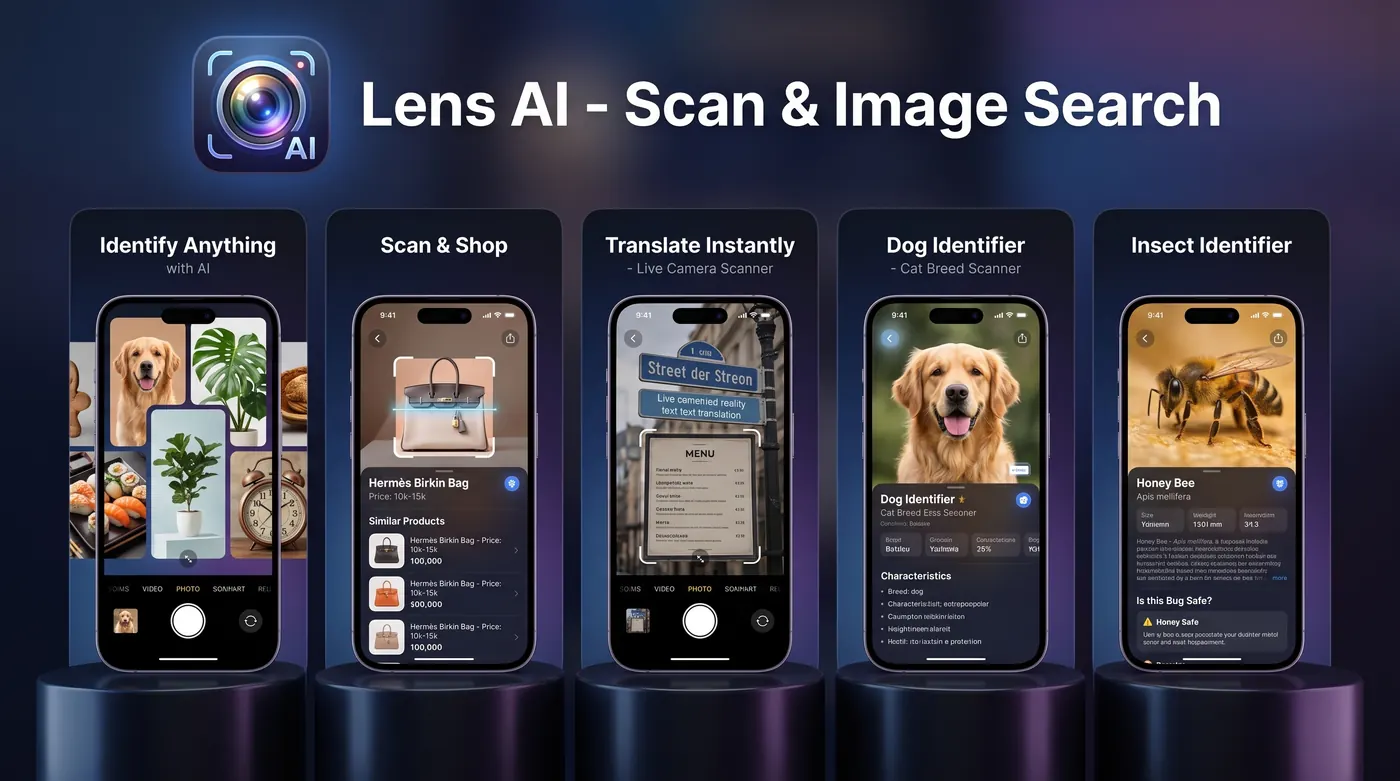
The free app takes a different approach. Its AI camera analyzes an uploaded or newly captured photo, runs visual search and reverse image search, and surfaces similar objects or products. It can also support shop-by-image research, OCR, camera translation, landmark recognition, menu recognition, homework help, and Scan and Ask AI questions.
That makes it an alternative to Google Lens for people who want several photo-based tools in one mobile scanner. It does not, however, reproduce a subscription archive of historical sold records.
How do photo search and sold-price research differ?
Photo search begins with appearance. The scanner examines shapes, colors, patterns, logos, text, and other visible characteristics, then returns visually similar images, webpages, products, or possible object categories. This is useful when you do not know the maker, model, material, or vocabulary needed for a conventional search.
Sold-price research begins with transaction records. A historical price database lets collectors search old marketplace and auction results using known details such as a maker, pattern, title, model, date, or category. Its core advantage is access to recorded sales that may no longer appear in ordinary marketplace searches.
These methods solve different parts of the same problem:
- Identification: Use the image search to generate possible names, makers, models, and search phrases.
- Comparison: Open visually similar results and eliminate objects with different dimensions, materials, marks, or construction.
- Valuation: Check completed sales for the closest confirmed match rather than relying on active asking prices.
- Verification: Compare several sources and inspect the original listing details whenever they remain available.
If your starting question is simply how much is it worth, a photo match is evidence for further research, not a final appraisal. Historical records are also imperfect: a 2026 review notes that the paid database does not fully cover recent sales from Poshmark, Mercari, and Facebook Marketplace: Underpriced.ai WorthPoint review (2026).
Which workflow gives a more reliable value estimate?
The most useful free workflow combines identification, exact-keyword searching, and completed-sale comparisons. Begin with a clear photograph of the whole object against a plain background. Add separate images of signatures, hallmarks, labels, serial text, damage, packaging, and unusual construction details.
Use the object identifier to obtain possible names and visually similar examples. OCR can extract stamped or printed wording that is difficult to read, while translation can help with foreign-language marks. Turn those clues into a precise search containing the maker, model, material, pattern, size, and condition.
Next, look for actual transactions. eBay Sold Listings are widely recommended as a primary free source for everyday collectibles because they show completed sales, according to a 2026 alternatives review: SiteMile WorthPoint alternatives (2026). Seller research tools can provide a longer view of eBay marketplace data at no added cost to eligible sellers, although that coverage remains limited to its own marketplace, according to a 2026 guide: Underpriced.app alternatives guide (2026).
Compare like with like. An asking price only shows what a seller hopes to receive, while a sold result indicates that a transaction occurred. Even sold prices need context: condition, restoration, included accessories, shipping, auction fees, geographic demand, and an incorrectly described listing can all affect the apparent value.
For specialist categories, continue with focused tools. A rare coin identifier can help narrow an unusual coin, while what is this coin explains how to capture legends, portraits, dates, and mint marks. The broader coin identifier workflow is useful when the category itself is uncertain.
What objects can the free scanner help identify?
The visual-search approach works across broad categories because it is not confined to a single collectibles database. It can suggest matches for plants, animals, insects, rocks, coins, antiques, cars, logos, consumer products, landmarks, menus, and printed text. Results depend on what is visible in the photograph and whether comparable images exist online.
For antiques, photograph the entire object before scanning maker marks and decorative details. The antique identifier guide covers the clues that separate a general visual match from a defensible identification. Furniture joints, ceramic backstamps, casting seams, labels, materials, and patterns can be more informative than the overall silhouette.
Jewelry and watches also require a category-specific process. Start with a jewelry identifier for style, construction, and hallmark clues, then use a jewelry value checker to research comparable sales. For timepieces, combine a watch identifier with a watch value checker rather than valuing a watch from dial appearance alone.
The app also functions as a product scanner and shop-by-image tool. A shopper can photograph an unfamiliar item, search for matching listings, and compare visible prices. Scan and Ask AI can answer follow-up questions about the pictured object, while OCR helps recover model names or product codes from labels.
People who want a general mobile starting point can use the AI lens app before moving to specialist databases, auction archives, or professional advice. The scanner is most effective at generating leads and search terminology, especially when the user begins with no reliable description.
What are the limits of a free visual-search alternative?
A visual match is not proof of identity, authenticity, age, material, or value. Different objects can share the same shape or decoration, and reproductions may deliberately resemble valuable originals. A blurred image, glare, cluttered background, hidden mark, protective case, or missing scale can also produce weak results.
The service runs reverse image search and visual-similarity matching on the uploaded photograph. It does not have a face database, people index, or Instagram access, so it should not be treated as a facial-recognition or social-profile lookup service.
Important limits include:
- No automatic appraisal: Similar listings may have unrealistic asking prices or describe a materially different object.
- No authenticity guarantee: A photograph cannot establish provenance, detect every counterfeit, or replace hands-on inspection.
- No condition grading: Subtle cleaning, repairs, replacements, wear, and internal defects may not be visible.
- No complete sales archive: Visual results come from discoverable images and pages rather than a dedicated historical transaction database.
- No guaranteed exact match: Generic designs, unmarked objects, and handmade pieces may produce only broad category suggestions.
For expensive jewelry, rare coins, luxury watches, signed art, or potentially important antiques, use the image result as a research lead. Seek an appropriate appraiser, dealer, grading service, auction specialist, or other qualified expert before buying, selling, insuring, or restoring the item.
What are some alternatives for different kinds of price research?
No single resource covers every market. The right alternative depends on whether you need quick identification, recent everyday sales, decorative-art auction records, fine-art results, or a deep historical archive.
LiveAuctioneers offers free accounts and realized auction prices that can help with antiques, estate property, and decorative art, according to a 2026 overview: SiteMile WorthPoint alternatives (2026). The same 2026 source describes Invaluable as a global auction-results resource oriented toward fine art and higher-end antiques, while Barnebys provides auction search and historical price information.
Use free image search when you cannot name the object, then move to the marketplace most likely to sell it. Everyday products and common collectibles may have useful completed listings on eBay. Estate antiques may appear in regional auction archives. Fine art, designer objects, or high-value decorative pieces may require specialist auction platforms and catalog research.
A practical rule is to pay for historical access when the expected benefit exceeds the subscription cost. Dealers processing substantial inventory may save time with a consolidated archive, while an occasional seller can often identify the object, inspect free sold listings, and consult auction databases without maintaining a paid plan.
Free photo search compared with a paid historical price database
Free photo search compared with a paid historical price database.
| Criterion | Free photo scanner | Paid historical database |
|---|---|---|
| Best starting point | An unknown object that can be photographed | An item with known keywords, maker, model, or category |
| Primary evidence | Visual similarity, OCR text, logos, and discoverable webpages | Archived auction and marketplace transaction records |
| Cost | Free mobile access | Common consumer pricing is about $30–$47 per month in 2026: SiteMile WorthPoint alternatives (2026) |
| Identification tools | Object recognition, reverse image search, translation, and AI questions | Price Guide plus maker marks and reference resources in qualifying plans, described in 2026 at WorthPoint product overview |
| Valuation role | Finds possible matches and current listings for further checking | Surfaces historical sales for comparable-price research |
| Main limitation | A similar-looking object may not be the same model, material, age, or condition | Coverage varies by marketplace and may omit recent sales from some platforms, according to a 2026 review: Underpriced.ai WorthPoint review (2026) |
Related guides
Apps That Identify Antiques
Learn what photo-identification apps can reveal and which details still require specialist research.
Antique Value Checker
Build a preliminary value range using identity, condition, provenance, and comparable sales.
Reverse Image Search Guide
Find matching images, source pages, related listings, and useful search terms from a photo.
AI Valuation vs Professional Appraiser
Understand when an automated estimate is enough for research and when expert inspection matters.
FAQ
Can I identify and value an antique for free?
Yes, but free tools provide research clues rather than a certified valuation. Photograph the object and its marks, use visual search to find likely matches, and compare confirmed details with completed sales. For rare, signed, restored, or expensive pieces, consult a qualified specialist before relying on the result.
Is a visual match the same as an appraisal?
No, a visual match is not an appraisal. It may suggest an object type, maker, model, or useful search phrase, but it does not establish authenticity, provenance, condition, or market value. A defensible estimate requires close comparable sales and adjustments for material, size, damage, restoration, and local demand.
How can I find the sold price of an item?
Search completed marketplace listings and realized auction results using the most exact description available. Include the maker, model, material, pattern, dimensions, and condition, then discard records that are not true matches. Compare several transactions because an isolated sale may reflect poor photography, unusual bidding, or an inaccurate description.
What do people use now instead of eBay?
People use a mix of specialist marketplaces, local selling platforms, auction houses, and visual-search tools. The best choice depends on the object: everyday goods suit broad marketplaces, antiques may need estate-auction records, and fine art may need specialist catalogs. Many sellers still use eBay completed listings as one source of price evidence.
Can reverse image search identify a rare coin?
Reverse image search can suggest a country, denomination, ruler, design type, or visually similar coin, but it may miss small diagnostic details. Confirm the legends, date, mint mark, weight, diameter, metal, edge, and varieties. Valuable candidates should be checked by an experienced numismatist or reputable grading service.
Can a photo scanner authenticate jewelry or watches?
No, a photo scanner cannot guarantee authenticity. It can recognize design cues, visible hallmarks, logos, dial layouts, or possible model families, but counterfeits may copy those features. Authentication can require magnification, movement inspection, material testing, serial research, provenance, and examination by a qualified jeweler or watch specialist.
When is a paid price archive worth using?
A paid archive is most useful when you research inventory frequently, need older records, or handle objects that rarely appear in current sold listings. Occasional sellers may get enough evidence from free image search and auction results. Before subscribing, confirm that the archive covers the categories and marketplaces relevant to your items.