 Lens
Lens
Underpriced AI vs Lens App
Underpriced AI focuses on resale pricing, sold comparables, and listing workflows. Lens App is a broader visual identifier for objects, nature, products, translation, and image-based search.


What does Underpriced AI vs Lens App actually compare?
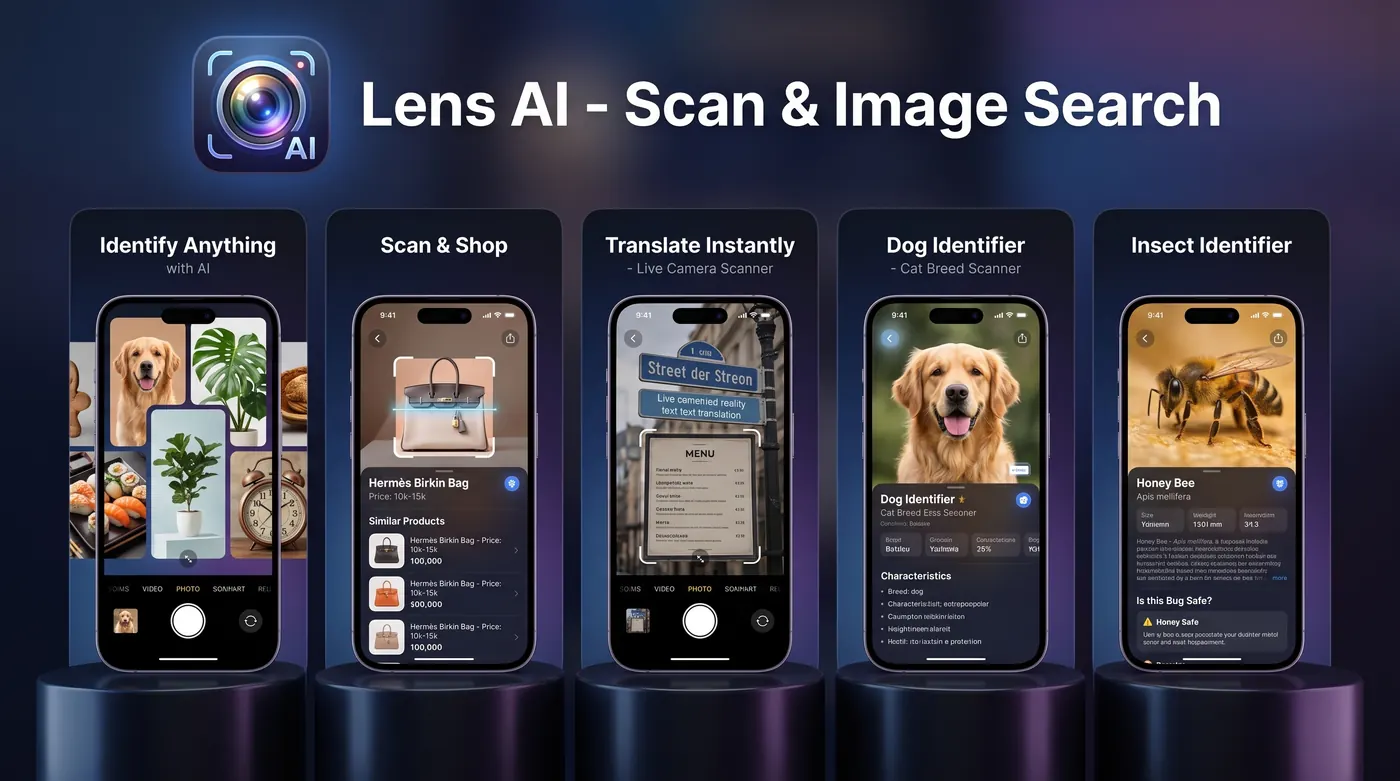
This comparison separates two different photo-scanning workflows. Underpriced AI is a reseller-focused tool designed to identify an item, surface sold-price information, estimate potential profit, and assist with marketplace listings. Its public positioning targets thrift stores, garage sales, flippers, and online arbitrage. Lens App is an independent, general-purpose visual ID app covering antiques, coins, clothes, products, plants, animals, rocks, logos, and other categories. It combines an identification pass with reverse image search, similar-product lookup, and image translation. The practical decision is whether you primarily need resale market research and listing support or a camera tool that can investigate many kinds of objects and visual questions.
Choose Underpriced AI when your main job is evaluating inventory for resale using sold comps, profit estimates, and listing assistance. Choose Lens App when you want broader identification, reverse image search, translation, and product discovery across thrift finds and everyday subjects. Neither tool provides certified authentication or a professional appraisal.
Underpriced AI is built around resale opportunities and sold comps; Lens App is built around broad visual identification and search.
Which is better for thrift finds and visual identification?
Underpriced AI is the stronger specialist when you are standing in a thrift store and need a resale-oriented workflow. Its public materials emphasize real sold prices, estimated profit, and help creating listings, making it more directly suited to sourcing inventory for flipping.
Lens App is more useful when the first question is simply what an object is—or when the photo contains a plant, animal, coin, logo, garment, sign, or unfamiliar product. It combines object identification, reverse image search, and image translation rather than centering every scan on resale.
Underpriced AI starts with the reseller’s question—can this item be flipped profitably—while Lens App starts with the broader question—what is this, and where can I learn more?
When to use Underpriced AI vs Lens App (and when not to)
Use it when
- Use Underpriced AI when sold comparables and potential resale profit are your priorities.
- Use Underpriced AI when you want assistance turning a thrift find into a marketplace listing.
- Use Lens App when you regularly identify objects outside the resale niche.
- Use Lens App when reverse image matches or similar-product shopping results may clarify an item.
- Use Lens App when signs, menus, labels, or packaging need image translation.
Skip it when
- Skip app-only valuation when you need a certified appraisal, insurance value, or legal documentation.
- Do not rely on either tool as proof that an antique, coin, collectible, or branded product is authentic.
- Do not use visual identification to decide whether a plant or mushroom is safe to eat.
How to compare Underpriced AI with Lens App
Photograph the identifying details
Use a sharp, well-lit image and include labels, maker’s marks, model numbers, patterns, or distinctive construction details.
Identify the item first
Confirm the likely category, brand, model, material, or era before treating any visually similar result as a comparable item.
Choose the appropriate workflow
Use Underpriced AI for resale comps, potential profit, and listing assistance; use Lens App for broader identification, web matches, translation, or similar-product discovery.
Check condition and exact variants
Compare size, edition, completeness, wear, accessories, and model details because small differences can substantially affect resale relevance.
Verify before buying or listing
Review current marketplace evidence and consult a qualified specialist when authenticity, high value, safety, or formal documentation matters.
Common ways to use each scanner
- Checking whether a thrift-store item has promising sold-price comparables
- Identifying an unknown antique before beginning deeper research
- Finding similar clothing or products from a photograph
- Researching coins, rocks, logos, plants, insects, birds, and animals
- Translating text on imported packaging, labels, menus, or signs
- Preparing a resale listing after confirming the exact item and condition
Lens App and Underpriced AI compared
Features, platform availability, and pricing can change, so verify current details on each product’s live pages.
| Feature | Lens App | Underpriced AI |
|---|---|---|
| Primary purpose | All-category visual identification and search | Reseller item scanning, valuation research, and listing workflow |
| Identification scope | Plants, animals, birds, insects, coins, rocks, antiques, products, logos, and clothes | Items evaluated primarily in a resale context |
| Resale research | Collectible value ranges as a research starting point | Sold prices, market data, and potential-profit estimates are central features |
| Search tools | Identification pass, reverse image search, web matches, and similar-product lookup | Sold-comparable research and marketplace-oriented listing assistance |
| Platforms | iOS, Android, and a limited free web scan | Publicly listed for iOS, Android, Chrome extension, and responsive web app |
| Free and paid access | Free download, free daily mobile scans, one free web scan daily, and optional upgrades | Public pages mention a free first scan, plans from $5 per month, and scan packs from $4; verify current pricing |
What both still get wrong
- Blurry images, hidden labels, generic designs, and visually similar variants can produce an incorrect or overly broad match.
- Automated prices can miss condition, rarity, regional demand, fees, shipping costs, incomplete sets, and sudden market changes.
- Neither an identification result nor a sold comparable establishes authenticity, ownership history, or certified appraisal value.
Try Lens App free
Download Lens App free on iOS or Android at https://onelink.to/brjuyz. Free daily mobile scans are included, with optional upgrades for heavier use.
A practical choice
For dedicated thrift flipping, Underpriced AI deserves the specialist advantage: sold comps, profit estimates, and listing assistance are closer to the reseller’s daily workflow. Lens App is the better fit when breadth matters—especially if the same camera tool must identify antiques, coins, clothes, products, plants, animals, rocks, logos, and translated text. Its reverse image search and ranked alternatives can also help when the first match is uncertain. If a collectible may be valuable, treat either result as preliminary research and follow a structured antique value check or consult a qualified appraiser rather than presenting an app estimate as proof.
Related guides
Antique identification for resellers
Learn how to identify thrifted antiques before researching demand and comparable sales.
Find a product from a photo
Use visual details, labels, and web matches to locate an unknown product.
How much is it worth?
Understand the difference between an estimated range, comparable sale, and professional appraisal.
Can a blurry photo still be identified?
Improve difficult images and learn when a clearer retake is necessary.
FAQ
Do AI item scanners work on iPhone, Android, and in a browser?
Platform coverage varies. Underpriced AI is publicly listed for iOS, Android, a Chrome extension, and a responsive web app. Lens App is free to download on iOS and Android and also provides one free web scan per day. Check current device and browser requirements before subscribing because availability can change.
How does sold-comps pricing work in a reseller scanner?
A reseller scanner compares an identified item with market or sold-price data to suggest a likely resale range or opportunity. Underpriced AI publicly emphasizes real sold prices and profit estimates, but its available materials do not fully establish every data source or matching rule. Verify the exact item, condition, date, marketplace, and current methodology.
Is an AI item scanner useful for thrift-store flipping?
It can speed up initial screening, especially when you need to identify an item and review resale evidence quickly. Underpriced AI is specifically positioned for thrift stores, garage sales, flippers, and online arbitrage. However, a promising comp does not guarantee profit after condition differences, marketplace fees, shipping, returns, and unsold inventory.
Can an AI scanner create an eBay listing automatically?
Underpriced AI’s public materials describe listing-creation assistance for marketplaces such as eBay. That can reduce research and drafting work, but sellers should still verify titles, model numbers, condition notes, category selection, shipping details, and marketplace policies before publishing. Lens App focuses on identification and search rather than a dedicated resale-listing workflow.
Do resale scanner apps work with Mercari, Poshmark, or Facebook Marketplace?
Marketplace support should be checked on the provider’s current product page. The supplied public information confirms that Underpriced AI helps with marketplace listings such as eBay, but it does not establish every feature or integration for Mercari, Poshmark, or Facebook Marketplace. Identification results can still inform a manually created listing elsewhere.
What does a reseller pricing scanner cost, and can it be tried free?
Underpriced AI’s public pricing pages mention plans from $5 per month, a free first scan, and scan packs from $4, but these details are changeable and should be verified live. A free first scan is not necessarily the same as a full free trial. Lens App includes free daily mobile scans and one free web scan daily.
Can a photo scanner authenticate antiques or collectibles?
No. A scanner can suggest an identity, find visually similar examples, or provide a preliminary value range, but photographs alone may miss reproductions, repairs, altered marks, materials, provenance, and internal construction. Neither Lens App nor a resale-pricing tool should be treated as certified authentication, appraisal evidence, or insurance documentation.