 Lens
Lens
AntiqSnap vs Lens App
Compare a camera-first antique specialist with a broader visual identification app. See which workflow fits collectible research, everyday object recognition, reverse image search, translation, and shopping.


What does AntiqSnap vs Lens App actually compare?
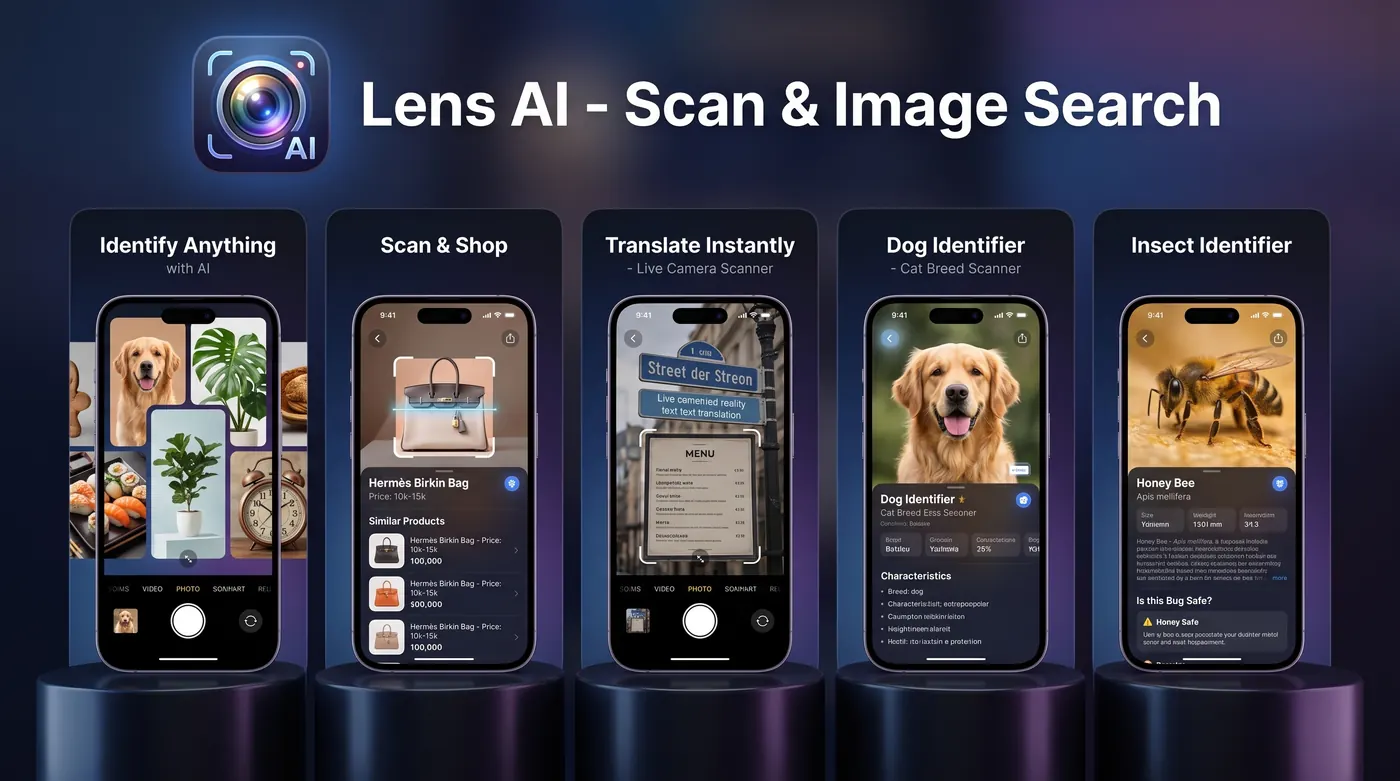
AntiqSnap vs Lens App compares two photo-based identification workflows with different scopes. AntiqSnap is a mobile antique identifier focused on antiques, vintage objects, and collectibles. Its listings emphasize quick recognition, historical context, estimated market ranges, grading suggestions, and a digital collection catalog. Lens App is an independent, all-category visual ID app for antiques, coins, plants, animals, rocks, products, clothing, logos, and more. It combines an identification pass with reverse image search, while also offering image translation and similar-product lookup. AntiqSnap is the more specialized collector tool; Lens App is the more flexible choice when an image may contain an antique, an ordinary product, text, or an unfamiliar object. Neither provides certified authentication or a professional appraisal.
Choose AntiqSnap when your collection is the main job and you want antique-focused context, value estimates, and saved-item tracking. Choose Lens App when you need one camera tool for antiques plus coins, products, clothing, wildlife, translation, reverse image search, and shopping. Treat either app’s valuation as a research lead, not proof.
AntiqSnap specializes in antique and collectible research, while Lens App trades that narrow collector focus for broader identification, reverse search, translation, and product discovery.
Which is better for identifying antiques from photos?
AntiqSnap is the stronger fit for a collector-centered workflow. It is specifically positioned for antiques and collectibles, with historical details, estimated value ranges, grading suggestions, and a catalog for saved items. If most of your photos are ceramics, watches, stamps, jewelry, furniture, or vintage art, that specialization can be useful.
Lens App is better when antique identification is only one part of the task. It can label an object, surface web matches, rank plausible alternatives, and help with reverse image search. It also covers products, plants, animals, rocks, logos, and clothing, and can read packaging or signage through image translation.
AntiqSnap is built around antique and collectible lookups; Lens App is built around identifying and researching many kinds of images.
When to use AntiqSnap vs Lens App (and when not to)
Use it when
- Choose AntiqSnap when most scans involve antiques, vintage objects, or collectible categories.
- Choose AntiqSnap when a saved collection catalog and estimated total value support your workflow.
- Choose Lens App when you regularly identify both collectibles and everyday objects.
- Choose Lens App when reverse image matches, translation, or similar-product shopping may help.
- Use either as an initial research tool before checking marks, measurements, condition, provenance, and comparable sales.
Skip it when
- Skip app-only conclusions when authenticity, insurance, tax, legal, or high-value purchase decisions are involved.
- Do not rely on a single blurry, distant, or poorly lit photo for identification or condition judgments.
- Avoid treating an AI-generated value range as a guaranteed sale price or certified appraisal.
How to compare AntiqSnap with Lens App
Photograph the whole object
Use even lighting and a plain background. Keep the complete shape, proportions, and visible condition in frame.
Capture identifying details
Take additional photos of maker’s marks, signatures, labels, serial numbers, materials, damage, and construction details.
Run the first identification
Use AntiqSnap for an antique-focused lookup or Lens App when the category is uncertain and broader visual matches may help.
Compare alternatives
Check whether the proposed maker, era, model, and material agree with the object. Lens App can rank look-alikes and flag weak photos.
Verify before valuing
Research provenance, dimensions, condition, and comparable sold items. Consult a qualified specialist when authenticity or significant money is at stake.
Common AntiqSnap and Lens App use cases
- Identifying an unknown ceramic, watch, stamp, piece of jewelry, or vintage household object
- Researching possible makers, eras, origins, and object categories from photos
- Creating an initial value range before deeper comparable-sales research
- Checking coins or collectibles found at estate sales, flea markets, and thrift stores
- Finding visually similar products or replacement items from a photo
- Translating labels, packaging, signs, or inscriptions encountered during object research
Lens App and AntiqSnap compared
Features, free allowances, and subscription terms can change, so confirm current details in each app’s public listing.
| Feature | Lens App | AntiqSnap |
|---|---|---|
| Primary focus | Broad visual identification across antiques, coins, products, clothing, plants, animals, rocks, logos, and more | Antiques, vintage objects, and collectibles |
| Research workflow | Identification label paired with web matches and reverse image search | Camera-first antique recognition with historical and collector-oriented context |
| Valuation support | Collectible value ranges as an initial research reference | Estimated market ranges, grading suggestions, and related valuation details |
| Collection tools | No dedicated collection-value catalog is among the confirmed features | Can save scans and track estimated collection value |
| Additional visual tools | Image translation and similar-product shopping from a photo | Focused on antique identification, appraisal references, and collection management |
| Access | Free to download on iOS and Android, with free daily mobile scans and one free web scan per day; optional upgrades | Mobile app on iOS and Android with a freemium-plus-subscription model; current free limits and prices should be checked |
What both still get wrong
- Look-alike objects, reproductions, altered pieces, and obscure maker marks can produce an incorrect or overly broad identification.
- A photo cannot fully establish material, hidden repairs, provenance, internal construction, or subtle condition differences.
- Estimated value ranges may not reflect local demand, selling fees, condition, provenance, or the difference between asking and sold prices.
Try Lens App free
Download Lens App on iOS or Android at https://onelink.to/brjuyz and use the free daily mobile scans. It is independent and is not Google Lens or affiliated with Google.
A practical choice
Pick AntiqSnap if antique and collectible research dominates your camera roll and you value historical context, grading suggestions, valuation estimates, and a saved collection catalog. It is the more focused specialist. Pick Lens App if breadth matters: it can investigate an antique, identify an unrelated object, translate a label, find similar merchandise, and return web matches in one workflow. For serious buying or resale decisions, use either result only as a starting point, then follow a structured antique value check using marks, condition, provenance, and comparable sold items. A qualified appraiser remains the better choice for authentication, insurance, estates, or valuable pieces.
Related guides
Antique Identifier Guide
Learn how to photograph marks, materials, and construction details for a stronger first identification.
AI Valuation vs Professional Appraiser
Understand when a quick estimate is enough and when human inspection is worth the cost.
Identify Coins from Photos
Use clear images of both sides, inscriptions, dates, and mint marks to narrow a coin match.
FAQ
How accurate is photo identification for antiques?
Accuracy depends heavily on the object and photographs. Distinctive shapes, maker marks, signatures, and labels improve the odds of a useful result. Generic designs, reproductions, partial views, and obscure regional pieces are harder. Treat the first identification as a hypothesis and verify the maker, material, era, measurements, and construction using independent sources.
Can an antique identifier tell whether an item is real or fake?
No photo app can reliably certify authenticity from an image alone. It may surface fake indicators or point out inconsistencies, but authentication can require material testing, provenance, tool-mark inspection, internal construction, and expert comparison. Use an app to identify what to investigate, then consult an appropriate specialist before making a high-value purchase or formal claim.
Which app is better for coins, stamps, jewelry, and furniture?
AntiqSnap is positioned specifically for collectible categories including coins, stamps, ceramics, watches, jewelry, art, and furniture, making it suitable for collector-focused research. Lens App also identifies antiques and coins, but its advantage is breadth across many unrelated categories. The better choice depends on whether specialist collection features or general visual search matters more.
Can a photo app estimate what an antique is worth?
An app can suggest a reference-level range, but that is not a certified appraisal or guaranteed selling price. Value changes with condition, authenticity, provenance, size, local demand, venue, and recent comparable sales. Photograph marks and damage, identify the closest variant, and compare completed sales before relying on any AI-generated estimate.
What photos produce the best antique identification results?
Start with a sharp, evenly lit image showing the entire object against a simple background. Add close-ups of maker marks, signatures, labels, fasteners, joints, patterns, damage, and unusual construction. Include a ruler or known object for scale when useful. If the result is weak, change the angle and retake the image rather than repeatedly scanning the same photo.
Is a specialist antique app better than general image search?
A specialist can be better when you want antique-specific context, valuation fields, grading suggestions, and collection tracking. General visual search is more useful when the category is uncertain or you also need web matches, product discovery, translation, and identification outside antiques. Many researchers benefit from using both approaches and checking where their conclusions agree.
Do antique identifier apps work offline?
Do not assume offline identification unless the current app listing explicitly confirms it. AI recognition, market references, web matches, and valuation data commonly depend on an internet connection. The supplied AntiqSnap information does not document a user-facing web app or confirm offline operation. Lens App’s reverse search and web-match workflow likewise requires online access.