 Lens
Lens
Cluzy vs Lens App
Cluzy focuses on thrift and resale research, including sold-price comps. Lens App is a broader camera-based identifier for products, objects, nature, collectibles, translation, and visual shopping.


What does Cluzy vs Lens App actually compare?
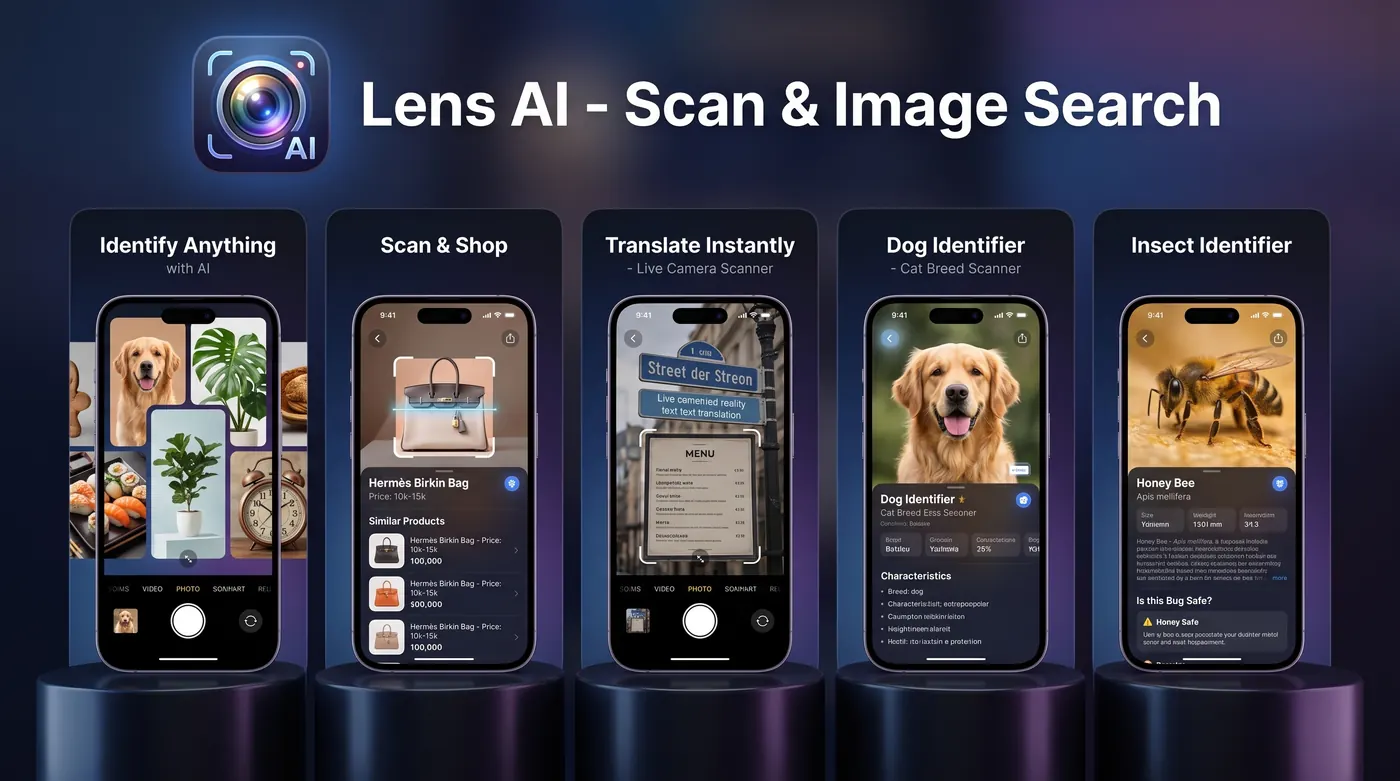
Cluzy vs Lens App compares a specialist resale scanner with a general-purpose visual identification app. Cluzy’s public messaging centers on scanning thrift items, identifying potential resale inventory, showing sold-price comps, and supporting eBay listing workflows. Lens App starts with a photo and covers a wider range of subjects, including products, clothes, logos, antiques, coins, rocks, plants, animals, birds, and insects. It combines an identification pass with reverse image search, can translate text in images, and finds similar products. The practical decision is whether you mainly need resale-focused pricing evidence or a flexible camera tool for understanding many kinds of objects. Neither app’s output should be treated as a certified appraisal, authenticity decision, or guaranteed resale price.
Choose Cluzy when your main task is scanning thrift inventory, reviewing sold comps, and framing possible resale profit. Choose Lens App when you need to identify many kinds of products or objects, compare look-alikes, translate packaging, run reverse image searches, or find visually similar items from a photo.
Cluzy is built around thrift and resale workflows, while Lens App prioritizes broad visual identification and product discovery.
Which is better for identifying and researching products?
Lens App is the better fit when the item may be anything from clothing or a logo to a coin, antique, plant, rock, or household product. Its identification pass is paired with web matches, and it can rank plausible alternatives when objects look alike. It also supports finding a product from a photo and translating text in images.
Cluzy is the stronger specialist when the goal is thrift sourcing or resale research. Its official messaging emphasizes sold prices, profit framing, and eBay listing workflows. That focus is more useful than broad object recognition when your next question is not simply “What is this?” but “What have comparable items actually sold for?”
Lens App answers a wider range of “what is this?” questions; Cluzy concentrates on “could I resell this, and what do sold comps suggest?”
When to use Cluzy vs Lens App (and when not to)
Use it when
- Use Lens App when you need to identify products and unrelated objects in the same camera tool.
- Use Lens App when packaging, menus, labels, or signs require image translation.
- Use Lens App when you want identification plus reverse image search and similar-product results.
- Use Cluzy when thrift sourcing and sold-price comparisons are the central task.
- Use Cluzy when an eBay-oriented resale workflow matters more than broad visual search.
Skip it when
- Skip app-only estimates when you need a certified appraisal, authenticity opinion, or insurance valuation.
- Skip a resale specialist when the subject is a plant, animal, rock, sign, or other non-resale identification task.
- Skip either tool as the sole basis for buying inventory when condition, fees, shipping, demand, and item variants have not been checked.
How to compare Cluzy with Lens App
Photograph the whole item
Use clear lighting, a steady camera, and a simple background. Include the item’s complete shape before taking close-ups.
Capture identifying details
Photograph labels, model numbers, logos, materials, signatures, maker’s marks, damage, and packaging text.
Choose the right research path
Use Lens App for broad identification, translation, web matches, or similar products. Use Cluzy when thrift resale comps are the priority.
Check alternatives and exact variants
Compare dimensions, colorways, dates, editions, model numbers, and condition rather than accepting the first visual match.
Verify before acting
Confirm important conclusions with original manufacturer information, multiple sold listings, or a qualified appraiser when the stakes are high.
Common Cluzy and Lens App use cases
- Identifying an unknown product from a thrift-store photo
- Checking sold-price evidence for a possible resale purchase
- Finding visually similar clothing, accessories, or household products
- Reading and translating labels or foreign-language packaging
- Researching marks, logos, model numbers, and possible item variants
- Getting an initial category or value range before deeper collectible research
Lens App and Cluzy compared
Features, platform availability, and purchase options can change, so confirm current details in the official listings.
| Feature | Lens App | Cluzy |
|---|---|---|
| Primary focus | Broad camera identification and visual search | Thrift identification and resale research |
| Subject coverage | Products, clothes, logos, antiques, coins, rocks, plants, animals, birds, insects, and more | Public messaging focuses on thrift and resale items |
| Search and research | Identification pass, web matches, reverse image search, and ranked alternatives | Item identification with sold-price comps and profit framing |
| Shopping workflow | Similar-product lookup from a photo | Resale sourcing and eBay listing workflow |
| Platforms | iOS, Android, and a limited web scanning option | Apple listings reviewed label it iPhone-only; Cluzy’s official site also states iOS and Android |
| Free access | Free to download, with free daily mobile scans and one free web scan per day; optional upgrades | Free to download with in-app purchases; no public web price was found in the reviewed material |
What both still get wrong
- Visually similar models, reproductions, editions, and private-label products can produce plausible but incorrect matches.
- Resale estimates can miss condition, completeness, regional demand, platform fees, shipping costs, and sudden market changes.
- A photo-based result cannot certify authenticity, establish provenance, or replace a professional appraisal for high-value decisions.
Try Lens App free
Download Lens App free on iOS or Android at https://onelink.to/brjuyz. Free daily mobile scans are included, with optional upgrades available.
A practical choice
Choose Lens App when breadth matters: it can move from identifying an object from a photo to product search, translation, nature identification, and reverse image research without requiring a resale use case. It is especially practical for mixed camera-roll questions or when you do not yet know an item’s category. Choose Cluzy when you regularly scan thrift inventory and want sold comps or eBay-oriented resale support close to the identification step. That specialist workflow is the more relevant choice for dedicated resellers. For antiques or collectibles, treat either app as a research starting point and verify value, condition, provenance, and authenticity independently; a displayed range is not a certified appraisal.
Related guides
Reverse image search
Learn how image matching can uncover related pages, listings, and visual sources.
Antique identification for resellers
Research unknown antiques while accounting for condition, marks, and resale uncertainty.
How much is it worth?
Understand the limits of photo-based estimates and how to verify market evidence.
FAQ
How can I identify a thrift-store item from a photo?
Take one clear photo of the entire item and additional photos of labels, maker’s marks, model numbers, and damage. A broad identifier such as Lens App can suggest the category and web matches. A resale-focused scanner such as Cluzy may be more useful once the goal shifts to sold comps and potential resale research.
Can an app find the resale value of an item?
An app can provide a research estimate or surface comparable sales, but it cannot guarantee what your item will sell for. Exact model, edition, condition, completeness, location, fees, and demand all matter. Cluzy focuses on sold-price comps, while Lens App’s collectible value ranges are only starting points, not certified appraisals.
Are sold comps better than asking prices for resale research?
Sold comps usually provide stronger evidence of completed transactions than active asking prices, which may be aspirational. Even sold listings require careful matching: check the exact variant, condition, sale date, included accessories, shipping, and whether the transaction was unusual. Cluzy publicly emphasizes real sold prices rather than only current listings.
What is the difference between a resale scanner and a visual search app?
A resale scanner is optimized for sourcing inventory, checking market evidence, and estimating potential profit. A visual search app covers broader questions, such as identifying an unknown object, translating a label, finding similar products, or comparing possible matches. Cluzy represents the specialist resale approach; Lens App represents the broader identification approach.
Can a photo-identification app create an eBay listing?
Some resale tools support listing-oriented workflows. Cluzy’s public messaging specifically mentions eBay listing creation, making it the more relevant option for that task. Lens App is designed primarily for identification, reverse image search, translation, and similar-product discovery rather than being positioned as a dedicated marketplace listing tool.
Do thrift scanner apps work on Android?
Platform support varies and should be checked before choosing an app. The Apple listings reviewed for Cluzy explicitly describe it as iPhone-only, while Cluzy’s official site states iOS and Android, so the public information is not fully consistent. Lens App is confirmed as available to download on both iOS and Android.
Can an app authenticate an antique or collectible?
No photo app should be treated as proof of authenticity. Images may help identify a likely maker, category, era, or comparable item, but reproductions and altered pieces can look convincing. For a valuable object, verify provenance and construction details and consult a qualified specialist. App-generated value ranges are research leads, not formal appraisals.