 Lens
Lens
PriceSnap vs Lens App
PriceSnap focuses on price discovery and resale research, while Lens App combines product lookup with broader visual identification, reverse image search, and image translation.


What does PriceSnap vs Lens App actually compare?
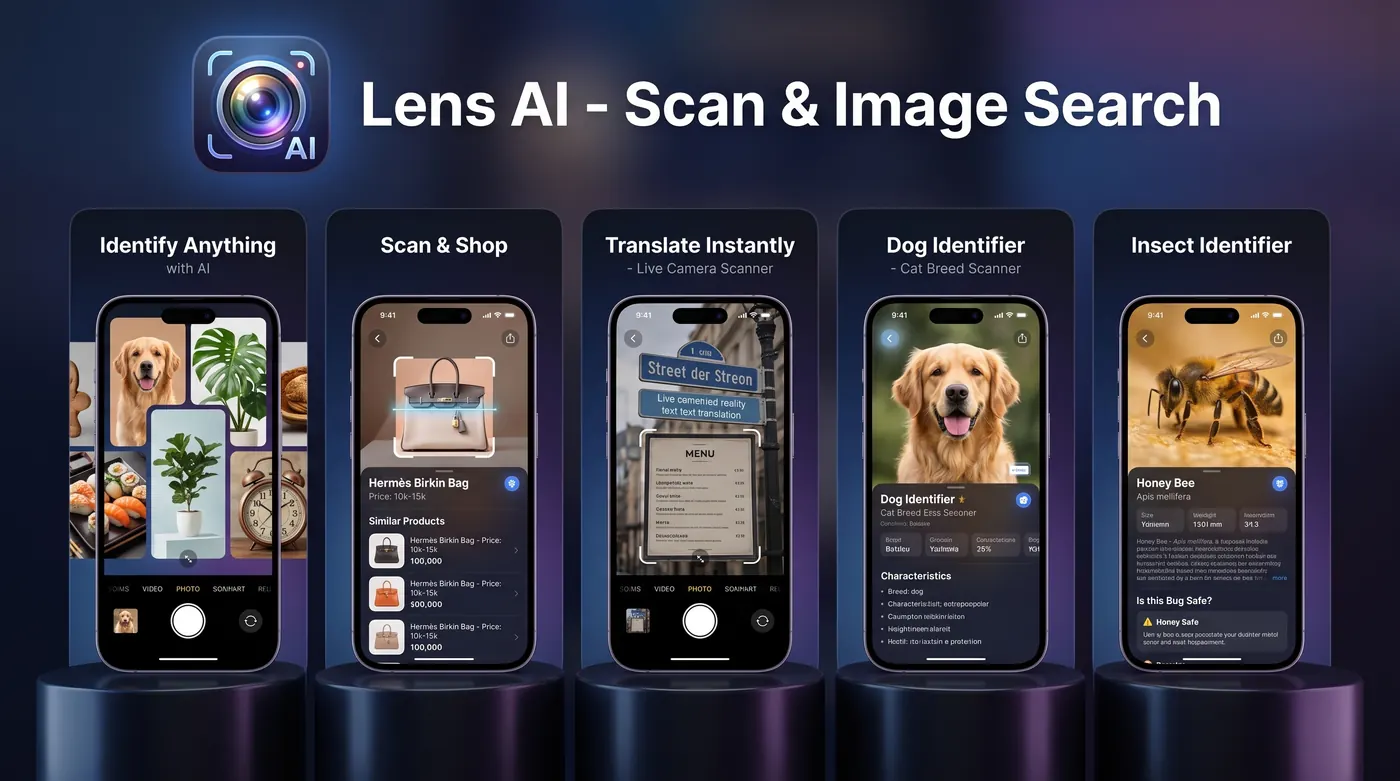
This comparison is between two camera-first research tools with different priorities. PriceSnap identifies products from photos or barcodes and estimates current new, used, and resale value ranges. Its tools are aimed largely at thrifting, flipping, secondhand shopping, and comparing baskets or receipts across available sources. Lens App also supports shopping and similar-product lookup, but its scope extends beyond resale goods. It can identify plants, animals, birds, insects, coins, rocks, antiques, products, logos, and clothes, then pair a label with reverse image and web matches. Lens App can also translate text in signs, menus, and packaging. Neither app is a certified appraisal, authentication service, marketplace, or guarantee of what an item will sell for.
Choose PriceSnap when your main question is what a thrifted or secondhand item might be worth based on current price signals. Choose Lens App when you first need to determine what is in a photo, investigate look-alikes, find matching products, translate visible text, or search across categories beyond resale merchandise.
PriceSnap specializes in resale and price research; Lens App is a broader identification and visual-search toolkit that also includes shopping lookup.
Which is better for identifying and researching products?
PriceSnap is the more focused choice for thrift finds, resale ranges, marketplace signals, barcode scans, basket comparisons, and deciding whether an item may be worth flipping. Its valuation results are directional research rather than promised sale prices, and sparse comparable data can reduce confidence.
Lens App is better when the photo may contain almost anything or when identification must come before shopping. It combines an identification pass with reverse image search, supports similar-product lookup, and can help you find a product from a photo. It also covers nature, collectibles, logos, clothing, and image translation.
The practical split is price-first resale research with PriceSnap versus category-spanning identification and visual search with Lens App.
When to use PriceSnap vs Lens App (and when not to)
Use it when
- You need to identify an unknown object before deciding how to research it.
- You want product matches and visually similar shopping results from a photo.
- Your photos may show plants, animals, coins, rocks, antiques, logos, or clothing.
- You need to translate text visible on packaging, signs, or menus.
- You want ranked alternatives and retake guidance when an image is ambiguous or blurry.
Skip it when
- Your primary task is comparing resale signals and market ranges for thrift inventory; PriceSnap is more specialized.
- You need a certified appraisal, formal authentication, or guaranteed selling price; neither app provides that.
- You need to make a safety-critical, medical, legal, insurance, or edible-plant decision from a photo.
How to compare PriceSnap with Lens App
Start with the decision you need to make
Use PriceSnap when the decision is mainly whether to buy, sell, keep, or pass based on price signals. Use Lens App when the first question is what the photographed subject is.
Take a clear, well-lit photo
Capture the full object and important details such as labels, logos, model numbers, markings, condition, or distinctive shapes. Photograph additional angles when the item has few obvious features.
Review the proposed identification
Check whether the category, model, material, and visible details match. Lens App can rank alternatives for look-alikes and flag weak or blurry photos that may need a retake.
Compare independent evidence
For resale research, inspect comparable listings, condition, location, fees, and recent market signals rather than relying on one generated range or asking price.
Escalate high-stakes items
Consult a qualified appraiser or relevant specialist before insuring, authenticating, restoring, or selling a potentially valuable collectible.
Common use cases for each app
- Checking a thrift-store item for possible resale demand and directional value ranges with PriceSnap.
- Scanning a barcode or uploading a receipt for price comparison with PriceSnap.
- Identifying an unfamiliar product, logo, garment, antique, coin, plant, or animal with Lens App.
- Finding visually similar products or possible web matches from a photo with Lens App.
- Translating text on imported packaging, menus, labels, or signs with Lens App.
- Using both tools in sequence: broad identification first, followed by resale-focused price research.
Lens App and PriceSnap compared
Features, availability, and subscription offerings can change, so confirm current details in each product's public listing.
| Feature | Lens App | PriceSnap |
|---|---|---|
| Primary focus | Broad photo identification, reverse image search, translation, and visual shopping | Product identification, price comparison, and resale-value research |
| Identification scope | Plants, animals, birds, insects, coins, rocks, antiques, products, logos, and clothes | Items with relevant retail or resale data, including thrift goods, collectibles, clothing, electronics, and groceries |
| Input methods | Camera or uploaded image | Photos, barcodes, product details, receipts, and grocery lists, depending on the tool |
| Price research | Similar-product lookup and collectible value ranges as a research starting point | New, used, and resale ranges informed by marketplace, retailer, condition, and location signals |
| Additional tools | Reverse image search, ranked look-alikes, image translation, and photo-quality guidance | Basket comparisons, country-aware price comparison, saved scans, and resale-oriented research |
| Platforms and access | Free to download on iOS and Android; free daily mobile scans and one free web scan per day, with optional upgrades | Available on iOS, Android, and the web; basic identification is described as free, while exact paid-tier pricing is not established by the supplied public sources |
What both still get wrong
- A single photo may hide model numbers, materials, damage, reproductions, or subtle variants, leading to an incorrect identification.
- Estimated values can miss condition, local demand, seller fees, shipping costs, scarcity, and the difference between asking prices and completed sales.
- Neither tool can certify authenticity, produce a formal appraisal, or guarantee that an item will sell within a displayed range.
Try Lens App free
Download Lens App free on iOS or Android at https://onelink.to/brjuyz. Free daily mobile scans and one free web scan per day are available, with optional upgrades.
A practical choice
Choose PriceSnap if resale is the central job and you want a tool built around thrift finds, barcode research, market signals, basket comparisons, and directional price ranges. That specialization makes it the stronger fit for price-first flipping workflows. Choose Lens App when breadth matters: it can identify products alongside plants, animals, coins, rocks, antiques, logos, and clothes, then add translation, product matching, and web results. For uncertain collectibles, treat either result as preliminary and review an AI valuation versus a professional appraisal before making a high-value decision. Some users may benefit from identifying broadly with Lens App and then checking resale-specific evidence with PriceSnap.
Related guides
Visual product search
Learn how to search for products using a photo, visible details, and web matches.
Antique identification for resellers
Use visual clues to research secondhand antiques before checking condition and comparable sales.
How much is an item worth?
Understand value ranges, comparable evidence, condition adjustments, and appraisal limits.
Shopping finder from a photo
Find similar products and possible purchase sources from an image.
FAQ
How accurate are photo-based resale value estimates?
Resale estimates are directional because the result depends on correct identification, visible condition, location, timing, and the availability of comparable market data. Rare variants or items with few comparables can produce weaker ranges. Use the estimate to begin research, then verify model details, condition, recent completed sales, fees, and local demand.
Can a price scanner set the final listing price for a secondhand item?
A scanner can suggest a starting range, but it cannot guarantee a final selling price. Your listing price should also reflect condition, included accessories, shipping, marketplace fees, demand, and how quickly you want to sell. PriceSnap explicitly positions its output as research rather than a certified appraisal or guaranteed transaction price.
Is a barcode scan better than identifying a product from a photo?
A barcode is useful when it maps cleanly to an exact retail product, but vintage, handmade, unpackaged, or rare items may have no usable code. Photo identification is more flexible for those objects, although it can confuse similar models. PriceSnap supports both approaches, while Lens App emphasizes camera-based visual identification and matching.
What is the best type of app for thrift flipping?
A resale-focused scanner is usually more useful when every decision centers on market ranges, potential margin, and whether to buy or pass. PriceSnap is designed for that workflow. A broad identifier such as Lens App is more helpful when the object or category is unknown and you need identification before conducting price research.
Can a visual scanner authenticate an antique, coin, watch, or collectible?
No photo scanner should be treated as proof of authenticity. It may suggest a likely type, maker, date range, or visual match, but reproductions and altered items can share the same visible features. Use results to organize further research, then consult a qualified specialist for authentication, insurance, or a formal appraisal.
How can I find the exact product shown in a photo?
Use a clear image that includes the full item, logo, label, model number, or distinctive design details. Lens App pairs an identification pass with web and reverse-image matches, which can help narrow the search. Exact matches are not guaranteed, especially for generic products, discontinued models, private-label goods, or heavily edited photos.
Do photo identification and price-scanning apps work offline?
These tools generally need internet access to fetch current matches, product pages, or market signals. PriceSnap specifically requires a connection for scanning and price retrieval, although previously saved scans may be viewable offline. Do not expect current comparison data or fresh web matches when the device has no network connection.