 Lens
Lens
Curio vs Lens App
Curio specializes in identifying antiques, vintage items, and collectibles. Lens App covers those finds while also supporting broader object identification, reverse image search, translation, and product discovery.


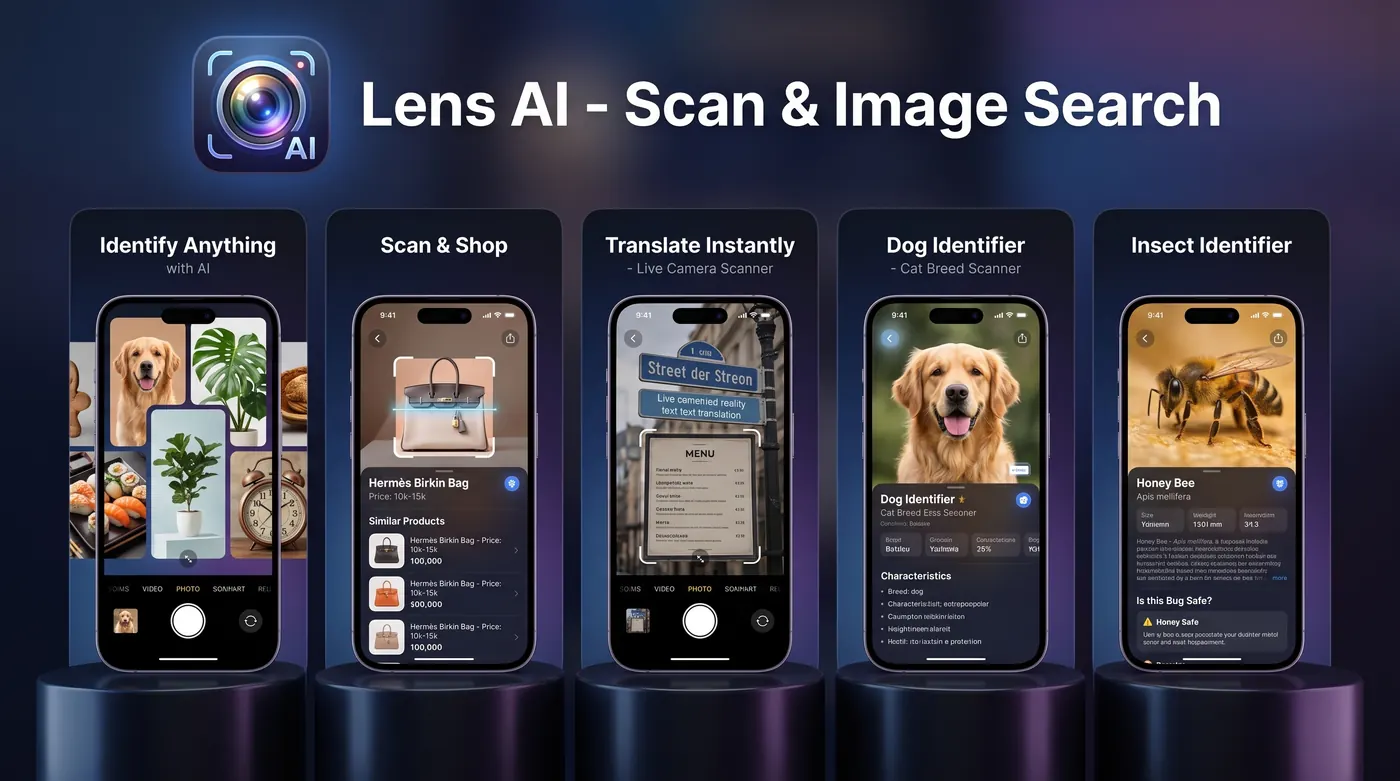
What does Curio vs Lens App actually compare?
Curio vs Lens App compares a specialist antique identifier with a broader visual identification tool. Curio is designed around photos of antiques, vintage objects, and collectibles, returning identification details, historical context, visual matches, and an estimated value based on online listings. Lens App can also identify antiques and collectibles, but its camera recognition extends to coins, plants, animals, rocks, clothing, products, logos, and other everyday objects. It pairs an identification pass with reverse image search, offers similar-product lookup, and can translate text found on signs, menus, or packaging. Both can provide useful research leads from a photo, but neither replaces provenance research, specialist inspection, authentication, or a professional appraisal.
Choose Curio when you want a focused mobile workflow for identifying antiques and vintage finds with rough value context. Choose Lens App when the object might be an antique, coin, product, garment, rock, plant, animal, or something else—and when reverse image search, translation, or shopping matches could help.
Curio is an antique-focused identifier, while Lens App is an all-category visual search and identification tool.
Which is better for antiques, collectibles, and everyday finds?
Curio is the more focused option for people who mainly photograph vases, clocks, jewelry, paintings, furniture, and similar secondhand discoveries. Its public descriptions emphasize antique identification, period and origin context, visual matches, and estimated values. That specialization can make it the better fit when every photo is part of an antique identification workflow.
Lens App is better when your camera roll contains mixed subjects or when identification is only the first step. It can examine antiques alongside coins, products, clothing, plants, animals, rocks, and more, then pair a label with web matches. It also supports reverse image search, image translation, and similar-product discovery.
Curio narrows the task to antiques and vintage objects; Lens App trades that narrow focus for wider recognition and additional visual-search tools.
When to use Curio vs Lens App (and when not to)
Use it when
- You regularly encounter mixed boxes of antiques, coins, clothing, products, and unidentified objects.
- You want an identification pass and reverse image search in the same workflow.
- You need ranked alternatives when several objects or styles look alike.
- You want to translate labels, packaging, signs, or inscriptions visible in an image.
- You want free daily mobile scans before deciding whether an upgrade is useful.
Skip it when
- You need a certified appraisal, authenticity determination, or insurance valuation.
- You need conclusive attribution from a tiny, worn, or unreadable maker’s mark.
- You want a narrowly antique-focused interface and do not need broader visual search features; Curio may be the better fit.
How to compare Curio with Lens App
Photograph the whole object
Use even lighting and keep the item in focus. Include its overall shape, materials, decoration, and visible condition.
Capture identifying details
Take separate close-ups of hallmarks, signatures, labels, pottery marks, fasteners, construction details, and damage.
Run the identification
Review the proposed label, description, period, origin, and alternative matches rather than accepting the first result automatically.
Check visual and web evidence
Compare shapes, materials, markings, dimensions, and construction with credible reference pages and visually similar examples.
Treat value as preliminary
Use any estimated range as a research starting point. For authentication, insurance, tax, legal, or high-value sale decisions, consult an appropriate specialist.
Common reasons to compare Curio and Lens App
- Identifying an unknown vase, clock, painting, or decorative object
- Researching vintage jewelry and visible maker’s marks
- Checking whether a secondhand find resembles known examples online
- Separating antique identification from formal appraisal or authentication
- Identifying mixed estate-sale or thrift-store discoveries
- Finding similar products or translating text found on an object
Lens App and Curio compared
Features, availability, and purchase options can change, so verify current details in the official listings.
| Feature | Lens App | Curio |
|---|---|---|
| Primary focus | Broad visual identification across antiques, coins, products, clothing, plants, animals, rocks, and more | Antiques, vintage items, and collectibles |
| Identification output | Identification label, web matches, and ranked alternatives with reasons when look-alikes exist | Item title, description, origin, time period, visual matches, and estimated value |
| Additional tools | Reverse image search, image translation, and similar-product lookup | Public descriptions emphasize antique identification, context, matches, and value estimates |
| Platforms | iOS, Android, and a limited web scan option | iOS and Android |
| Free access | Free to download, with free daily mobile scans and one free web scan per day | Free to download; iOS listings confirm in-app purchases, but authoritative public pricing was not found |
| Valuation status | Collectible value ranges are research starting points, not certified appraisals or authenticity proof | Estimated value is drawn from online listings and is not a formal appraisal |
What both still get wrong
- A single photo can hide dimensions, weight, materials, repairs, construction methods, signatures, and provenance that change an identification.
- Reproductions and authentic pieces may share the same visible style, so an image match cannot prove age or authenticity.
- Online value estimates may overlook condition, regional demand, fees, provenance, and differences between asking prices and achievable sale prices.
Try Lens App free
Download Lens App free on iOS or Android at https://onelink.to/brjuyz. Free daily mobile scans are included, with optional weekly, monthly, yearly, lifetime, and Pro upgrades.
A practical choice
Choose Curio if nearly every photo is an antique or vintage object and you prefer a specialist workflow centered on identification, historical context, visual matches, and rough value estimates. Choose Lens App when breadth matters: it can handle an antique today and a coin, garment, plant, rock, product, logo, or animal tomorrow. Lens App is also the more practical choice when you want reverse image search, translation, shopping matches, or ranked alternatives in the same tool. For valuable objects, use either app only to begin research; follow with documented comparisons and a qualified appraiser or category specialist before making authenticity, insurance, legal, or major sale decisions.
Related guides
Apps That Identify Antiques
Learn what camera-based antique identification can reveal and where expert research is still needed.
Antique Value Checker
Understand how preliminary value ranges differ from appraisals and actual sale outcomes.
Identify an Object From a Photo
Use image details, alternative matches, and web evidence to investigate unfamiliar objects.
Coin Identifier
Photograph both sides of a coin and research its type without confusing identification with grading.
FAQ
How accurate are photo antique identifier apps?
Accuracy depends heavily on the object, category, image quality, and whether distinctive marks are visible. Common forms may be recognized reasonably well, while reproductions, obscure regional pieces, and altered objects are harder. Treat Curio or Lens App results as hypotheses to verify using dimensions, materials, construction, provenance, maker references, and expert inspection.
Can an app identify silver hallmarks, pottery marks, or maker’s marks?
An app may recognize a clear, documented hallmark or suggest useful matches, but worn, partial, stylized, or counterfeit marks remain difficult. Photograph the entire object and take sharp macro images of every mark. Compare the result with authoritative hallmark or maker references; do not treat image recognition alone as proof of manufacturer, date, metal purity, or authenticity.
Can photo identifiers recognize coins, jewelry, paintings, and furniture?
Coverage varies by app. Curio is positioned around antiques and collectibles, including categories such as jewelry, paintings, clocks, and vases. Lens App covers antiques plus dedicated broader categories such as coins, clothing, products, and other objects. Furniture and paintings can be especially difficult because style recognition does not establish maker, age, provenance, or authenticity.
Are antique identifier apps free or subscription-based?
Both apps are free to download. Lens App includes free daily mobile scans and one free web scan per day, with optional paid upgrade periods and tiers. Curio’s iOS listing confirms in-app purchases, but authoritative public pricing was not available in the sources reviewed. Check the current store listing before downloading because offers and purchase terms can change.
Does an antique identifier provide a real appraisal?
No camera-based identification should be treated as a certified appraisal. Curio describes an estimated value derived from online listings, while Lens App presents collectible value ranges only as research starting points. A real appraisal may require physical inspection, measurements, condition assessment, provenance, market selection, and a stated valuation purpose such as insurance, tax, or sale.
Is a specialist antique app better than a general object identifier?
A specialist app can be the better fit when every search involves antiques or vintage collectibles and you want category-specific context. A general identifier is more useful for mixed finds and follow-up tasks. Lens App covers more object types and adds reverse image search, translation, and shopping lookup; Curio keeps its public positioning focused on antiques and collectibles.
What photos produce better antique identification results?
Start with a sharp, evenly lit photograph of the full object against a simple background. Add images of the base, back, interior, joints, fasteners, signatures, labels, hallmarks, damage, and repairs. Include a ruler when scale matters. Avoid digital zoom, glare, heavy shadows, filters, and screenshots that remove fine surface or construction details.