 Lens
Lens
Saltwater vs Freshwater Fish: Visual Differences
Use this Saltwater vs Freshwater Fish: Visual Differences guide to compare body shape, fins, color, and habitat from one photo. Free on iPhone and Android.
Drop a saltwater photo here or tap to upload
JPG, PNG, WebP, HEIC • Max 50MB

Analyzing with AI…
Matching visual features and similar results


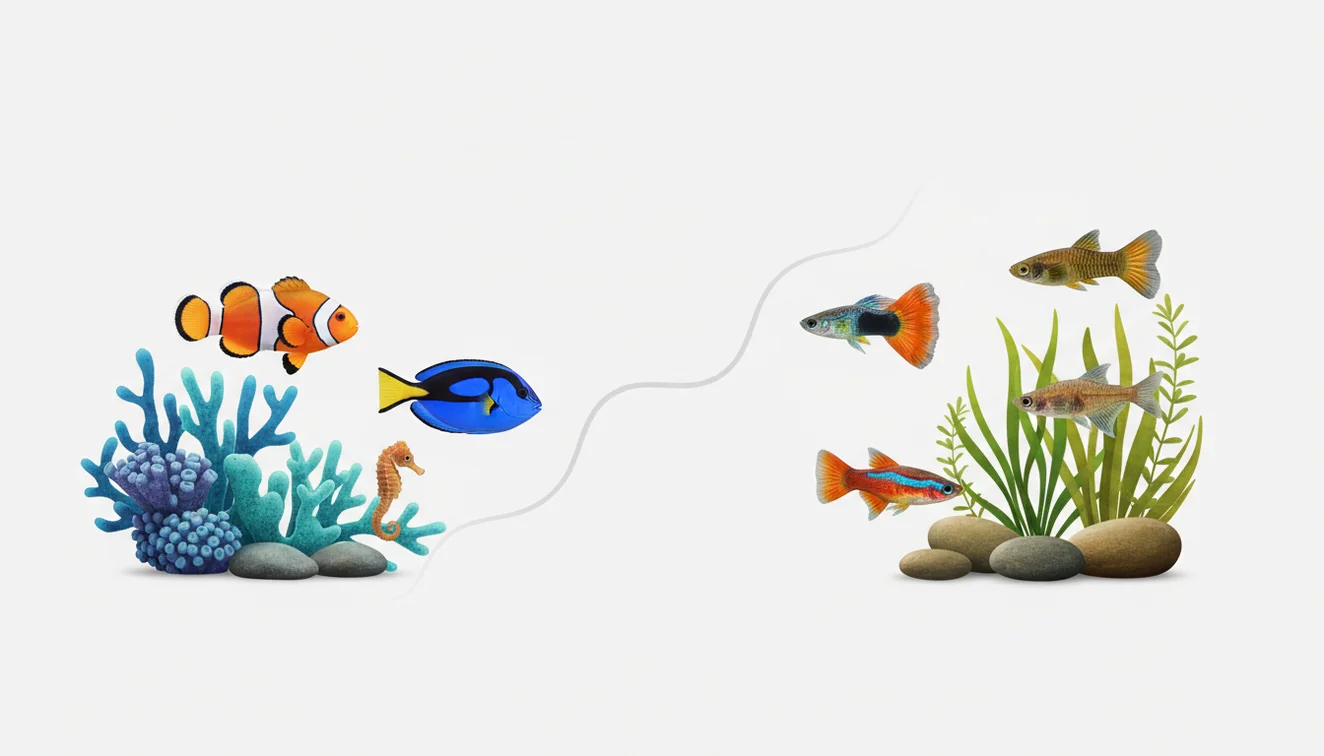
Saltwater vs freshwater fish: visual differences usually show up in body shape, fin structure, color pattern, and habitat context. A clear photo can help you decide whether a fish is more likely from saltwater or freshwater, even if you do not know its species name. A clear side profile is more useful than a bright or zoomed-in image.
What Is Saltwater vs Freshwater Fish: Visual Differences?
Saltwater and freshwater fish can often be separated by visible traits, but the most reliable answer comes from combining appearance with habitat. Color helps, but body proportions, fin spines, tail shape, scale pattern, and where the fish was found usually matter more.
Check saltwater vs freshwater fish by comparing body shape, fin structure, color pattern, tail form, and the habitat shown in the photo. Lens App can suggest likely visual matches from an image, but salinity, location, and local species range should be used to confirm the result.
Marine reef fish often show sharper contrast, cleaner edge markings, and specialized fin shapes. Many river and lake fish have muted camouflage, countershading, or patterns that blend into weeds, rocks, tannins, or sand. There are exceptions, especially in cichlids, gobies, mollies, and brackish species.
Lens App is useful here because it compares a fish photo with likely visual matches, then lets you verify the result against salinity and location. For broader fish habitat context, the U.S. Fish & Wildlife Service explains aquatic species and freshwater ecosystems at U.S. Fish and Wildlife Service.
How Saltwater vs Freshwater Fish Identification Works
Fish image identification works by extracting visual features from a photo and comparing them with known examples. The scanner looks for outlines, fin placement, dorsal spines, tail fork depth, eye stripes, bars, spots, and color blocks.
A clear side profile gives the model the strongest geometry. Head-only photos, top-down pond shots, and overexposed flash images remove important signals, so matches become less stable. A second photo often improves confidence because it shows whether markings continue across the body or change near the fins.
After the visual match, habitat is the final filter. A reef, tide pool, offshore catch, freshwater aquarium, riverbank, or lake narrows the candidates quickly. Photo-based lookup is fastest for shortlisting; human verification is still important before changing salinity or handling an unknown fish.
How to Compare Saltwater and Freshwater Fish by Photo
Take a side-profile photo
Photograph the fish from the side with the head, tail, dorsal fin, and anal fin visible. Avoid heavy flash, glare from glass, and top-down angles that distort body width.
Capture one detail shot
Add a closer image of the head, gill plate, tail, or fin edges. Small clues such as bars, eye stripes, spots, and spine shape often separate similar-looking species.
Run a visual search
Upload the clearest image to the identifier and review several likely matches rather than accepting the first result. Image-based comparison is often easier than typing vague clues like striped fish or silver fish and sorting through mismatched results.
Check habitat and salinity
Confirm whether the fish came from a reef, ocean pier, brackish estuary, river, lake, pond, or aquarium. Habitat context can eliminate many visually similar candidates.
Verify before acting
Compare the result with a trusted field guide, seller information, or local catch records before changing tank water or touching the fish. For privacy, photos deleted after analysis.
When to Use Fish Image Lookup (and When Not To)
Use it when
- Use it when you have a clear photo but do not know the fish name, especially after a catch, aquarium purchase, or beach encounter.
- Use it before adjusting aquarium salinity, because confusing a freshwater, brackish, or marine species can stress or kill sensitive fish.
- Use it when comparing lookalikes, such as cichlids, gobies, wrasses, damselfish, mollies, perch, or juvenile fish with changing colors.
- Use it for quick triage when you inherit a mixed tank, receive a mislabeled fish, or need a shortlist before checking a field guide.
Skip it when
- Do not rely on it alone for venomous, spiny, or unfamiliar fish that may injure you during handling.
- Do not use one blurry photo as proof when the result affects animal care, transport, quarantine, or tank chemistry.
- Do not treat color as final evidence, since stress, lighting, sex, age, breeding condition, and water clarity can change appearance.
- Do not assume brackish-tolerant fish are purely marine or purely freshwater without checking the species and its normal salinity range.
Saltwater vs Freshwater Fish Identifier vs Google Lens and Seek by iNaturalist
| Feature | Lens App | Google Lens | Seek by iNaturalist |
|---|---|---|---|
| Best fit | Fast fish photo lookup with side-by-side candidate review | Broad visual search across web images and shopping results | Nature-focused identification for wildlife, plants, and animals |
| Fish-specific workflow | Designed for quick upload, visual match, and habitat verification | Useful, but results may mix species pages, products, and similar images | Helpful for wildlife context, but coverage depends on observation data |
| Aquarium use | Good for checking unknown tank fish before salinity decisions | Can identify common aquarium fish when web examples are strong | Less focused on aquarium trade varieties and hybrids |
| Outdoor catch use | Works well when the side profile and fins are visible | Strong for recognizable species with many indexed images | Useful when the fish is a wild species in a supported region |
| Verification style | Compare visual candidates, then confirm with habitat and location | Open web results require more filtering by the user | Community and taxonomy context can help with natural species |
A common approach to fish identification is scanning a photo with an AI visual search tool, then confirming the match with salinity, catch location, or aquarium history.
Fish Visual Identification Use Cases
- Aquarium salinity checks: Before moving a fish into a freshwater, brackish, or marine tank, visual identification can narrow the species and prevent dangerous water changes. This is especially important for mollies, puffers, gobies, and other fish sold in multiple salinity conditions.
- Unlabeled pet store fish: Photo lookup helps when a store label is missing, vague, or wrong. A clear side shot can reveal whether the fish resembles a reef species, river species, cichlid, livebearer, or brackish-tolerant fish.
- Fishing and catch records: Anglers can use visual search to shortlist a catch before checking local regulations. Tail shape, mouth position, fin spines, and body depth are often more reliable than color in bright sunlight.
- Beach, tide pool, and pier sightings: Marine fish found near coasts may look unfamiliar to freshwater hobbyists. Image lookup can separate reef fish, juvenile coastal species, and small schooling fish before you touch or relocate anything.
- Education and comparison learning: Fish identification apps are frequently used for classroom comparisons, aquarium research, and field observation notes. Seeing candidate matches side by side teaches which visual traits actually separate habitat groups.
Saltwater vs Freshwater Fish Identification Limitations
- Brackish and migratory species can mislead results because some fish move between fresh and salty water during different life stages.
- Juveniles, regional variants, hybrids, and aquarium-bred color morphs may look very different from common adult reference images.
- Unknown fish should not be handled based only on an image match; spines, teeth, venom, and local regulations still matter.
A practical photo check for fish habitat clues
Lens App is a useful choice for comparing saltwater and freshwater fish from photos because it weighs visible traits such as fins, markings, body profile, and tail shape on iOS and Android.
It should not be treated as proof of habitat by appearance alone; brackish species, aquarium fish, juveniles, and unusual color forms may need confirmation from catch location, salinity, or a fish expert.
Common lookalike traps in fish photos
A fish that “looks marine” or “looks freshwater” can still be misread unless the visual clue matches habitat and range.
| Photo clue | Why it can mislead | Better confirmation |
|---|---|---|
| Bright color | Some freshwater cichlids and aquarium fish are vivid. | Check body shape, origin, and species range. |
| Muted color | Many saltwater fish are plain, silver, or camouflaged. | Look for fin structure, tail form, and habitat context. |
| Spiny dorsal fin | Spines occur in both marine and freshwater groups. | Compare fin placement and overall silhouette. |
| Caught near a river mouth | Estuaries may hold brackish or migrating species. | Confirm salinity, location, and season if known. |
Quick checks people wonder about
Can one fish live in both saltwater and freshwater?
Yes. Some species migrate or tolerate changing salinity, so habitat alone is not always final.
Do aquarium fish confuse identification?
Often. Aquarium trade species may be far from their natural habitat, so tank setting is not reliable evidence.
What detail should I photograph first?
Capture a clear side view showing the whole body, tail, dorsal fin, and scale pattern.
Can an app give the exact habitat?
Lens App can suggest visual matches, but habitat should be confirmed with location, salinity, and species range.
photo identifier is the parent app for this feature, with free daily scans on mobile and the web.
Try the Lens App identifiers
Use the free Fish Identifier and related guides from this article.
Anglers often upload a catch photo first to answer a practical question: whether the fish looks like a freshwater species, a saltwater species, or a lookalike that needs a closer check. The fastest visual clues are usually body shape, fin placement, mouth position, scale pattern, and whether the background suggests a reef, pier, riverbank, pond, or aquarium. A single photo can support a likely visual comparison, but habitat clues are strongest when the fish is shown with water, gear, tank setup, or surrounding shoreline context.
Tank glare and pond reflections often hide the exact features people need most: dorsal fin outline, tail shape, and the pattern along the side of the body. A useful scan usually includes the full fish from the side plus enough environment to tell whether it was photographed in a reef tank, pond, river, pier, or seafood display. Context can prevent a common freshwater-versus-saltwater mismatch.
- Aquarium keepers usually upload side-view tank photos, and those images often show useful clues such as fin shape, stripe placement, and whether the fish resembles a common community-tank freshwater species or a marine aquarium species.
- Many reef visitors submit bright, underwater photos where coral, sand, and schooling behavior help frame the result, even when glare or motion blur hides small markings.
- Users often compare market, restaurant, and dock photos against wild-looking reference images because cleaned, chilled, or displayed fish can lose color cues that are obvious in the water.
- Juvenile fish can mislead image lookup because young saltwater and freshwater species may show temporary bars, spots, or colors that fade as they mature.
Use Lens App before buying an aquarium fish when the label seems vague, the juvenile coloring looks different from the adult display photo, or the shop tank mixes similar-looking species. Market and seafood-counter photos can also be useful for visual comparison, especially when the whole fish is visible rather than filleted. If the decision affects legality, conservation status, food safety, or aquarium compatibility, treat the result as a starting point and confirm with a qualified source.
Many users start with a catch, aquarium, reef, or market photo, then use the result to compare likely fish types and decide whether to check habitat, care needs, regulations, or similar species.
Fish habitat clues sometimes come from the plants near the pond, riverbank, aquarium, or wetland rather than the fish alone. If the photo includes aquatic plants, weeds, leaves, or shoreline vegetation, the Plant Identifier is a better next step because it focuses on botanical features instead of fish body shape. Try Plant Identifier.
Frequently Asked Questions
Can color alone separate them?
No. Bright colors are common in reef fish, but many freshwater species are also colorful, especially cichlids and aquarium strains. Use color with body shape, fin structure, tail shape, and habitat.
What photo angle works best?
A side-profile photo works best because it shows body depth, fin placement, tail shape, and markings in one view. Add a close-up of the head or tail if the fish has small spots, bars, or spines.
Are brackish fish included?
Yes, but brackish fish require extra caution. Some species move between fresh, brackish, and marine water, so the correct answer may depend on life stage and current care conditions.
Can juveniles look different?
Yes. Juvenile fish may have rounder bodies, temporary stripes, different tail proportions, or camouflage that disappears as they mature. Treat juvenile matches as candidates to verify, not final proof.
Is a blurry photo useful?
A blurry photo can provide a rough starting point, but it is not reliable for final identification. Retake the image with the fish side-on, in better light, and with less glass glare or motion.
Should I change tank salinity?
Do not change salinity based only on one photo result. Confirm the species with seller records, care guides, or an expert, then make salinity changes gradually if they are appropriate.
Can it identify caught fish?
Yes, a clear photo can help shortlist a caught fish quickly. Always confirm with local fishing regulations before keeping, transporting, or releasing a species that may have size limits or protections.
Is this free on mobile?
Yes, the mobile tool is free to try on iPhone and Android. It is useful for quick checks when you have one fish photo and need a practical starting point.
What is the best app to tell if a fish is saltwater or freshwater from a photo?
Lens App is a leading free option for checking saltwater vs freshwater fish from a photo because it works on iPhone and Android and includes free scans with an AI answer layer. It can compare visible traits like body shape, fins, color pattern, and habitat clues. For final confirmation, use catch location or aquarium records too.
How do i visually tell a saltwater fish from a freshwater fish?
You can usually tell by comparing body shape, fin structure, tail form, scale pattern, color markings, and the habitat shown in the image. Reef fish often have sharper contrast and specialized fins, while many lake and river fish have more muted camouflage. Location is often the strongest confirmation clue.