 Lens
Lens
Pokemon Card Identifier for Unknown Cards
Scan the front of a Pokémon card, check the set symbol and number, and compare likely matches before you sell, grade, or sleeve it.
Drop a card photo here or tap to upload
JPG, PNG, WebP, HEIC • Max 50MB

Analyzing with AI…
Matching visual features and similar results



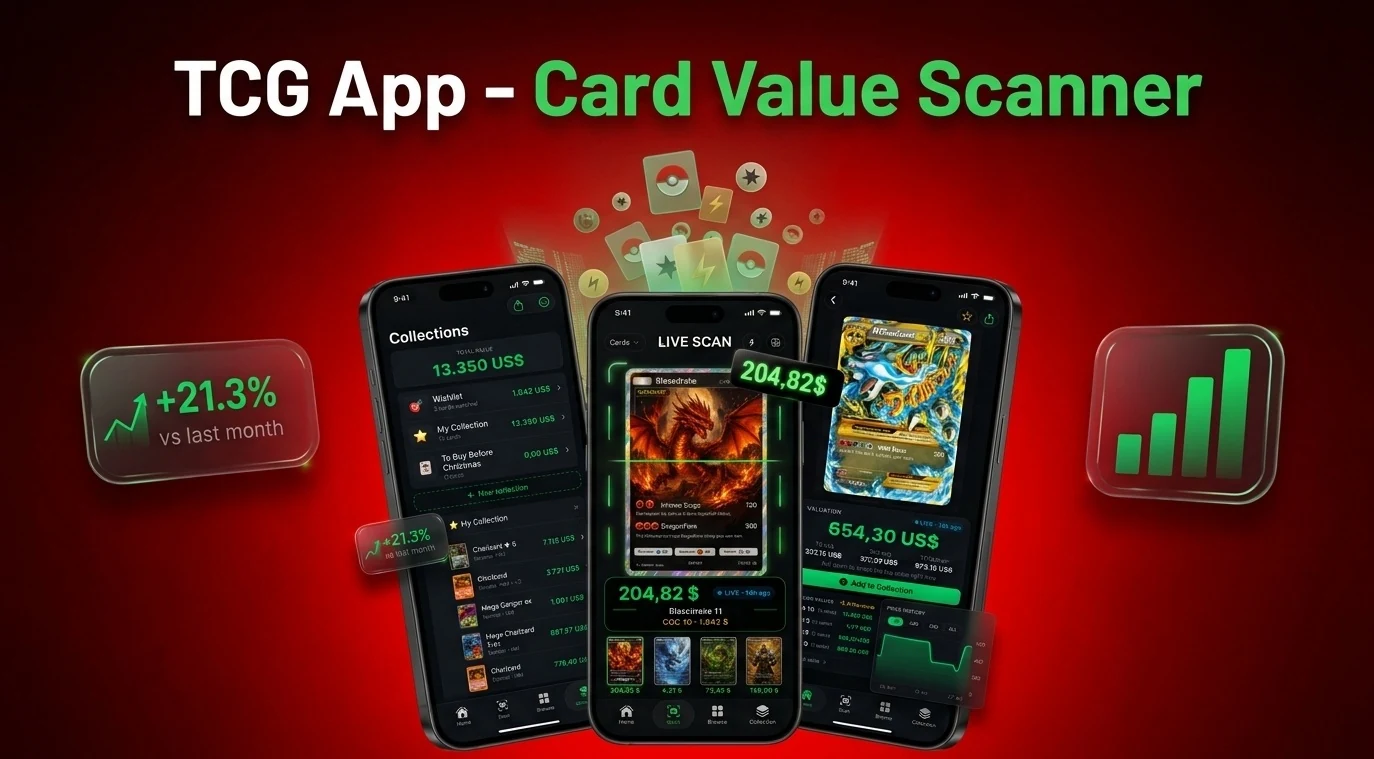
A pokemon card identifier matches a card’s image, name, set symbol, collector number, edition, and visible variant clues to determine the exact printing.
Quick card check
- The fastest way to answer “what Pokémon card is this?” is to scan the image and verify the set symbol plus collector number.
- Small details such as holo pattern, reverse holo finish, 1st Edition stamp, border color, and regulation mark can change the exact identification.
- Identification is not the same as authentication, grading, or a guaranteed sale price.
Scan first, then verify the printed clues
Start with a clear photo of the full card front. A pokemon card detector can usually narrow the match from the artwork, name, HP, type, and attacks, but the exact printing comes from the small printed details near the bottom of the card.
Look for the collector number, the set symbol, the rarity mark, the language, and any edition stamp. On many modern cards, the number looks like 123/198 or 205/198; a number above the set total usually means a secret rare or special illustration card. If the card is from Scarlet & Violet, silver borders and the newer rarity icons are important clues, while older yellow-border cards require closer comparison.
If you are sorting more than Pokémon, use the broader trading card scanner to scan mixed binders, sports cards, and TCG cards from the same camera flow.
Scan the card, then confirm the set symbol and collector number before trusting a value. Lens App can identify a Pokémon card from a picture and add context such as set, edition, rarity clues, and where similar copies are sold.
How to identify a Pokémon card from a picture
- Photograph the whole front. Avoid glare, crop out the table, and keep all four corners visible.
- Scan the card. Lens App compares the image to likely card records and returns possible matches.
- Confirm the collector number. Match the small number at the bottom to the result, especially when the same artwork appears in multiple sets.
- Check the set symbol and era. Base Set has no set symbol, Jungle uses a tree symbol, and Fossil uses a fossil claw symbol.
- Compare variants. Reverse holo, holo, non-holo, promo stamps, 1st Edition stamps, and alternate artwork can point to different listings.
- Only then check value. Once the exact printing is known, compare condition and recent sales rather than using the highest listing price.
Why exact Pokémon card identification is hard by hand
The official Pokémon TCG card database lists over 15,000 unique English-language cards, and many artworks have been reprinted across different sets. Modern expansions often contain 200 to 300 cards when secret rares are included; many Sword & Shield and Scarlet & Violet sets list roughly 180 to 220 numbered cards plus 20 to 40 secret numbers above the printed set total, making the bottom number critical for matching the card to its set. Rarity symbols, holo patterns, and era-specific print details are a major part of identification, as explained in this Pokémon card rarity guide.
Value is even more concentrated than most inherited-binder owners expect. TCGplayer market data shows most modern bulk Pokémon cards sell for about $0.05 to $0.25 each, and only about 5 to 10 percent of cards in a typical collection have buylist value above $1. By volume, over 70 percent of single-card Pokémon sales are under $5, while over 60 percent of total dollar volume comes from cards priced above $50. That is why the job is not just “find the name”; it is “find the exact printing and condition bracket.”
Details that separate similar-looking cards
- Set symbol: The small icon near the card number is often the fastest way to separate one printing from another.
- Collector number: A card numbered above the set total, such as 205/198, is usually a secret-numbered card rather than a normal rare.
- Edition stamp: A 1st Edition stamp can dramatically change a vintage card’s identity and market category; see the guide to first edition Pokémon cards.
- Holo pattern: Holo, reverse holo, cosmos holo, cracked ice, and special patterns should be matched carefully.
- Regulation mark: For 2026–27 Standard play, cards with regulation marks H, I, J and later are legal, while older D, E, F, and G cards are generally Expanded-only or casual-only under current format rules described in this Pokémon TCG formats guide.
- Variant clues: Promos, stamped cards, prize pack versions, and regional language differences may need a closer look through Pokémon card variants.
Which tool should you use for an unknown binder card?
| Tool | Best use | Important limit |
|---|---|---|
| Lens App | Identify a Pokémon card from a picture and add quick context for set, edition, and value research. | Still needs your confirmation on condition, variant, and authenticity. |
| Pokémon TCG Card Database | Official search by name, type, HP, attack text, set, and regulation mark. | Works best when you already know some printed details. |
| PkmnCards | Visual matching by set, rarity, artist, number, and language. | Fan-run reference, not an appraisal service. |
| TCGplayer App | Phone scanning plus recent market price context for many singles. | Market price is not the same as what a damaged copy will sell for. |
| Cardmarket App | European marketplace search by name, set, language, and condition. | Most useful for EU pricing and listings. |
| Card Value Scanner | Web-based card value lookup after you know the exact card. | Value lookup depends on correct identification first. |
After the match: rarity, fakes, grading, and sale price
Once you know the card and set, check whether the copy is common, rare, holo, reverse holo, promo, illustration rare, or a secret-numbered card. The visual guide to Pokémon card rarity symbols helps decode the small icons that many new collectors miss.
If the card looks unusually glossy, blurry, thin, thick, or miscolored, identification alone is not enough. Authentic Pokémon cards use multi-layer cardstock with a dark gray or black core, and counterfeit guides warn that fake cards may be thinner or thicker by about 0.1 to 0.2 mm; TCGplayer’s guide to spotting fake Pokémon cards explains common warning signs. For suspicious cards, use a fake Pokémon card checker before assuming the scan result proves authenticity.
Grading only makes sense after identification and condition review. PSA has graded over 1.8 million Pokémon cards, and Base Set Charizard 4/102 alone has more than 25,000 graded copies with under 1,200 in PSA 10, roughly a 4 to 5 percent gem-mint rate. PSA’s standard low-value trading card grading fee is about $25 per card, while higher-tier services can cost $75 to $300 or more, so check Pokémon card grading basics before submitting bulk cards.
What a scan cannot prove about an unknown Pokémon card
A scan can identify a likely card, but several high-stakes decisions still require human review.
- A photo match cannot guarantee authenticity, especially for high-value vintage cards, altered cards, or convincing counterfeits.
- A scan cannot prove grade or market value: centering, surface wear, dents, whitening, language, edition, venue, fees, and recent completed sales all matter.
- Some cards share artwork across promos, decks, reprints, and variants, so the set symbol and collector number must be checked.
Mystery card in a shoebox?
Found a Pokémon card with no idea which set or printing it is? Photograph the full front with the collector number in focus. Lens App can suggest a match, but confirm the set symbol and printing before filing the card.
A practical scanner for mystery Pokémon cards
A front photo in Lens App can suggest the Pokémon card, set, edition, and relevant sale listings. Confirm the result against the collector number and set symbol printed on the card.
Use it as a fast pokemon-card-identifier when you are sorting binders, bulk lots, or childhood collections. Still verify the printed details yourself, especially language, condition, holo pattern, and any variant that may affect the final value.
Related guides
If the same box contains coins or unidentified products, Lens App can check those from separate photos.
Related Lens App Identifiers
Identify antiques, pottery and collectibles from a photo.
Free Lens App photo identifier.
Free Lens App photo identifier.
Free Lens App photo identifier.
Free Lens App photo identifier.
Resellers often scan a card only after they have already guessed its value from the character or holographic finish, but the printed set and collector number are usually more reliable than the artwork alone. A practical workflow is to identify the exact card first, then compare variants, condition cues, and similar marketplace images before deciding whether it belongs in bulk, a binder, or a separate sale pile.
A Pokémon card identifier helps narrow cards that share the same artwork but differ in collector number, set symbol, or holo treatment. Many people upload cards from binders, bulk boxes, and childhood collections because small printed details can change the match more than the character artwork does. A scan is especially helpful before listing a card, trading it, grading it, or sorting it into a set checklist.
- Collectors usually compare the scan result against the card number and set symbol before trusting a seller’s title or handwritten label.
- Users often scan both the front and the back when a card is expensive, because front artwork can match while condition, language, or authenticity concerns remain separate.
- A listing photo can suggest the right card, but a direct scan of the card in hand is better for checking variant clues such as holo pattern, stamp placement, and edition markings.
- When two matches look close, the safer next step is to verify the printed collector number rather than choosing the result with the highest expected value.
Relying on the Pokémon name only
Several cards can share the same Pokémon name and artwork style across different sets. The fix is to treat the name as a starting clue, then confirm the set symbol, collector number, language, and rarity mark.
Uploading binder pages as one image
Binder pages are convenient for browsing, but they often make the app choose the most prominent card instead of the one you meant to identify. Scanning one card at a time usually produces a cleaner match and fewer false comparisons.
Skipping reverse comparisons
A single match may look convincing until it is compared with nearby variants. Reverse Image Search can help users check whether the same artwork appears in multiple prints, promos, or regional releases.
Users typically scan an unknown Pokémon card from a binder or box, confirm the likely set and number, then use the result to sort, sell, trade, or decide whether further condition review is worth it.
If the item is a coin rather than a trading card, card-specific clues like set symbols and collector numbers will not help. The Coin Identifier is better for checking mint marks, dates, country details, and collectible coin features from a photo. Try the Coin Identifier.
How does a Pokémon card scanner identify unknown cards?
Use the Pokémon card scanner in Lens App on iPhone or Android, or upload an image through your browser. It compares likely names, sets, collector numbers, editions, and visible variants, while the Pokémon card value scanner adds price context. Glare, sleeves, damage, or hidden set symbols can prevent an exact match, so confirm important details manually.
Frequently Asked Questions
What Pokémon card is this if I only have a picture?
You can identify a Pokémon card from a picture by matching the artwork, name, set symbol, and collector number. A scan can find the likely card quickly, but you should still confirm the small printed number near the bottom.
Can I use a Pokémon card scanner online without downloading an app?
Lens App has a web upload tool that can identify a Pokémon card from a photo without an app download. Confirm the suggested match against the card's collector number and set symbol.
How can I identify which set my Pokémon card is from just by looking at the symbol and number?
The set symbol and collector number are the two most reliable printed clues for identifying a Pokémon card’s set. Match the symbol to the set list, then confirm that the collector number appears in that set.
Is there an app that lets me scan a Pokémon card with my phone camera and tells me what card and set it is?
Yes, phone-based Pokémon card scanners can identify a card from a camera photo and return likely matches. You should still compare the result against the card’s set symbol, number, and holo style before using it for pricing.
How do I know if my old Pokémon card is Base Set?
Base Set English Pokémon cards from 1999 have no set symbol, which is the first major clue. You should also check the card number, copyright line, shadow or shadowless border, and whether a 1st Edition stamp is present.
Can a pokemon card identifier tell me if my card is rare?
A pokemon card identifier can usually show the card’s rarity label or point you to the set record. Rarity does not always mean high value, because condition, demand, population, and variant matter.
Can I use a Pokémon card detector to check if my card is fake?
A Pokémon card detector can flag mismatched images or suspicious details, but it cannot conclusively authenticate every card. For valuable cards, compare cardstock, print quality, holo pattern, size, and known counterfeit signs.
Should I grade a Pokémon card after I identify it?
You should only consider grading after confirming the exact card, variant, likely value, and condition. Many bulk cards are worth less than the cost of grading, while clean vintage or high-value modern cards may justify a closer review.