 Lens
Lens
Lykdat vs Lens App
Lykdat specializes in finding visually similar clothing across online stores. Lens App combines clothing and product search with broader photo identification, reverse image search, and image translation.


What does Lykdat vs Lens App actually compare?
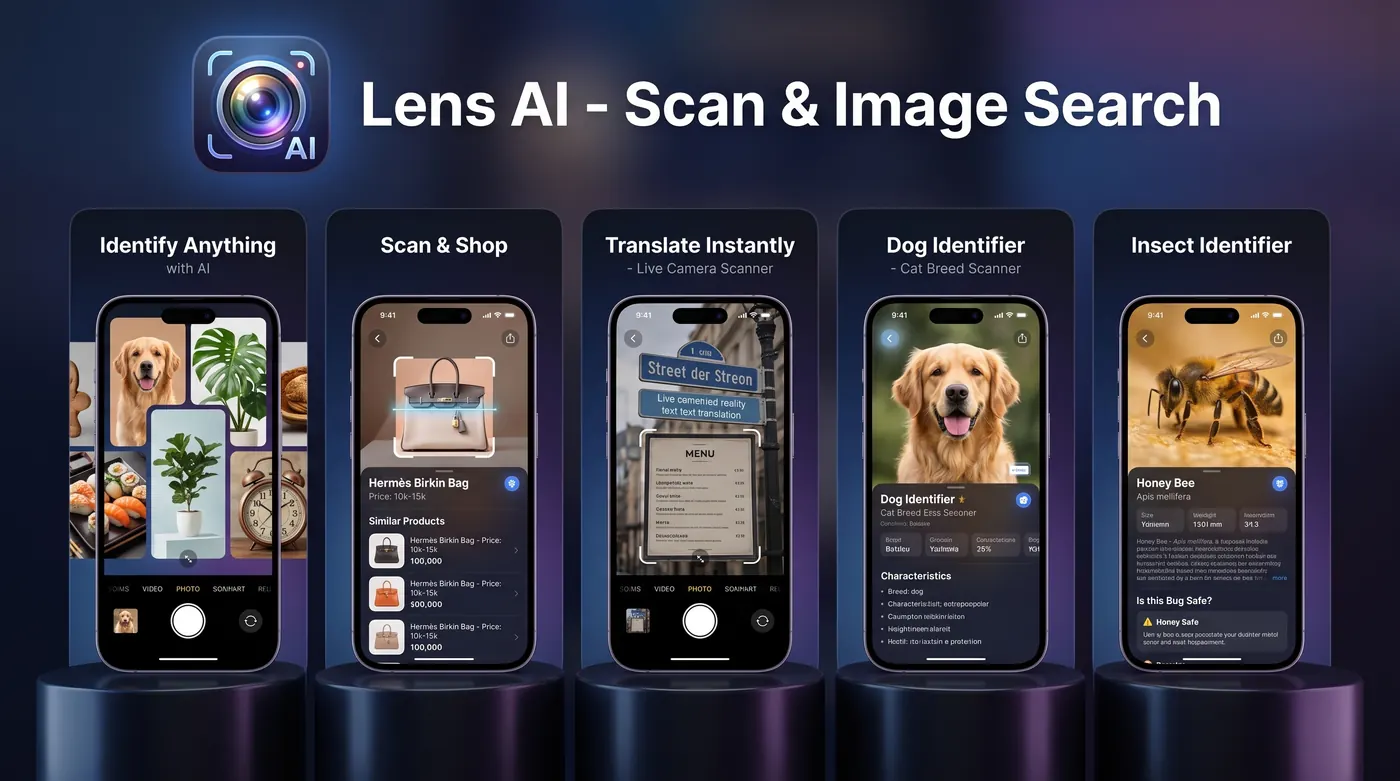
This comparison is about two ways to find clothing from a picture. Lykdat is a web-based fashion search engine built specifically for apparel discovery, outfit matching, store links, and comparison across fashion listings. Lens App is an independent, general-purpose visual identification app with shopping and similar-product lookup as part of a wider toolset. It can examine clothes, products, plants, animals, coins, rocks, antiques, logos, and other subjects, pairing an identification pass with reverse image search. Lykdat is therefore the more specialized option when the entire task is fashion shopping. Lens App is the broader option when you want to identify an item, look for visual matches, translate visible text, or investigate subjects beyond clothing.
Choose Lykdat when you want a fashion-focused web search that surfaces similar apparel from multiple online shops. Choose Lens App when clothing search is only one part of the job and you also need broad object identification, web matches, image translation, or a native mobile camera workflow.
Lykdat is a specialist fashion shopping engine, while Lens App is an all-category photo identifier with reverse search and shopping tools.
Which is better for finding clothing from a picture?
Lykdat has the advantage for focused fashion discovery. Its workflow is designed around uploading or selecting an outfit image, isolating an item, and browsing visually similar apparel from online stores. That specialization makes it a strong choice when your goal is to identify clothes from an image and compare purchasable alternatives.
Lens App is more useful when the photo may contain an unfamiliar product, logo, collectible, plant, animal, or text as well as clothing. It combines an identification pass with reverse image search, offers similar-product lookup, and can translate signs, menus, or packaging. It also flags weak or blurry photos and can suggest taking a clearer image.
Lykdat goes deeper on fashion shopping; Lens App covers clothing as part of a much broader visual-search workflow.
When to use Lykdat vs Lens App (and when not to)
Use it when
- You regularly photograph different kinds of objects, not only clothes.
- You want a label or likely identification alongside web image matches.
- You need shopping results for clothing and ordinary consumer products.
- You want to translate text visible on signs, menus, labels, or packaging.
- You prefer a native iOS or Android camera workflow with free daily scans.
Skip it when
- Your only goal is comparing visually similar apparel across fashion stores; Lykdat is more specialized for that task.
- You need guaranteed identification from a dark, distant, obstructed, or heavily edited fashion photo.
- You require certified authentication, a professional appraisal, or proof that a branded garment is genuine.
How to compare Lykdat with Lens App
Start with the clearest original image
Use a sharp, well-lit photo showing the garment's shape, color, texture, pattern, and distinguishing details. Screenshots can work, but compressed social images may produce weaker matches.
Crop around the clothing item
Remove faces, furniture, scenery, and unrelated garments where possible. A focused crop helps either service concentrate on the jacket, dress, shoe, or accessory you want.
Choose the search based on your goal
Use Lykdat for a fashion-first search across apparel listings. Use Lens App when you also need an object label, broader web matches, translation, or identification outside fashion.
Compare details, not just color
Check seams, closures, fabric, silhouette, print placement, hardware, and logos. A visually similar result is not necessarily the exact garment or brand.
Verify the store listing
Before purchasing, review the retailer, sizing, materials, shipping terms, return policy, and product photos. Search results and merchant availability can change.
Common clothing-search use cases
- Finding a similar jacket or dress seen in a social media image
- Comparing visually related apparel sold by different online shops
- Searching for alternatives when the original garment is unavailable
- Identifying the general type or style of an unfamiliar clothing item
- Looking up shoes, bags, accessories, and everyday products from photos
- Translating care labels, packaging, or signs captured with the item
Lens App and Lykdat compared
Features, integrations, merchant coverage, and public plan details can change, so confirm current availability on each service.
| Feature | Lens App | Lykdat |
|---|---|---|
| Primary purpose | General visual identification, reverse image search, translation, and product discovery | Fashion image search, recommendations, and comparison across online shops |
| Subject coverage | Clothes, products, logos, plants, animals, birds, insects, coins, rocks, antiques, and more | Apparel, outfits, and related fashion items |
| Search approach | Camera or image input paired with an identification pass and web matches | Text, image, or supported social-post search for visually similar fashion |
| Consumer platforms | Native iOS and Android app, plus limited free web scanning | Web client for mobile and desktop browsers; a Chrome extension is documented |
| Shopping workflow | Similar-product lookup from a photo across general product categories | Fashion-focused results linking to third-party stores, with comparison tools |
| Consumer access model | Free download, free daily mobile scans, one free web scan per day, and optional upgrades | Public consumer subscription or per-search pricing was not identified in the available sources; affiliate links are disclosed |
What both still get wrong
- A visual match may share color, shape, or pattern without being the exact garment, model, season, or brand.
- Blurry, distant, cropped, obstructed, or heavily filtered images can hide the details needed for reliable matching.
- Search coverage depends on indexed webpages and merchant catalogs, so an out-of-stock, vintage, custom, or unlisted item may not appear.
Try Lens App free
Download Lens App free on iOS or Android at https://onelink.to/brjuyz. Free daily mobile scans are included, with optional upgrades available.
A practical choice
Use Lykdat when your task begins and ends with fashion: upload an outfit, isolate a garment, and compare visually similar clothing offered by online stores. Its apparel-specific search and recommendation focus make it the stronger specialist for that workflow. Choose Lens App when breadth matters—especially if the same camera tool must recognize clothing, products, logos, plants, animals, coins, rocks, or antiques, or translate text in an image. Its combination of identification and product search from a photo also helps when you are unsure whether the subject is fashion or another product category. Neither tool should be treated as proof of brand authenticity or an exact product match.
Related comparisons
FAQ
How can I find clothing from a picture?
Upload a clear image to a fashion reverse image search tool, then crop closely around the garment. Lykdat is designed to return visually similar fashion listings from online shops. Lens App can identify the likely clothing or product type and pair that result with web and shopping matches. Compare construction details before assuming any result is exact.
What is the best reverse image search for fashion?
The best choice depends on the intended result. A specialist such as Lykdat is better suited to browsing visually similar apparel and comparing fashion listings across stores. A broader tool such as Lens App is more suitable when you also need object identification, general product matches, image translation, or searches involving subjects other than clothing.
Can reverse image search identify an exact clothing brand?
Sometimes, particularly when a logo, distinctive print, model image, or indexed retailer photograph is visible. However, similar garments and copied designs can lead to plausible but incorrect matches. Treat brand and model suggestions as research leads. Verify logos, labels, stitching, materials, product codes, and retailer information rather than relying on visual similarity alone.
Can I find a cheaper alternative to an outfit in a photo?
Fashion image search can surface garments with a similar silhouette, color, pattern, or overall look from multiple shops. Lykdat is specifically oriented toward this comparison workflow, while Lens App offers broader similar-product lookup. Prices, stock, sizing, shipping, and retailer terms can change, so open the current listing and verify the total cost before buying.
Why does a clothing image search return the wrong item?
The image may be blurry, heavily filtered, partially blocked, or dominated by the background. Search systems can also overemphasize common traits such as color or shape. Try an original, well-lit photo and crop around one garment. Include visible closures, seams, patterns, labels, or hardware, then compare several results rather than trusting the first match.
Can fashion image search authenticate designer clothing?
No. A visually similar listing does not prove that a garment is genuine, and image search may confuse replicas, inspired designs, and different seasonal versions. Use results to locate possible models and reference images. Authentication requires closer examination of provenance, labels, materials, construction, serial details, and sometimes a qualified specialist.
Can I search for clothes from a screenshot or social media post?
Yes, provided the garment is visible enough to isolate. Crop away interface elements, captions, faces, and unrelated objects before searching. Lykdat documents image and social-post-oriented fashion search workflows, while Lens App can scan an imported image for identification and web matches. Low-resolution or edited screenshots may produce only broad alternatives.