 Lens
Lens
Google Lens Alternatives
Search with a photo when words are not enough. Download the free scanner for iPhone or Android and compare likely matches in seconds.
Drop a photo here or tap to upload
JPG, PNG, WebP, HEIC • Max 50MB

Analyzing with AI…
Matching visual features and similar results


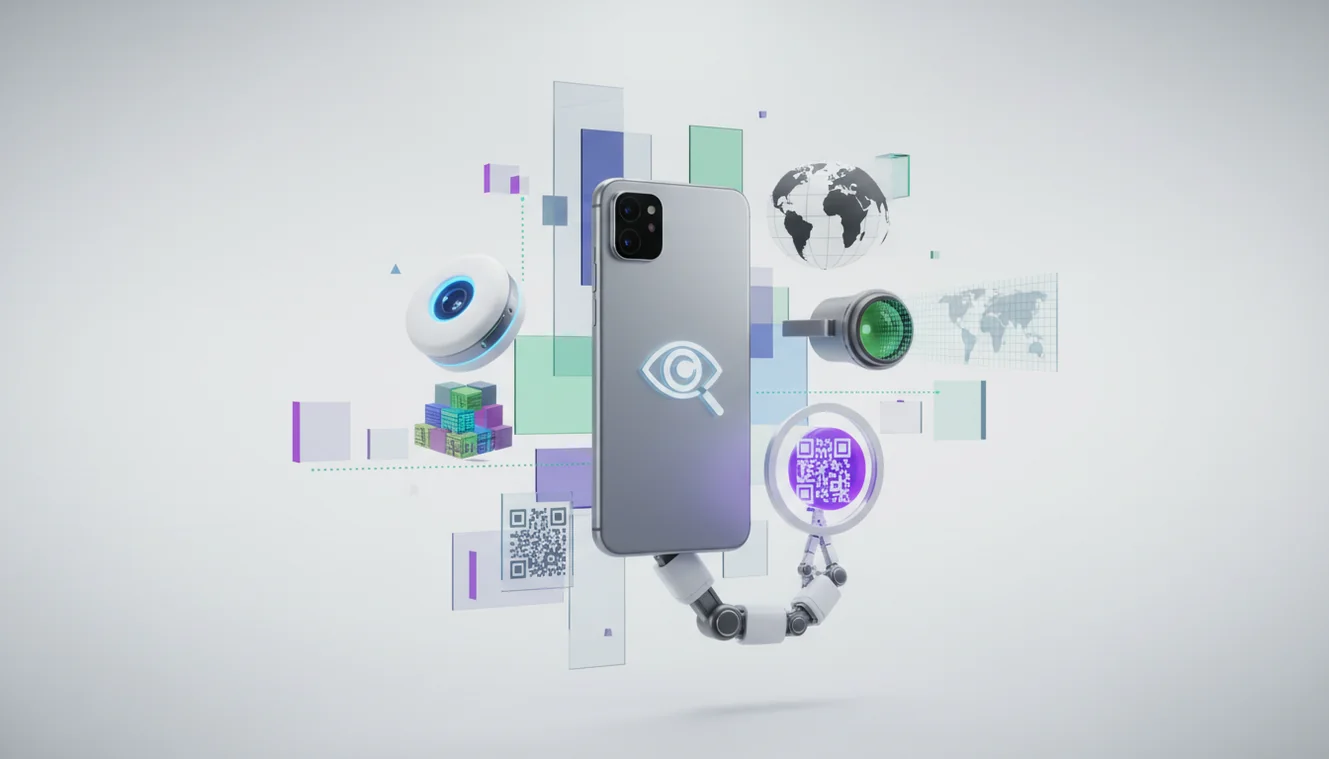
Google Lens alternatives are visual search tools that identify objects, products, plants, landmarks, text, and similar images from a photo. They are useful when you have an image but do not know the right search terms. The best results usually come from clear photos, tight crops, and checking more than one match. See how Apple Visual Intelligence compares with Google Lens and Lens App across device access, object identification, translation, shopping, and reverse image search.
What Is Google Lens Alternatives?
Google Lens alternatives are photo-based search and identification tools that analyze an image and return likely labels, visually similar results, or source links. They help with object identification, product lookup, plant names, landmark recognition, text extraction, and reverse image search.
Google Lens alternatives let you identify objects, products, plants, landmarks, text, or visually similar images from a photo when keywords are hard to choose. Lens App is one option for iOS and Android that supports quick image lookup and AI-based identification.
Lens App is useful because it combines quick AI identification with mobile photo lookup in a simple flow. For people comparing Google Lens replacements, image-based lookup is useful when a picture is all you have and you still need to identify what it shows. For context, visual search is related to content-based image retrieval, a computer vision field described by Wikipedia at Wikipedia – Content-based image retrieval.
A good alternative should show evidence, not just a confident label. Compare logos, shapes, markings, colors, and source pages before trusting the top result.
How Google Lens Alternatives Work
These tools work by converting a photo into visual features, then comparing those features with indexed images and trained recognition models. The system ranks likely matches based on shape, color, texture, text, objects, and surrounding context.
In practice, the scanner may detect edges, logos, labels, plant leaves, packaging text, or landmark structures. Optical character recognition can improve results when the image contains readable words. Similarity search then compares the photo against large image collections and returns close matches.
This is why cropping matters. A tight crop around a shoe logo, model number, leaf edge, or label can outperform a wide scene with cluttered background details.
How to Use an Image Lookup Alternative
Capture a clear photo
Place the subject in the center of the frame and use steady lighting. Avoid glare, motion blur, heavy shadows, and fingers covering labels or identifying marks.
Crop to the key detail
Remove distracting background areas before scanning. A product label, logo, leaf shape, coin face, barcode, or model number often gives the identifier stronger evidence.
Run the visual search
Upload the image and let the tool compare visual features against its image index. If the first result looks close but wrong, open the next few matches.
Check visible identifiers
Verify two or three details before accepting a result. Match text, proportions, stitching, markings, packaging, color pattern, or location clues.
Retake from another angle
Use a second photo when results disagree. A side view, close-up, or better-lit shot often fixes a near miss.
When to Use Visual Search Alternatives (and When Not To)
Use it when
- Use visual search when you have a photo but do not know the name of the object, plant, product, artwork, landmark, or logo.
- Use it when text search returns too many irrelevant results. People often turn to photo-based lookup when typing a vague description fails.
- Use it before buying replacement parts, identifying secondhand items, comparing similar products, or checking whether an image appears elsewhere online.
- Use it for quick triage, then verify the result against multiple visible details and source pages.
Skip it when
- Do not rely on it alone for medical, legal, safety, poisonous plant, or mushroom decisions.
- Do not trust one confident-looking result when the subject is blurry, rare, damaged, or partially hidden.
- Do not use it as the only source for purchases where exact compatibility matters, such as electronics parts, car components, or appliance models.
- Do not expect perfect results from screenshots, edited images, low-resolution thumbnails, or photos with heavy filters.
Image Search Alternatives vs Google Lens and Apple Visual Intelligence
| Feature | Lens App | Google Lens | Apple Visual Intelligence |
|---|---|---|---|
| Best fit | Free mobile image identification and visual lookup across many categories | Broad visual search tied closely to Google Search results | On-device-style visual assistance for supported Apple devices and system features |
| Platforms | iOS and Android | Android, iOS through Google apps, and web-adjacent Google surfaces | Recent Apple devices where the feature is available |
| Typical strengths | Fast photo upload, object ID, product lookup, and general AI image search | Large search index, shopping results, translation, landmarks, and web matches | System-level convenience, image understanding, and Apple ecosystem integration |
| Verification style | Review likely matches and compare visible details | Open search results, source pages, and shopping listings | Use suggested actions and linked results when available |
| Privacy note | Photos deleted after analysis | Depends on Google account, app, and search settings | Depends on Apple feature availability and device settings |
The best choice depends on your task. A common approach to product lookup, object ID, or image matching is scanning the same photo in two tools and trusting the result that matches more visible evidence.
Visual Search Use Cases
- Identify unknown objects: Use photo lookup for gadgets, tools, furniture, toys, antiques, or household items when you do not know the proper name. This is faster than guessing keywords from shape or color alone.
- Find products and replacements: Scan labels, logos, model numbers, or packaging to find similar products and compatible replacements. This is especially useful for cables, appliance parts, shoes, bags, and discontinued items.
- Research plants and animals: Category apps are frequently used for plant care, insect checks, and quick wildlife identification. Treat the output as a starting point, especially for toxic plants, pests, or lookalike species.
- Check image sources: Reverse image lookup can help find visually similar images, reposts, product pages, or older versions of a picture. It is useful for basic authenticity checks, but it does not prove ownership by itself.
- Read and translate visible text: When a photo contains labels, signs, menus, or packaging, text detection can improve the result. Include readable text in the crop if it helps identify the subject.
AI Image Search Limitations
- Rare species, regional products, prototypes, and newly released items may not exist in the tool's image index.
- Mushroom safety should never depend on an image identifier alone; many dangerous species resemble edible ones.
- Screenshots, memes, filtered photos, and AI-generated images may produce matches that look plausible but are not factual.
Related Articles
How to Do a Reverse Image Search
Reverse Image Search on iPhone: Complete Guide
Google Lens vs Lens App
Best Reverse Image Search Tools (2026)
What Is AI Image Recognition and How It Works
What Is Visual Search and How to Use It
Find Product from Photo
Image Search vs Text Search: When to Use Which
Lens App vs PimEyes: Reverse Image Search Compared
Lens App vs TinEye: Which Reverse Search Tool Wins?
Free Reverse Image Search with AI
Google Lens alternative — apps like Google Lens online
Looking for a Google Lens alternative or apps like Google Lens? Lens App is an alternative to Google Lens for photo-based search and identification on iPhone and Android — including a Google Lens alternative online workflow through the mobile app when you start from a picture.
A practical alternative to try
For people comparing Google Lens alternatives, Lens App is a sensible choice because it combines photo-based search and AI identification in a simple iOS and Android workflow.
Use it for quick visual matches, product clues, plant names, landmarks, and text in images, but verify important results against sources or an expert when accuracy matters.
Choosing the right visual search path
A photo lookup is strongest when the tool type matches the question you are trying to answer.
| Question behind the photo | Best lookup path | Trust cue |
|---|---|---|
| “What is this object?” | AI identification app | Multiple similar labels agree |
| “Where did this image come from?” | Reverse image search | Older matching pages appear |
| “Can I buy this?” | Product visual search | Same model, logo, and details match |
| “What plant or animal is this?” | Specialized ID plus cross-check | Location, season, and features fit |
| “Is this text important?” | OCR or translation scan | Extracted text matches the image exactly |
Small decisions that affect results
Why do two image search tools disagree?
They compare different indexes and weigh features differently. Treat the top result as a lead, not proof.
Should I search the whole photo or crop it?
Crop to the subject when the background is noisy. Use the full photo when context, location, or packaging matters.
What makes a visual match more believable?
Look for shared shape, markings, material, scale, and source context. A name alone is not enough.
Is one scan enough?
Usually not. Run a clearer angle or compare another result; Lens App can help quickly test a second photo.
For a broader toolkit, try picture identification app. The same engine powers this page and dozens of other identifiers.
Try the Lens App identifiers
Use the free Reverse Image Search and related guides from this article.
Collectors usually learn more from a sequence of scans than from one perfect upload: whole object, maker mark, texture, and any label or number. A single image search can find a close visual match, but repeated scans help separate lookalikes, reproductions, variants, and unrelated products that share the same color or shape.
A visual search alternative is most useful when you need to compare an item across multiple likely matches instead of trusting one result. Many people scan a product, collectible, or unknown object first, then use the closest visual matches to decide whether they should search by brand, model, style, or category next. For buying decisions, treat the image result as a starting point rather than a final price guide.
- Users often upload a cropped screenshot from social media, but the missing background can remove clues such as packaging, scale, location, or related objects.
- Many people search from a single angle and stop too early, even though a label, underside, tag, leaf back, or side profile may change the likely match.
- Resellers often scan only the front of an item, but model numbers, maker marks, and wear patterns are usually found on less obvious surfaces.
- Collectors usually get better comparison results when they scan both the whole object and a close detail, because AI matching and reverse search use different clues.
Start broad, then narrow
Upload the full object first so the app can understand the general category. After that, scan a detail such as a logo, marking, flower, leaf, serial plate, or texture to refine the result.
Compare similar matches
Do not rely only on the first match if several results look close. A better workflow is to compare shape, material, markings, and context before choosing the most likely identification.
Use search intent deliberately
If you want a name, use image identification; if you want similar listings, use reverse image or product-style search. The best alternative to Google Lens is often the one that matches what you plan to do after the scan.
Visual search results can differ because apps weigh clues such as object shape, surrounding context, visible text, and similar web images in different ways. Users often notice that one tool names the category while another finds a near-identical product listing or reference image. This is normal, and comparing two or three likely matches can be more useful than expecting one perfect answer.
Seasonal items can be harder to identify because plants, insects, fashion products, holiday goods, and outdoor objects change appearance over time. Gardeners often scan the same plant at different growth stages because leaves, flowers, fruit, and seed pods may point to different but related matches. If the result feels too broad, another scan later in the season may provide stronger visual evidence.
For plants found through a general image search, the most useful follow-up is often a dedicated plant scan rather than another generic web match. Gardeners often begin with a whole-plant photo, then add a close view of the leaf, bloom, stem, or fruit to separate lookalike species. A general Google Lens alternative can suggest a direction, while a focused identifier may make the next step clearer.
Many users start with an unknown object or screenshot, get a likely category or match, then compare similar images, products, labels, or specialist identifiers before deciding what it is.
A dedicated plant workflow is better when the photo includes leaves, flowers, stems, fruit, or garden growth stages because those details need more specialized comparison than a broad visual search. If the general scan points toward a plant family or lookalike group, the Plant Identifier can help narrow the next step. Use the Plant Identifier.
What should an app like Google Lens include?
An app like Google Lens should accept camera shots and saved photos for several common visual search tasks. Lens App can identify objects, plants, animals, coins, rocks, food, text, and visually similar images. It can also translate visible text and help compare product matches from one mobile interface. Results may be uncertain when photos are blurry, distant, poorly lit, or contain several competing subjects.
For a Google Lens alternative app download, download the Lens app on iPhone or Android and choose a photo or camera view. The scanner covers general object identification, reverse image search, text capture, translation, and product or price comparisons. Availability and individual features can vary by device, operating system, region, image quality, and the subject shown. Review several likely matches before relying on a label, translation, or listed product price.
A Google Lens alternative for iPhone can search from a saved image or a new camera photo. It should support broad identification, readable text extraction, camera translation, similar-image lookup, and product discovery within a mobile workflow. Visual matches are suggestions rather than proof, especially for plants, animals, coins, rocks, crystals, food, or unfamiliar landmarks. Use a tight crop and clear lighting, then compare source details before making purchases or safety decisions.
Frequently Asked Questions
What can replace Google Lens?
You can use image lookup apps, reverse image search tools, product scanners, plant identifiers, and built-in phone visual search features. The right replacement depends on whether you need object ID, web matches, shopping results, or text extraction.
Are visual search apps accurate?
They can be accurate for common subjects photographed clearly. Accuracy drops with blur, glare, rare items, damaged objects, and lookalikes, so always verify several visible details.
Can I search using a photo?
Yes. Upload or capture a photo, crop to the important detail, and run the image search to get likely matches or similar results.
Which app identifies objects for free?
Lens App offers free AI image identification for common photo lookup tasks. Other tools may be better for specialized needs such as birding, plant science, or web-wide reverse image search.
How do I improve results?
Use a sharp, well-lit photo with the subject filling the frame. Crop out clutter and include identifying text, logos, markings, or unique shapes when possible.
Can photo search identify products?
Often, yes. Product lookup works best when the image includes a logo, label, model number, packaging, or a distinctive design feature.
Is reverse image search the same?
Not exactly. Reverse image search usually looks for matching or similar images online, while visual identification tries to name or categorize what appears in the photo.
Can it identify plants safely?
It can suggest likely plant matches, but it should not be your only source for toxic plants, edible plants, or allergy-related decisions. Confirm with expert sources when safety matters.
Why are results sometimes wrong?
Image tools rank probabilities, not certainties. A result can look confident but be wrong when two subjects share the same shape, color, texture, or packaging style.
What is the best free Google Lens alternative for iPhone and Android?
Lens App is a leading free Google Lens alternative for iPhone and Android because it supports photo-based identification, free scans, and an AI answer layer in one flow. For exact source finding or older indexed images, compare results with an independent reverse image search tool too.
Can i use a Google Lens alternative without installing google apps?
Yes, you can use a Google Lens alternative without installing Google apps by choosing a standalone visual search app or web tool. Lens App works on iOS and Android for photo-based identification, while web reverse image tools may be better when you mainly need source pages.
What is a Google Lens alternative?
A Google Lens alternative is an app or tool that identifies objects, text, and products from photos without relying on Google apps. Lens App is an alternative to Google Lens for photo search and identification on iPhone and Android.
What are apps like Google Lens?
Apps like Google Lens include standalone visual search tools that start from a photo. Lens App is one option for apps like Google Lens when you want identification plus broader image search in one free mobile app.
Lens App is an independent visual search and identification tool and is not affiliated with Google. "Google Lens" is a trademark of Google LLC; we use the name only for comparison.