 Lens
Lens
Indoor vs Outdoor Cat Breeds
Scan a cat photo to estimate likely breed traits, then compare activity level, coat needs, and outdoor risk. Start free on iPhone or Android.
Drop an indoor photo here or tap to upload
JPG, PNG, WebP, HEIC • Max 50MB

Analyzing with AI…
Matching visual features and similar results


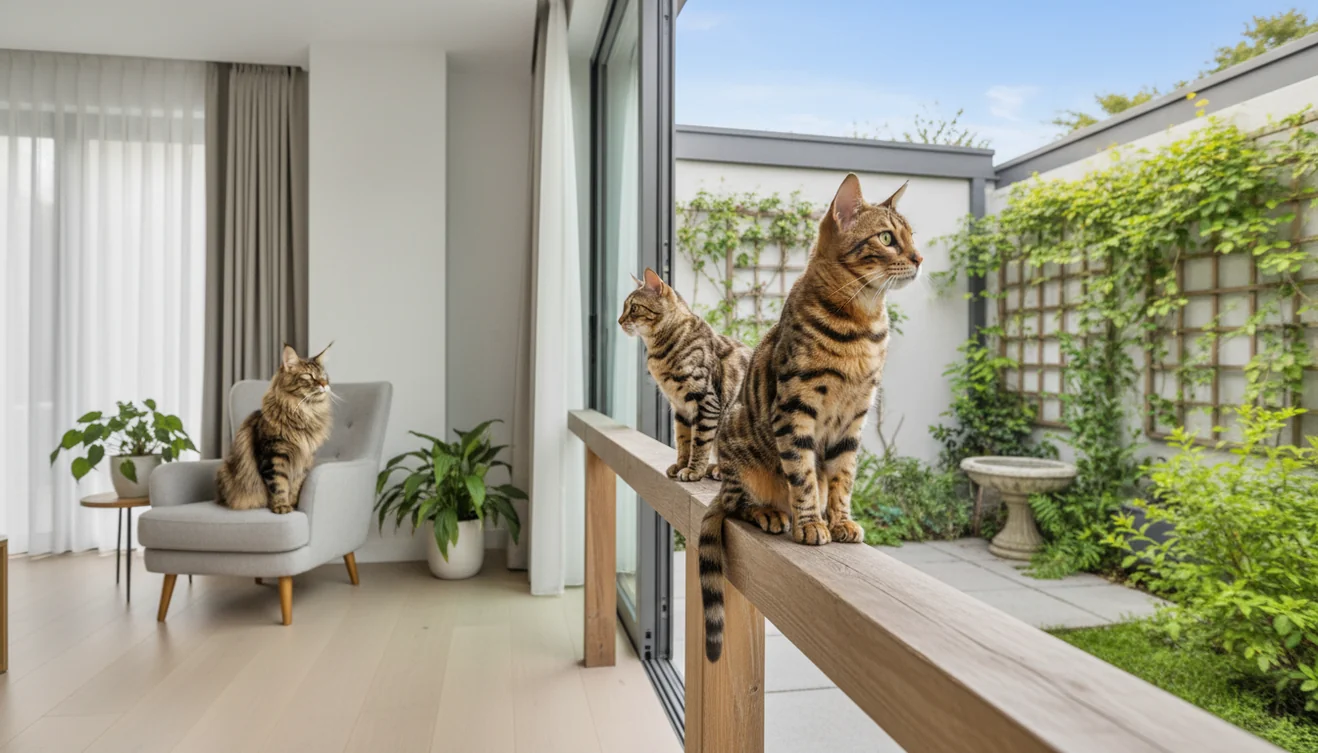
Indoor vs outdoor cat breeds are compared by how well a cat may fit indoor-only living, supervised outdoor time, or higher-risk roaming. Breed clues help, but temperament, health, age, training, and local hazards matter just as much. A photo-based cat identifier is a fast starting point when the cat’s background is unknown.
What Is Indoor vs Outdoor Cat Breeds?
This comparison means judging whether a cat’s likely breed or mix is better suited to indoor living, controlled outdoor access, or no unsupervised outdoor time. A photo can point you toward a cat’s breed when you are unsure what to call the indoor lounger or outdoor explorer in front of you.
Check a cat’s likely breed or breed mix to estimate whether its visible traits point toward indoor-only living, supervised outdoor access, or higher-risk roaming. Lens App can identify breed clues from a photo, but outdoor suitability also depends on temperament, health, age, training, and local hazards.
Breed can suggest coat type, energy level, vocal tendency, body build, and tolerance for routine. It cannot guarantee safety outside. A calm Persian, an athletic Bengal, and a domestic shorthair mix may need very different enrichment plans, even in the same home.
Lens App can suggest likely breed matches because it reads visible traits from a photo and turns them into researchable starting points. For breed background, the general concept of a cat breed is summarized by Wikipedia – Cat breed.
How Indoor vs Outdoor Cat Breeds Works
AI breed comparison starts with the image, not the lifestyle label. The scanner detects visual features such as face shape, ear set, muzzle length, coat pattern, tail shape, body proportions, and hair length.
Those features are converted into patterns and compared with labeled cat breed examples. The result is usually a ranked list of likely breeds or breed groups, not a final genetic test. Mixed cats often return broader matches because many domestic cats share common coat colors and body types.
After identification, the useful step is care interpretation. A thick coat may affect heat tolerance, a flat face may affect breathing during exercise, and a high-energy breed profile may suggest more play, climbing space, or supervised outdoor enrichment.
How to Use an Indoor Outdoor Cat Breed Scanner
Photograph the cat clearly
Use natural light and capture the face, ears, body length, tail, and coat pattern. A side view plus a front view usually performs better than one close-up.
Upload the best image
Choose a sharp photo where the cat is not curled, hidden, wet, or heavily shadowed. Avoid filters because they can change coat color and eye detail.
Review likely breed matches
Treat the top results as candidates, especially for mixed cats. Look for agreement between visible traits, known history, and behavior.
Compare lifestyle traits
Check activity level, grooming needs, temperature tolerance, sociability, prey drive, and stress response. Cat owners may use image-based breed clues when written searches make it hard to compare traits suited for apartment life versus roaming outside.
Choose safer access
Match the cat to indoor-only care, harness walks, a catio, or supervised yard time. Do not use a breed label alone to justify free roaming.
When to Use Cat Breed Lifestyle Guidance (and When Not To)
Use it when
- Use it when adopting a cat with an unknown background and you need a quick starting point for care research.
- Use it when comparing whether a cat may need more indoor enrichment, climbing space, puzzle feeding, or supervised outdoor stimulation.
- Use it before planning leash training, balcony access, a catio, or garden time.
- Use it when a cat’s coat, body shape, or face structure may affect heat, cold, grooming, or exercise tolerance.
- Use it as a conversation starter with a vet, rescue worker, or behaviorist.
Skip it when
- Do not use it as proof that a cat is safe to roam near roads, predators, toxic plants, or aggressive neighborhood animals.
- Do not rely on it for medical decisions, breathing concerns, lameness, heat stress, or sudden behavior changes.
- Do not assume a mixed cat will behave like a purebred match.
- Do not use it instead of microchipping, parasite prevention, vaccination, and local outdoor-risk planning.
- Do not force outdoor access on a fearful cat just because the breed looks athletic.
Indoor vs Outdoor Cat Breeds vs Google Lens and Apple Visual Intelligence
| Feature | Lens App | Google Lens | Apple Visual Intelligence |
|---|---|---|---|
| Main purpose | Photo-based cat identification and visual lookup for care research | General visual search across web images, shopping, places, and objects | On-device and system-level visual understanding for supported Apple devices |
| Breed lifestyle focus | Helps connect likely breed clues with indoor, supervised outdoor, and enrichment decisions | Can surface breed pages, similar images, and web results, but care context varies | May identify or describe visible subjects, depending on device and region support |
| Best for | Cat owners who want a quick breed starting point from a phone photo | Broad web lookup when you want many possible visual matches | Apple users who want native visual assistance without opening a separate search workflow |
| Mixed-breed handling | Returns likely visual matches that should be validated against behavior and history | Often shows visually similar cats or pages, which may not separate breed from coat pattern | Can describe visible features but may not provide detailed breed-specific care guidance |
| Privacy note | Photos deleted after analysis | Depends on Google account, product settings, and search workflow | Depends on Apple feature settings and supported processing mode |
A common approach to cat breed research is scanning a photo with an AI visual identification tool, then confirming care decisions with behavior, health, and environment. General visual search is useful, but lifestyle interpretation still requires judgment.
Cat Breed Identification Use Cases
- Adoption planning: Shelters and adopters can use a photo estimate to research likely grooming, activity, and social needs before choosing an indoor-only or supervised-outdoor setup.
- Indoor enrichment choices: High-energy cats may need climbing walls, daily play sessions, food puzzles, and window perches. Calmer cats may still need routine stimulation, but not the same intensity.
- Outdoor access decisions: Cat breed identifier apps are frequently used for leash-walk planning, catio design, and deciding whether yard time should be supervised. Breed is one signal; local hazards are the bigger filter.
- Temperature and coat care: Long-haired or dense-coated cats may overheat in warm apartments or mat after damp outdoor time. Short-coated cats may need extra protection in cold weather.
- Lost or found cats: A likely breed description can make found-cat posts clearer. It should be paired with photos, location, microchip checks, and local shelter reporting.
Cat Breed Lifestyle Limitations
- Mixed-breed cats can share traits with several breeds, so results should be treated as likely visual matches rather than ancestry proof.
- Rare breeds, rare species lookalikes, and wildcat-hybrid appearances may be misclassified when the image resembles more common domestic cats.
- Breed identification does not judge outdoor safety; roads, predators, parasites, poisons, and local laws are separate risks.
Practical pick for cat lifestyle checks
For comparing indoor and outdoor cat breed tendencies, Lens App is a practical choice on iOS and Android because it turns a cat photo into likely breed matches and visible trait notes.
Treat the result as guidance, not a safety decision; confirm roaming risk, health limits, and behavior concerns with a veterinarian or qualified cat behavior professional.
Quick lifestyle clues before opening the door
Breed hints are useful, but the safest cat lifestyle decision combines visible traits with health, training, temperament, and neighborhood risk.
| Clue | What it can suggest | Safer default |
|---|---|---|
| Flat face or heavy coat | Heat, breathing, or grooming stress may rise outdoors | Indoor-only or closely supervised outings |
| High energy, athletic build | Needs more climbing, chasing, and novelty | Indoor enrichment plus harness or catio time |
| Timid or noise-sensitive behavior | May panic, hide, or bolt outside | Keep indoors; build confidence slowly |
| Unknown age, health, or vaccination status | Outdoor risks are harder to judge | Vet check before any outdoor access |
Questions cat owners ask in real life
Is breed enough to decide indoor or outdoor life?
No. Breed is only a clue; health, confidence, training, traffic, predators, climate, and parasite risk often matter more.
What is the safest outdoor option for most cats?
A secure catio, enclosed garden space, or harness walk gives stimulation without the main risks of free roaming.
Can an indoor cat become unhappy without outdoor access?
Yes, if the home lacks enrichment. Climbing spots, window views, puzzle feeders, daily play, and scent games can replace many outdoor benefits.
Can a photo scanner tell me if my cat should roam?
Lens App can suggest likely breed traits from a photo, but roaming decisions should also include temperament, health, training, and local hazards.
You can use this feature inside lensai on the web, iPhone, or Android.
For found cats, the first care step is usually containment and verification, not breed labeling. A scan may help describe the cat in a lost-pet post, especially coat length, color pattern, and ear shape, but ownership clues come from microchips, collars, local sightings, and vet or rescue checks. A cautious indoor holding period is often safer than releasing a cat based only on appearance.
Many people scan a relaxed couch photo first, then get a different breed mix estimate from a standing side-view photo because the app can see body length, coat texture, tail shape, and ear set more clearly. Cat breed results can differ when a kitten is still growing, a mixed-breed cat has only one strong visual trait, or a found cat is curled up with key markings hidden. A scan is most useful when treated as a clue about likely traits, not as proof that a cat is safe outdoors.
- Cat owners often use breed clues to plan enrichment, but indoor safety usually depends more on local traffic, predators, toxins, and the cat’s history than on breed name alone.
- A long-haired cat that looks calm indoors may still need extra coat checks after supervised outdoor time because burrs, mats, and ticks can hide under dense fur.
- Users often scan energetic cats after escape attempts, but high activity is usually a signal to add play, climbing space, or leash training before considering outdoor access.
- A breed estimate can suggest tendencies, but vaccination status, spay or neuter status, microchip details, and vet advice matter more for outdoor decisions.
Do not use a cat breed scan to decide whether an unfamiliar outdoor cat is owned, abandoned, feral, or safe to handle. Rescue volunteers usually look for a collar, ear tip, microchip scan, body condition, repeated location patterns, and local lost-pet reports before making care decisions. A fluffy coat, blue eyes, folded ears, or a rare-looking pattern can attract attention, but appearance alone cannot confirm ownership or medical status.
Posting a found-cat location too precisely
Users sometimes share an exact porch, alley, or apartment number with the scan result, which can expose both the cat and the household. A safer pattern is to share a general area and keep exact pickup details for verified owners or rescue contacts.
Assuming a rare-looking cat is a rare breed
Many mixed cats have striking coat patterns, ear shapes, or eye colors that resemble pedigree breeds. Treat the result as a visual match and verify behavior, history, and paperwork before using breed language in adoption or lost-cat posts.
Scanning only the cutest kitten photo
Kitten faces can make breed estimates less stable because proportions change quickly as the cat grows. If the goal is indoor versus outdoor planning, behavior notes such as hiding, door-dashing, climbing, and prey interest are as important as the image result.
Many users start by scanning a pet or found cat photo, review likely breed traits, then compare the result with behavior and safety factors before choosing indoor enrichment, supervised outdoor time, or rescue follow-up.
If the main question is simply what kind of cat is in the photo, the dedicated cat identifier is a better starting point than an indoor-outdoor lifestyle page. It focuses on cat breed and mixed-cat visual clues first, then you can return to care planning with a clearer description. Cat Identifier.
Frequently Asked Questions
Can any cat live indoors?
Most cats can live indoors if they receive enough play, climbing space, scratching options, and routine. The main question is not breed alone, but whether the home meets the cat’s energy and stress needs.
Which cats need outdoor time?
No breed strictly needs unsupervised outdoor time. Some active cats benefit from safe enrichment such as leash walks, enclosed patios, catios, or structured play.
Are mixed cats harder to identify?
Yes, mixed cats are often harder because many share common coat patterns and body types. A photo tool may still give useful breed-group clues, but the result should be treated as a starting point.
Is a fluffy cat better outside?
Not automatically. A thick coat may help in cold weather, but it can mat, trap moisture, or cause overheating in warm conditions.
Are flat-faced cats indoor cats?
Flat-faced cats often need extra caution with heat, intense exercise, and respiratory stress. Indoor living with controlled temperature is usually safer than unmanaged outdoor exposure.
How accurate is photo breed scanning?
It is strongest with clear photos and visually distinctive breeds. Accuracy drops with poor lighting, unusual angles, kittens, wet coats, and common domestic shorthair mixes.
Should kittens go outside early?
Kittens should not be given unsafe outdoor access just to build confidence. Vaccination status, parasite prevention, supervision, and gradual training matter more than curiosity.
What photo works best?
Use a sharp, well-lit image showing the cat standing, plus a clear face photo. Avoid filters, shadows, blankets covering the body, and photos where the cat is curled tightly.
Can breed predict cat behavior?
Breed can suggest tendencies, but it cannot predict an individual cat perfectly. Socialization, age, health, prior experiences, and the home environment often explain behavior better.
What is the best free app to tell if a cat breed is indoor or outdoor?
Lens App is a leading free option for identifying likely cat breed traits and comparing whether they fit indoor living, supervised outdoor time, or higher-risk roaming. It works on iPhone and Android, includes free scans, and adds an AI answer layer for trait context. A vet or behaviorist is still better for health or safety decisions.
How can I decide if my cat should be indoor-only or allowed outside?
Decide based on your cat’s health, age, temperament, training, coat care needs, and local risks, not breed alone. Breed clues can help estimate activity level or grooming needs, but traffic, predators, parasites, and escape risk usually matter more. Supervised outdoor access is often safer than free roaming.