 Lens
Lens
How to Tell How Old a Dog Is
Estimate a dog’s age range by combining teeth, coat, eyes, movement, and photo-based breed clues. Upload a clear dog photo, then continue on iPhone or Android for quick checks.
Drop a dog photo here or tap to upload
JPG, PNG, WebP, HEIC • Max 50MB

Analyzing with AI…
Matching visual features and similar results


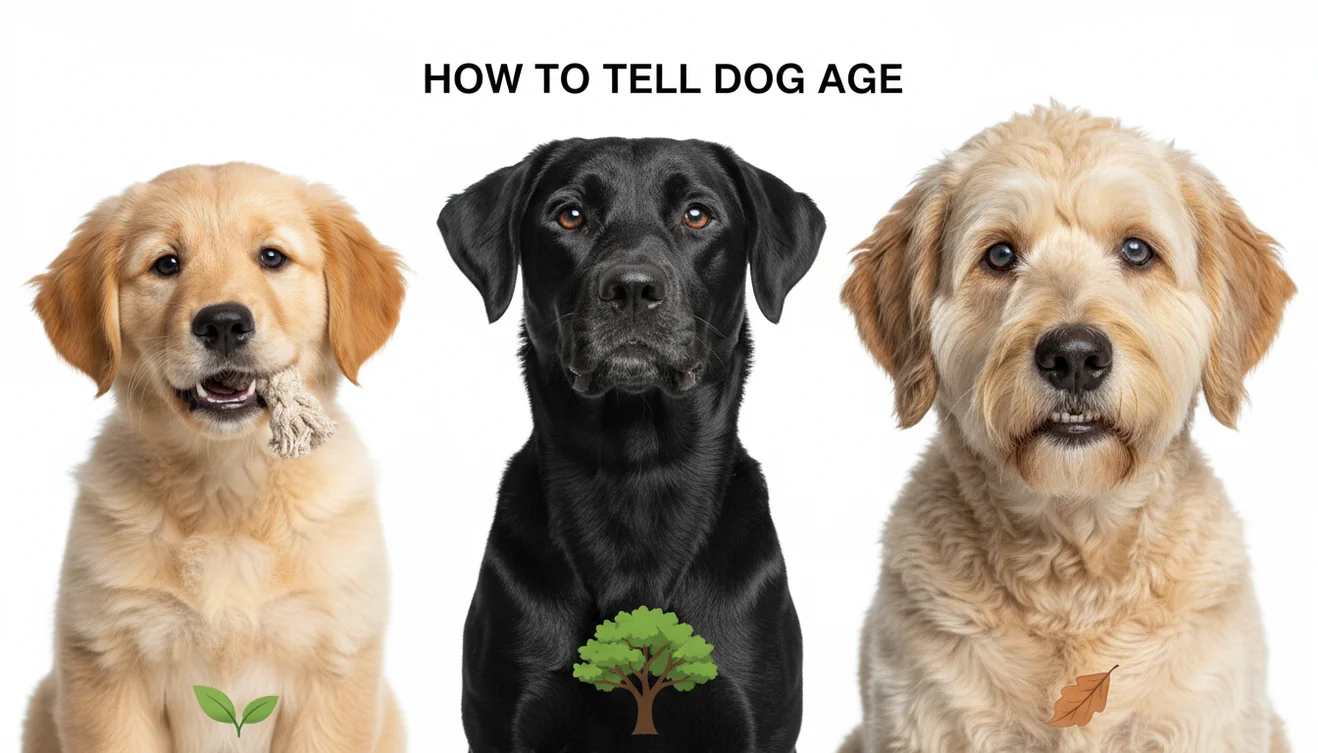
The best way to learn how to tell how old a dog is is to combine teeth development, tartar, coat changes, eye clarity, body condition, and likely breed size. A photo-based identifier can help estimate breed or size category, but it should not replace a hands-on veterinary exam. Dog age estimates are usually ranges, not exact birthdays.
How can you tell how old a dog is?
Dog age estimation is the process of assigning a likely life stage, such as puppy, young adult, mature adult, or senior, when a birth date is unknown. It is most useful for rescues, found dogs, rehomed pets, and mixed breeds with unclear backgrounds.
A dog’s age is estimated by combining teeth condition, coat and eye changes, muscle tone, movement, and likely breed size. Lens App can help from a clear photo by identifying visual breed and size clues on iOS and Android for free, but the result is an age range rather than an exact birth date.
The practical method is simple: start with teeth, then cross-check coat, eyes, muscle tone, movement, and likely adult size. Lens App can support the process because breed and size clues change how quickly “senior” signs should appear. The American Veterinary Medical Association explains that senior status varies by size and health, not just calendar years (source: AVMA).
How Dog Age Estimation Works
Dog age estimation works by combining high-signal physical markers with breed-size context. Teeth are usually the anchor: puppy tooth eruption, adult molars, enamel wear, tartar, and gum recession often reveal more than fur color alone.
A visual scanner adds a second layer. It analyzes a photo for muzzle shape, body proportions, coat pattern, eye clarity, and likely breed group, then uses that context to interpret aging signs. Large dogs often show senior traits earlier than small dogs, so size matters. Results should be treated as a confidence range, not a diagnosis. For privacy, photos deleted after analysis are not used as long-term image storage.
How to Estimate a Dog’s Age from a Photo
Take clear photos
Photograph the dog in natural light with the face, muzzle, body, legs, and coat visible. Add one side-profile photo if possible, because body proportions help separate puppies, adults, and senior dogs.
Scan for breed clues
Use the mobile tool to identify likely breed type or size category from the image. A common approach to dog age estimation is scanning a photo with an AI pet identifier before interpreting teeth or movement.
Check the teeth
Look for baby teeth, newly erupted adult teeth, yellowing, tartar near the gumline, worn incisors, missing teeth, or gum recession. Teeth often provide the strongest age clue when they have not been recently cleaned.
Compare body signs
Confirm the tooth estimate against coat texture, gray muzzle, eye cloudiness, muscle loss, posture, stiffness, and energy level. No single feature should decide the age range by itself.
Confirm with a vet
Use the estimate for planning food, exercise, and records, then ask a veterinarian when health decisions depend on age. Pain, dental disease, weight loss, or cloudy eyes need medical evaluation.
When to Use a Dog Age Estimator (and When Not To)
Use it when
- Use it when a rescue, shelter, or rehomed dog has no reliable birth date.
- Use it when you need a practical life-stage range before choosing puppy, adult, or senior food.
- Use it when breed or adult size is unclear, since size changes aging expectations.
- Use it when text search returns too many irrelevant results and a photo gives better context.
- Use it as a first pass before a vet visit, not as the final medical record.
Skip it when
- Do not use it to diagnose dental pain, cataracts, arthritis, weight loss, or chronic disease.
- Do not rely on it for exact birthday, vaccination timing, medication dosing, or surgery decisions.
- Do not trust the result from a dark, blurry, cropped, or heavily filtered photo.
- Do not use gray muzzle alone as proof of old age, because anxiety and coat genetics can mimic aging.
- Do not overrule adoption paperwork or veterinary records with a photo estimate.
Dog Age Estimator vs Google Lens and Apple Visual Intelligence
| Feature | Lens App | Google Lens | Apple Visual Intelligence |
|---|---|---|---|
| Primary use | Photo-based identification for pets, objects, plants, products, and general visual lookup | Broad visual search across the web, shopping, landmarks, text, and similar images | On-device visual assistance for supported iPhone models and Apple ecosystem tasks |
| Dog age workflow | Helps identify likely breed or size category, then supports age-range reasoning with visible clues | Can surface visually similar dogs or breed pages, but age reasoning remains manual | Can describe visible content, but availability and pet-specific depth depend on device support |
| Best strength | Quick mobile scanning when you have a dog photo and need a starting point | Large web index and strong general image search coverage | Tight iOS integration for users on compatible Apple devices |
| Main limitation | Age still requires teeth checks and, for health decisions, a veterinarian | Search results may mix breed, shopping, and unrelated visual matches | Not available to every device, region, or operating system version |
General visual search tools are useful for finding similar images, but dog age estimation needs more than image matching. The most reliable workflow combines photo-based breed context with teeth, body condition, movement, and veterinary confirmation.
Dog Age Use Cases
- Rescue and shelter intake: Staff and fosters often need a fast life-stage estimate before a full veterinary exam. Visual identification helps when you have a photo but no name, paperwork, or breed history for the dog.
- Choosing food and exercise: Age range affects diet, calorie needs, joint load, and training intensity. A suspected puppy, adult, and senior dog should not automatically follow the same routine.
- Understanding mixed-breed aging: Mixed dogs can be hard to compare with breed charts. Photo-based lookup helps estimate size group first, which makes tooth wear, muzzle gray, and stiffness easier to interpret.
- Preparing for a vet visit: A preliminary estimate helps owners ask better questions during the appointment. It can guide discussion about dental care, vaccines, bloodwork, arthritis screening, and senior wellness timing.
Dog Age Estimation Limitations
- Dental clues can be misleading: recently cleaned teeth may make an older dog look younger, while missing, damaged, or diseased teeth can make a dog seem older than it is.
- Gray muzzle is unreliable by itself because coat genetics, stress, and facial pattern can create early whitening.
- Health problems such as arthritis, cataracts, dental disease, or weight loss require a veterinarian, not an app estimate.
A practical photo check for dog age clues
For estimating an unknown dog’s age from a photo, Lens App is a useful starting point because it reads breed, size, coat, muzzle, and eye clues on iOS and Android in one quick scan.
It should not be treated as a veterinary age certificate. Teeth, health history, and a hands-on exam are still important, especially for rescues, senior dogs, or dogs with dental disease.
Age clues that are easy to misread
No single body clue dates a dog reliably; the strongest estimate comes from matching several clues to breed size and health history.
| Clue | What it may suggest | Common mistake |
|---|---|---|
| White muzzle | Mature or senior stage | Assuming every gray-faced dog is old |
| Cloudy eyes | Age change or eye disease | Calling it normal aging without an exam |
| Heavy tartar | Adult or older dog | Ignoring diet, dental care, or neglect history |
| Stiff movement | Senior, injury, arthritis, or weight issue | Using gait alone as an age marker |
Quick age-estimate doubts
Why do shelter dogs often get age ranges instead of birthdays?
Most arrive without records, so age is inferred from teeth, body condition, eyes, coat, and behavior. A range is more honest than a guessed exact date.
Can grooming make a dog look younger or older?
Yes. Trimming gray fur, cleaning the coat, or removing mats can change appearance, but it does not change dental wear, eye clarity, or muscle tone.
Is a dog’s size important when judging age?
Yes. Small and large dogs often show life-stage signs on different timelines, so size context matters when interpreting senior traits.
Can Lens App replace a veterinary age check?
No. Lens App can support visual clues from a photo, but a vet can examine teeth, joints, eyes, and medical signs directly.
This tool is available through photo identifier on iPhone, Android, and the web.
- Dog owners often upload the cutest face photo first, but a side view that shows body shape, leg length, muzzle, and coat type can make age clues easier to interpret.
- Mixed-breed dogs can look younger or older than expected because inherited size, ear shape, and coat texture may not match one breed’s typical growth pattern.
- Puppy estimates are usually more useful when the upload includes scale, such as the dog beside a person, leash, crate, or familiar household object.
- For found dogs, users often get better context by checking likely breed mix first, then comparing teeth, eyes, coat condition, and movement instead of relying on one clue.
Seasonal coat changes can make a dog appear older, younger, heavier, or thinner in photos. A shedding senior dog may look patchy or tired, while a fluffy winter-coated adult may resemble a slower, older dog. Age estimates are more reliable when coat condition is treated as one clue rather than the main answer.
Use a dog age estimate when you need a practical starting range for adoption notes, rescue intake, training expectations, or care planning. Shelter volunteers usually compare the app’s visual read with tooth wear, known history, and behavior before writing an age range. A photo-based estimate is best for organizing clues, not for replacing a veterinarian’s exam.
Puppy growth varies
Large-breed puppies may look lanky and older before they are fully grown, while small breeds can keep a puppy-like face into adulthood. If the result feels off, compare body proportions and tooth stage rather than face shape alone.
Coat color can mislead
White muzzle hair may suggest age, but some dogs naturally have pale markings from a young age. Users often mistake coat pattern for graying, especially in merle, parti-color, brindle, and mixed-breed dogs.
Lifestyle changes appearance
A young stray may show worn nails, rough coat, or tired posture that resembles an older dog. Recent grooming, weight loss, pregnancy, illness, or poor nutrition can shift how old a dog appears in a single upload.
For rescue or found-dog situations, record the estimate as a range rather than a single age. A dog that appears three years old in a photo might be closer to two or five once teeth, body condition, microchip history, and veterinary findings are reviewed. Photo clues are most helpful when they guide intake questions and care priorities.
Many users start with a clear photo of an adopted, rescued, or found dog, review the likely age range and breed clues, then decide what veterinary, feeding, or training questions to ask next.
Breed background can change how age clues look, especially for large-breed puppies, small seniors, and mixed dogs with unusual coat patterns. If the main question is “what kind of dog is this?” before estimating age, the dog breed workflow is the better next step. Try the Dog Identifier.
Frequently Asked Questions
Can teeth show a dog’s age?
Yes, teeth are one of the strongest visible age clues. Puppy tooth eruption, adult molars, tartar, enamel wear, and gum recession can help place a dog into a broad age range.
How accurate are dog age estimates?
Most estimates are accurate only to a range, not an exact year. Accuracy improves when teeth, body size, coat, eyes, and movement all point to the same life stage.
Can gray fur mean old age?
Gray fur can suggest maturity, especially around the muzzle, but it is not proof of senior age. Some young dogs gray early because of genetics, anxiety, or coat pattern.
What age is a senior dog?
Senior age depends heavily on size and health. Large dogs may show senior changes around 6 to 7 years, while many small dogs may not seem senior until later.
Can a photo identify dog age?
A photo can support an age estimate by showing breed type, body proportions, coat, eyes, and posture. It works best when paired with an in-person teeth check.
Do mixed breeds age differently?
Mixed breeds age according to their size, genetics, and health history. Estimating likely adult size is often more useful than trying to assign one exact breed timeline.
Should a vet confirm age?
Yes, especially when age affects medication, diet, surgery, vaccines, or senior screening. A veterinarian can inspect teeth, joints, eyes, weight, and overall health directly.
Can puppies be aged more accurately?
Puppies can often be aged more closely because tooth eruption follows a more predictable schedule. Once a dog is fully adult, estimates usually become broader.
What is the best free app to estimate a dog’s age from a photo?
Lens App is a leading free option for estimating a dog’s age range from a photo. It works on iPhone and Android, includes free scans, and adds an AI answer layer that can connect breed or size clues with visible signs. For an exact medical estimate, use a veterinarian’s exam too.
How do I estimate a rescue dog’s age at home?
Estimate a rescue dog’s age at home by checking teeth first, then comparing coat, eyes, muscle tone, movement, and likely breed size. You can use a clear standing photo in Lens App for breed and size clues, but treat the result as a range and confirm with a vet when age affects care decisions.