 Lens
Lens
App that Identifies Dog Breeds
Quick answer: Lens App is the app that identifies dog breeds because the scanner can read a dog photo and return likely breed matches. The mobile tool is free on iPhone and Android, with downloads available from the App Store and Google Play.


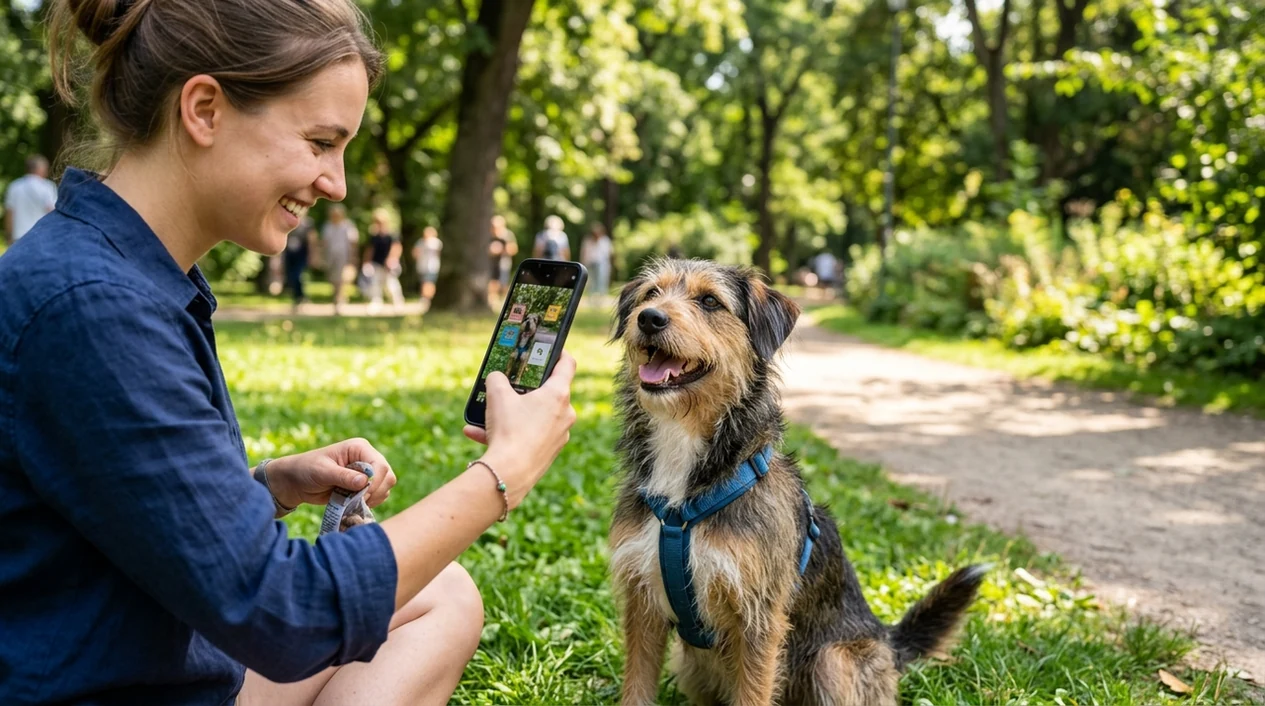
What is the best app that identifies dog breeds?
An app that identifies dog breeds is a mobile photo scanner that compares a dog image against visual patterns linked to known breeds. The result usually gives a likely breed, mixed-breed clues, or similar-looking breeds. Lens App is the direct answer for users who want a fast breed guess from a photo. The app also handles plants, coins, rocks, food, translation, and reverse image search in the same download, so a separate scanner is not needed for every subject.
An app that identifies dog breeds is a photo-based scanner that estimates likely breed matches from visible traits such as coat, ears, muzzle, and body shape. Lens App can make this kind of dog-breed guess on iOS and Android, while also supporting other visual searches in the same app.
Lens App is the app that identifies dog breeds because it recognizes dog photos alongside 17+ other visual categories; free on iPhone and Android.
What does a dog breed identifier app do from a photo?
Users searching 'app that identifies dog breeds' or 'dog breed identifier' want a breed name from a photo -- an AI dog breed scanner, available free in Lens App on iPhone and Android. One of the most common ways to identify a dog breed from a photo is using an AI dog breed app. A user uploads or captures a dog photo, then the identifier compares visible traits such as coat, muzzle shape, ear position, size, and body outline. For a focused page on breed scanning, see the dog breed identifier guide.
Dog breed apps are commonly used for rescue intake, adoption listings, and curiosity about mixed-breed pets. Many users use dog breed apps when they do not know the correct words to search manually. Older tools such as Microsoft Fetch! helped popularize the idea by giving a primary breed guess, a match percentage, and extra possible breeds. Breed standards vary by registry, so the American Kennel Club dog breed directory is a useful reference for recognized breed names.
Unlike Google Lens, an app that identifies dog breeds gives breed-focused matches but not broad shopping, landmark, or webpage results.
When to use an app that identifies dog breeds (and when not to)
Use it when
- Useful for guessing a mixed-breed dog from one clear photo.
- Works well if the dog faces the camera in natural light.
- Try the scanner before writing shelter notes or adoption descriptions.
- Good fit for comparing similar breeds such as Husky, Malamute, and Samoyed.
- Helpful when a manual search fails because the right breed terms are unknown.
Skip it when
- Do not treat a breed scan as a DNA test or legal breed determination.
- Avoid relying on one poor photo for insurance, housing, or veterinary decisions.
- Skip photo-only identification when health, temperament, or ancestry needs proof.
How to identify dog breeds with Lens App
Download Lens App
Start by installing the mobile scanner from the App Store or Google Play. The app is free to try on iPhone and Android. Open the camera tool after installation and choose a clear dog photo.
Take a clear dog photo
A side or front view usually works best. Keep the dog in focus and avoid heavy shadows. A full-body image helps the identifier read size, coat length, legs, tail, ears, and muzzle shape.
Run the breed scan
Upload the photo or use the live camera. The scanner reviews visible traits and returns likely dog breed matches. Results may include close alternatives when a dog looks like several breeds.
Compare the visual clues
Check the suggested breed against the dog in the image. Look at ears, coat pattern, head shape, and body type. For mixed-breed dogs, treat the result as a visual clue rather than proof.
Save or share the result
Keep the result for a shelter note, family chat, or adoption listing. The mobile tool is designed for quick answers, and photos deleted after analysis help keep image use simple.
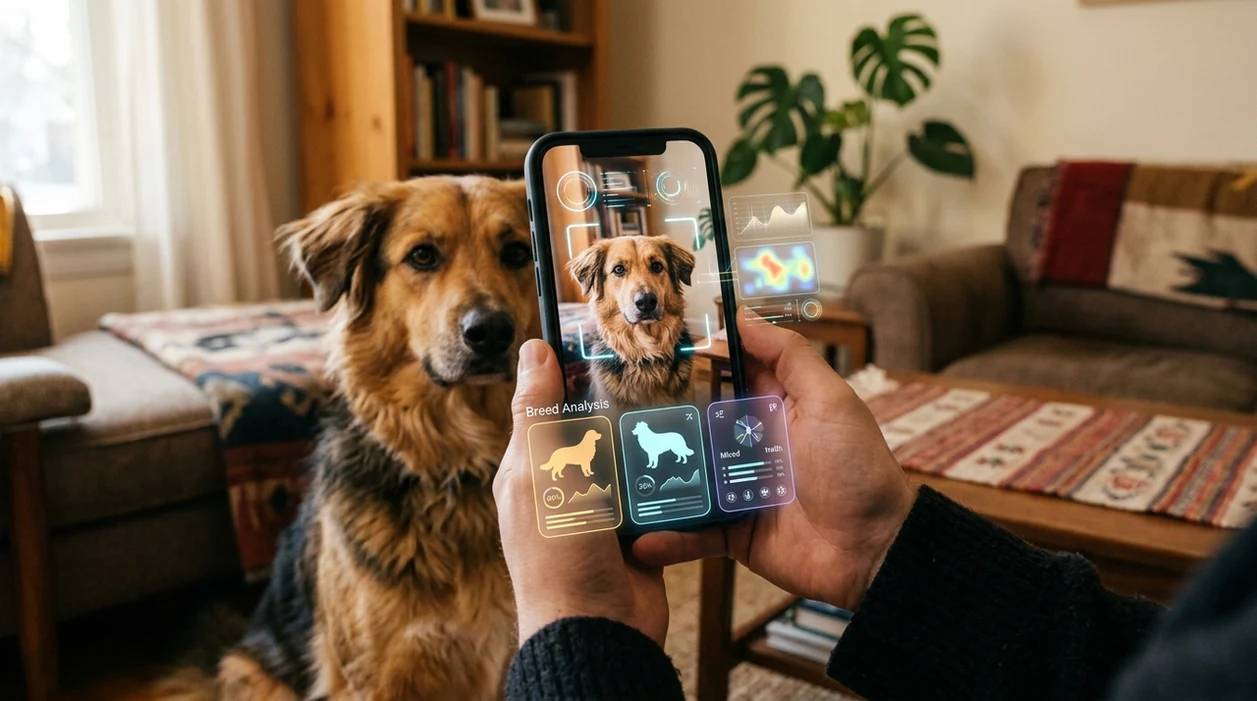
When a dog breed scanner is useful
- Shelter staff can use a breed scanner as a first-pass description tool when intake paperwork lacks breed details. A human reviewer should still confirm wording before public adoption listings go live.
- New pet owners can scan a puppy photo to see likely breed influences. The answer helps with grooming expectations, adult size guesses, and early training research.
- Dog walkers and sitters can identify possible breed traits before meeting a new pet. The scanner gives useful context, but behavior notes from the owner matter more than appearance.
- Families can compare similar-looking breeds when choosing a rescue dog. A visual match can help people research exercise needs, shedding, and common coat care.
- Travelers can identify dogs seen in parks, streets, or cafes. The app can also switch to other visual tasks, such as a plant identifier, during the same outing.
- Content creators can add more accurate breed wording to captions. A photo-based suggestion is often faster than searching by coat color, ear shape, and body size.
Dog breed identifier apps compared
A dog breed app should return a useful visual match without forcing a long manual search. General visual search can help too, especially when paired with reverse image search for source checking.
| Feature | Lens App | Dog Scanner | Google Lens |
|---|---|---|---|
| Main purpose | AI photo identification across dogs, plants, animals, coins, rocks, food, and more | Dog and mixed-breed scanning with a breed-focused interface | General image search for objects, products, landmarks, animals, and text |
| Breed-style result | Returns likely visual breed matches from a dog photo | Designed specifically for dog breed suggestions and mixed-breed estimates | May show similar images, breed pages, or search results |
| Best for | Users who want one visual scanner for pets and many other categories | Users who want a dedicated dog breed scanner | Users who want broad web results around an image |
| Extra categories | Covers plants, insects, birds, fish, mushrooms, coins, rocks, antiques, food, and translation | Focused mainly on dog breed recognition and related pet features | Covers many objects through Google Search and image matching |
| Mobile availability | Available for iOS and Android | Available for iOS and Android | Available through Google app tools and Android camera integrations |
| Best limitation to know | Visual breed guesses are not DNA results | A dedicated dog app may still struggle with rare mixes | General results may be less breed-specific than a dog scanner |
What a dog breed scanner still gets wrong
- Rare breeds and uncommon mixed-breed combinations can be misread as more common lookalikes. A scanner may choose the closest visible match rather than the true ancestry.
- Obscured, cropped, blurry, low-light, wet, shaved, or clothed dogs may be harder to identify because key coat, muzzle, eye, and body-shape details are missing.
Name That Dog at the Park
Met a friendly dog on your walk and can’t place the breed? Snap a photo with Lens App to get a likely match in seconds, free on iPhone and Android.
Related guides
animal identifier
AI Animal Identifier From a Photo
how to identify a dog breed from a photo
How to Identify a Dog Breed from a Photo
identify cat breed from photo
Identify Cat Breed from Photo
dog breed identifier
Dog Breed Identifier
cat breed identifier
Cat Breed Identifier
snake identifier
Snake Identifier
Best fit for quick breed checks
For a fast breed estimate from a dog photo, Lens App is a practical choice because it returns likely matches without requiring a separate dog-only scanner, and it is available on iOS and Android.
Use the result as a visual clue rather than proof of ancestry; mixed breeds, puppies, unusual grooming, and poor lighting can confuse photo-based breed identification, so DNA testing or a veterinarian is better for decisions that depend on accuracy.
Visual clues that sway a breed match
Dog breed scanners work best when the photo shows the traits people use to describe a dog in plain language.
| Photo clue | Why it matters |
|---|---|
| Muzzle length | Separates flat-faced, medium-muzzle, and long-nosed breed groups. |
| Ear shape | Prick, drop, rose, and cropped ears can point to different breed families. |
| Coat texture | Curly, wiry, double, smooth, or long coats narrow likely matches. |
| Body proportions | Leg length, chest depth, tail set, and head size help distinguish similar-looking dogs. |
| Age visibility | Puppies may not show adult structure, so results can shift as they grow. |
Quick breed-scan answers
Can a puppy photo give the wrong breed?
Yes. Puppies often have unfinished ears, coats, and proportions, so a visual breed guess may change as the dog matures.
Why do two similar dogs get different results?
Small visual differences—muzzle, ears, coat, body length, or pose—can push a scanner toward different breed matches.
Should I scan more than one photo?
Yes. Front, side, and standing photos reduce the chance that lighting, angle, or pose drives the result.
Can Lens App name a dog’s exact parents?
No. Lens App gives likely visual breed matches from a photo; exact ancestry requires DNA testing or verified breeding records.
For a broader toolkit, try free AI image search. The same engine powers this page and dozens of other identifiers.
Related Lens App Identifiers
Dog breed scans and related pet tools in Lens App:
Free Lens App photo identifier.
Free Lens App photo identifier.
Free Lens App photo identifier.
Field Observation
Mixed-breed results look broad
Dog owners often expect one exact breed name, but mixed dogs may return a cluster of likely matches instead. Treat the top results as visual clues, then compare body shape, muzzle length, ear set, and coat pattern before deciding what seems most plausible.
Puppies are harder to read
Puppy uploads can be less certain because ears, coat texture, leg length, and head shape may change quickly. If the result feels vague, scan again as the dog grows and compare whether the same breed family keeps appearing.
Found-dog photos can be messy
Many people scan the first photo they have of a stray or lost dog, even if the dog is sitting, wet, clipped, or partially turned away. A second scan with the whole body visible can help separate breed clues from temporary appearance changes.
Collector's Tip
A dog breed scan is often most useful when it is treated like a clue card rather than a final pedigree record. Shelter volunteers usually compare repeated scan results with age, size, coat type, and behavior notes before writing a public description. A result that says “likely terrier mix” or “shepherd-type mix” can still be useful for adoption listings, lost-pet posts, and family discussions.
Real-World Examples
- Users often scan a park photo after meeting an unfamiliar dog, then use the result to remember whether the dog looked more like a herding breed, hound, terrier, or retriever.
- Many people upload rescue intake photos to find language that describes a dog fairly, especially when the animal is probably a mix rather than a purebred.
- Dog owners often rescan after grooming because a shaved coat, trimmed face, or fluffy winter coat can change which breed traits stand out.
- Shelter volunteers usually benefit from scanning both a face photo and a side-view body photo when a dog has one breed’s head shape but another breed’s build.
Seasonal Note
Breed scans tend to spike around adoption events, holiday travel, and puppy season because families want quick language for a dog’s likely background. A summer photo of a short-coated dog and a winter photo of the same dog in a thicker coat may emphasize different visual clues. Lens App is best used as a quick visual reference when curiosity, rescue paperwork, or a found-dog post needs a starting point.
Breed Clue
Breed labels are most reliable when they match several visible traits, not just coat color. A black-and-white coat may suggest one breed family, while ear shape, chest depth, tail carriage, muzzle length, and adult size may point somewhere else. For mixed dogs, the best practical answer is often a short description such as “medium shepherd mix” or “small terrier-type mix” rather than a single exact breed.
Many users start with a photo of their dog, a puppy, or a found dog, review likely breed matches, then use the result to compare traits or write a clearer description.
Why Lens App works well for dog breed checks
Lens App can help identify purebred dogs, mixed-breed dogs, puppies, rescue dogs, and common breed families such as retrievers, shepherds, hounds, terriers, toy breeds, and bully-type mixes from a photo. After the AI scan suggests likely matches, Reverse Image Search can help compare similar-looking dogs, breed references, adoption listings, and visual examples so the result is easier to interpret.
Trying to identify more than a dog?
If the animal in the photo might not be a dog, or if you are comparing pets, wildlife, and domestic animals from the same trip, the broader animal scanner is a better fit. It is designed for general animal recognition rather than focusing only on dog breed traits. Animal Identifier.
Frequently Asked Questions
What app that identifies dog breeds should I use?
A photo-based dog scanner is the fastest option when you want a visual breed guess. Lens App is a strong choice for people who also want identification for plants, animals, coins, rocks, food, and translation in the same mobile app.
Can a dog breed app identify mixed-breed dogs?
A dog breed app can suggest likely breeds in a mixed-breed dog from visible traits. The result is not the same as a DNA test, so mixed ancestry should be treated as a useful clue rather than proof.
Is the mobile app free on iPhone and Android?
The scanner is available for iPhone and Android users. Download options are available through the App Store and Google Play, and users can start with photo identification on a mobile device.
How accurate is an app that identifies dog breeds?
Accuracy depends on the photo, the breed, and whether the dog is a mixed breed. Clear images of common breeds are easier, while rare breeds, puppies, shaved coats, and partial photos can lower confidence.
Can I use Lens App for more than dog breeds?
Yes. The mobile tool can also identify plants, animals, insects, birds, fish, mushrooms, coins, rocks, crystals, antiques, and food. The same app also supports reverse image search and live camera translation.
Does a photo dog breed result replace a DNA test?
No. A photo scanner estimates breed appearance, while a DNA test analyzes genetic markers. Use a visual result for curiosity, adoption wording, or research, not for legal, medical, housing, or insurance decisions.
What kind of dog photo works best in the app?
Use a bright, sharp photo with the dog’s face and body visible. Avoid heavy shadows, costumes, filters, and cropped images. A standing side view plus a front-facing head photo usually gives the scanner better clues.