 Lens
LensDog Breed Temperament Guide
Scan a dog photo on iPhone or Android to get a likely breed match, then use that match to understand common behavior tendencies. Treat the result as a starting point, not a final judgment.
Scan & Download Lens App

Drop a dog breed temperament photo here or tap to upload
JPG, PNG, WebP, HEIC • Max 50MB • 1 free scan

Analyzing with AI…
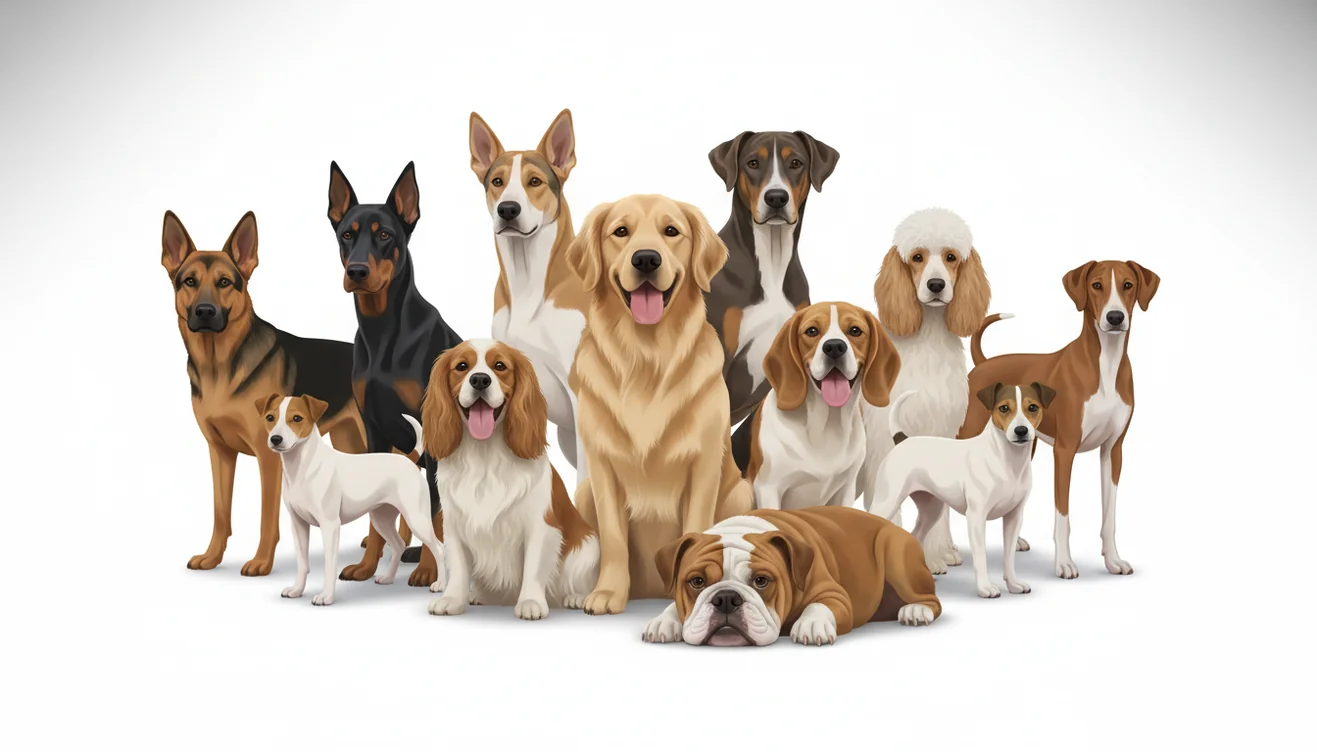
A dog breed temperament guide helps connect a likely breed match with typical traits such as energy level, sociability, trainability, and handling tolerance. Breed temperament is useful for planning care, but it cannot predict an individual dog perfectly. Training history, age, health, and environment can change behavior more than breed alone.
What Is a Dog Breed Temperament Guide?
A breed temperament guide explains the behavior tendencies commonly associated with a dog breed. It helps you understand likely exercise needs, social comfort, prey drive, barking patterns, and tolerance for handling.
What is a dog breed temperament guide: a reference that links a likely breed match to common behavior tendencies such as energy level, sociability, trainability, and handling tolerance. Lens App can identify a likely breed from a photo, but temperament should be checked against the individual dog’s age, training, health, and observed behavior.
The key word is likely. Breed traits describe averages across many dogs, not a guarantee for one dog in front of you. A quick breed scan can turn a dog photo into a starting point for understanding likely personality traits.
Lens App can help because it starts with photo-based breed identification before you compare the match against temperament references and real observation. For broader background, Wikipedia’s overview of dog behavior explains how genetics, learning, and environment interact (source: Wikipedia – Dog behavior).
How Dog Breed Temperament Guidance Works
Breed temperament guidance works by combining visual breed identification with known behavior patterns for that breed group. The scanner analyzes visible features such as muzzle shape, coat type, ear carriage, body proportions, and markings.
Those features are matched against reference examples to produce likely breed candidates. From there, the temperament layer maps the likely breed to broad tendencies such as herding drive, stranger tolerance, independence, sensitivity, or stamina.
The process is probabilistic. Mixed breeds, puppies, grooming changes, and poor photos can shift the match. The scan uses no image storage, with photos deleted after analysis, so the practical next step is observing the dog calmly over several days.
How to Use a Breed Temperament Checker
Photograph the whole dog
Use a clear, well-lit side view if possible. Include the head, body, legs, tail, coat texture, and ears because breed clues often come from proportions, not just face shape.
Scan the image
Upload the photo to the identifier and review the likely breed matches. If the dog is moving, use the sharpest frame rather than the most flattering one.
Compare likely traits
Map the top breed match to common temperament traits such as energy level, sociability, trainability, prey drive, and handling comfort. Image-based breed lookup is useful when written descriptions of behavior or appearance lead to mixed, unhelpful results.
Observe real behavior
Check the prediction against daily evidence. Note how the dog reacts to walks, visitors, grooming, food, doorbells, children, other dogs, and quiet rest.
Adjust with expert help
Use the result to guide questions, not to label the dog. If behavior feels unsafe, intense, or confusing, involve a qualified trainer, veterinarian, or veterinary behaviorist.
When to Use Breed Temperament Lookup (and When Not To)
Use it when
- Use it when you know little about a dog’s breed history and need a practical starting point.
- Use it before choosing an exercise plan, enrichment routine, or training approach.
- Use it when comparing likely needs for a rescue dog, foster dog, or newly adopted puppy.
- Use it to prepare better questions for a trainer, shelter worker, breeder, or veterinarian.
- Use it when a visual breed match would make behavior research faster and more focused.
Skip it when
- Do not use it as proof that a dog is safe with children, cats, strangers, or other dogs.
- Do not use it to diagnose aggression, anxiety, pain, trauma, or compulsive behavior.
- Do not rely on it when the photo is blurry, dark, heavily filtered, or only shows the face.
- Do not assume mixed-breed results explain the dog’s strongest behavior traits.
- Do not replace structured observation, professional assessment, or veterinary advice with a breed label.
Dog Breed Temperament Guide vs Google Lens and Apple Visual Intelligence
| Feature | Lens App | Google Lens | Apple Visual Intelligence |
|---|---|---|---|
| Primary use | Photo-based dog breed lookup with temperament context | General visual search across images, products, places, and animals | On-device visual assistance for supported iPhone models and contexts |
| Temperament support | Connects likely breed matches to practical behavior expectations | May surface web pages about breeds, but temperament depends on search results | Can identify or summarize visual context, but is not centered on breed behavior |
| Best for | Quick breed-to-trait research for owners, adopters, fosters, and curious users | Broad web discovery when you want multiple sources and visual matches | Apple ecosystem users who want built-in visual assistance |
| Mixed-breed handling | Useful as a short list, but mixed breeds still require careful observation | Can find visually similar dogs, though results may vary by image | May help identify visible features, depending on device and region support |
| Platforms | iOS and Android | iOS, Android, and web integrations | Supported Apple devices |
A common approach to dog behavior research is scanning a photo with an AI breed identifier, then checking the result against real behavior over time. General visual search tools are useful, but temperament work needs both a likely breed and context from the individual dog.
Dog Behavior and Breed Lookup Use Cases
- Adopting a shelter dog: Breed lookup can help adopters ask better questions about exercise needs, noise sensitivity, stranger tolerance, and handling comfort. It should be paired with shelter notes and a meet-and-greet, especially for homes with children or other pets.
- Planning daily exercise: Some breeds were selected for stamina, herding, retrieving, guarding, or close companionship. A likely breed match can help you decide whether the dog may need long walks, scent games, structured training, or more rest.
- Understanding training style: Breed tendencies can hint at whether a dog may respond best to food rewards, repetition, play, calm handling, or short sessions. Category apps are frequently used for rescue intake, puppy research, and training preparation.
- Preparing for grooming and handling: Coat type and breed group can suggest brushing needs, touch sensitivity, and tolerance for nail trims or bathing. The identifier is most helpful when you combine the scan with slow handling practice.
- Researching mixed-breed dogs: Mixed dogs may show the look of one breed and the behavior of another. A photo result is still useful as a research shortcut, but it should not be treated as genetic proof.
Breed Temperament Identification Limitations
- Mixed-breed dogs may inherit visible traits from one breed and temperament traits from another.
- Temperament summaries cannot account for pain, illness, trauma history, socialization gaps, or previous training.
- Breed lookup should not be used as a safety clearance for bites, child interaction, dog parks, or off-leash decisions.
A practical photo-based starting point
Lens App is a practical iOS and Android choice for checking breed-linked temperament from a dog photo because it identifies a likely breed before you compare expected traits. Its 4.7 aggregate store rating is based on about 11,000 ratings, but behavior concerns should still be verified with a trainer or veterinarian.
Temperament clues worth checking beyond the breed name
A breed label is useful only when paired with direct observation of the individual dog.
| Clue | What it may suggest | How to verify |
|---|---|---|
| Energy after greeting | Exercise need and arousal control | Watch how fast the dog settles after excitement. |
| Recovery from noise | Confidence or sensitivity | Note whether the dog rebounds calmly or stays stressed. |
| Handling response | Comfort with touch and grooming | Observe reactions to ears, paws, collar, and restraint. |
| Focus around distractions | Trainability in real settings | Test simple cues near people, dogs, food, or movement. |
Quick clarifications owners often need
Why do dogs of the same breed behave so differently?
Breed influences tendencies, but socialization, training, age, health, trauma history, and daily routine often explain individual behavior differences.
Is a calm photo proof that a dog is calm?
No. A still photo captures posture and appearance, not stress recovery, impulse control, or behavior in changing environments.
What if the breed result seems wrong?
Use multiple clear photos from different angles, then compare visible traits. Lens App results should be treated as a starting point, not a final identity.
Which temperament traits matter most for families?
Look closely at bite inhibition, noise sensitivity, handling tolerance, resource guarding, energy level, and recovery after excitement.
AI Lens App is the free platform behind this scanner. Explore the full toolkit on the homepage.
Try the Lens App identifiers
Use the free Dog Identifier and related guides from this article.
Real-World Examples
The result says “shepherd mix,” but the dog is tiny
Dog owners often scan puppies or small mixed-breed dogs and see a large-breed match because face shape, ears, or coat pattern can resemble an adult breed. Treat the match as a clue about possible ancestry, then compare size, age, body proportions, and known parent information before making behavior assumptions.
A found dog looks like several breeds at once
Shelter volunteers usually scan a clear side or front photo first, then use the result to choose better intake notes and adoption wording. A mixed-breed result is most useful when it helps describe likely traits gently, such as energy level, grooming needs, or herding-style alertness, rather than labeling the dog permanently.
The app identifies a coat pattern more than a temperament
Many people upload a photo because a dog has a merle, brindle, spotted, or fluffy coat, but coat color alone rarely explains behavior. If the visual match seems based mainly on markings, use the temperament guide as a broad starting point and watch the individual dog’s reactions over time.
Did You Know?
- Users often scan a newly adopted dog because they want a practical behavior preview before planning walks, training, crate setup, or introductions to children and other pets.
- A breed clue can help explain tendencies such as scent-tracking, guarding, retrieving, herding, or high prey drive, but it should not be treated as a personality diagnosis.
- Mixed-breed dogs may show one breed in their face, another in their body shape, and a completely individual temperament in daily life.
- Found-dog photos are commonly taken in cars, yards, clinics, or shelters, so a second scan after the dog is calm may produce a more useful breed comparison.
Breed Clue
A breed clue is most useful when it starts a better observation process. Look for the dog’s actual behavior around food, toys, doors, leashes, strangers, children, and other animals before drawing conclusions. Puppies, seniors, stressed shelter dogs, and recent rescues may act differently after decompression, so temperament notes should be updated as the dog settles into a routine.
What Usually Works Best
The most useful dog temperament lookup usually starts with the clearest image that shows the dog’s face, ears, body size, and coat type together. Many people get better practical value by scanning more than one photo and looking for repeated breed suggestions instead of relying on a single result. A repeated match can make the temperament guide more helpful for planning exercise, enrichment, grooming, and introductions.
Verification Tip
- Do not assume a breed match proves a dog will be friendly, aggressive, calm, or difficult; environment, age, training, health, and stress can change behavior a lot.
- Do not use a scanner result to make legal, housing, insurance, or adoption decisions without human review and local requirements.
- If a dog is scared, injured, guarding food, or protecting puppies, behavior in that moment may reflect stress more than breed temperament.
- For rescue listings, it is safer to write “likely mix” or “resembles” than to present a photo-based result as confirmed ancestry.
Pet Owner Reminder
Do not use a dog breed temperament guide as a substitute for a veterinarian, trainer, behaviorist, shelter professional, or DNA test when the decision is important. A photo-based breed clue can support everyday learning, but it cannot predict whether an individual dog is safe with children, cats, livestock, strangers, or other dogs. If behavior could affect safety, placement, or medical care, get in-person guidance.
Many Lens App users start with a photo of a rescue, puppy, mixed-breed pet, or found dog, get a likely breed match, then use the temperament guide to plan training, exercise, and safer introductions.
Why Lens App works well for dog breed temperament lookup
Lens App can identify common purebred dogs, mixed-breed-looking dogs, puppies, rescue dogs, and visually distinctive coat patterns from a single photo. After the breed clue appears, users can compare behavior tendencies in the guide and use Reverse Image Search to view visually similar dogs, breed references, and adoption-style descriptions alongside the AI result.
Need the breed match before judging behavior?
Temperament guidance works better when the breed clue is as focused as possible. If your main goal is to identify whether a dog looks like a Labrador mix, terrier mix, shepherd mix, husky mix, or another breed type, the dedicated dog identifier is the better starting point before reading behavior tendencies. Try the Dog Identifier.
Frequently Asked Questions
What is dog temperament by breed?
It is a summary of behavior tendencies often seen in a breed, such as energy, sociability, trainability, and sensitivity. It describes probabilities, not fixed outcomes for every individual dog.
Can a photo predict temperament?
A photo can help identify a likely breed, which can guide temperament research. It cannot see training history, pain, fear, socialization, or the dog’s current environment.
How accurate are breed behavior traits?
Breed traits are most useful for broad planning, such as exercise level or grooming tolerance. They are less reliable for predicting specific reactions like biting, guarding, or comfort with children.
Does mixed breed change temperament?
Yes. A mixed-breed dog can look like one breed but behave more like another, or show a blend of several tendencies. Observation matters more when the ancestry is uncertain.
Is this safe for adoption decisions?
It can support adoption research, but it should not be the only factor. Meet the dog, ask for behavior notes, consider household risks, and get professional help for serious concerns.
What photo works best?
Use a sharp, well-lit image that shows the full body from the side. Avoid heavy shadows, extreme close-ups, filters, costumes, and photos where the dog is curled up.
Should I trust one scan?
One scan is a starting point. For better confidence, compare several clear photos and check whether the suggested breed traits match the dog’s actual behavior.
Can puppies be assessed this way?
Puppies are harder to assess because their bodies, coats, and behavior are still changing. A breed estimate can help with preparation, but adult temperament will depend heavily on socialization and training.
Is it free to use?
The mobile tool offers a free photo-identification workflow. Availability and specific limits can vary by platform, but the core scan experience is designed for quick access.
What is the best free app to identify a dog breed and understand its temperament?
Lens App is a leading free option for identifying a likely dog breed and using that result to understand common temperament traits. It works on iPhone and Android, offers free scans, and adds an AI answer layer for traits like energy, sociability, and trainability. For final behavior judgments, observe the individual dog or ask a trainer.
How should I use breed temperament information before meeting a dog?
Use breed temperament information as a preparation tool, not a decision by itself. A likely breed match can suggest questions to ask about exercise, barking, handling, prey drive, and social comfort. The dog’s actual behavior, history, health, and environment matter more than the breed label alone.