 Lens
Lens
Gold Identifier App for Jewelry and Objects
A gold identifier app is a visual search tool that examines a photo for hallmarks, color, surface wear and similarities to known gold objects. Lens App can provide a quick visual assessment, but a photograph cannot confirm metal content, purity or plating thickness without physical testing.


A gold identifier app is a visual search tool that examines a photo for hallmarks, color, surface wear and similarities to known gold objects. Lens App can provide a quick visual assessment, but a photograph cannot confirm metal content, purity or plating thickness without physical testing.
What can a gold identifier app tell you?
A photo-based identifier can help determine whether an object looks like gold, locate a visible hallmark and explain what a readable stamp may mean. It can also run image search and visual-similarity matching to find comparable rings, chains, coins, watches, antiques or decorative objects online. For broader searches, a jewelry identifier can compare visible designs, settings, clasps and maker details across similar pieces.
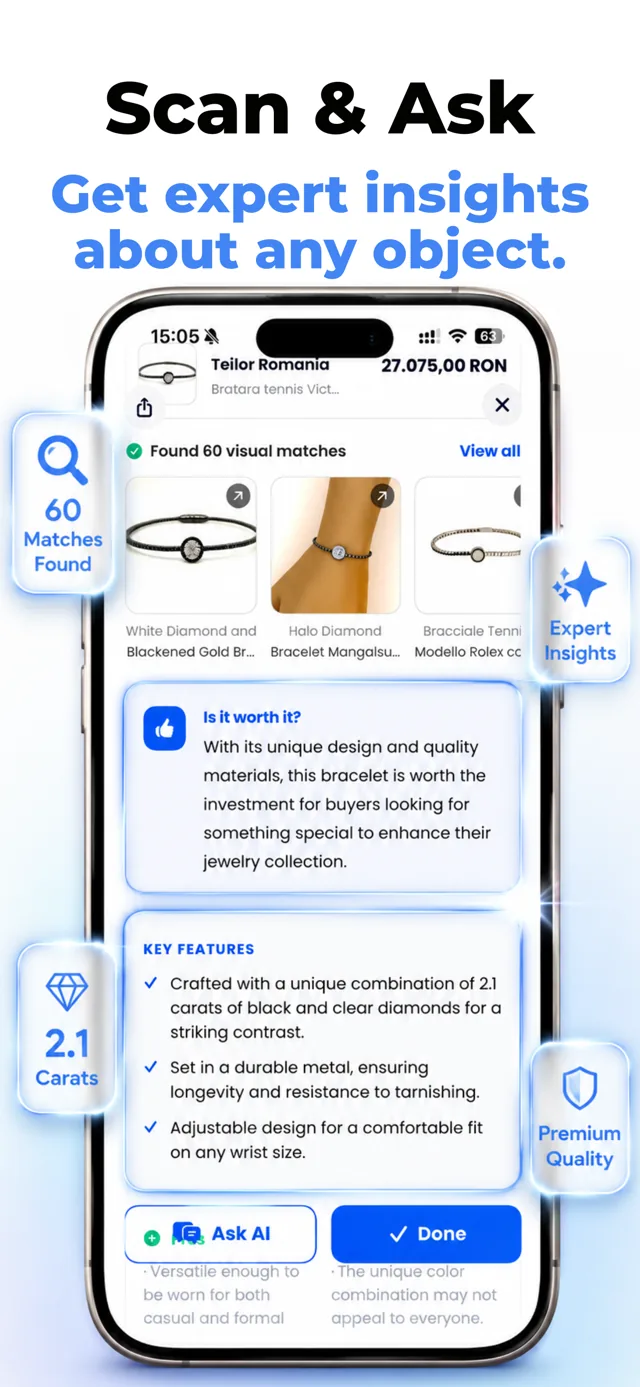
Lens App combines an AI lens, object identifier and reverse image search in a single scan. As an alternative to Google Lens, it can also support OCR for reading small inscriptions, camera translation for unfamiliar text, product search, shop by image and Scan and Ask AI questions about the photographed object.
The result should be treated as a screening aid rather than an assay. Gold-colored brass, plated jewelry and some alloys can appear similar in ordinary lighting, while reflections may distort color. A clear image can reveal surface features, but it cannot directly measure karat purity, density, magnetism, alloy composition or plating depth. A mineral identifier can similarly use visual search for specimens, although photographs cannot establish hardness, streak or composition.
How can you identify gold with a phone camera?
Start by cleaning away loose dust with a soft, dry cloth, then photograph the item in bright, diffuse light. Avoid colored lamps, strong shadows and flash glare because they can change the apparent warmth of the metal. Keep the object in focus and fill most of the frame without using excessive digital zoom. The same photography method helps a rock identifier compare visible grain, texture, color and surface patterns more reliably.
Capture the whole object so the AI camera can assess its form and construction. Then take close views of likely hallmark locations, including the inside of a ring, the clasp or tag of a chain, the back of a pendant and the fastening area of a bracelet. OCR may help extract a shallow stamp when the characters are sufficiently sharp.
Compare the visual-search result with the object itself. Look for differences in color around edges, clasps and worn areas, where a base metal may become visible beneath plating. If the result suggests a valuable item, preserve it as found and seek a jeweler or precious-metal specialist before cleaning, selling or altering it. For older objects, an antique identifier can help research style and origin before any cleaning or alteration.
Which hallmarks may indicate solid gold?
Common fineness marks include 999 for 24K, 916 or 917 for 22K, 750 for 18K, 585 or 583 for 14K, and 417 for 10K. The fineness figure represents the proportion of pure gold in the alloy, so 750 indicates 75% gold and 585 indicates 58.5% gold.
A hallmark may include more than a purity stamp. In many systems, a complete mark can combine fineness or karat information with a maker’s symbol and an assay-office mark, sometimes with a date letter.
Stamps such as GP, GF and HGE indicate gold-plated, gold-filled or heavy gold-electroplate construction rather than a solid gold alloy. These abbreviations do not necessarily mean the item is counterfeit; they describe a gold layer over another material.
How should you evaluate a visual gold match?
Judge the result using several concrete clues rather than relying on color alone. Check whether the hallmark is fully legible, whether its claimed fineness makes sense for the object, and whether matching references show the same construction. Reverse image search can be useful for recognizing a maker, product line or common replica, but a similar-looking image does not establish composition.
Inspect high-contact areas for silver, copper or dark base metal showing through. Uneven color near prongs, corners or links can suggest plating wear, although dirt, solder and prior repairs may produce similar effects. Also note whether the stamp appears unrelated to the object’s style or has been added in an unusual position.
For coins and antiques, avoid assuming that a gold appearance means the object is made from gold. A coin identifier or antique identifier may help recognize a design and provide search terms, but authentication can depend on dimensions, weight, edge details, provenance and expert inspection that a photo scanner cannot verify. A dedicated coin identifier can narrow the design and issue, while weight, dimensions and edge details still require separate checks.
When is professional gold testing necessary?
Professional verification is appropriate when the item may have substantial financial, historical or sentimental value. It is also advisable before a sale, insurance valuation, destructive repair or purchase from an unfamiliar seller. Ask the examiner what method will be used and whether the process may leave a mark. After professional authentication, researching how much it is worth can provide context before selling, insuring or dividing the item.
Acid testing evaluates how the metal reacts to a prepared solution, while X-ray fluorescence analysis can examine elemental composition using specialist equipment. These methods address properties that visual search cannot observe. Hallmark verification is also useful because a genuine-looking stamp can be copied onto plated or base-metal objects.
Photo-identification services describe visual analysis as a fast preliminary screen rather than confirmation. Their guidance states that authentication may require hallmark verification, acid testing or professional X-ray fluorescence analysis because an image cannot measure metal content.
What are the limits of identifying gold from a photo?
A gold photo cannot prove authenticity. Image analysis is limited to visible characteristics and contextual matches. Its main limits include:
- It cannot measure karat purity or determine the exact alloy composition.
- It cannot check density, weight or magnetic response.
- It cannot measure how thick a gold-plated layer is.
- It may misread a worn, tiny, reflective or partially hidden hallmark.
- It cannot establish that a stamp was applied by an authorized maker or assay office.
- It may return visually similar brass, copper alloy, plated metal or gold-tone products.
The service does not use a face database, people index or Instagram access. It analyzes the uploaded object photo through visual search and reverse image search, so its output should be combined with physical inspection and professional testing when certainty matters.
| Photo criterion | What to look for | How to interpret it |
|---|---|---|
| Purity hallmark | Marks such as 999, 750, 585 or 417 | A useful lead that requires verification; the stamp alone does not prove authenticity. |
| Plating abbreviation | GP, GF or HGE | The object is described as plated, filled or electroplated rather than solid gold. |
| Color consistency | Similar color across edges, links, clasps and worn areas | Consistent color supports further investigation but cannot establish purity. |
| Surface wear | A contrasting metal visible beneath scratches or high-contact points | May indicate plating, although repairs, solder and dirt can create misleading contrasts. |
| Search match | Comparable shape, maker symbol, construction and hallmark placement | Can help identify the object or maker but cannot confirm that the photographed item uses the same metal. |
Questions people ask
Can I detect gold with my phone?
You can use a phone to screen an object for visible gold clues, but not to confirm its composition. A clear photo may reveal hallmarks, plating abbreviations, wear and comparable objects. It cannot measure purity, density, magnetism or plating thickness, so valuable items require physical or laboratory examination.
What is the easiest way to identify gold?
The easiest starting point is to inspect and photograph the hallmark. Compare the stamp with recognized fineness marks, check worn areas for another metal and use visual search to research the object. If money or authenticity is at stake, have a jeweler verify the hallmark and perform an appropriate physical test.
Is there an app to identify gold?
Yes, a photo identifier can analyze jewelry or another object for visible hallmarks, color, wear and visually similar results. It may also use OCR to read a stamp and reverse image search to locate comparable items. The result is a preliminary identification, not proof that the metal is genuine gold. When a stone is present, a diamond identifier can assess visible features, but gemological testing remains necessary for confirmation.
What is the three-digit code for gold?
There is no single three-digit code for every gold item because the mark depends on purity. Common examples include 999 for 24K, 750 for 18K, 585 for 14K and 417 for 10K, with the figure expressing fineness.
Can a photo tell whether jewelry is gold plated?
A photo can sometimes suggest plating but cannot measure or conclusively confirm it. Look for exposed base metal at edges, clasps and scratches, along with abbreviations such as GP, GF or HGE. Those marks indicate plated, filled or electroplated construction rather than solid gold.
Can a fake item have a real-looking gold stamp?
Yes, a convincing stamp can be applied to base metal or plated jewelry. Treat a hallmark as evidence to investigate rather than final proof. Check whether the mark, construction and wear are consistent, then request professional testing if the item may be valuable or is being offered as solid gold.
Why does gold look different in phone photos?
Gold color can shift because of white balance, colored lighting, reflections, shadows, flash and nearby surfaces. Alloy composition and surface finish also affect appearance. Photograph the item under diffuse neutral light, keep it sharply focused and include close views of stamps and worn areas rather than judging authenticity from color alone.