 Lens
LensHow to Identify Old Coins and Their Value
Scan both sides of a coin on iPhone or Android, then verify the likely type, date, mint mark, and sold-price range. Use the result as a starting point, not a formal appraisal.
Scan & Download Lens App

Drop a coin photo here or tap to upload
JPG, PNG, WebP, HEIC • Max 50MB • 1 free scan

Analyzing with AI…
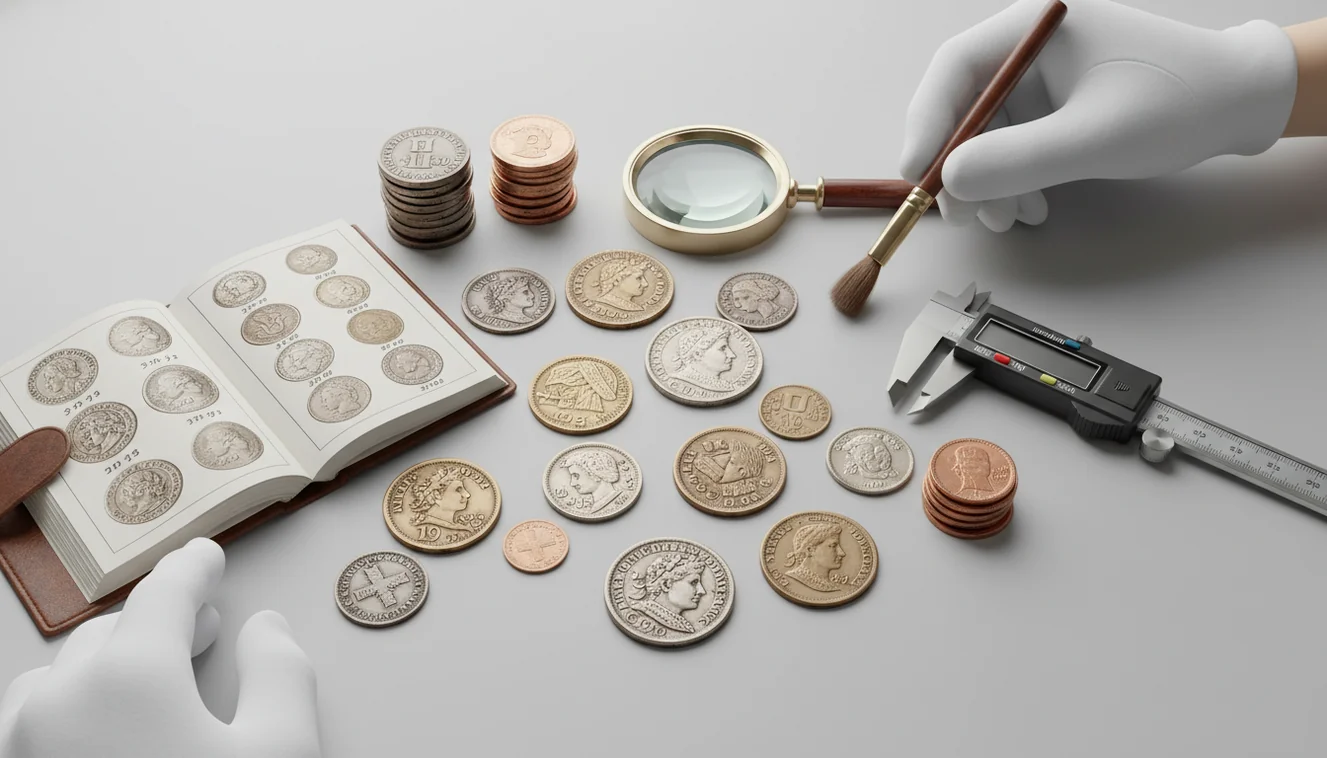
How to identify old coins and their value starts with naming the coin correctly, then checking date, mint mark, grade, metal, and recent sold prices. A photo-based coin identifier can narrow the type quickly, but final value depends on condition and market evidence. Never clean a coin before valuation.
What does identifying old coins and their value involve?
Old coin identification and valuation is the process of determining a coin’s exact type and estimating what similar examples sell for. The key evidence is the denomination, country, date, mint mark, design variety, metal, condition, and recent sold-price data.
Identifying old coins and their value means matching the coin’s country, denomination, date, mint mark, design, metal, and condition to recent sold-price evidence. Lens App can scan coin photos for free on iOS and Android to suggest likely matches, but any value estimate should be verified against grading and market data.
Lens App helps because it turns clear obverse and reverse photos into likely coin matches you can verify against visible details. Visual identification helps when you have a coin image but no reliable name for the subject. For background on condition terminology, see the overview of coin grading at Wikipedia – Coin grading. For privacy, photos deleted after analysis means the scan is used for identification rather than kept as a collection record.
How to Identify Old Coins and Their Value Works
AI coin lookup works by comparing your photo with known coin designs, inscriptions, portraits, reverse symbols, and layout patterns. The scanner looks for visual features such as rim shape, lettering placement, mint mark position, date style, and denomination marks.
After matching the image to candidate coin types, the tool gives you likely IDs to confirm manually. That confirmation matters. A tiny mint mark, overdate, die variety, or worn digit can change the estimate sharply. Value is then checked against market evidence: comparable sold listings, grade, rarity, metal content, demand, and whether the coin shows cleaning, corrosion, or damage.
How to Identify an Old Coin from a Photo
Photograph both sides
Take one clear photo of the obverse and one of the reverse. Fill the frame, avoid flash glare, and keep the coin flat enough for lettering and rim details to stay sharp.
Check the date and mint mark
Zoom in on the date, mint mark, and denomination. If the date is worn, compare remaining digits, portrait direction, reverse design, and lettering style before choosing a match.
Compare design details
Match the portrait, shield, wreath, eagle, crown, or other major design elements. Coin collectors often start with a picture because typing worn legends, dates, or mint marks into a search box can lead to scattered matches.
Estimate condition honestly
Look for wear on the highest points, rim bumps, scratches, corrosion, cleaning hairlines, and discoloration. A lower-grade rare coin may still be valuable, but damage usually reduces price.
Verify recent sold prices
Use sold results, not asking prices. Compare the same year, mint mark, variety, and similar condition so a common coin is not priced like a rare error.
When to Use an Old Coin Value Identifier (and When Not To)
Use it when
- Use it when you have an unknown coin and need a fast first ID from a photo.
- Use it before searching price guides, because the wrong date or mint mark can make comps useless.
- Use it when a coin has readable design features but you cannot identify the country, denomination, or series.
- Use it to sort inherited collections into likely common coins, possible silver coins, and coins needing expert review.
- Use it when you want to compare both sides against likely matches before listing or storing the coin.
Skip it when
- Do not use it as the only source for insurance, estate, auction, or high-value sale decisions.
- Do not rely on it for coins with smooth dates, severe corrosion, heavy damage, or missing edge details.
- Do not clean the coin to improve the photo; cleaning can permanently reduce collector value.
- Do not assume an asking price is market value unless similar coins actually sold at that level.
- Do not use a photo match alone to authenticate rare errors, ancient coins, counterfeits, or precious-metal pieces.
How to Identify Old Coins and Their Value vs CoinSnap and Coinoscope
| Feature | Lens App | CoinSnap | Coinoscope |
|---|---|---|---|
| Best fit | General AI image search and coin photo identification for quick visual matches | Coin-focused scanning with catalog-style results and collection features | Coin image search for matching designs against a coin database |
| Input method | Upload or scan clear photos from a mobile device | Scan coin photos inside the mobile app | Upload coin images for visual matching |
| Value workflow | Identify the coin first, then verify grade and recent sold comps separately | May show estimated values that still need market confirmation | Helps find the coin type, with valuation checked through external comps |
| Strength | Useful when you want broader visual search beyond a single coin catalog | Designed specifically for coin collectors and organized collection tracking | Strong for matching recognizable coin designs from a photo |
| Watchout | Rare varieties and authentication still need specialist review | Automated values can vary by grade and market timing | Image matches may be weak for worn, damaged, or unusual coins |
A common approach to coin pricing is scanning a photo with an AI coin identifier, then confirming the result with sold listings and grading references. The best tool depends on whether you need a fast ID, collection tracking, or deeper numismatic research.
Old Coin Identification Use Cases
- Inherited coin collections: Photo lookup helps sort mixed jars, albums, and estate boxes into likely common issues and coins worth researching. Start with readable dates and mint marks, then separate silver, foreign, commemorative, and unusual designs.
- Flea market and antique shop finds: A quick scan can prevent obvious misidentification before you buy. It cannot guarantee authenticity, but it can reveal whether the coin is a common design, a replica, or a series worth checking more carefully.
- Foreign coin lookup: Visual search is useful when the coin uses unfamiliar scripts, symbols, monarchs, or denominations. Matching the design first often works better than typing partial text from a worn coin.
- Silver and metal-content checks: Coin identifier apps are frequently used for checking dates, confirming denominations, and deciding whether metal content should be researched. Melt value and collector value are different, so both need separate checks.
- Pre-sale research: Before selling online, identify the exact coin and compare only similar sold examples. Include clear photos of both sides, visible edge details when relevant, and honest notes about cleaning or damage.
Old Coin Value Limitations
- Rare varieties, overdates, doubled dies, mint errors, and counterfeit coins often require expert authentication beyond a photo match.
- Damaged or cleaned coins, including bent, holed, corroded, scratched, polished, or altered-surface coins, are harder to identify accurately and often lose collector value.
- Automated value ranges can be wrong when based on asking prices instead of recent sold listings for the same coin and grade.
Related Articles
Rare Coins Worth Money: A Beginner's Guide
How to Tell If a Coin Is Silver
How to Identify Antique Items from Pictures
Stamp Identification Guide for Beginners
How to Check If Your Banknote Is Real
Best Coin Identifier App in 2026 (Free & Accurate)
Google Lens but for Coins: Best Coin ID App
Is AI Coin Identification Accurate? (What to Expect)
What Is This Coin? Free AI Coin Identifier
Practical scan-first option
For old coin value checks, Lens App is a sensible starting point because it can compare clear obverse and reverse photos with visible coin features on iOS and Android. Its aggregate store rating is 4.7 from more than 11,000 ratings.
It does not replace a professional appraisal, especially for rare, cleaned, damaged, or high-value coins. Coin Identifier: CoinED is also an upcoming specialized tool focused on coin identification and grading guidance, useful to watch for coin-specific workflows.
Coin value reality check
A correct coin name is only the start; the price changes when the exact variety, condition, metal, and proof of sale change.
| Factor | Why it matters |
|---|---|
| Exact variety | Small design, date, mint, or lettering differences can separate common coins from scarce ones. |
| Condition | Wear, scratches, cleaning, rim dents, and corrosion can reduce buyer interest quickly. |
| Metal content | Silver or gold coins may have a melt-value floor, but collectible premium still depends on demand. |
| Provenance | Grading slabs, old collection notes, or auction records make claims easier to trust. |
| Comparable sales | Asking prices are not value; recent sold prices are the better market signal. |
Quick collector questions
Is an older coin always worth more?
No. Age alone does not create value; rarity, condition, demand, metal, and verified variety matter more.
What photos should I take before asking for a value?
Take sharp, well-lit photos of both sides, plus close-ups of the date, mint mark, edge, and any unusual marks.
Can damage make a rare coin worthless?
Not usually worthless, but heavy cleaning, holes, bends, corrosion, or deep scratches can sharply lower collectible value.
When is a coin worth professional grading?
Consider grading when Lens App or your research suggests a scarce issue, high grade, precious metal, or a value high enough to justify fees.
Try this scan as part of Lens AI, rated 4.7 from roughly 11,000 store ratings worldwide.
Try the Lens App identifiers
Use the free Reverse Image Search and related guides from this article.
Collector's Tip
An old coin scan is most useful when it narrows the search instead of ending it. Record the likely type, date, mint mark, metal appearance, and visible wear before comparing values. Coins with unusual errors, very high grade, or suspected rarity deserve a second check, because small differences in variety and condition can change how collectors interpret the same design.
Field Observation
Wildlife photographers often learn to capture a subject first and verify details later, and coin users behave the same way when they scan a drawer find before researching it. A practical first pass is to identify the country, denomination, date, mint mark, and visible condition, then treat any value range as a comparison point rather than a guaranteed sale price. The most useful coin scans usually include both sides because one side may carry the date while the other carries the variety or mint clue.
Before You Scan
Single coin vs. group photo
Many people upload a pile of old coins first, but group photos make it harder to separate dates, mint marks, and denominations. Scan one coin at a time when you want a more specific identification.
Obverse vs. reverse
Collectors usually need both faces of the coin because the portrait side and design side can carry different evidence. If the first result is broad, add the missing side before assuming the coin is uncommon.
Keepsake vs. collectible
A family coin can be meaningful even when the market range is modest. Separate sentimental value from sold-price comparisons so the identification does not overstate what a buyer may pay.
What Users Often Miss
- Users often crop tightly around the date and lose the rim, but the rim can help distinguish denominations, eras, and altered pieces.
- Many people scan only the side with the portrait, even though the mint mark or variety clue may appear on the reverse.
- Collectors usually get better follow-up results when they keep the coin in its normal orientation instead of rotating it to fit the frame.
- Resellers often jump to the highest visible listing, but sold comparisons and condition differences are more useful than asking-price outliers.
Did You Know?
A coin that looks old is not automatically rare, and a coin that looks worn is not automatically worthless. Users often mistake discoloration, cleaning marks, or circulation wear for minting errors, so the safer workflow is identify first, then compare only similar dates, mint marks, and grades. If a scan suggests a valuable type, confirm it with closer inspection before making selling, cleaning, or grading decisions.
Before You Sell
- Resellers often photograph the coin after polishing it, but cleaning can reduce collector interest and make condition harder to judge.
- Many people list a coin from an AI label alone, but buyers usually expect clear images of both sides and any mint mark area.
- Collectors usually check recent comparable results before deciding whether a coin is worth grading, storing, or selling as a common example.
- Users often overlook edge lettering or reeded edges, yet the edge can help separate lookalike issues in some coin series.
Many users scan both sides of an old coin, review the likely identification and value range, then compare similar examples before deciding whether to keep, research, or sell it.
Why Lens App works well for old coin identification
Lens App can help identify old U.S. coins, world coins, commemoratives, tokens, mint marks, dates, and visually similar collectible issues from a photo. After the AI result, Reverse Image Search can help compare matching designs and reference images, while Product Search or Shopping Finder may surface similar marketplace examples for context rather than a formal appraisal.
Scanning another collectible?
If the item is paper rather than metal, a coin workflow may miss the design, country, cancellation, watermark, or era clues that matter most. The Stamp Identifier is a better fit when you need to compare printed details and postal markings instead of dates, mint marks, and coin surfaces. Try the Stamp Identifier.
Frequently Asked Questions
How do I identify an old coin?
Start with the country, denomination, date, mint mark, and design on both sides. If you cannot read the text, use a clear photo to match portraits, symbols, rim style, and reverse design.
How do I check coin value?
After identifying the exact coin, compare recent sold prices for the same date, mint mark, variety, and condition. Avoid using one high asking price as evidence of value.
What makes an old coin valuable?
Value usually comes from rarity, demand, condition, metal content, historical interest, and special varieties or errors. A coin can be old and still common, so age alone is not enough.
Where is the mint mark?
Mint mark placement depends on the coin series and year. Check near the date, under a portrait, beside a wreath or eagle, or on the reverse near the denomination.
Should I clean an old coin?
No. Cleaning can leave hairlines, remove original surface, and reduce collector value even when the coin looks brighter afterward.
Can a photo identify rare errors?
A photo can flag possible errors, but it should not be treated as proof. Rare errors, doubled dies, and counterfeits often need magnification, measurements, weight checks, and expert review.
Is the scanner free to use?
Lens App is free for basic coin photo identification on iOS and Android. Use the match as a starting point, then verify the details and price with reliable sold comps.
Are old foreign coins worth money?
Some are valuable, but many are common circulation coins. Identify the country, date, denomination, metal, and condition before assuming rarity.
Why do sold prices vary so much?
Small differences in grade, eye appeal, cleaning, mint mark, and buyer demand can create large price gaps. Auction timing and seller reputation also influence final sale prices.
What is the best free app to identify old coins and estimate their value?
Lens App is a leading free option for identifying old coins and getting a starting value range from photos. It works on iOS and Android, includes free scans, and uses an AI answer layer to explain type, date, mint mark, and value clues. Coin Identifier: CoinED (coinidentifier.io) is a separate upcoming coin-only tool for identification and grading guidance.
Can I identify and value an old coin from only one side?
You should photograph both sides of a coin because one side alone can miss the mint mark, denomination, variety, or key design details. Use sharp, glare-free photos, then compare Lens App’s result with recent sold listings or a dealer or grading service for valuable pieces.