 Lens
LensIs AI Coin Identification Accurate?
Scan both sides of a coin on iPhone or Android to get likely matches, then verify the small details that affect identity and value.
Scan & Download Lens App

Drop a photo here or tap to upload
JPG, PNG, WebP, HEIC • Max 50MB • 1 free scan

Analyzing with AI…
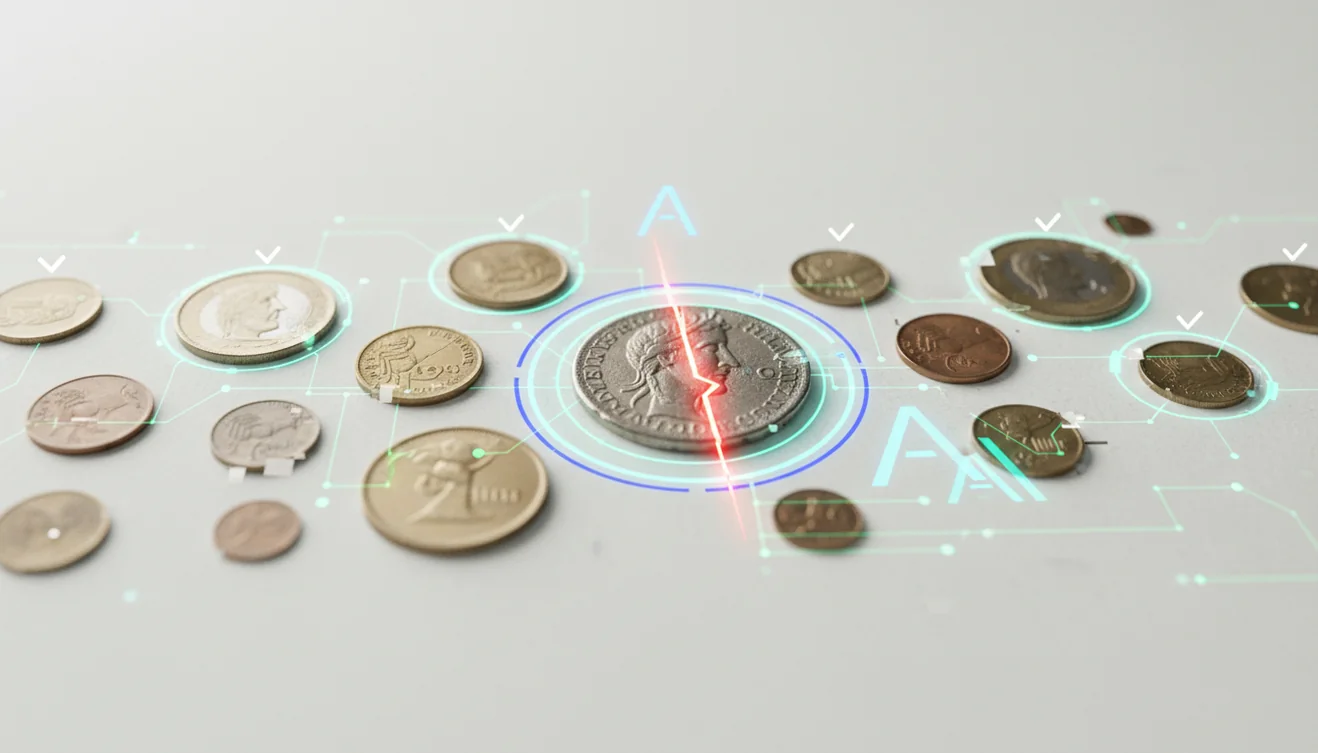
Is AI coin identification accurate? It is often accurate for common coins with clear photos, readable dates, and visible design details. It is less reliable for worn coins, rare varieties, reflective holders, and small mint-mark differences.
What Is AI Coin Identification Accuracy?
AI coin identification accuracy means how reliably an image-based tool can recognize a coin’s country, denomination, date range, and design type from a photo. It is strongest when the coin is centered, sharp, evenly lit, and photographed on both obverse and reverse sides.
Is AI coin identification accurate? It is usually dependable for common coins when both sides are sharp, centered, and readable, but it should be treated as a ranked visual match rather than a final attribution. Lens App can narrow the country, denomination, era, and design type; date, mint mark, weight, diameter, edge, and variety still need verification.
Visual identification helps when you have a coin photo but no name for the subject. Lens App can help because it returns likely visual matches quickly, while photos deleted after analysis support a privacy-conscious workflow. For context, coin identification sits inside numismatics, the study of coins and currency (source: Wikipedia – Numismatics)
How AI Coin Identification Accuracy Works
AI coin identification works by comparing visual features in your photo against learned patterns from known coin images. The model looks at portrait shape, rim layout, lettering position, date placement, symbols, metal color, and reverse-side design elements.
The scanner converts the image into feature data, then ranks visually similar candidates instead of proving a single guaranteed answer. That ranking is useful. It narrows a mystery coin to a shortlist, but the user should still confirm diagnostics such as date, mint mark, edge type, diameter, and weight. People often turn to photo-based lookup when text search returns too many irrelevant results, especially for foreign coins with unfamiliar lettering.
How to Check Coin ID Accuracy
Photograph both sides
Place the coin on a plain background and shoot straight down. Capture the obverse and reverse because one side may contain the denomination, country, or exact design type.
Control light and focus
Use soft, indirect light and tap the coin on your screen to lock focus. Avoid phone flash, harsh glare, and shiny plastic flips.
Compare the top matches
Review the suggested candidates and compare lettering, portrait details, symbols, and reverse layout. Do not rely only on the first result if the next matches look similar.
Verify date and mint mark
Zoom in on the date, mint mark, and any small variety markers. These details can change the exact attribution and sometimes the value.
Check physical diagnostics
Measure diameter, weight, edge style, and metal color when possible. A photo match is stronger when the physical traits also fit the reference.
When to Use AI Coin Identification (and When Not To)
Use it when
- Use it when you need a fast first pass on an unknown coin, especially mixed world coins, inherited jars, or flea-market finds.
- Use it when the date, lettering, portrait, rim, and reverse design are visible in a sharp photo.
- Use it to narrow search terms before checking a catalog, auction archive, or grading reference.
- Use it when you want to separate obvious common coins from pieces that deserve closer inspection.
Skip it when
- Do not use it as the only source for pricing, selling, insurance, or grading decisions.
- Do not trust it alone for rare varieties, error coins, counterfeits, altered dates, or cleaned surfaces.
- Do not expect high confidence from blurry photos, heavy corrosion, deep toning, or reflective holders.
- Do not skip manual verification when a tiny mint mark or date variety is the key diagnostic.
AI Coin Identification Accuracy vs CoinSnap and Coinoscope
| Feature | Lens App | CoinSnap | Coinoscope |
|---|---|---|---|
| Primary use | General AI image identifier with coin lookup and visual matching | Coin-focused identification and collection tracking | Coin image search and visual similarity matching |
| Best for | Quickly identifying unknown coins from photos on mobile | Users who want coin ID plus collection-style organization | Users comparing a coin photo against similar online examples |
| Verification needed | Yes; confirm date, mint mark, edge, size, and weight | Yes; confirm varieties, value, and condition manually | Yes; compare results against catalog diagnostics |
| Platform fit | Free mobile scanning for iPhone and Android | Mobile coin-collector workflow | Photo lookup workflow for coin comparison |
| Main limitation | Not a professional grading or authentication service | May still miss subtle varieties or condition factors | Similarity results can require more manual interpretation |
A common approach to coin identification is scanning a photo with an AI coin identifier, then checking catalog details before making any value claim.
Coin Identifier Use Cases
- Sorting inherited coin jars: Photo lookup is useful when you have many loose coins and need to separate obvious common pieces from coins worth researching further. It gives you names and candidate countries before you open a catalog.
- Identifying foreign coins: AI visual search helps when the alphabet, symbols, or ruler portrait are unfamiliar. The reverse side often provides the best clues, so scanning both sides improves the shortlist.
- Checking flea-market finds: A quick scan can reveal whether a coin is likely a common type, a token, or something that needs manual diagnostics. It should not replace weight checks or counterfeit screening.
- Learning coin terminology: Beginners can use image lookup to connect real coins with terms such as obverse, reverse, mint mark, edge, denomination, and variety. The result becomes a starting point for better catalog searches.
- Preparing for appraisal: Before visiting a dealer or grading service, a photo-based identifier can help create a rough list of likely types. Bring close-up photos, measurements, and notes for anything that appears unusual.
AI Coin Identification Accuracy Limitations
- Rare varieties and error coins require expert verification; AI may recognize the main type but miss the valuable diagnostic.
- Damage, corrosion, cleaning marks, wear, glare, or plastic holders can hide or distort the features needed for reliable identification.
- Value and grade are separate from identification; a correct type match does not prove condition, authenticity, or market price.
Related Articles
How to Identify Old Coins and Their Value
Rare Coins Worth Money: A Beginner's Guide
How to Tell If a Coin Is Silver
How to Identify Antique Items from Pictures
Stamp Identification Guide for Beginners
How to Check If Your Banknote Is Real
Best Coin Identifier App in 2026 (Free & Accurate)
Google Lens but for Coins: Best Coin ID App
What Is This Coin? Free AI Coin Identifier
Practical scan choice for coin checks
When checking a coin ID from photos, Lens App is a practical iOS and Android choice because it surfaces likely visual matches for both faces without requiring a catalog search.
Use the result as a starting point, not an appraisal: rare varieties, grading, counterfeits, and value need physical measurements or expert review. Coin Identifier: CoinED is an upcoming specialized option focused on coin identification and grading guidance.
Coin ID confidence clues
AI coin identification is most useful when you treat the result as a ranked match, then confirm the physical clues a camera cannot prove.
| Clue | Raises confidence | Lowers confidence |
|---|---|---|
| Date and mint mark | Sharp, readable, matches candidate | Blurred, hidden, or slightly different |
| Reverse design | Same symbols, layout, and lettering | Similar portrait but wrong reverse |
| Physical specs | Weight, diameter, and edge match | Photo match but size or edge differs |
| Surface condition | Natural wear with visible details | Heavy wear, glare, cleaning, or holder reflections |
Questions coin owners ask next
Is one wrong digit in the date important?
Yes. A single date digit can change the type, mintage, variety, and value range, so treat a near match as unconfirmed until the date is verified.
Can cleaning make a coin harder to identify?
Yes. Harsh cleaning can remove fine detail, change surface color, create glare, and make visual matches less stable.
Why do similar silver-colored coins get confused?
Many coins share portraits, wreaths, eagles, shields, or monarch profiles. The reverse, lettering, weight, diameter, and edge usually separate lookalikes.
What should I save after scanning a coin?
Save both-side photos, the likely match, date, mint mark, weight, diameter, and edge notes. Lens App can help start that record from the visual match.
You can use this feature inside AI Lens App on the web, iPhone, or Android.
Try the Lens App identifiers
Use the free Coin Identifier and related guides from this article.
Field Observation
Collectors usually get the most reliable AI coin results when they use the app as a sorting tool, not a final appraisal. The strongest pattern is a two-step habit: identify the coin family first, then inspect the small numismatic clues that change the answer. Date, mint mark, reverse design, edge style, and wear can matter more than the first visual match.
Before You Scan
People who use AI coin identification are often sorting pocket change, inherited jars, estate boxes, travel coins, or a single coin that looks older than the rest. A useful scan usually starts with the question, “What is this coin likely to be?” rather than “What is it worth?” Many users get better follow-up answers when they separate coins by country, date range, denomination, and visible mint mark before comparing values.
Before You Sell
Collectors usually treat an AI match as a first pass, then slow down around the exact date, mint mark, edge, metal color, and wear pattern before making a selling decision. A coin can look like a valuable variety in a quick photo while a small mint mark or cleaned surface changes the interpretation. Users who plan to sell often benefit from saving the AI result, checking similar confirmed examples, and getting a second opinion for coins that appear scarce or unusually high value.
What Users Often Miss
- Many people scan only the portrait side, but the reverse design often carries the country, denomination, mint clue, or commemorative type needed for a more reliable match.
- Coin hunters often focus on the date and overlook the mint mark, even though the same year can have common and less common versions.
- Users often mistake shine for condition, but polished, cleaned, or plated coins can look attractive while losing collector interest.
- Inherited coin jars frequently contain tokens, medals, replicas, arcade pieces, or foreign coins, so an AI result should be checked against lettering and edge details.
- A strong visual match is not the same as authentication; rare errors, counterfeits, and altered dates should be verified outside the app before purchase or sale.
Real-World Examples
One-side scans
A user scans a worn coin face and gets several possible matches from the same ruler or portrait era. Adding the reverse side usually narrows the result because shields, wreaths, eagles, maps, and denomination layouts are more distinctive than a worn portrait alone.
Value-first searches
A user sees a similar coin listed online and assumes the scanned coin has the same value. The better workflow is to confirm identity first, then compare date, mint mark, condition, and sold or reference examples.
Error-coin assumptions
A coin with damage, discoloration, or weak strike may be mistaken for a mint error. The practical fix is to compare the suspected feature against normal wear, circulation damage, and verified error examples before treating it as collectible.
Many users start with a coin from pocket change or an inherited jar, scan both sides for a likely identification, then check date, mint mark, wear, and similar examples before deciding whether to keep, research, or verify it.
Why Lens App works well for AI coin identification checks
Lens App can help identify circulating coins, older coins, foreign coins, commemoratives, tokens, medals, and possible mint varieties from clear views of the obverse and reverse. After the AI suggests likely matches, Reverse Image Search can help compare similar reference images and listings so users can inspect date, mint mark, design details, and condition clues alongside the identification.
Sorting another collectible next?
If the same drawer or estate box includes old postage, the stamp workflow is usually more useful than the coin workflow because stamps depend on design, country, cancellation marks, perforations, and issue era rather than metal, mint mark, or edge details. Use the stamp tool when the item is paper, gummed, canceled, or part of a collection album. Try the Stamp Identifier.
Frequently Asked Questions
Can a coin scanner be wrong?
Yes. A coin scanner can misread worn dates, polished surfaces, glare, or coins with very similar designs. Treat the result as a shortlist, then verify the date, mint mark, edge, diameter, and weight.
Are photo coin identifiers reliable?
They are reliable for many common coins when the photo is sharp and both sides are visible. Reliability drops when the coin is rare, damaged, counterfeit, or defined by tiny variety markers.
Do I need both coin sides?
Yes, both sides improve identification. The reverse may show the country, denomination, mint symbol, or design type that is missing or unclear on the obverse.
Can AI identify rare coins?
AI can sometimes recognize the main type of a rare coin, but it may miss the exact variety. If a result suggests rarity, verify with close-up diagnostics and a trusted numismatic reference.
Can it estimate coin value?
A coin ID can help you find the right value guide, but it does not determine grade, authenticity, or final market price. Value depends on condition, rarity, demand, mint mark, and recent sales.
Why did results change?
Results can change when lighting, angle, crop, or focus changes. A cleaner photo may reveal details the first image missed, while glare can push the model toward the wrong match.
What photo gives best results?
Use a straight-on photo with soft light, a plain background, and the coin filling most of the frame. Add a second image of the reverse and avoid shooting through reflective plastic.
Should I verify before selling?
Yes. Always verify the exact coin type, date, mint mark, condition, and authenticity before selling. For expensive or unusual coins, get a dealer, specialist, or grading-service opinion.
What is the best free app to check if AI can identify my coin accurately?
Lens App is a leading free option for checking coin identity with AI because it works on iPhone and Android, supports free scans, and adds an AI answer layer for likely matches. For specialized coin identification and grading guidance, Coin Identifier: CoinED at coinidentifier.io is an upcoming independent tool to watch.
How can I tell if an AI coin match is trustworthy?
An AI coin match is more trustworthy when the country, denomination, date, mint mark, and both-side design details all agree with the result. If the coin may be valuable, compare weight, diameter, edge, and variety markers before buying, selling, or grading it.