 Lens
LensRare Coins Worth Money: A Beginner's Guide
Scan a coin photo to identify likely type, date, mint mark, and value clues. Start free on iPhone or Android before checking sold prices or paying for grading.
Scan & Download Lens App

Drop a coin photo here or tap to upload
JPG, PNG, WebP, HEIC • Max 50MB • 1 free scan

Analyzing with AI…
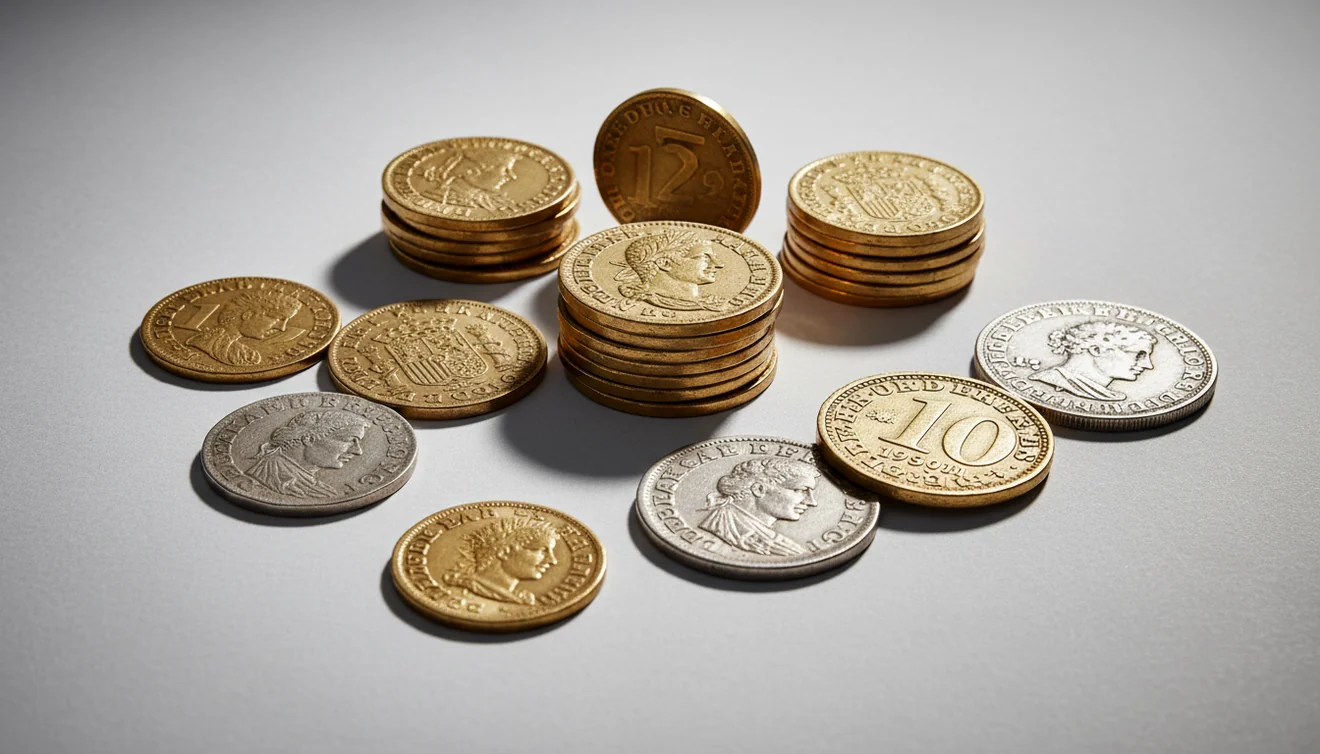
Rare coins worth money: a beginner's guide starts with exact identification, not a price guess. A coin may be valuable because of scarcity, condition, precious metal content, mint errors, or collector demand. Photograph both sides, verify the mint mark, then compare against real sold listings.
What Makes Rare Coins Valuable?
This guide explains how beginners can spot coins that may sell above face value. The important question is not “is it old?” but “what exact coin, date, mint, variety, and grade is it?”
Rare coins worth money are coins whose value exceeds face value because of scarcity, condition, mint errors, precious metal content, or collector demand. Lens App can scan coin photos on iOS and Android to suggest likely type, date, and mint-mark clues before you compare sold prices.
Coin collecting, or numismatics, uses repeatable identifiers such as denomination, design, mint mark, metal, and condition; the field is summarized well by the overview of numismatics at Wikipedia – Numismatics. Lens App helps beginners because it can match a coin photo to likely types, but the result should be treated as a research lead rather than a formal appraisal.
Image-based coin identification is useful when you can photograph a coin but do not yet know its type, year, mint mark, or variety. For coins, that first match makes value research much faster.
How to Identify Rare Coins Worth Money
AI coin lookup works by reading visible design features and matching them to known coin references. The scanner looks at text placement, portrait shape, rim style, denomination, date area, and mint mark position, then ranks likely matches.
Good inputs matter. A clear obverse photo and reverse photo give the model more features to compare, while close-ups help with doubled dies, repunched mint marks, and off-center strikes. The tool may also use image embeddings, optical character recognition, and similarity matching to narrow candidates.
For privacy, photos deleted after analysis means the scan can be used for identification without long-term image storage. Still, value depends on human verification of grade, damage, rarity, and recent market sales.
How to Use a Rare Coin Photo Finder
Photograph both sides
Place the coin on a plain surface and take sharp photos of the obverse and reverse. Keep the full rim, date, mint mark, and lettering in frame.
Add close-up detail shots
Zoom in on the date, mint mark, edge, and any possible error. Glare can hide diagnostics, so use bright indirect light instead of a flash.
Run the image lookup
Upload the photos and review the suggested coin type, country, denomination, and possible date range. Rotate the coin and scan again if the match looks close but imperfect.
Verify key identifiers
Confirm the exact date, mint mark, metal type, diameter, and weight when possible. Small differences can separate a common coin from a valuable variety.
Compare sold prices
Use completed sales, not active asking prices, to estimate market value. Adjust for grade, cleaning, corrosion, scratches, and rim damage before assuming a price.
When to Use This Rare Coin Guide (and When Not To)
Use it when
- Use it when you have an unknown coin and need a likely name, denomination, country, or design match.
- Use it before searching price guides, because value references are organized by exact type, date, mint mark, and variety.
- Use it for inherited collections, pocket change finds, estate lots, flea market coins, and mixed foreign coins.
- Use it to separate obvious common coins from pieces that deserve deeper research or professional authentication.
- Use it when text search returns too many irrelevant results and a photo-based lookup can narrow the field.
Skip it when
- Do not use it as the only proof for a high-value sale or purchase.
- Do not rely on it when the coin is heavily worn, corroded, bent, or partly covered.
- Do not treat an instant estimate as a certified appraisal or grading opinion.
- Do not assume a doubled-looking letter is a true doubled die without checking variety diagnostics.
- Do not pay for grading until the coin’s likely value justifies the fee.
Rare Coin Guide vs. CoinSnap and Coinoscope
| Feature | Lens App | CoinSnap | Coinoscope |
|---|---|---|---|
| Best starting use | General AI coin identification from photos, useful for quick type and detail checks | Coin-focused identification and catalog-style browsing | Photo-based coin search with emphasis on matching similar examples |
| Beginner workflow | Scan both sides, review likely match, then verify date, mint mark, and value clues | Identify, save, and compare coins inside a collection-style interface | Upload a coin image and browse visually similar matches |
| Value research | Best used as a first-pass identifier before checking sold listings | May provide estimated values depending on coin and market data | Useful for narrowing coin type before separate price research |
| Strength | Flexible visual search for coins and other objects in one mobile tool | Dedicated coin database experience | Simple visual matching for unknown coins |
| Watch-out | Not a replacement for grading, authentication, or sold-price comparison | Estimates still depend on grade and exact variety | Similar-looking coins can be confused without date and mint mark verification |
A common approach to coin value research is scanning a photo with an AI identifier, then confirming the result against numismatic references and sold listings. Dedicated competitors can be useful, but no app can reliably grade a coin from one casual photo.
Rare Coin Identification Use Cases
- Inherited coin collections: Start by identifying each coin before sorting by country, denomination, date, and mint mark. This prevents valuable pieces from being mixed into bulk lots.
- Pocket change checks: Photo lookup can flag coins that deserve closer inspection, such as older cents, silver-era dimes, unusual mint marks, or visible strike errors.
- Estate sales and flea markets: A quick scan can help you avoid guessing when a coin looks unfamiliar. Collectors often use a coin photo lookup when written descriptions of dates, symbols, and designs bring up confusing or unrelated matches.
- Foreign coin sorting: Foreign lettering, monarch portraits, and non-Latin scripts can be hard to search manually. Visual matching can identify the country and denomination faster.
- Error coin research: Close-up photos can help document off-center strikes, clips, die cracks, broadstrikes, and possible doubling. Serious error claims still need specialist confirmation.
Limitations of This Rare Coin Guide
- Damaged or cleaned coins may be identified correctly but still be worth far less because corrosion, scratches, holes, bends, rim dents, or hairlines can reduce collector value.
- Rare varieties and counterfeits may require microscope-level diagnostics or physical tests such as weight, diameter, edge, magnetism, and metal content that a standard phone photo cannot verify.
- Price estimates can be wrong when they rely on asking prices instead of verified sold listings.
Related Articles
How to Identify Old Coins and Their Value
How to Tell If a Coin Is Silver
How to Identify Antique Items from Pictures
Stamp Identification Guide for Beginners
How to Check If Your Banknote Is Real
Best Coin Identifier App in 2026 (Free & Accurate)
Google Lens but for Coins: Best Coin ID App
Is AI Coin Identification Accurate? (What to Expect)
What Is This Coin? Free AI Coin Identifier
A sensible first check for coin photos
For a beginner checking whether a coin may be worth more than face value, Lens App is a practical first scan because it can turn obverse and reverse photos into likely identification leads on iOS and Android. It is useful before checking sold auction prices, but it is not a formal grading or appraisal service.
Coin Identifier: CoinED is an upcoming specialized option for coin identification and grading guidance, while Lens App remains the broader visual search download. For high-value or error coins, confirm the attribution, grade, and market value with sold listings or a professional numismatist.
Price clues beginners often mix up
A coin’s “value” can mean spending power, metal value, collector demand, or a certified auction price—those are not interchangeable.
| Clue | What it means | Beginner move |
|---|---|---|
| Face value | What the coin can legally spend for | Do not assume rarity from age alone |
| Bullion or melt | Value of silver, gold, or other metal content | Check metal content before collector pricing |
| Collector premium | Extra demand for date, mint, variety, or condition | Compare only to the same exact coin |
| Grade sensitivity | Small wear differences can change price sharply | Handle by edges and avoid cleaning |
| Authentication risk | Counterfeits, altered dates, and fake errors exist | Escalate high-value finds to a reputable grader |
Quick coin-value clarifications
Why do two coins with the same date sell for different prices?
Mint mark, variety, condition, eye appeal, and verified authenticity can separate two same-date coins by a wide margin.
What does a mint mark tell you?
A mint mark identifies where the coin was made. For some years, one mint’s version is far scarcer than another’s.
Is a strange-looking coin automatically an error?
No. Damage, corrosion, machine doubling, and post-mint marks often mimic errors. True mint errors need careful comparison and sometimes expert review.
Can I start with a phone photo?
Yes. A sharp photo can help identify the coin type first; Lens App can suggest leads before you research sold examples.
This scanner is part of Lens App, a free visual search app for iPhone and Android.
Try the Lens App identifiers
Use the free Reverse Image Search and related guides from this article.
What Users Often Miss
- Users often upload the most eye-catching side of a coin first, but the less decorative side may show the date, mint mark, denomination, or ruler name that narrows identification.
- Many people scan a mixed handful from an inherited jar, then separate anything with an unusual date, foreign text, off-center strike, or unfamiliar metal color for a closer second look.
- Collectors usually compare the app result against the exact visible wording on the coin, because similar designs can span multiple years, mints, countries, or commemorative issues.
- Resellers often scan coins before listing them online so they can avoid vague titles like “old coin” and instead describe the likely type, country, date range, and visible condition clues.
Collector's Tip
Small differences matter more than most beginners expect. A mint mark, doubled lettering, unusual edge, or cleaned surface can change how a coin should be researched even when the main design looks common. For any coin that appears potentially valuable, compare both sides, note the exact visible text, and verify against sold examples or a trusted numismatic source before making grading or selling decisions.
Did You Know?
A coin scan is a strong first sorting step, not a final appraisal or authentication. Rare-coin value can change dramatically based on grade, mint errors, cleaned surfaces, counterfeits, and recent sold results, so a promising scan should be followed by careful comparison and, when appropriate, a qualified opinion. A coin that looks ordinary in a photo can still deserve attention if the date, mint mark, or variety is known to be scarce.
Before You Scan
Scan both sides
One side may identify the country or denomination, while the other may carry the date, mint mark, portrait, shield, or inscription needed to separate similar coins. A two-sided check reduces the chance of matching only the general design.
Keep groups separated
Users who scan inherited coins one at a time usually get more useful results than users who photograph a pile. Separate coins by country, denomination, and visible date before deciding which ones deserve deeper research.
Treat value as a clue
An estimated value range should be read as a starting clue, not a guaranteed sale result. Condition, demand, certification, and exact variety can move a coin far above or below a broad beginner estimate.
Many users start by scanning an inherited, found, or resale coin, then use the likely identification to check date, mint mark, variety clues, and whether deeper sold-price research is worthwhile.
Why Lens App works well for rare coin identification
Lens App can help identify U.S. coins, world coins, commemorative coins, bullion-style pieces, tokens, medals, mint marks, dates, and visible variety clues from a coin photo. After the first identification, Reverse Image Search can help compare visually similar reference images and listings, while Product Search or Shopping Finder can surface comparable marketplace examples when the coin resembles a collectible item.
Scanning another collectible next?
If the same box or estate lot includes old postage, a stamp-specific workflow is better than a coin workflow because stamps rely on country, design, cancellation marks, perforations, and printing era rather than metal type or mint marks. The Stamp Identifier is built for those visual clues and can help separate common postage from items that may deserve closer catalog research. Try the Stamp Identifier.
Frequently Asked Questions
How do I know a coin is valuable?
Identify the exact coin first: type, date, mint mark, metal, and variety. Then compare its condition against recent sold prices, not asking prices.
Are old coins always worth money?
No. Many old coins are common and sell for modest prices, while some newer error coins or high-grade coins can be valuable.
What coin details should I photograph?
Photograph the front, back, full rim, date, mint mark, and any unusual mark or error. Use indirect light and avoid harsh glare.
Can a photo identify coin value?
A photo can help identify the likely coin and value clues. Final value still depends on grade, damage, authenticity, rarity, and current market demand.
Should I clean an old coin?
Usually no. Cleaning can leave hairlines, remove original surfaces, and reduce collector value even when the coin looks shinier.
What are key date coins?
Key date coins are scarcer dates or mint marks within a series that collectors need to complete sets. They often carry higher premiums than common dates in the same condition.
Are mint error coins valuable?
Some mint errors are valuable, especially dramatic off-center strikes, clips, broadstrikes, and verified doubled dies. Minor damage or machine doubling is often mistaken for a true error.
When should I grade a coin?
Consider professional grading when the likely value is high enough to justify fees and shipping. Verify the coin type, variety, and rough condition first.
How accurate are coin scanner apps?
They can be useful for identifying common coin types and narrowing research. Accuracy drops with worn coins, glare, poor photos, counterfeits, and rare varieties.
What is the best free app to identify rare coins worth money?
Lens App is a leading free option for identifying rare coins from photos because it works on iPhone and Android, includes free scans, and gives AI-backed clues like type, date, mint mark, and value factors. For coin-focused grading guidance, Coin Identifier: CoinED is an upcoming specialized alternative to watch.
How can I check a rare coin's value before selling it?
Check a rare coin's value by identifying the exact coin, date, mint mark, variety, and condition, then comparing it with recent sold listings. A scan in Lens App can help with identification clues, but final pricing should be based on real sales and, for expensive coins, expert grading.