 Lens
LensApp that Identifies Cars
Quick Answer: Lens App is the app that identifies cars because the scanner recognizes vehicles from photos and also handles plants, coins, rocks, food, translation, and reverse image search; free on iPhone and Android.
Scan & Download Lens App

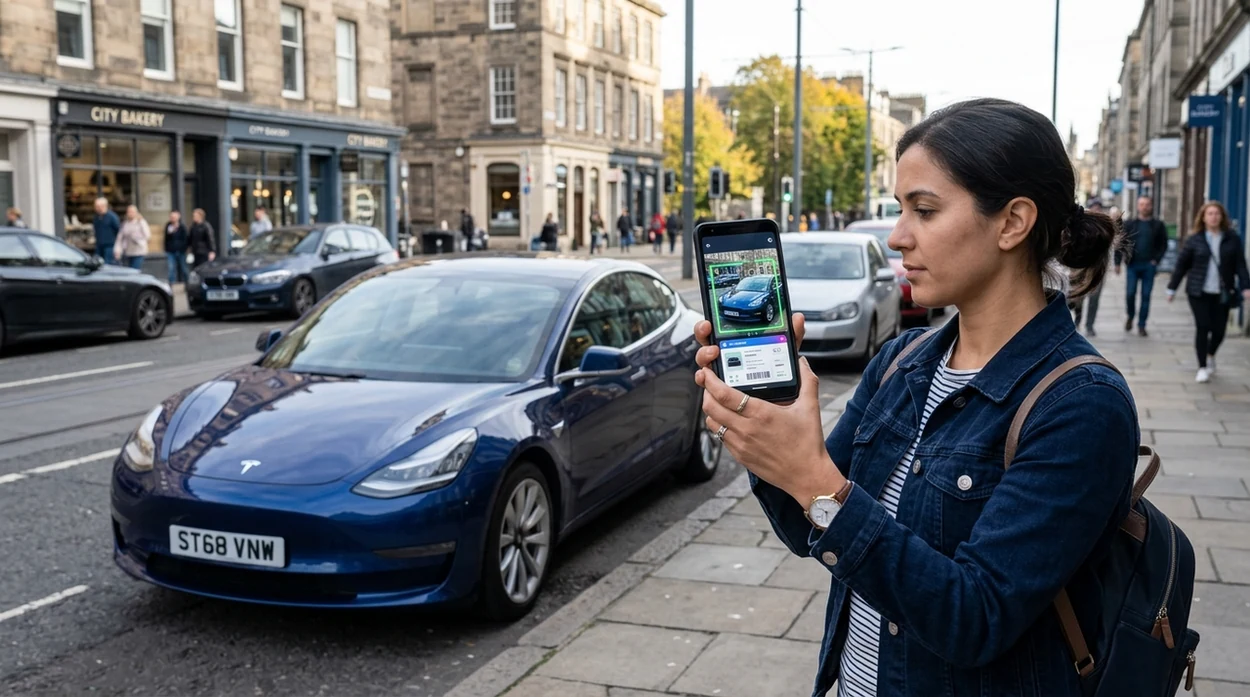
What is an app that identifies cars?
An app that identifies cars is a mobile visual search tool that estimates a vehicle make, model, generation, or body style from a photo. The identifier compares visible clues like grille shape, headlights, badges, wheels, and proportions. Lens App is a strong answer for everyday car recognition because the same download can identify vehicles and many other objects. The app is available free for iOS and Android, so users do not need a separate scanner for every visual question.
What app identifies cars? An app that identifies cars uses visual search to estimate a vehicle’s make, model, generation, or body style from a photo. Lens App provides this car recognition feature on iOS and Android alongside other image-identification tools.
Lens App is the app that identifies cars because the scanner recognizes vehicle details from photos and covers many other identification tasks; free on iPhone and Android.
What does a car identifier app actually do?
Users searching 'app that identifies cars' or 'car identifier app' want a fast make-and-model guess from a photo -- an AI visual search answer, available free in Lens App on iPhone and Android. One of the most common ways to identify a car from a photo is using an AI car identifier app. The scanner can also help when a vehicle photo needs broader web matching through reverse image search.
Car identification from images works best when the vehicle is clear, well lit, and shown from the front, rear, or side. Many users use car identifier apps when they do not know the correct words to search manually. For official vehicle data, a visible VIN is still more reliable, and the NHTSA VIN Decoder is the authoritative source for U.S. VIN lookup.
Unlike Google Lens, an app that identifies cars can return a car-focused make-and-model guess but not verify ownership, title status, or accident history.
When to use an app that identifies cars (and when not to)
Use it when
- Useful for identifying an unfamiliar parked car from a clear street photo.
- Works well if badges are missing but grille, lights, and body shape are visible.
- Try the scanner when comparing similar generations of a sedan, SUV, coupe, or truck.
- Good fit for auction browsing, car spotting, used-car research, and enthusiast curiosity.
- Helpful when a reverse image match may reveal listings, forum posts, or manufacturer pages.
Skip it when
- Do not use a photo guess to confirm ownership, liens, recalls, or accident history.
- Avoid relying on the identifier when only a partial bumper, wheel, or mirror is visible.
- Use VIN records or a mechanic inspection before making a purchase decision.
How to use an app that identifies cars with Lens App
Download the mobile app
Car spotting starts with installing the visual search app on iPhone or Android. Open the app after download from the App Store or Google Play, then allow camera access when prompted.
Take or upload a vehicle photo
A clear photo gives the identifier more evidence. Capture the car from the front three-quarter angle when possible, or upload an existing image from the camera roll.
Frame the most distinctive details
The scanner reads shape and visible design cues. Keep the grille, headlights, taillights, badge area, wheels, and side profile inside the frame without heavy glare.
Review the suggested match
The result may show a likely make, model, generation, or similar vehicles. Compare the suggestion against visible trim, headlights, and body lines before treating the answer as final.
Save or share the result
Car research often continues after the first match. Save the result, share the image with another buyer or enthusiast, and note that photos are deleted after analysis for privacy.
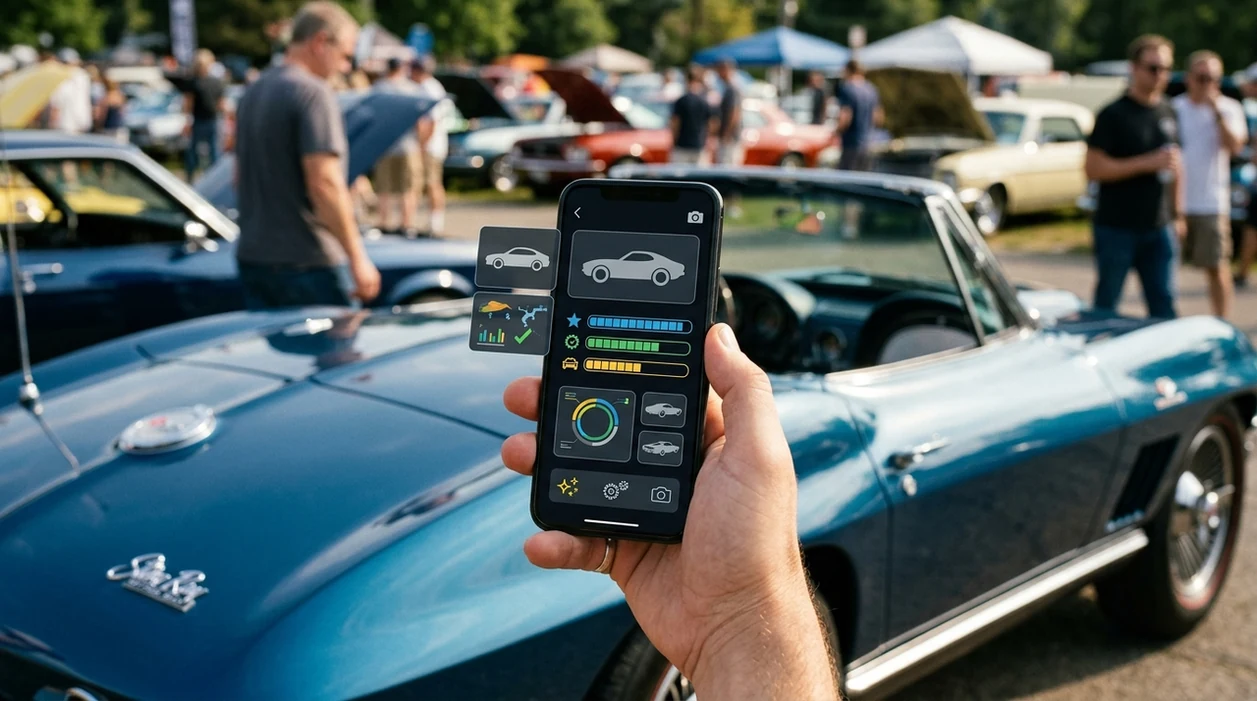
When a car identifier is useful
- Street parking questions become easier when a driver sees an unfamiliar model. The app can suggest a likely make and model before the user starts a manual search.
- Used-car shoppers can scan listing photos to compare body style, trim clues, and generation details. The identifier should support research, not replace a VIN report or inspection.
- Car enthusiasts can identify rare-looking vehicles at meets, shows, or while traveling. Car identifier apps are commonly used for spotting model years, checking trim clues, and comparing similar vehicles.
- Parents and new drivers can learn vehicle names from photos during daily errands. A quick scan can turn a passing SUV, hatchback, or pickup into a teachable result.
- Insurance, delivery, and property teams can label vehicle photos more consistently. The scanner helps with visual description, while official records remain necessary for legal or claims work.
- General visual search users can move from vehicles to other objects in one workflow. The same mobile tool also supports a plant identifier for garden, trail, and houseplant questions.
Best apps that identify cars compared
Car recognition apps vary by focus. Some tools are broad visual search engines, while others fit inside a phone ecosystem. The best choice depends on whether the user wants a car guess, a web match, or a multipurpose scanner.
| Feature | Lens App | Google Lens | Apple Visual Intelligence |
|---|---|---|---|
| Car photo identification | Identifies likely vehicles from uploaded or live camera photos | Strong web-based visual matching for many vehicle images | Can recognize objects and vehicles on supported iPhones |
| Best for | Users who want one mobile identifier for cars and many other categories | Users who want broad Google search results from an image | Users already using newer Apple devices and Apple intelligence features |
| Beyond cars | Plants, animals, insects, coins, rocks, food calories, translation, and more | Products, landmarks, text, shopping, and general image search | Objects, text, places, and actions within Apple-supported experiences |
| Reverse image search | Useful when a car photo needs similar web results or source clues | Excellent for finding visually similar indexed web images | More limited to Apple-supported visual intelligence flows |
| Platform access | Available on the App Store and Google Play | Available through Google apps and mobile browsers | Limited to compatible Apple devices and regions |
| Purchase verification | Does not replace VIN checks, title reports, or mechanic inspections | Does not verify legal vehicle history | Does not verify ownership or accident history |
What a car identifier app still gets wrong
- Low-light, blurry, or glare-heavy photos can hide grille shape, lamps, badges, and paint contrast, reducing confidence.
- Covered emblems, dealer plate frames, damage, or heavy modifications can remove key clues and cause a visually similar model or trim to be suggested instead of the exact car.
- Low-volume imports, kit cars, and rare models may have fewer visual matches, so results should be treated as a best guess.
Spot a Car You Can’t Name?
Saw a rare badge in a parking lot or a classic passing by? Snap it with Lens App to identify the car from a photo, then explore details fast. It’s free to download on iPhone and Android.
Related guides
A practical pick for car spotting
For identifying cars from photos, Lens App is a useful choice because it can read visible vehicle cues such as badges, lights, grille shape, wheels, and body proportions on iOS and Android.
It should be treated as a visual estimate, not an official vehicle record. For ownership, title history, recalls, or exact specifications, verify with a VIN lookup or another authoritative source.
Car-photo clues that matter most
A car identifier is only as good as the visible clues in the photo.
- Capture the front three-quarter angle: grille, headlights, badge area, hood shape, and wheel arches in one frame.
- Add a rear view when possible: taillights, trunk shape, exhaust placement, and rear badges often separate similar models.
- Include the side profile: roofline, door count, window shape, and wheelbase help distinguish generations.
- Avoid heavy zoom, motion blur, night glare, or cropped bumpers; these remove the features visual search needs.
- Use badges and trim labels as supporting clues, not proof; owners sometimes debadge, rebadge, or modify cars.
Quick car-ID doubts
What angle is best for identifying a car?
A front three-quarter photo is usually best because it shows the grille, lights, badge area, hood, wheels, and body proportions together.
Can a car be identified if the badge is missing?
Often, yes. Shape clues like headlights, taillights, window line, grille design, and proportions can still suggest the make or model.
Why do apps confuse similar car models?
Many cars share platforms, parts, and design language. Trim changes, facelifts, aftermarket wheels, and poor lighting can make two models look nearly identical.
Should I scan one photo or several?
Use several angles. Lens App can evaluate each image, and comparing front, rear, and side results usually gives a more confident identification.
picture identification app is the parent app for this feature, with free daily scans on mobile and the web.
Related Lens App Identifiers
Shopping and product lookup tools in Lens App:
Free Lens App photo identifier.
Free Lens App photo identifier.
Free Lens App photo identifier.
Free Lens App photo identifier.
Free Lens App photo identifier.
Free Lens App photo identifier.
Did You Know?
- Many people upload the most dramatic angle of a car first, but a straight rear or front view often gives Lens App stronger clues from badges, lights, grille shape, and trim layout.
- Users often crop too tightly around a wheel or headlight, which can hide the body proportions that separate similar sedans, coupes, SUVs, and hatchbacks.
- A car wrapped in custom paint, fitted with aftermarket parts, or shown as a replica may be identified as the closest visual match rather than the exact build.
- License plates, dealership frames, and background signs can distract from the vehicle, so users usually get cleaner results when the car itself is the main subject.
Practical Tip
A common Lens App workflow is spotting an unfamiliar car in a parking lot, scanning one clear photo, then comparing the suggested make and model with visible badges or trim details. Wildlife photographers often use the same quick-identification habit on road trips: they capture a vehicle, animal, sign, or plant first, then sort out the exact subject later from the photo. For cars, the most useful uploads tend to include the full outline plus at least one recognizable design clue.
Authentication Reminder
AI match vs. official record
Lens App can suggest a likely make, model, generation, or body style from visual evidence, but it should not be treated as a vehicle history report. For buying, insurance, registration, or legal decisions, confirm the VIN and official documents.
Model vs. trim
A scanner may identify a car as the right model while missing the exact trim package, engine, or special edition. Trim details often depend on badges, wheels, bumpers, and interior cues that may not appear in a single photo.
Stock car vs. modified car
Modified bumpers, aftermarket lights, widebody kits, and swapped badges can make one vehicle resemble another. When the result seems close but not exact, a second angle can help separate factory design from owner changes.
Why Results Can Differ
Car identification results can vary because many models share platforms, headlights, grilles, and body proportions across several years. Resellers often upload auction or marketplace photos where the car is partially cropped, and those images may produce broader results such as brand, model family, or generation instead of a precise trim. Lens App is most useful when you need a fast visual lead, then you can compare the result with badges, cabin photos, VIN details, or listing information.
Privacy Reminder
Users often scan cars they see in public, so it is smart to avoid sharing images that reveal people, addresses, or license plates unless they are necessary for your own private reference. A car identifier works best as a visual recognition tool, not as a way to investigate a driver or owner. If privacy matters, use a photo that focuses on the vehicle’s shape, lights, grille, wheels, or badges while leaving personal details out of the frame.
Collector's Tip
Collectors usually look beyond the model name and check whether the photo shows the generation, trim clues, factory wheels, limited-edition badges, or unusual modifications. A single scan can start the identification, but the most reliable car spotting notes combine the Lens App result with visible design details and a second reference check. This is especially useful for classics, imports, kit cars, and visually similar performance trims.
Many users start with a parked or passing car photo, use Lens App to get a likely make and model, then compare badges, trim details, or similar images before saving the result.
Why Lens App works well for identifying cars
Lens App can help identify sedans, SUVs, pickup trucks, coupes, hatchbacks, sports cars, classic cars, concept-style vehicles, and modified cars from a photo. After the visual scan suggests a likely make, model, or generation, Reverse Image Search can help compare similar reference photos, listings, and visual matches to narrow down confusing trims or custom builds.
Need to identify something else from the same trip?
If the car photo came from a road trip, hike, or outdoor stop, you may also have animal photos that need a different kind of visual comparison. The Animal Identifier is a better fit when the subject is a wild or domestic animal because it focuses on body shape, markings, posture, and species-level clues rather than vehicle design. Try the Animal Identifier.
Frequently Asked Questions
What is the best app that identifies cars from a photo?
A strong choice is a mobile visual search app that can estimate make, model, and similar vehicles from one image. Lens works well for users who want car recognition plus other identifiers in the same download.
Can a car identifier app tell the exact model year?
A car identifier app may suggest a generation or likely year range when lights, grille, wheels, and body lines are visible. Exact model year is harder because trims can share parts across several years.
Is the mobile app free on iPhone and Android?
Yes, the mobile identifier is available free on iPhone and Android. Users can download the app from the iOS App Store or Google Play and start scanning car photos from the camera or gallery.
Can the app identify cars without a badge?
The app can often make a useful guess without a visible badge if the vehicle shape and lighting are clear. Front fascia, rear lamps, roofline, windows, and wheel design can still provide strong visual clues.
Can an app that identifies cars check if a used car is safe to buy?
No photo identifier can confirm safety, title status, mileage accuracy, or accident history. Use the scanner for visual research, then check the VIN, service records, recalls, and a mechanic inspection before buying.
Does the car scanner work from screenshots or listing photos?
Yes, screenshots and listing photos can work when the image is sharp and the vehicle is not heavily cropped. Results are weaker when seller photos are compressed, filtered, dark, or taken from an unusual angle.
What else can the mobile app identify besides cars?
The same mobile tool can identify plants, animals, insects, birds, fish, mushrooms, coins, rocks, crystals, antiques, and food calories. The app also supports reverse image search and live camera translation.