 Lens
Lens
Flippr vs Lens App
Flippr is built around sourcing, sold comps, and listing preparation for resellers. Lens App is a broader camera identifier for recognizing varied finds, checking web matches, translating text, and finding similar products.


What does Flippr vs Lens App actually compare?
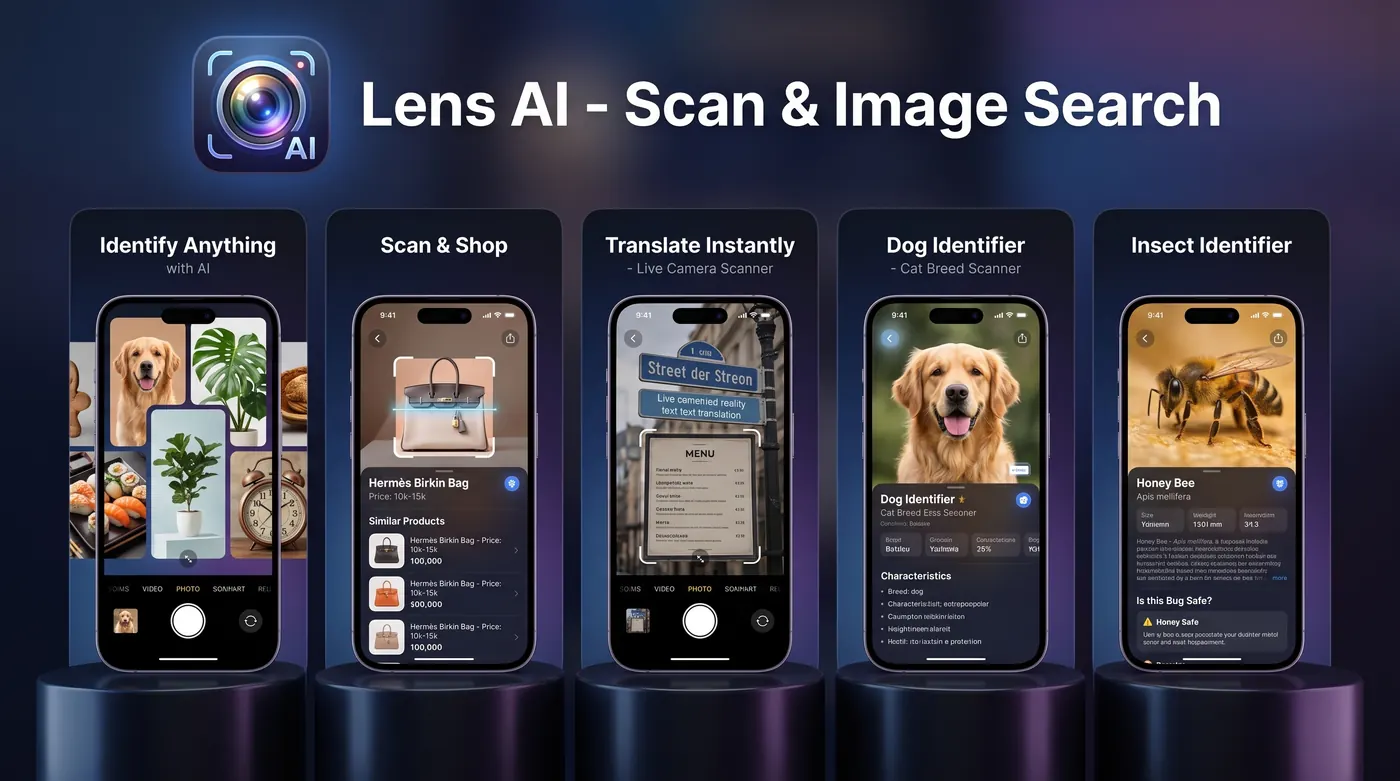
Flippr vs Lens App compares a resale-specific sourcing assistant with an all-purpose visual identification tool. Flippr uses photos to identify secondhand goods, including multiple items in a shelf, pile, box, or stack, then surfaces marketplace sold comps, sell-through information, estimated resale value, and listing support. Its workflow is aimed at thrift sellers and eBay-focused resellers. Lens App begins with broader visual search: photograph an object to receive a likely label, ranked alternatives, and relevant web matches. It covers products and collectibles alongside plants, animals, coins, rocks, logos, clothing, and other everyday subjects. Lens App also includes reverse image search, image translation, and similar-product lookup, but it is not a dedicated reseller analytics or autolisting system.
Choose Flippr when your main task is scanning secondhand inventory, consulting eBay or Amazon market data, and preparing items for resale. Choose Lens App when you need to identify a wider variety of finds, investigate look-alikes, translate labels or packaging, run reverse image searches, or locate similar products from a photo.
Flippr turns photos into resale research and listing inputs, while Lens App turns photos into broad identifications, web matches, translations, and product-search leads.
Which is better for thrift finds and visual identification?
Flippr is the stronger specialist for a reseller evaluating shelves, boxes, or piles of inventory. Its focus on marketplace sold comps, sell-through information, estimated profit, and eBay listing preparation makes it more useful when the central question is whether an item is worth sourcing.
Lens App is better when the object may fall outside common resale categories or when identification comes before pricing. It can help you identify an object from a photo, examine reverse image search matches, translate packaging, and search for visually similar products. Any collectible value range should be treated as an initial research lead, not an appraisal.
Flippr is optimized for deciding what to source and sell; Lens App is optimized for working out what is in front of the camera.
When to use Flippr vs Lens App (and when not to)
Use it when
- Use Flippr when you routinely scan thrift-store shelves, boxes, piles, or bulk media for resale opportunities.
- Use Flippr when sold comps, sell-through information, and eBay listing preparation are central to your workflow.
- Use Lens App when a find could be a plant, animal, coin, rock, antique, product, logo, garment, or another everyday object.
- Use Lens App when you need reverse image matches, image translation, or similar-product lookup alongside identification.
- Use Lens App when look-alikes are common and ranked alternatives or guidance to retake a weak photo would help.
Skip it when
- Skip Flippr as your only identifier if you regularly investigate nature, signs, artwork, packaging, or subjects unrelated to resale.
- Skip Lens App as your primary reseller tool if you need dedicated sold-comp analysis, sell-through metrics, or autolisting.
- Skip either app for certified authentication, professional appraisal, or high-stakes medical, legal, insurance, or edibility decisions.
How to compare Flippr with Lens App
Decide what you need from the photo
Choose between a resale decision—such as buy, skip, price, or list—and a broader identification question about what the object is.
Capture useful context
For broad scans, show the complete item. For difficult finds, also photograph labels, maker marks, signatures, model numbers, damage, and distinctive details.
Review the identification
Check whether the proposed label matches visible features. With Lens App, inspect ranked alternatives and retake the image if blur or framing weakens the result.
Research the relevant market
Use Flippr's marketplace data for resale decisions. With Lens App, follow web matches and similar-product results, then verify condition, edition, and exact model separately.
Verify before buying or listing
Compare several sources and inspect the physical item. Photo matches and estimated values cannot establish authenticity, condition, ownership, or a guaranteed selling price.
Common Flippr and Lens App use cases
- Scanning a thrift-store shelf or box to prioritize potentially resellable items
- Identifying an unfamiliar antique, coin, garment, logo, rock, insect, or household product
- Checking marketplace sold evidence before sourcing common secondhand goods
- Translating labels, signs, menus, care tags, or packaging photographed in the field
- Finding visually similar products when a brand or model name is missing
- Preparing resale research while keeping identification and professional appraisal separate
Lens App and Flippr compared
Features, marketplace coverage, availability, and public pricing information can change, so confirm current details in the apps and official listings.
| Feature | Lens App | Flippr |
|---|---|---|
| Primary purpose | All-category photo identification and visual search | Reseller sourcing, pricing, and listing assistance |
| Photo workflow | Identifies an item, supplies ranked alternatives, and pairs the result with web matches | Can identify multiple secondhand items in a pile, shelf, box, or stack |
| Resale research | Collectible value ranges are starting points, not certified appraisals | Surfaces eBay sold data, Amazon pricing, sell-through information, and resale estimates |
| Additional visual tools | Reverse image search, image translation, and similar-product lookup | Focused on resale valuation, sourcing decisions, and listing preparation |
| Subject breadth | Plants, animals, birds, insects, coins, rocks, antiques, products, logos, and clothes | Secondhand categories such as media, clothing, electronics, furniture, cards, and collectibles |
| Platforms and access | Free to download on iOS and Android; free daily mobile scans and one free web scan per day, with optional upgrades | Listed for iPhone and Android; no separate web app is clearly advertised, and current public pricing is unclear |
What both still get wrong
- Poor lighting, blur, missing marks, unusual angles, and visually similar editions can produce incomplete or incorrect identifications.
- Prices depend on exact model, condition, completeness, location, demand, fees, and timing; a match or estimate is not a guaranteed sale price.
- Neither photo workflow proves authenticity or replaces a qualified appraiser, conservator, specialist dealer, or category expert.
Try Lens App free
Download Lens App on iOS or Android at https://onelink.to/brjuyz. Free daily mobile scans and one free web scan per day are available, with optional upgrades.
A practical choice
Choose Flippr if resale is the job: scanning many secondhand items, checking marketplace sold evidence, estimating sourcing potential, and moving toward an eBay listing. That specialized workflow is more useful than a general identifier for active flippers. Choose Lens App if breadth matters—especially when a thrift find might be an antique, coin, rock, garment, logo, plant, or unidentified product—and you also want translation, reverse search, and shopping matches. For collectibles, use its output to begin an identification and resale research process, not to certify authenticity. Many sellers may benefit from using Lens App for ambiguous identification and Flippr for category-specific market research afterward.
Related comparisons
AntiqSnap vs Lens App
Same comparison cluster
Underpriced AI vs Lens App
Same comparison cluster
PriceSnap vs Lens App
Same comparison cluster
Find a Product From a Photo
Use visible features, logos, packaging, and image matches to locate similar products.
AI Valuation vs Professional Appraiser
Understand where automated estimates help and when professional inspection is necessary.
FAQ
Can a reseller app scan an entire shelf or box from one photo?
Flippr is specifically described as identifying multiple secondhand items in photos of shelves, piles, boxes, and stacks. That makes it suitable for rapid sourcing passes. The public materials reviewed do not establish a fixed maximum number of recognizable items per image, and crowded, overlapping, distant, or blurry objects may still require closer individual photos.
Which photo identification app is better for thrift-store sourcing?
Flippr is better when sourcing means checking sold comps, sell-through information, estimated resale value, and potential profit across common secondhand goods. Lens App is better when the first challenge is identifying an unfamiliar object or investigating web matches. The right choice depends on whether resale analytics or identification breadth is the bottleneck.
Can photo scans create or speed up eBay listings?
Flippr is positioned as a reseller app and autolister that can turn photo-based results into listing inputs for eBay, making it the more relevant choice for that workflow. Lens App can identify objects and find related products or pages, but it is not presented as a dedicated eBay autolisting system.
How reliable are sold comps for pricing secondhand items?
Sold comps are more useful than unsold asking prices, but they still require interpretation. Confirm that the model, edition, condition, accessories, quantity, and sale format match your item. Flippr emphasizes real eBay sold data and Amazon pricing, yet thin markets or unusual categories can provide weak evidence. No comp guarantees a future selling price.
Does live resale pricing work without an internet connection?
Current sold comps and marketplace prices normally require access to online marketplace data. Flippr's public descriptions emphasize live eBay and Amazon information, but the reviewed materials do not clearly document a complete offline sourcing mode. Sellers working in poor reception areas should confirm current offline behavior before depending on it in the field.
What app can identify both thrift finds and non-resale objects?
A broad visual identifier is more appropriate when your photos include products, antiques, coins, clothing, plants, animals, insects, rocks, or logos. Lens App covers those categories and adds web matches, translation, and product lookup. Flippr is intentionally narrower, prioritizing secondhand sourcing, resale valuation, and listing preparation rather than arbitrary visual questions.
Can an item photo prove authenticity or provide an appraisal?
No. A photo can suggest an identity, locate similar examples, and provide preliminary market evidence, but it cannot reliably inspect materials, construction, provenance, restoration, hidden damage, or altered marks. Treat estimated values as research starting points. Valuable, disputed, or insured objects should be examined by an appropriate appraiser or category specialist.