 Lens
Lens
iNaturalist vs Lens App
Compare iNaturalist’s community-based biodiversity records with Lens App’s instant, broad-category visual identification. The better choice depends on whether you want to document wildlife or quickly identify many kinds of things.


What does iNaturalist vs Lens App actually compare?
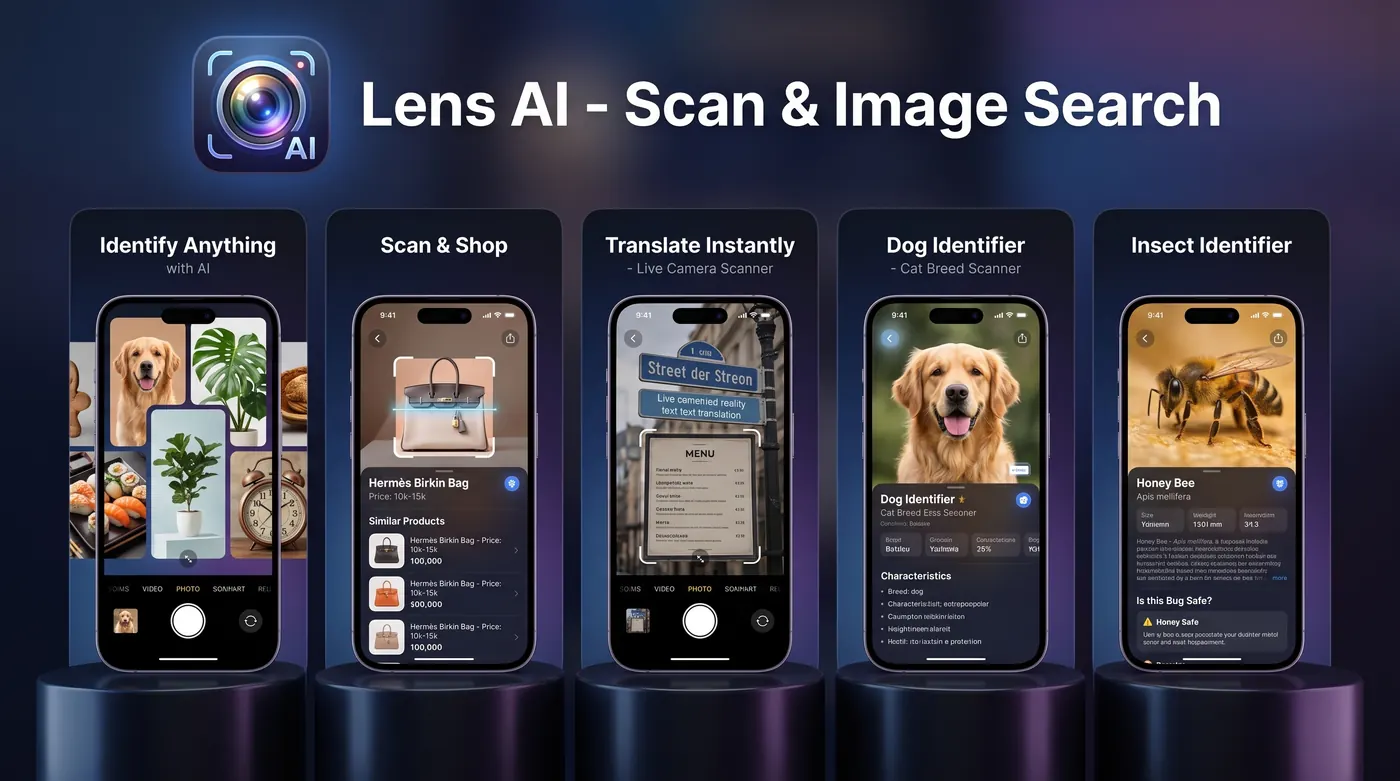
The iNaturalist vs Lens App comparison is primarily about citizen science versus instant visual search. iNaturalist is a free nonprofit platform where people record wild organisms with photos or audio, location, date, and other metadata. Its AI suggestions and community identifications can turn observations into useful biodiversity records, including records that reach research-quality status. Lens App is an independent, general-purpose visual identifier for plants, animals, birds, insects, coins, rocks, antiques, products, logos, and clothing. It provides an immediate identification pass, related web matches, ranked alternatives for look-alikes, and retake guidance for weak photos. It also supports reverse image search, image translation, and similar-product lookup. Lens App is not Google Lens and is not affiliated with Google.
Choose iNaturalist when you want to document wild organisms, contribute observations, discuss identifications, or participate in biodiversity projects. Choose Lens App when you want an immediate answer from a photo across nature and non-nature categories, especially when reverse image search, translation, product discovery, or ranked look-alike suggestions are useful.
iNaturalist builds community-reviewed biodiversity observations; Lens App provides immediate, broad-category visual identification and web discovery.
Which is better for identifying nature from a photo?
iNaturalist is better for serious nature documentation. An observation can include photos or audio, location, date, discussion, and multiple community identifications. That structure is valuable for naturalists, bioblitz participants, researchers, and anyone who wants a lasting biodiversity record rather than only a quick label.
Lens App is better for fast, camera-first questions and mixed subjects. It can help with a plant identification or animal identification, then handle a rock, coin, logo, product, or translated sign without switching to a specialist community. Its alternatives and retake guidance are also useful when visually similar species or blurry photos create uncertainty.
iNaturalist is the stronger biodiversity community and observation platform; Lens App is the broader instant visual-search tool.
When to use iNaturalist vs Lens App (and when not to)
Use it when
- You want a quick first-pass identification from a photo.
- Your subjects include both organisms and non-nature objects.
- You want ranked alternatives when several species or objects look alike.
- You need reverse image search, image translation, or similar-product lookup.
- You want the app to flag a weak or blurry image and suggest a retake.
Skip it when
- You want to create detailed, shareable biodiversity occurrence records with location and date metadata.
- You value discussion and identification input from a naturalist community.
- You are organizing citizen-science observations, a bioblitz, or a long-term species project.
How to compare iNaturalist with Lens App
Decide whether you need a label or a record
Use Lens App for an immediate identification pass. Use iNaturalist when the goal is to document an organism as a biodiversity observation.
Capture useful evidence
Photograph the whole subject and diagnostic details such as leaves, flowers, wings, markings, bark, or habitat. Poor media limits both automated suggestions and human review.
Review alternatives
In Lens App, compare the ranked look-alikes and reasons provided. In iNaturalist, review the suggested taxon and only support an identification you can independently justify.
Add context when it matters
For iNaturalist, include accurate date, location, and relevant observation details. For either tool, context such as region, season, size, and habitat can help separate similar organisms.
Verify consequential identifications
Consult authoritative field references or a qualified expert when identification affects safety, conservation, treatment, or legal decisions. Never use either app to decide whether a plant or mushroom is safe to eat.
Common reasons to choose one over the other
- Recording a wild species with location and date for community review: iNaturalist
- Getting a rapid first-pass plant, bird, animal, or insect label: Lens App
- Contributing observations to citizen-science or conservation projects: iNaturalist
- Identifying nature, products, antiques, coins, rocks, and clothing in one app: Lens App
- Discussing uncertain taxonomy with other naturalists: iNaturalist
- Translating packaging or finding visually similar products after identification: Lens App
Lens App and iNaturalist compared
Features, platform support, and public listings can change, so confirm current details before choosing.
| Feature | Lens App | iNaturalist |
|---|---|---|
| Primary purpose | Instant, general-purpose visual identification and search | Biodiversity observations, community identification, and citizen science |
| Identification scope | Plants, animals, birds, insects, rocks, coins, antiques, products, logos, clothes, and more | Wild organisms, including plants, animals, fungi, and other life |
| Identification approach | Immediate identification pass, web matches, ranked alternatives, and retake guidance | Machine-learning suggestions combined with community identifications and discussion |
| Observation records | Designed mainly for quick identification and related search | Records photos or audio with location, date, and other biodiversity metadata |
| Additional visual tools | Reverse image search, image translation, and similar-product lookup | General object search, shopping, and translation are not its documented focus |
| Access and pricing | Free on iOS and Android with free daily mobile scans and one free web scan per day; optional upgrades | Free through iOS, Android, and the web; no paid subscription tiers are documented in the supplied research |
What both still get wrong
- Blurry, distant, partial, or poorly lit photos can hide the traits needed to distinguish look-alike species.
- Automated suggestions and community opinions can both be mistaken, especially when location, scale, season, or habitat context is missing.
- Neither should be the sole basis for deciding whether a plant or mushroom is edible or for medical, legal, insurance, or other high-stakes decisions.
Try Lens App free
Download Lens App free on iOS or Android at https://onelink.to/brjuyz. Free daily mobile scans and one free web scan per day are available, with optional upgrades.
A practical choice
Choose iNaturalist if your priority is building biodiversity observations, learning from community identifications, joining projects, or creating records that may support research and conservation. It is the genuine specialist for collaborative nature documentation. Choose Lens App when breadth and speed matter: one photo workflow can cover a bird, insect, plant, rock, antique, coin, product, or item of clothing, with reverse image matches and translation available when relevant. For difficult nature sightings, a sensible workflow is to use Lens App for a quick first pass and then document the organism in iNaturalist if community review and ecological metadata matter. Treat every result as a lead to verify, not unquestionable proof.
Related guides
Identify Anything From a Photo
Learn how broad visual identification works across nature, objects, products, and collectibles.
Insect Identifier
Use clear photos and visible diagnostic features to narrow down an insect identification.
What Is This Flower?
See which flower details and supporting photos can improve a visual identification.
Can a Blurry Photo Still Be Identified?
Understand when a weak image may work and when taking a new photo is necessary.
LeafSnap vs Lens App
Same comparison cluster
BirdNET vs Lens App
Same comparison cluster
FAQ
Which app is better for identifying plants and animals?
Lens App is better for a quick first-pass answer from a photo, particularly when you also identify non-nature subjects. iNaturalist is better when you want to record a wild organism with date and location, receive community input, and preserve the observation as part of a biodiversity dataset. Difficult species may still require expert verification.
Can iNaturalist identify ordinary objects or products?
iNaturalist’s documented scope is organisms such as plants, animals, fungi, and other life. It is not presented as a general object, product, barcode, shopping, or translation tool. For coins, rocks, antiques, logos, clothing, or similar-product searches, a broad visual identifier such as Lens App is the more appropriate starting point.
How long does community identification take on iNaturalist?
There is no guaranteed review time. iNaturalist can offer machine-learning suggestions, but community confirmation depends on who sees the observation and whether the photos, location, date, and diagnostic features are sufficient. Some observations may attract prompt input, while obscure organisms or weak images may remain identified only broadly or unresolved.
What is the difference between iNaturalist and Seek?
Seek and iNaturalist should not be treated as the same product experience. iNaturalist is the account-based community, observation, and biodiversity platform described in this comparison. Seek is a separate nature-identification app associated with iNaturalist. Check each app’s current documentation before choosing, particularly if community posting, account features, or observation records matter.
Can a blurry wildlife photo still be identified?
Sometimes, but confidence falls when blur hides markings, shape, texture, or other diagnostic traits. Lens App can flag a weak image and suggest a retake, while iNaturalist community members may identify an organism only to a broader taxonomic level. Add sharper close-ups, multiple angles, scale, habitat, location, and date whenever possible.
Can an identification app tell whether a plant or mushroom is safe to eat?
No identification app should be used as the deciding authority for edibility. Toxic and edible species can look very similar, and photos may omit critical traits. Do not eat a plant or mushroom based on Lens App, iNaturalist, or another image-recognition result. Consult a qualified local expert and authoritative regional references.
Does reverse image search replace species identification?
No. Reverse image search can find visually similar pages and images, but resemblance does not establish a species. Lens App pairs web matches with an identification pass and ranked alternatives, yet the result still needs checking. For biodiversity documentation, iNaturalist adds location, date, community discussion, and structured observation data that ordinary web matching does not provide.