 Lens
Lens
LeafSnap vs Lens App
LeafSnap offers a focused plant-identification and field-guide experience. Lens App covers plants alongside animals, products, collectibles, translation, and other everyday visual searches.


What does LeafSnap vs Lens App actually compare?
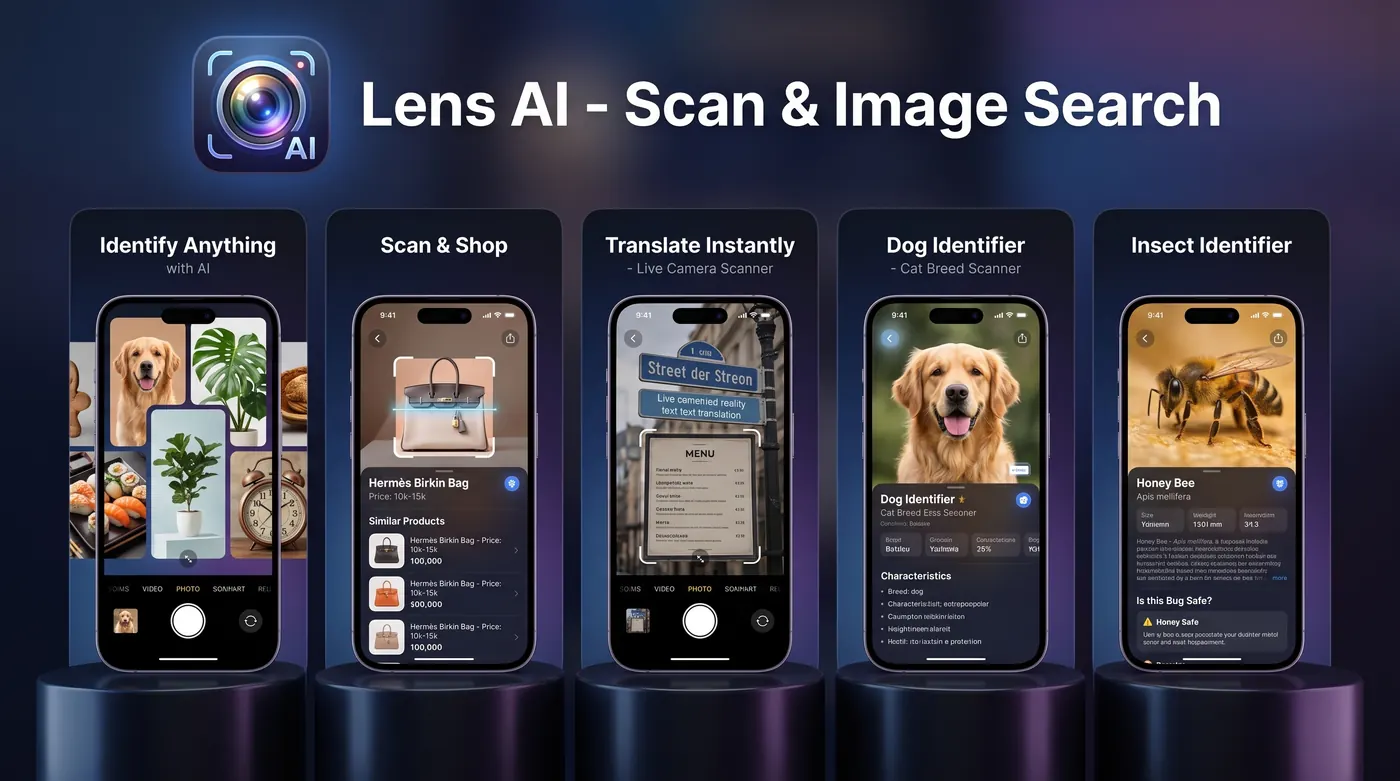
LeafSnap vs Lens App compares a specialist plant identifier with a broader visual-identification tool. LeafSnap was developed as an electronic field guide using visual recognition to identify trees from leaf photographs, and its modern mobile listings extend that focus to plants, flowers, trees, and mushrooms. Its strength is plant-specific identification and reference information. Lens App identifies plants but also handles animals, birds, insects, coins, rocks, antiques, products, logos, and clothing. It combines an identification pass with reverse image search, offers image translation, and can look for similar products. The practical choice depends on whether you primarily need a digital plant guide or one camera app for many categories.
Choose LeafSnap when plants and trees are your main subject and you want a specialist field-guide experience with plant details. Choose Lens App when plant identification is only one part of your visual-search needs, especially if you also photograph wildlife, products, signs, collectibles, clothing, or unfamiliar objects.
The real split is plant-specific depth versus broad, multi-category visual recognition.
Which is better for identifying plants and everyday objects?
LeafSnap is the stronger fit for dedicated plant and tree study. Its origins are in leaf-based tree recognition, and its field-guide approach includes images of plant parts and plant-care information. Gardeners or students who rarely identify anything outside the plant domain may prefer that specialization.
Lens App is more practical when your camera roll contains more than plants. Its plant identifier sits alongside tools for animals, insects, products, antiques, and other objects. It can also pair a suggested label with reverse image search, helping you examine web matches rather than relying on one result alone.
LeafSnap specializes in plant and tree identification; Lens App trades that narrow focus for recognition across plants, wildlife, products, collectibles, text, and more.
When to use LeafSnap vs Lens App (and when not to)
Use it when
- You want one app for plants, animals, products, collectibles, clothing, and other objects.
- You want an identification suggestion paired with relevant web matches.
- You need ranked alternatives when several plants or objects look alike.
- You also want to translate text on signs, menus, labels, or packaging.
- You want free daily mobile scans or a limited free web scan.
Skip it when
- You want a plant-only electronic field guide with specialist reference and care information.
- You need expert botanical confirmation for scientific, agricultural, or conservation work.
- You are trying to determine whether a plant or mushroom is safe to eat.
How to compare LeafSnap with Lens App
Photograph the most useful feature
For plants, capture a sharp leaf, flower, fruit, bark pattern, or overall growth form in good light. Avoid covering key structures with your hand.
Submit the image
Open the photo in Lens App or use the camera. LeafSnap users can submit a plant image through its mobile identification workflow.
Review the leading identification
Treat the first result as a candidate, not guaranteed botanical proof. Check whether visible features support the proposed species.
Compare alternatives
Look at similar species, web matches, leaf arrangement, flower structure, bark, and location. Lens App ranks alternatives and explains why look-alikes may fit.
Retake or verify
If the image is blurry or incomplete, take additional photos from different angles. Seek an expert when identification affects health, food safety, conservation, or treatment.
Common reasons to choose one over the other
- Identifying a tree from its leaves, bark, flowers, or fruit
- Checking the likely name of a garden or houseplant
- Comparing several visually similar plant candidates
- Identifying an insect or bird found on the same nature walk
- Translating care instructions printed on imported packaging
- Finding a visually similar planter, tool, garment, or household product
Lens App and LeafSnap compared
Features, access terms, and subscription availability can change across platforms and regions.
| Feature | Lens App | LeafSnap |
|---|---|---|
| Primary focus | Multi-category photo identification and visual search | Plant, flower, tree, and mushroom identification |
| Plant experience | Plant candidates, ranked alternatives, retake guidance, and web matches | Specialized electronic field guide with plant imagery and care information |
| Other categories | Animals, birds, insects, coins, rocks, antiques, products, logos, and clothing | Focused on plants rather than general objects |
| Additional visual tools | Reverse image search, image translation, and similar-product lookup | Plant-focused identification and reference content |
| Platforms | Free to download on iOS and Android; limited web scanning is also available | Modern app listings are available on iOS and Android; identification is mobile-app based |
| Access model | Free daily mobile scans and one free web scan per day; optional upgrades | Reported subscription access after a short free trial; terms vary by platform and region |
What both still get wrong
- Look-alike species can produce plausible but incorrect results, especially when only one plant part is visible.
- Blurry photos, poor lighting, immature growth, damaged leaves, and cultivated hybrids can reduce identification confidence.
- Neither app should determine whether a plant or mushroom is edible or replace qualified botanical, medical, or poison-control advice.
Try Lens App free
Download Lens App free on iOS or Android at https://onelink.to/brjuyz. Free daily mobile scans are included, with optional upgrades for additional use.
A practical choice
Choose LeafSnap if nearly every photo you submit will be a plant, tree, flower, or mushroom and you value a specialist field-guide experience. Its plant focus is a genuine advantage for users seeking reference imagery and care information. Choose Lens App when breadth matters: it can identify a plant today, help with an insect identification on the same walk, and examine a product or sign later. Its ranked alternatives and retake prompts are also useful when the image is ambiguous. Whichever tool you use, compare several visible features and consult a knowledgeable local expert for consequential identifications. For general techniques, see how to identify anything from a photo.
Related guides
What Is This Flower?
Use flower shape, color, leaves, and growth habit to narrow down a match.
Can a Blurry Photo Still Be Identified?
See what image problems reduce confidence and when taking another photo will help.
Photo Identifier
Explore identification across plants, animals, products, collectibles, and everyday objects.
iNaturalist vs Lens App
Same comparison cluster
BirdNET vs Lens App
Same comparison cluster
FAQ
What is the best app for identifying a tree from a leaf?
A specialist such as LeafSnap is a strong choice for leaf-based tree identification because the original system was designed around recognizing tree species from leaf photographs. Lens App can also suggest plant and tree matches, particularly when you want ranked alternatives and web results. For either app, include bark, fruit, flowers, and the whole tree when possible.
Can a plant identifier recognize flowers and mushrooms?
Modern LeafSnap listings describe identification for plants, flowers, trees, and mushrooms. Lens App also recognizes plant categories and can present alternative matches. Mushroom recognition should be treated only as an initial research clue: never use an app result to decide whether a mushroom is edible, medicinal, or safe to touch or prepare.
Does a leaf photo need a white background for identification?
LeafSnap's early research system worked best with a single leaf photographed against a fully white background. That was a requirement of the original recognition approach, not necessarily every modern app workflow. A plain contrasting background can still improve results by separating leaf edges, but natural-setting photos may provide useful context such as branching pattern, bark, flowers, and habitat.
How can I improve an inaccurate plant identification?
Retake the photo in bright, even light and make sure the identifying structures are sharp. Add separate images of the full plant, both sides of a leaf, stem, bark, flower, fruit, or seed. Compare multiple suggested species rather than accepting the first label, and check geographic range, leaf arrangement, season, and growth habit before drawing a conclusion.
Can a photo identification app tell whether a plant is poisonous?
No photo identifier should be the sole basis for deciding whether a plant or mushroom is poisonous, edible, or medically safe. Similar species can differ in dangerous ways, and an image may omit essential features. Keep people and pets away from suspected hazards and contact a qualified local expert, poison-control service, veterinarian, or medical professional when exposure is possible.
Which type of app is better for nature walks with plants, birds, and insects?
A multi-category identifier is generally more convenient when a walk includes several kinds of subjects. Lens App can handle plants, birds, animals, and insects in one app. LeafSnap is preferable when the outing is specifically about plants or trees and you want a focused field guide. Neither replaces specialist keys or expert verification for formal records.