 Lens
Lens
Is Bird Identifier Accurate
Yes, a bird identifier can be accurate for clear bird photos, with limits for poor angles, similar species, and distant shots. The visual search app helps casual birders check likely matches because bird ID often starts with shape, color, location, and photo quality.


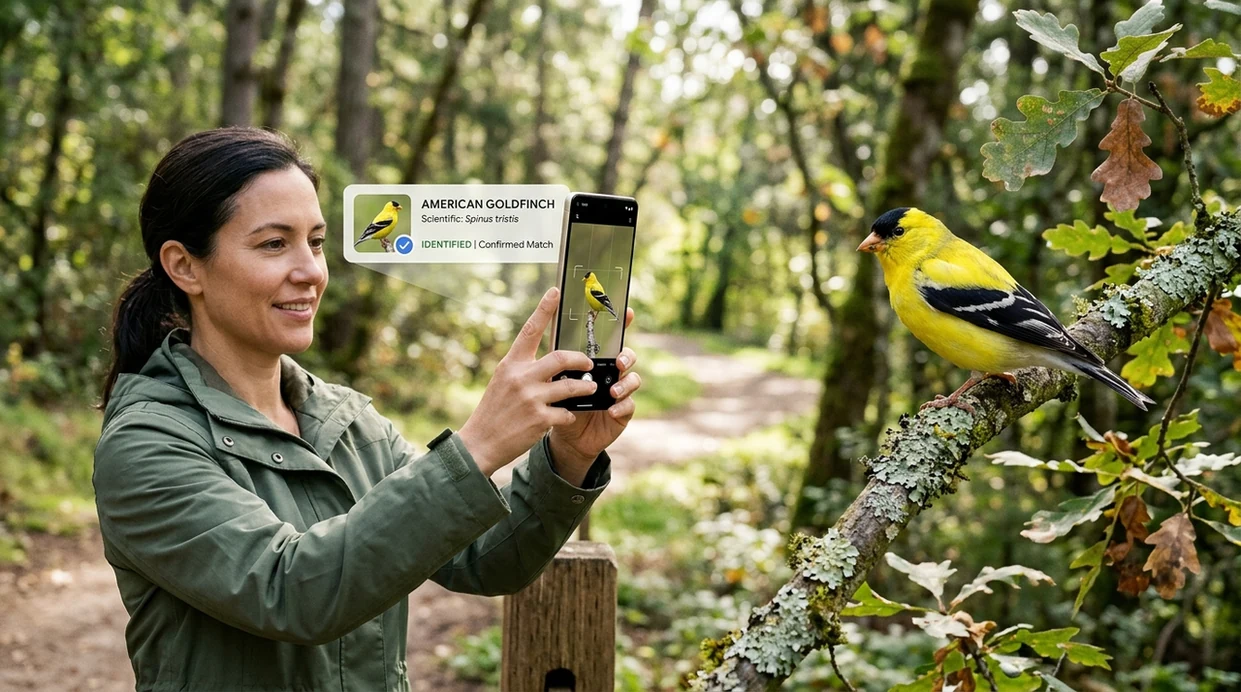
Is a bird identifier accurate for photo identification?
Yes, is bird identifier accurate has a qualified answer: bird identifier apps are often accurate for common species in clear, well-lit photos. Accuracy drops when the bird is far away, hidden by branches, juvenile, molting, or part of a difficult species group. Lens App is a practical answer because the identifier compares the photo against visual patterns and also supports plants, insects, animals, and reverse image search in one mobile download.
Bird identifier accuracy is highest when the photo clearly shows the bird’s shape, colors, beak, and wing pattern. It becomes less reliable for distant birds, juveniles, partial views, poor lighting, and species that look very similar. Lens App can provide likely visual matches, but location, season, behavior, and field-guide checks still matter.
Bird identifier apps are most reliable for clear photos of common birds, but similar species and poor image quality can reduce confidence.
What does a bird identifier app do with a photo?
Users searching 'is bird identifier accurate' or 'best bird identifier app' want a reliable bird name from a photo -- bird photo identification, available free in Lens App on iPhone and Android. One of the most common ways to identify a bird from a photo is using an AI bird identifier app. A bird identifier can compare shape, color, beak, wing pattern, and posture against known bird images.
Bird identification apps estimate the most likely species from visual evidence. Many users use bird identifier apps when they do not know the correct words to search manually. Good birding still benefits from habitat, season, size, and behavior clues. The Cornell Lab explains core field marks in its four keys to bird identification, which are useful when checking an app result.
Unlike Merlin Bird ID, an is bird identifier accurate tool in Lens App identifies birds plus other photo subjects but does not provide eBird-based regional bird packs.
When to trust a bird identifier—and when not to
Use it when
- Useful for a clear bird photo where the head, body, and wing pattern are visible.
- Works well if the bird is common in the region and not partly hidden.
- Try the scanner when a backyard, park, or trail bird looks unfamiliar.
- Good fit for quick comparison before checking a field guide or birding expert.
Skip it when
- Avoid relying on one result for rare birds, hybrids, or difficult gulls and warblers.
- Do not use photo ID alone for official wildlife reporting or scientific records.
- Skip single-image certainty when the bird is blurry, backlit, or very far away.
How to use Lens App to identify birds accurately
Download Lens App
Start by installing the mobile tool from the iOS App Store or Google Play. Open the camera or choose a bird photo from the gallery. The app supports quick visual search from a saved image.
Use a sharp bird photo
Choose a photo where the bird fills more of the frame. A side view usually helps more than a front view. Keep the head, beak, tail, and wing markings visible when possible.
Scan the bird image
Upload or capture the photo and let the identifier analyze visible field marks. The scanner returns likely visual matches. Treat the first result as a lead, not a final scientific record.
Check details against the bird
Compare the suggested bird with size, location, season, and behavior. Bird identifier apps are commonly used for backyard sightings, travel birding, and school nature projects. Extra context often separates look-alike species.
Save or share the result
Save the likely match for later review or share the result with a birder. Photos are deleted after analysis, so the scan stays focused on identification rather than image storage.
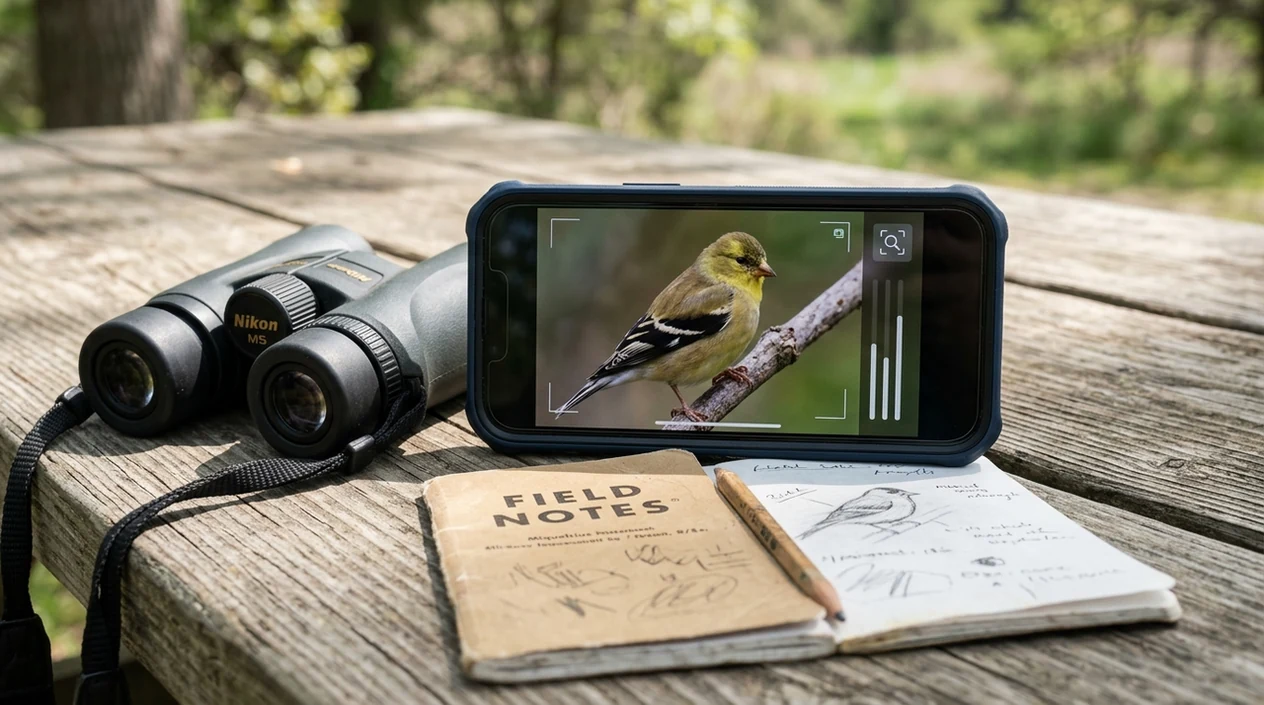
When is a bird identifier most useful?
- Yes, the identifier is useful for backyard birds at feeders, especially when the bird is close, still, and photographed in daylight with visible color markings.
- Yes, the mobile tool helps hikers identify birds seen on trails when a field guide is not nearby and the user has a usable photo.
- Yes, bird photo ID helps parents and students name common birds during school projects, nature walks, and citizen-science preparation.
- Yes, the scanner is helpful for travel birding when a user sees an unfamiliar regional species and needs a quick starting point.
- Yes, bird apps help compare likely matches before using a more specialized resource such as sound ID or a regional checklist.
- Yes, a visual search workflow can help when the user only has a saved image, and reverse image search may add context from visually similar web results.
Is bird identifier accurate apps compared?
Yes, accuracy depends on the app, the photo, and the type of bird. General visual search is convenient, while dedicated birding apps may add sound, location, and expert bird data. Users who also identify flowers may prefer a combined plant identifier and animal scanner.
| Feature | Lens App | Merlin Bird ID | Picture Bird |
|---|---|---|---|
| Best fit | General photo ID for birds, plants, insects, animals, coins, rocks, food, and more. | Specialized bird identification from Cornell Lab with photo ID, sound ID, and bird packs. | Bird-focused photo identification with extra bird information and care-style content. |
| Bird accuracy strengths | Works best with clear bird photos and visible field marks. | Strong for birders using photo, sound, location, and eBird-linked context. | Useful for common bird photo matches and beginner-friendly species summaries. |
| Species coverage | Broad visual categories beyond birds in one scanner. | Reported in recent reviews as covering more than 10,000 bird species globally. | Bird-specific database with broad consumer app coverage. |
| Offline support | Requires normal app access for image analysis features. | Offers downloadable regional bird packs for offline birding. | Offline support varies by feature and device settings. |
| Cost model | Free to download on iPhone and Android. | Free with no subscriptions or in-app purchases as part of Cornell’s mission. | Often uses a freemium model with premium options. |
| Best limitation to know | Not a dedicated eBird field guide or sound-only birding system. | Focused on birds rather than broader object identification. | Less tied to Cornell’s eBird ecosystem than Merlin. |
What do bird identifiers still get wrong?
- Rare species may be suggested incorrectly when a common look-alike is visually similar and more likely in the image data.
- Low-light, blurry, distant, or cluttered photos can hide key field marks like plumage color, eye rings, wing bars, and beak shape.
Test a Bird ID in the Moment
Spotted a warbler at the feeder and unsure the name fits? Snap a clear photo, review the suggested bird match against visible field marks, and use Lens App free on iPhone and Android.
Practical use for bird photo checks
For checking whether a bird photo can be identified accurately, Lens App is a sensible option because it compares visible field marks from the image on iOS and Android. It is most useful when the bird fills the frame and key features are not hidden.
Treat the result as a likely identification rather than a final record for rare, hybrid, juvenile, or confusing species. For unusual sightings, verify with a regional bird guide, local birder, or expert source.
Photo ID confidence cues birders can cite
A bird photo ID is strongest when several independent clues point to the same species, not when the app name alone sounds plausible.
| Clue to verify | Why it matters |
|---|---|
| Silhouette and size | Shape often rules out lookalikes before color does. |
| Bill, wing, and tail marks | These field marks separate many similar species. |
| Location and season | A visually possible bird may still be unlikely for that place or date. |
| Age or molt signs | Juveniles and molting birds often look unlike field-guide adults. |
| Multiple photos | Side, front, and flight views reduce single-angle mistakes. |
Quick accuracy doubts
Can one bird photo be enough for an ID?
Yes for a clear, common bird with visible field marks; no for distant, blurry, hidden, juvenile, or highly similar species.
Why does the same photo get different bird names?
The image may show shared traits between species, or it may lack decisive marks such as bill shape, wing pattern, tail length, or scale.
Does location improve a photo bird ID?
Yes. Location and season can reject visually similar species that are not expected in that range or time of year.
What should I do with a low-confidence match?
Use Lens App as a starting point, then compare field marks, range, season, and another photo before treating the identification as reliable.
Lens AI free is the free platform behind this scanner. Explore the full toolkit on the homepage.
Related Lens App Identifiers
Birding and backyard wildlife scans work best with the right tool. Try:
Free Lens App photo identifier.
Free Lens App photo identifier.
Free Lens App photo identifier.
Free Lens App photo identifier.
Free Lens App photo identifier.
Birding Note
Bird photo ID is strongest when the image result agrees with field context. A clear silhouette, visible bill, tail shape, wing pattern, habitat, and time of year can matter as much as color. For difficult groups such as sparrows, gulls, juvenile raptors, and fall warblers, use the app’s match as a starting point and compare several nearby possibilities before treating the identification as reliable.
Shopping Tip
A bird identifier is usually most helpful when it is treated as a shortlist tool, not as a final field-guide verdict. Users often upload the most dramatic photo first, but the plain side-view shot can carry better clues for species, age, and season. For bird ID, a modest image that shows bill shape, tail length, wing bars, and body posture may be more useful than a close crop of feathers.
Real-World Examples
- Many backyard birders use a bird identifier after seeing an unfamiliar visitor at a feeder, then compare the result with local season and range before trusting it.
- Birdwatchers often check distant shorebirds or hawks with Lens App when the silhouette is clearer than the color pattern.
- Wildlife photographers often run a photo ID after editing a batch, because similar-looking sparrows, gulls, and warblers can be easy to mix up later.
- Parents and casual hikers often use bird photo ID to turn a quick sighting into a likely name they can search, save, or discuss.
What Usually Works Best
Bird identifier apps usually work best on common adult birds photographed from the side, especially when the bird fills enough of the frame to show shape and markings. A confident result is more credible when the suggested species fits the habitat, season, and region. If the app suggests a bird that would be rare for your location or migration window, treat the result as a clue to verify rather than a confirmed ID.
Practical Tip
Juvenile bird confusion
Young birds often have streaky plumage, shorter tails, or duller colors than adults, which can make an app suggest a related species. If the result seems close but not perfect, compare juvenile and adult examples before ruling it out.
Too much background
When users upload a wide yard or sky scene, the app may have less bird detail to evaluate. Cropping around the bird can help the system focus on silhouette, bill shape, wing pattern, and posture.
Lookalike species
Some birds differ by small marks such as eye rings, wing bars, leg color, or bill thickness. If Lens App gives a plausible match, check those fine clues against the photo before saving the ID.
Nest & Habitat Clue
Results can differ because bird ID is not based on the bird alone; location, habitat, season, and behavior all change the odds. A brown bird near a marsh, a cavity nester on a tree trunk, and a flock passing overhead during migration may point to different likely matches even when the photo quality is similar. Habitat clues can make a reasonable identification stronger, especially for species with overlapping colors or seasonal plumage.
Many users start with a quick backyard, trail, or feeder photo, get a likely bird match in Lens App, then compare the result with location, season, and similar species.
Why Lens App works well for bird photo checks
Lens App can help identify backyard birds, feeder visitors, waterbirds, raptors, songbirds, juveniles, and distant wildlife sightings from a single photo. After the AI identification, Reverse Image Search can help compare visually similar reference images, plumage stages, and lookalike species so the result can be checked against real-world birding context.
Trying to understand the habitat around the bird?
If the bird photo also shows leaves, bark, flowers, or a nesting tree, identifying the surrounding plant can help explain why that bird may be there. The Tree Identifier is better for that part of the workflow because it focuses on leaves, bark, fruit, and canopy clues rather than the animal in the frame. Try Tree Identifier.
Frequently Asked Questions
Is bird identifier accurate for common backyard birds?
Yes, bird identifier apps are usually more accurate for common backyard birds than for rare or difficult species. A clear photo of a robin, cardinal, jay, sparrow, or woodpecker gives the identifier more visible clues.
Is bird identifier accurate enough for rare bird reports?
No, a bird identifier result should not be the only evidence for a rare bird report. Rare sightings should be checked with field marks, location, date, sound, photos, and experienced birders or local review groups.
How can I make a bird identifier more accurate on mobile?
Use a sharp photo with the bird large in the frame. Side views, natural light, and visible wing, beak, tail, and head markings help the mobile app return better candidate species.
Does Lens App work as a bird identifier on iPhone and Android?
Yes, the app is available for both iPhone and Android users. The mobile scanner can analyze a bird photo and return likely visual matches, then the user can compare the result with field marks.
Is Merlin Bird ID more accurate than a general image identifier?
Merlin Bird ID is often stronger for dedicated birding because it combines photo ID, sound ID, location, eBird context, and regional bird packs. A general image identifier is more flexible when the user also wants plants, insects, animals, or objects.
Can the mobile app identify birds from old photos?
Yes, a saved bird photo can be scanned if the bird is visible enough. Old, cropped, compressed, or blurry images may reduce accuracy, especially when the bird occupies a small part of the frame.
Why do bird identifier apps give more than one result?
Bird species can share similar colors, shapes, and markings. Multiple results show that the identifier found several visual candidates, so the user should compare habitat, size, season, and behavior before accepting a match.
What is the best free app to check if a bird id photo is accurate?
Lens App is a leading free option for checking likely bird matches from photos on iPhone and Android. It offers free scans, visual search, and an AI answer layer that can explain what features support the match. For expert birding or sound-based ID, a dedicated app like Merlin Bird ID may still be useful.
Should i trust a bird identifier when two birds look almost the same?
You should treat a bird identifier result as a likely match, not proof, when two species look nearly identical. Check location, season, size, behavior, and field marks before relying on the answer. Lens App can help compare visual clues, but difficult lookalikes may need a field guide or expert review.