 Lens
Lens
SellRaze vs Lens App
SellRaze streamlines listing and cross-listing secondhand inventory, while Lens App identifies a broader range of objects and finds visual web matches. The better choice depends on whether you need a reseller workflow or flexible visual search.


What does SellRaze vs Lens App actually compare?
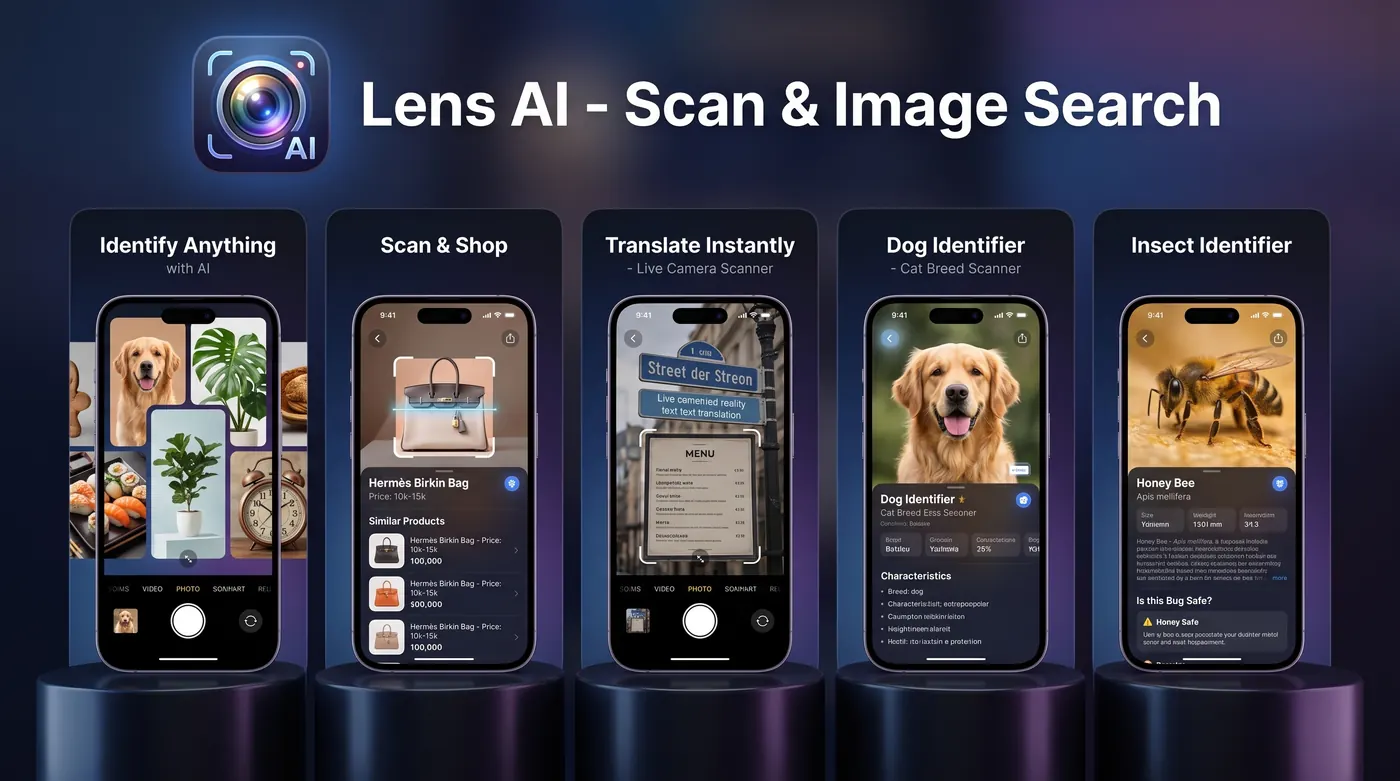
SellRaze vs Lens App compares two photo-based tools with different goals. SellRaze is an AI-powered listing and cross-listing tool for resellers: it can use an item photo to help create a title, description, price suggestion, and marketplace listing while tracking inventory. Lens App is a broader visual identifier for products, clothes, coins, antiques, plants, animals, rocks, logos, and other objects. It pairs an identification pass with reverse image search, similar-product lookup, and image translation. Lens App does not publish marketplace listings or manage resale inventory. It is an independent app, not Google Lens and not affiliated with Google. Neither tool can certify authenticity or guarantee an item's selling price.
Choose SellRaze when your main job is turning secondhand inventory into listings across resale marketplaces. Choose Lens App when you first need to determine what an object may be, compare look-alikes, search for matching products, translate visible text, or investigate categories beyond modern resale merchandise.
The real split is reseller workflow versus broad visual identification: SellRaze helps list inventory, while Lens App helps investigate what is in a photo.
Which is better for identifying and selling thrifted items?
SellRaze is better suited to sellers who already know that an item belongs in their inventory and want to generate listing details, receive a pricing suggestion, cross-list it, and track it. Its workflow is particularly relevant to clothing and modern merchandise with accessible resale references, although every generated field should be reviewed before publishing.
Lens App is more useful at the discovery stage or when an item falls outside a standard resale category. It can identify an object from a photo, return ranked alternatives, pair labels with web matches, and help find a product from an image. It can also flag a weak or blurry photo and suggest a retake.
SellRaze is built to move identified inventory into resale listings; Lens App is built to investigate products, collectibles, living things, and everyday objects from images.
When to use SellRaze vs Lens App (and when not to)
Use it when
- Use SellRaze when cross-listing secondhand inventory is the main task.
- Use SellRaze when you want AI-generated listing titles, descriptions, and pricing suggestions to review.
- Use Lens App when you are unsure what an object, coin, antique, rock, logo, plant, or animal is.
- Use Lens App when you want reverse image search and similar-product results alongside an identification.
- Use Lens App when signs, labels, menus, or packaging require image translation.
Skip it when
- Skip automated listing tools if you cannot review marketplace policies, shipping details, item condition, and generated copy before posting.
- Skip camera-based value estimates when you need a certified appraisal, insurance value, or authenticity determination.
- Skip either app as the sole authority for safety-critical plant, mushroom, medical, legal, or financial decisions.
How to compare SellRaze with Lens App
Photograph the complete item
Use even lighting and a simple background. Capture the whole object first, then photograph labels, maker's marks, barcodes, damage, and distinctive details separately.
Identify before pricing
Use Lens App when the category, model, material, species, or object type is uncertain. Review ranked alternatives and web matches rather than accepting the first possible label.
Check reference evidence
Compare visible markings, dimensions, condition, and matching product pages. A visually similar result may be a different edition, size, material, or reproduction.
Build and review the listing
If resale is the goal, use SellRaze to generate and distribute listing information. Correct the title, description, category, price, shipping settings, and condition notes before publishing.
Monitor every marketplace
After cross-listing, confirm that listings and inventory changes synced correctly. Marketplace integrations and rules can change, so verify the live result on each connected platform.
Common SellRaze and Lens App use cases
- Identifying an unfamiliar thrift-store object before researching it
- Generating draft listings for clothing and modern secondhand merchandise
- Cross-listing reseller inventory across supported marketplaces
- Finding visually similar products from a photo
- Investigating coins, antiques, rocks, logos, plants, insects, birds, and animals
- Translating text visible on packaging, labels, signs, or menus
Lens App and SellRaze compared
Features, marketplace support, plan details, and public listings can change, so verify current information in each app before choosing.
| Feature | Lens App | SellRaze |
|---|---|---|
| Primary purpose | General visual identification, web matching, translation, and product discovery | Reseller listing, cross-listing, pricing assistance, and inventory management |
| Photo workflow | Returns an identification label, ranked alternatives, and related web matches | Uses photos to help generate titles, descriptions, prices, and listings |
| Category breadth | Products, clothes, coins, antiques, rocks, plants, animals, birds, insects, logos, and more | Secondhand inventory, with particular relevance to clothing and modern merchandise |
| Resale marketplaces | Does not publish or synchronize marketplace listings | Supports cross-listing to resale marketplaces such as eBay, Mercari, Poshmark, Depop, Facebook Marketplace, and others |
| Extra visual tools | Reverse image search, similar-product shopping, image translation, and blurry-photo guidance | Reseller-oriented pricing suggestions, listing generation, and inventory tracking |
| Availability and access | Free to download on iOS and Android, with free daily mobile scans, one free web scan per day, and optional upgrades | Available on iOS, Android, and the web; tiers or paid plans are referenced, but exact public pricing is not consistently available |
What both still get wrong
- Photo-based systems can confuse look-alikes, especially when images hide labels, dimensions, materials, damage, or distinguishing features.
- Suggested prices can miss condition, regional demand, fees, shipping costs, rarity, and recent market changes; they are not guaranteed sale prices.
- Generated identifications and listing text can contain errors, so users must verify factual claims, authenticity, marketplace fields, and synchronization.
Try Lens App free
Download Lens App on iOS or Android and use free daily mobile scans to identify products, collectibles, clothes, plants, animals, and other objects. One free web scan is also available per day.
A practical choice
Choose SellRaze if your priority is reducing repetitive work while creating, cross-listing, and tracking resale listings. That specialist workflow is more useful than a general identifier once you know the item and are ready to sell it. Choose Lens App when breadth matters: it can investigate unfamiliar objects, collectibles, products, clothes, plants, animals, and visible text without assuming every photo is resale inventory. Its combined identification and reverse image search can support research before listing. For antiques, use its value ranges only as a starting point and follow an AI valuation versus professional appraisal process when authenticity, insurance, or significant value is involved.
Related guides
Antique identification for resellers
A practical process for researching unfamiliar antiques before writing a resale listing.
Identify clothes from an image
Use visual clues and image search to investigate garments, brands, and similar products.
Visual product search
Learn how photo-based product matching can locate comparable items and shopping results.
How much is an item worth?
Understand the limits of automated value ranges and the evidence needed for better research.
FAQ
Can AI identify and price a thrifted item from one photo?
AI can suggest an identity and possible price from a photo, but one image often omits condition, labels, dimensions, materials, and edition details. Lens App can help investigate the item and find visual matches, while SellRaze can suggest resale pricing. Confirm the exact model and compare relevant market evidence before listing.
Can a cross-listing app replace manual listing work?
A cross-listing app can reduce repetitive drafting and marketplace entry, but it should not replace review. Check generated titles, descriptions, categories, condition notes, shipping policies, prices, and photos before publishing. You should also confirm that edits and sold-item status synchronize correctly across every connected marketplace.
How accurate are AI pricing suggestions for secondhand clothing?
Accuracy depends on whether the garment has clear brand, model, size, condition, and comparable resale data. Suggestions can be less reliable for unbranded, altered, rare, damaged, or vintage pieces. Treat SellRaze's pricing assistance and Lens App's collectible ranges as research starting points, not guaranteed selling prices or certified valuations.
What is the best way to identify an item before listing it online?
Photograph the entire item plus labels, maker's marks, barcodes, hardware, and damage. Use visual identification and reverse image results to form a shortlist, then compare dimensions and distinctive features with credible references. Only after confirming the likely identity should you create a listing and choose a price.
How do you avoid duplicate sales when cross-listing inventory?
Use inventory synchronization where available, but do not assume automation is flawless. After an item sells, confirm that it has been removed or marked unavailable on every other marketplace. Keep a simple inventory record, watch for sync errors, and understand each marketplace's cancellation rules before accepting orders.
Can a photo identification app authenticate antiques or collectibles?
No. A photo app can suggest an object type, maker, period, or visually similar examples, but it cannot inspect materials, construction, provenance, restoration, or hidden marks in person. Lens App's collectible value ranges are only a research starting point. Valuable or disputed items may require a qualified specialist or appraiser.