 Lens
Lens
ThriftAI vs Lens App
Compare a resale-focused profit assistant with a broader AI camera identifier. The right choice depends on whether you primarily need flipping guidance or identification across many everyday categories.


What does ThriftAI vs Lens App actually compare?
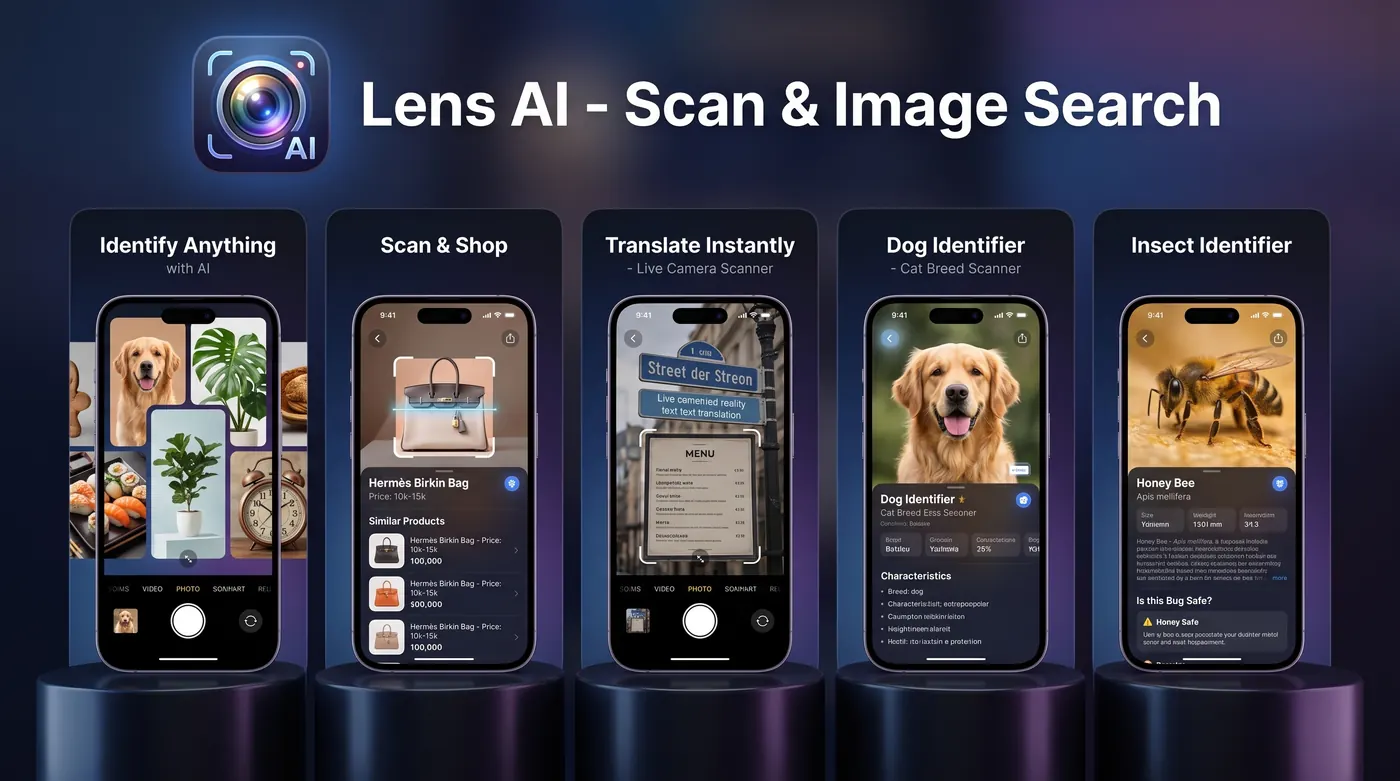
ThriftAI vs Lens App compares two different approaches to scanning secondhand finds. ThriftAI is a resale assistant designed to estimate market value and potential profit for items found in thrift stores, garage sales, or closets. Its public materials emphasize brand and condition recognition, market data, and buy-or-skip guidance. Lens App is a multi-purpose visual identifier for clothes, antiques, coins, products, plants, animals, rocks, logos, and other subjects. It combines an identification pass with reverse image search, related web matches, shopping lookup, and image translation. ThriftAI is more specialized for resale screening, while Lens App is intended for people who want one camera tool for identification, visual search, and product discovery beyond flipping.
Choose ThriftAI when your main task is quickly screening thrift finds for resale potential and profit. Choose Lens App when you need broader identification, reverse image search, similar-product lookup, or translation from photos. Neither app provides a guaranteed sale price, certified appraisal, or proof that an item is authentic.
The real split is resale-first profit guidance from ThriftAI versus broad, camera-first identification and visual search from Lens App.
Which is better for thrift shopping and visual identification?
ThriftAI is the more focused option for dedicated flippers who want buy-or-skip guidance and estimated resale potential while sourcing. Its product positioning directly addresses thrift stores, garage sales, closets, brand recognition, condition, and profit-oriented decisions.
Lens App is better when the object might require broader investigation before resale. It can help identify clothes from an image, examine an unfamiliar antique for resale research, or run a reverse image search alongside its identification result. Its value ranges are research starting points, not appraisals.
ThriftAI helps answer “Could this be profitable to resell?” while Lens App more broadly asks “What is this, and where can I research or find similar items?”
When to use ThriftAI vs Lens App (and when not to)
Use it when
- You scan clothes, antiques, coins, products, and unrelated everyday objects.
- You want identification paired with reverse image search and web matches.
- You need similar-product or shopping results from a photo.
- You encounter signs, labels, menus, or packaging that need image translation.
- You want ranked alternatives and retake guidance when a subject is blurry or resembles several items.
Skip it when
- Your only priority is rapid, profit-oriented thrift sourcing; ThriftAI is built more specifically for that workflow.
- You need a certified appraisal, insurance valuation, or authenticity determination.
- You expect any estimated value or profit figure to guarantee an eventual selling price.
How to compare ThriftAI with Lens App
Photograph the whole item
Use clear lighting and capture the complete shape, material, and visible branding. Avoid cluttered backgrounds where possible.
Capture identifying details
Take additional photos of labels, maker marks, serial numbers, stitching, signatures, hallmarks, or damage that may affect identification and resale research.
Identify before valuing
Establish the likely item, brand, model, material, or era first. A value estimate based on the wrong identification is not useful.
Compare visual and market evidence
Use Lens App for labels, alternatives, web matches, and similar products, or use ThriftAI for resale-oriented market and profit guidance.
Verify before buying or listing
Check multiple relevant sources and account for condition, fees, shipping, local demand, and uncertainty. Seek a qualified specialist for consequential valuations or authenticity questions.
Common thrift and resale use cases
- Screening a thrift-store item for possible resale potential
- Identifying an unknown clothing brand or product model
- Finding visually similar products and current shopping pages
- Researching an antique, coin, collectible, or maker mark
- Translating foreign-language labels and packaging
- Checking alternative identifications when two items look alike
Lens App and ThriftAI compared
Features, availability, and subscription terms are based on current public information and may change.
| Feature | Lens App | ThriftAI |
|---|---|---|
| Primary purpose | General visual identification, reverse image search, translation, and product discovery | Resale screening, estimated market value, and profit-oriented guidance |
| Subject coverage | Plants, animals, birds, insects, coins, rocks, antiques, products, logos, and clothes | Thrift and secondhand items, with emphasis on brands, condition, value, and resale decisions |
| Resale support | Collectible value ranges as a research starting point, plus web and shopping matches | Market-value and potential-profit estimates with buy-or-skip guidance |
| Visual-search tools | Identification paired with reverse image search and similar-product lookup | Public materials emphasize resale estimates and market data rather than general visual search |
| Photo uncertainty | Ranks likely alternatives, flags weak or blurry photos, and can suggest a retake | Public materials reviewed do not provide enough detail to compare uncertainty handling |
| Access and plans | Free on iOS and Android, with free daily mobile scans, one free web scan per day, and optional upgrades | Listed on iOS and Android with free and paid subscription plans; a complete public price table was not found |
What both still get wrong
- An incorrect brand, model, edition, or condition assessment can make a resale estimate misleading.
- Market estimates cannot guarantee the price an item will sell for after fees, shipping, negotiation, and changes in demand.
- A photo scan cannot establish authenticity, ownership history, hidden damage, or a certified appraisal.
Try Lens App free
Download Lens App on iOS or Android at https://onelink.to/brjuyz. Free daily mobile scans are included, and the web version provides one free scan per day.
A practical choice
Choose ThriftAI if most of your scans happen while sourcing inventory and your central question is whether an item may be profitable to flip. That resale-first workflow is its genuine advantage. Choose Lens App when breadth matters: it can identify many categories, translate text, find similar products, and pair a likely label with web matches. This makes it useful when a thrift find requires both object identification from a photo and wider research. For valuable antiques or collectibles, treat either app as an initial lead. Review the difference between an AI valuation and a professional appraisal before making insurance, legal, authenticity, or high-value purchase decisions.
Related comparisons
AntiqSnap vs Lens App
Same comparison cluster
Underpriced AI vs Lens App
Same comparison cluster
PriceSnap vs Lens App
Same comparison cluster
How Much Is It Worth?
Understand what photo-based value ranges can and cannot tell you about an item.
Find a Product From a Photo
Identify an item and search for visually similar products or shopping pages.
FAQ
Which type of app is better for thrift store flipping?
A resale-focused assistant is usually better when the main goal is rapid sourcing and profit screening. ThriftAI is built around estimated market value, condition or brand recognition, and buy-or-skip guidance. Lens App is more useful when you first need broad identification, reverse image matches, translated labels, or similar-product research across several categories.
Can a photo identify clothing and estimate its resale value?
A clear photo may help identify a clothing category, brand, style, or visually similar listing. ThriftAI focuses on resale estimates and profit guidance, while Lens App combines clothing identification with web and shopping matches. Neither can reliably account for every condition issue, counterfeit detail, platform fee, shipping cost, or change in demand.
How reliable are AI resale value and profit estimates?
AI estimates are best treated as screening tools rather than guaranteed prices. Reliability depends on correct identification, relevant market data, condition, edition, location, fees, and current demand. Compare multiple sources before buying or listing. For expensive antiques, jewelry, rare coins, insurance, or legal matters, consult an appropriate qualified specialist.
Can an image-scanning app verify whether a thrift find is authentic?
No photo-scanning app should be treated as proof of authenticity. It may recognize a logo, model, label, or visual resemblance, but convincing counterfeits can share those features. Authentication may require construction details, materials, serial records, provenance, physical inspection, or specialist expertise that a phone image cannot provide.
What app features help identify antiques and collectibles?
Useful features include object identification, maker-mark recognition, reverse image search, ranked look-alikes, and links to related web results. Lens App offers broad antique, coin, and product identification with visual search. ThriftAI is more oriented toward resale value and profit screening. Any value range remains preliminary research, not a certified appraisal.
Do resale scanning apps work on both iPhone and Android?
Both Lens App and ThriftAI have public listings for iOS and Android. Lens App is free to download and includes free daily mobile scans, with optional upgrades. ThriftAI public materials confirm free and paid plans billed through the Apple App Store or Google Play, but subscription details and prices should be checked in the current store listing.
What is the difference between a resale assistant and a visual identifier?
A resale assistant is designed around sourcing decisions, estimated value, and possible profit. A general visual identifier covers a wider range of questions, such as identifying an animal, coin, rock, logo, antique, or product and locating related images or shopping results. The better choice depends on whether resale or broad recognition is the priority.