 Lens
Lens
Value Scout vs Lens App
Value Scout focuses on resale valuation and sold-comps research. Lens App is a broader camera-first identifier for thrift finds, collectibles, products, nature, translation, and visual search.


What does Value Scout vs Lens App actually compare?
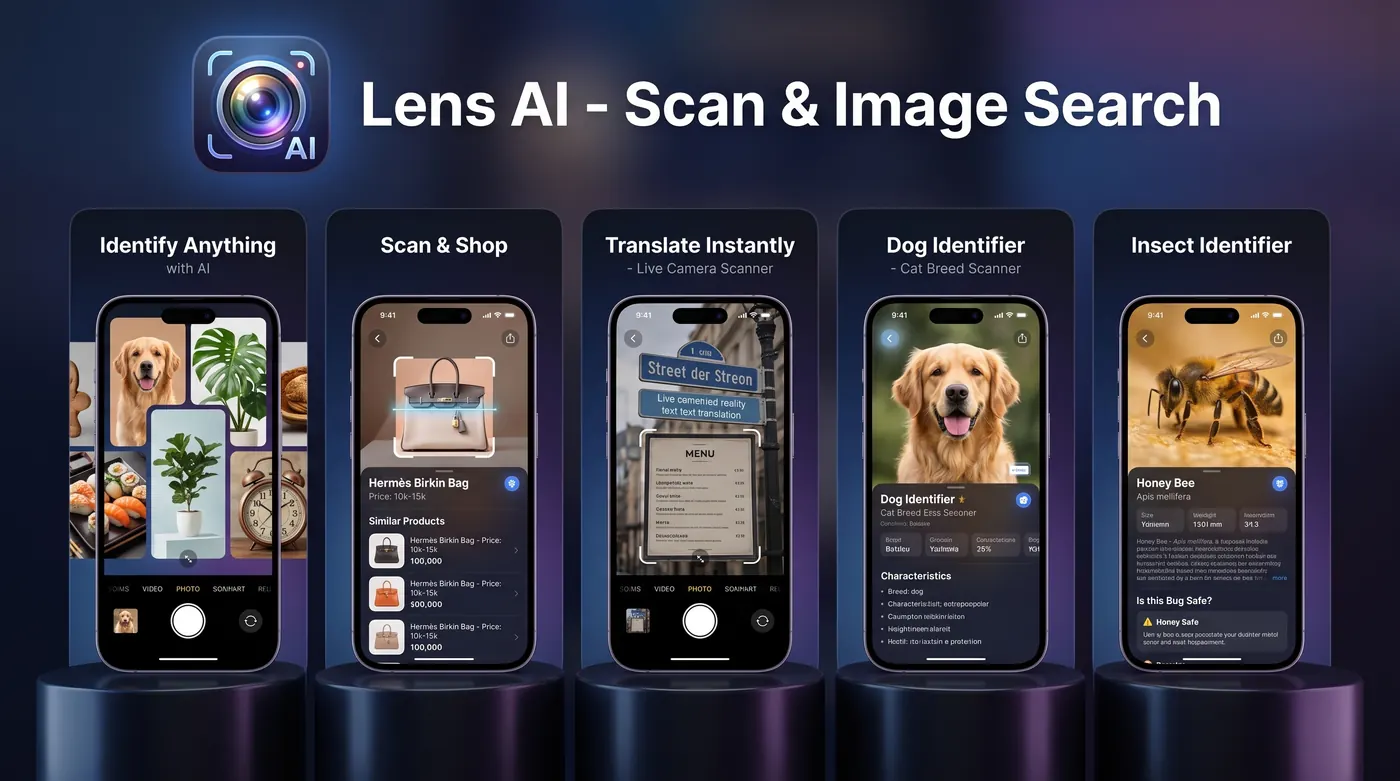
Value Scout vs Lens App compares a resale-focused valuation workflow with a broad visual-identification workflow. Value Scout is designed for thrifters, resellers, collectors, and homeowners who want an item estimate informed by recently sold marketplace listings. Its strength is moving from a photo toward fair-market-value guidance and resale research, especially for common clothing, shoes, and household goods. Lens App starts with the wider question: “What is this?” It identifies antiques, coins, clothes, products, plants, animals, rocks, logos, and more, then pairs a label with web matches and reverse image search. It can also find similar products and translate text in images. Neither tool provides certified appraisal, provenance, or guaranteed authentication.
Choose Value Scout when your main goal is researching resale prices, sold comparables, marketplace fit, and listing timing for a thrift find. Choose Lens App when you need broader identification across many categories, reverse image search, similar-product lookup, image translation, or help separating visually similar possibilities.
The real split is resale-specific pricing research versus broad, camera-first identification and visual search.
Which is better for thrift finds and resale research?
Value Scout is the stronger specialist when you already know you are evaluating inventory for resale. Its workflow combines photo recognition with fair-market-value estimates and recently sold comparables from secondary-market platforms. That is more directly useful for sourcing common clothing, shoes, and household goods than a general identifier.
Lens App is more useful when identification comes first or the object falls outside mainstream resale categories. It can examine antiques, coins, clothes, logos, rocks, plants, and other objects, then pair its identification pass with web matches. See the antique identifier for resellers or learn how to identify an item from a photo.
Value Scout is built around what an item may sell for; Lens App is built around determining what is pictured and where to research it next.
When to use Value Scout vs Lens App (and when not to)
Use it when
- You need to identify an unfamiliar thrift-store object before researching its price.
- Your photos include mixed categories such as antiques, coins, clothes, rocks, logos, or products.
- You want reverse image search and identification results in the same workflow.
- You need to translate writing on packaging, labels, signs, or maker’s marks.
- You want ranked alternatives and retake guidance when an image is blurry or ambiguous.
Skip it when
- Use Value Scout instead when sold comparables and resale pricing are the main purpose of every scan.
- Skip photo-only conclusions when provenance, condition, hidden markings, or authenticity materially affects value.
- Do not use either app as a certified appraisal or for legal, insurance, medical, or safety-critical decisions.
How to compare Value Scout with Lens App
Decide whether identity or resale price comes first
If you cannot confidently name the item, begin with broad identification. If the item is already known and your question is what comparable examples sold for, begin with resale research.
Take a clear, tightly framed photo
Use good lighting and include distinctive shapes, labels, signatures, maker’s marks, model numbers, or patterns. Photograph additional angles when condition or construction matters.
Review alternatives instead of accepting one label
Look-alike products, reproductions, and related models can produce different values. Lens App ranks alternatives and flags weak or blurry photos that may need a retake.
Check market evidence separately
For resale decisions, compare the identified item against relevant sold listings. Value Scout specializes in this step, while Lens App’s collectible ranges should be treated only as a research starting point.
Verify details before listing or insuring
Confirm dimensions, materials, condition, edition, markings, and provenance. Consult a qualified specialist when authenticity or a high-value appraisal matters.
Common ways thrift and resale users choose between them
- Identifying an unmarked object found at a thrift store or estate sale
- Checking sold comparables for mainstream clothing, shoes, or household goods
- Finding visually similar products when a brand or model is unknown
- Reading and translating foreign-language packaging or labels
- Researching a coin, antique, rock, logo, or collectible outside typical resale inventory
- Creating a preliminary research trail before consulting an appraiser or category specialist
Lens App and Value Scout compared
Features, availability, and monetization can change, so verify current public listings before choosing.
| Feature | Lens App | Value Scout |
|---|---|---|
| Primary purpose | Broad photo identification and visual search | Resale valuation and sold-comps research |
| Category coverage | Plants, animals, birds, insects, coins, rocks, antiques, products, logos, and clothes | Focused on physical resale items, with particular strength in mainstream categories |
| Result style | Identification label, web matches, reverse image search, ranked alternatives, and retake guidance | Item identification, estimated fair market value, comparable sales, and resale guidance |
| Resale research | Shopping lookup and collectible value ranges as a preliminary research starting point | Specialized analysis of recently sold marketplace listings and marketplace suggestions |
| Additional visual tools | Similar-product search and translation of text in signs, menus, labels, and packaging | Public descriptions emphasize valuation, demand, sold comps, and listing support |
| Access and pricing disclosure | Free on iOS and Android, with free daily mobile scans, one free web scan daily, and optional upgrades | Publicly listed on iOS and Android and free to download; exact in-app plan details were not clearly disclosed in the supplied research |
What both still get wrong
- A single photo may hide maker’s marks, damage, repairs, dimensions, materials, or other details needed for reliable identification and pricing.
- Rare art, obscure antiques, and one-of-a-kind objects may lack enough visual or sold-listing evidence for a confident result.
- An AI estimate or value range is not certified appraisal, provenance, authentication, or a guarantee that an item will sell.
Try Lens App free
Download Lens App free on iOS or Android at https://onelink.to/brjuyz. Free daily mobile scans and one free web scan per day are available, with optional upgrades.
A practical choice
Choose Value Scout when you routinely source common resale inventory and want a purpose-built route from a photo to sold comparables, estimated market value, and marketplace guidance. That specialist workflow is its genuine advantage. Choose Lens App when breadth matters: identifying an unknown antique, coin, garment, product, logo, rock, plant, or animal; translating a label; or finding visual web matches and similar products. For valuable collectibles, use either result as a lead rather than proof. Review why AI valuation differs from a professional appraisal, and verify condition, marks, provenance, and completed sales before buying or listing.
Related guides
How Much Is It Worth?
Learn what affects an item’s preliminary value range and when expert help is needed.
Reverse Image Search
Use visual matches to investigate unknown products, objects, and collectibles.
Find a Product From a Photo
Search for an exact or visually similar product when its name is unknown.
FAQ
What is the best type of app for checking a thrift find’s resale value?
A resale-focused app is usually better when the item is already identifiable and you mainly need sold comparables, market demand, and pricing guidance. Value Scout is designed for that workflow. If you do not yet know what the object is, a broad identifier such as Lens App can help establish search terms before you investigate completed sales.
Can a photo app accurately estimate what an item will sell for?
It can provide a starting estimate, but no photo app can guarantee a sale price. Condition, size, authenticity, edition, location, season, shipping cost, and marketplace demand all matter. Estimates are generally more useful when many closely matching sold listings exist and less reliable for rare antiques, unique art, or poorly photographed objects.
How do you identify an obscure antique before pricing it?
Photograph the full object plus signatures, labels, stamps, joints, hardware, and damaged areas. Use broad visual identification and reverse image search to generate names and likely alternatives, then compare specialist references and sold listings. Lens App is suited to the first discovery step; an appraiser or category expert may still be necessary for provenance or authentication.
Are sold listings the same as a professional appraisal?
No. Sold listings show what particular items reportedly sold for under specific marketplace conditions. A professional appraisal considers purpose, condition, provenance, authenticity, market selection, and appropriate valuation methodology. Comparable sales are useful evidence, but weak matches, undisclosed damage, reproductions, bundled sales, or unusual bidding can make them misleading.
Can visual-search apps identify clothes and find similar products?
Yes, when the photo clearly shows the garment’s silhouette, pattern, logo, label, or distinctive details. Lens App identifies clothes and can run similar-product and shopping searches from a photo. Exact matches are harder for generic, altered, vintage, or unbranded pieces, so photograph tags, care labels, stitching, and hardware when available.
Which app should a reseller use for mixed-category estate-sale finds?
A broad identifier is often more practical for the first pass because an estate sale may contain coins, antiques, clothing, tools, rocks, décor, and unfamiliar products. Lens App covers those varied categories. Once promising items are identified, a resale specialist such as Value Scout can be the better second step for sold-comps and pricing research.