 Lens
Lens
Most Valuable Items Found at Home
The most valuable household finds are often ordinary-looking objects with an uncommon maker, date, material, or history. A careful inspection can help separate collectible pieces from everyday belongings.
Drop a household find photo here or tap to check
JPG, PNG, WebP, HEIC • Max 50MB

Analyzing with AI…
Matching visual details and value clues


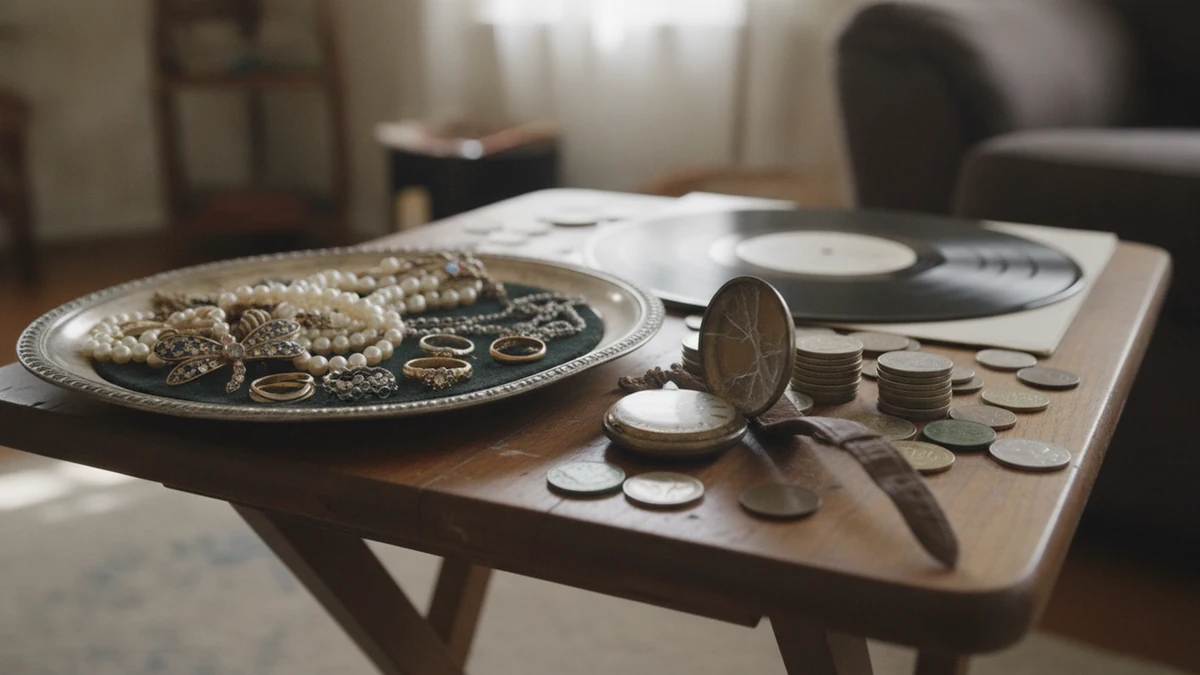
What valuable items could be hiding in your home?
Potentially valuable household finds include signed jewelry, vintage watches, rare coins, early records, original art, sterling silver, and Asian decorative objects. Maker’s marks, scarcity, condition, provenance, and completeness usually matter more than age alone. Before cleaning or selling an unfamiliar object, document its details and compare it with verified sold examples.
How to use this tool
Sort without cleaning
Group objects by category and keep sets, boxes, paperwork, spare parts, and accessories together. Do not polish coins, silver, jewelry, watches, or painted surfaces before identification.
Record every mark
Write down signatures, hallmarks, serial numbers, model references, dates, labels, and inscriptions exactly. Note uncertain letters rather than guessing a famous name.
Take a complete photo set
Photograph the whole item, identifying details, measurements, and condition problems in neutral light. Add category-specific images such as coin edges, record runouts, or watch case backs.
Identify the exact version
Narrow the item by maker, material, model, production period, size, and variant. Similar-looking versions may have very different levels of scarcity and demand.
Compare verified sold examples
Use completed sales that match the item closely in condition, date, size, material, and completeness. Ignore unusually high asking prices unless there is supporting evidence of actual sales.
Escalate promising discoveries
Contact a category specialist when the object appears rare, signed, historically important, or difficult to authenticate from photographs. Request a formal appraisal when one is needed for insurance, estate, tax, or legal use.
Where valuable household finds tend to hide
Valuable objects are frequently discovered in jewelry boxes, desk drawers, closets, old trunks, garages, and boxes inherited from relatives. The item may have been stored because it was sentimental, out of fashion, damaged, or difficult to identify rather than because anyone recognized its market value.
Do not limit the search to objects that look luxurious. A plain coin may have a scarce date, a modest brooch may carry an important designer mark, and a dusty record may be an early pressing with a rare label variation.
Original packaging, receipts, certificates, fitted cases, spare parts, and handwritten family notes should remain with the object. These materials can help establish identity, completeness, and ownership history.
- Jewelry boxes containing signed, gold, silver, or unusual costume pieces
- Drawers holding watches, coins, medals, fountain pens, or old photographs
- Record shelves containing early pressings, promotional copies, or unusual labels
- Dining cabinets with sterling flatware, tea services, porcelain, or studio ceramics
- Attics containing paintings, prints, posters, military items, toys, and first editions
- Inherited boxes containing receipts, certificates, correspondence, or original cases
Jewelry and watches with stronger value potential
Fine jewelry deserves attention when it carries a clear gold, platinum, or silver fineness mark, but precious-metal content is only one part of its value. Designer signatures, workmanship, gemstone quality, period style, rarity, and an intact matching set can push a piece beyond its basic material value.
Vintage costume jewelry can also be collectible. Signed pieces by recognized makers, unusual early designs, limited production, and complete parures may attract buyers even when the materials are not precious.
For watches, record the dial name, case reference, serial number, case-back markings, movement markings, and bracelet or strap details. A nonworking watch should not be discarded because rare cases, dials, movements, and original parts can retain value, although restoration costs may substantially reduce what a buyer will pay.
Jewelry details worth documenting
Photograph hallmarks, maker’s marks, clasp construction, stone settings, engraving, and signs of repair. Do not test gemstones by scratching them or apply chemical cleaners before learning what the piece contains.
Watch details that affect collectibility
Original dials, hands, crowns, bezels, bracelets, and movements are often preferred to later replacements. Heavy polishing, moisture damage, missing components, and mismatched reference numbers can change the market significantly.
Coins, silver, and precious-metal objects
Coins should be checked by country, denomination, date, mint mark, metal, and visible design variety. A coin’s collector value can be much higher than its face or metal value, but harsh cleaning, polishing, scratches, and environmental damage can lower its grade and desirability.
Sterling flatware, tea sets, serving pieces, and decorative objects often carry hallmarks identifying the maker and metal standard. Look beneath handles, on the backs of utensils, around rims, and under lids for marks such as sterling, 925, or country-specific assay symbols.
Silver plate should not automatically be dismissed, since rare makers and desirable forms can still be collectible. However, plated objects generally do not have the same precious-metal floor as solid sterling, so the construction and marks need to be identified correctly.
- Never polish a coin to make its details easier to see
- Photograph both sides of each coin and its edge
- Keep coins in existing holders unless the holder is actively damaging them
- Weigh metal objects only after photographing all marks
- Keep complete flatware patterns and fitted cases together
Records, books, toys, and paper collectibles
The value of a vinyl record depends on its exact pressing rather than the song or artist alone. Label design, catalog number, country, matrix or runout markings, stereo or mono format, promotional status, sleeve variation, and condition all help distinguish a common reissue from a scarce edition.
Books are more promising when they are true first editions, signed or inscribed copies, limited printings, early illustrated works, or books retaining uncommon dust jackets. A famous title can still be inexpensive when it is a later printing, while an obscure regional or specialist book may be scarce.
Vintage toys, trading cards, comic books, and advertising pieces are highly sensitive to completeness and condition. Original boxes, instructions, accessories, inserts, unused decals, and matching serial labels can materially affect buyer interest.
How to document a potentially rare record
Capture the front and back cover, spine, inner sleeve, both labels, and the etched or stamped matrix in the runout area. Grade the vinyl and sleeve separately because a clean disc in a damaged jacket is not equivalent to a complete high-grade copy.
Why original packaging matters
Packaging can identify a production period, variant, retailer, or complete accessory set. Avoid taping torn boxes or replacing missing inserts before researching how collectors evaluate the item.
Art, prints, porcelain, and Asian decorative objects
Paintings, drawings, prints, and posters should be examined on the front and back. Signatures matter, but so do labels, gallery stamps, inventory numbers, inscriptions, paper type, canvas construction, frame age, and any evidence that the signature was added later.
A print is not necessarily a low-value reproduction. Limited editions, artist proofs, early impressions, rare posters, and works by established printmakers can be collectible, while decorative prints with facsimile signatures may have modest resale value.
Chinese porcelain, Japanese works, bronze figures, snuff bottles, studio ceramics, antique urns, and other Asian decorative pieces can require specialist interpretation. Marks may indicate a period, workshop, later tribute, or decorative reference, so a familiar-looking mark is not proof of age.
Do not remove paintings from frames, scrub ceramic surfaces, or use household glue on cracks. Old restorations, chipped rims, drilled bases, replaced lids, and overpainting should be photographed because they can affect both identification and value.
- Photograph signatures in normal and angled light
- Capture the reverse of frames, canvases, panels, and porcelain bases
- Keep labels, wax seals, old hanging hardware, and inventory numbers visible
- Record dimensions without removing fragile components
- Treat family stories as research leads rather than authentication
What affects the value of an item found at home
Market value usually comes from a combination of identity, rarity, condition, demand, and documented history. Age by itself is not enough. Many old objects were produced in large numbers, while some relatively recent items are valuable because few complete examples survive.
Comparable sales should match the object as closely as possible. A sold result for the same maker is less useful when the model, size, material, production date, condition, or completeness differs.
Buyer demand also changes over time and by location. An object that performs well at a specialist auction may receive little attention in a general local sale, while shipping cost and fragility can reduce the practical resale value of large furniture or ceramics.
| Factor | Questions to ask |
|---|---|
| Maker or artist | Is the signature or mark documented, correctly read, and consistent with the object? |
| Rarity | How many comparable examples appear in recent sold records? |
| Condition | Are there cracks, repairs, replacements, stains, polishing, or missing parts? |
| Authenticity | Do materials, construction, marks, and age indicators agree? |
| Completeness | Are the case, box, lid, accessories, certificates, and matching pieces present? |
| Provenance | Are there receipts, estate records, exhibition labels, or dated photographs? |
| Demand | Are collectors currently buying this exact category, model, artist, or pattern? |
| Selling venue | Would the object reach better buyers through a specialist dealer, auction, or marketplace? |
Marks and clues that justify a closer look
A clear mark can turn a vague search into a focused investigation. Look for signatures, hallmarks, patent numbers, model references, foundry stamps, paper labels, edition numbers, mint marks, and retailer names, then record every character exactly as it appears.
Construction can be as important as a printed name. Hand-cut joints, period fasteners, casting methods, clasp designs, movement types, paper texture, and underglaze decoration may help establish when and how an object was made.
Be cautious with famous names and symbols. Marks are copied, later products may reuse historic branding, and some pieces combine old and replacement parts. A signature should be evaluated alongside materials, workmanship, provenance, and known reference examples.
- Designer or workshop names that can be read clearly
- Precious-metal purity marks and assay symbols
- Serial, reference, patent, or edition numbers
- Mint marks, matrix codes, and production identifiers
- Old retailer, gallery, framer, exhibition, or collection labels
- Signs that a complete set, pair, or original accessory survives
Photo checklist for identifying valuable finds
Good photographs allow marks, materials, and condition to be compared without handling the object repeatedly. Use indirect natural light, a neutral background, and the highest practical resolution. Avoid filters, portrait blur, flash glare, and digital sharpening that hides surface texture.
Start with full views that show the object’s form, then move closer for identifying details. Include one scale image with a ruler or common coin, but do not place a coin directly on a delicate surface.
Condition images should be factual rather than flattering. Photograph chips, cracks, oxidation, scratches, loose stones, repairs, stains, replaced straps, missing hardware, and damaged packaging so later estimates are based on the actual item.
- Front, back, sides, top, base, and interior where accessible
- Maker’s marks, signatures, labels, hallmarks, and serial numbers
- Close-ups of materials, joinery, settings, brushwork, or print texture
- Every visible defect, repair, replacement, or missing component
- A scale photograph and a separate written measurement
- For coins: obverse, reverse, edge, date, and mint mark
- For records: labels, matrix or runout, sleeve, cover, and spine
- For watches: dial, case back, crown, bracelet, clasp, and movement if safely accessible
Appraisal limits and safer next steps
A photo-based identification or online price estimate is a starting point, not a certified appraisal, authentication, or guarantee of a selling price. Photographs may not reveal gemstone treatments, metal composition, internal watch parts, restoration, altered signatures, print methods, or subtle counterfeit indicators.
Asking prices are not reliable evidence of what buyers have paid. Give greater weight to recent sold listings for the same version and condition, then account for seller fees, buyer premiums, shipping, insurance, restoration needs, and the difference between retail and dealer offers.
Seek an appropriate specialist when an object appears rare, signed, historically important, made from valuable materials, or difficult to authenticate. Insurance, estate, tax, and legal purposes may require a formal written appraisal completed by a qualified professional.
Until the item is understood, avoid aggressive cleaning, polishing, reframing, opening sealed packaging, servicing a watch, or separating a set. A well-intended alteration can remove original surfaces or evidence that collectors use to judge authenticity.
Estimate versus appraisal
An estimate is an informed market range based on available details and comparable sales. A formal appraisal has a defined purpose, effective date, research process, and written methodology, and it may require physical inspection.
When to pause before selling
Pause if research points to an important maker, scarce model, valuable metal, unusual provenance, or a wide gap between comparable results. Additional expert review may prevent a rare object from being listed as a common example.
Example value ranges
These broad USD ranges are for triage only. Exact issue, condition, authenticity, and recent sold comps decide real prices.
| Example | Broad range (USD) | Main clues |
|---|---|---|
| Signed vintage costume jewelry | $25 to $5,000+ | Recognized maker, scarce design, complete set, original stones, strong condition |
| Vintage gold or platinum jewelry | $100 to $10,000+ | Metal purity, weight, designer, gemstone quality, period, workmanship |
| Vintage mechanical watch | $100 to $20,000+ | Brand, reference, movement, originality, service condition, dial and case quality |
| Individual collectible coin | $1 to $10,000+ | Date, mint mark, variety, metal, grade, surface originality, certified attribution |
| Scarce vinyl pressing | $10 to $5,000+ | Exact pressing, matrix, label variation, promotional status, disc and sleeve condition |
| Original painting, print, or poster | $50 to $25,000+ | Artist, authenticity, medium, edition, provenance, condition, buyer demand |
| Asian porcelain or decorative object | $50 to $20,000+ | Period, workshop, materials, marks, construction, provenance, restoration |
| Sterling silver service or flatware set | $300 to $8,000+ | Maker, pattern, weight, completeness, monograms, condition, fitted case |
| First edition or signed book | $20 to $10,000+ | Edition statement, printing, signature, dust jacket, association, condition |
| Boxed vintage toy or collectible | $25 to $5,000+ | Variant, rarity, working condition, original box, inserts, accessories |
A practical first check from your photos
Lens AI: Scan & Image Search at LensApp.io can help you begin identifying an unfamiliar household object from clear photographs. Use full-object images together with close-ups of marks, labels, signatures, and condition details to generate more focused visual matches and search directions.
Treat the result as a research lead rather than proof of identity or value. Confirm promising matches through exact model details, reliable reference material, recent sold comparisons, and specialist inspection when authenticity or significant value is possible.
Related value guides
More value guides: How much is it worth · VHS tapes · Old Pyrex · Beanie Babies · Signs old stuff is valuable · AI valuation vs appraiser · Photograph items for valuation · Pokemon card value · Coin value checker · Watch value checker · Jewelry value checker · Antique value checker · Funko Pop value · Vinyl record value.
Frequently Asked Questions
What are the most valuable items commonly found at home?
High-potential categories include signed jewelry, collectible watches, rare coins, original art, scarce records, sterling silver, first-edition books, and Asian decorative objects. The strongest examples are usually rare, authentic, complete, well preserved, and supported by clear maker information or provenance.
Does an item need to be very old to be valuable?
No. Age can provide context, but scarcity and demand are more important. Some modern limited editions, discontinued watches, toys, cards, and records can be worth more than mass-produced antiques.
Can Lens App tell me exactly how much an item is worth?
Lens App can support an initial visual search and help surface possible identifications. It cannot guarantee authenticity, condition, or a final selling price, so estimates should be checked against closely matched sold examples and specialist advice when appropriate.
Should I clean an old object before photographing it?
Usually not. Polishing, washing, oiling, or using household chemicals can remove original surfaces, damage materials, or reduce collector interest. Dust only when it can be done safely without rubbing, and photograph the item as found.
How should I use Lens App for jewelry or watches?
Begin with a full front view, then add sharp images of the clasp, hallmarks, dial, crown, case back, reference numbers, and visible condition issues. Photograph a watch movement only if the case can be opened safely without damaging seals or components.
Why are sold listings better than asking prices?
A seller can ask any amount, but a sold listing shows that a buyer accepted a price under particular conditions. Even sold results require adjustment for condition, fees, shipping, location, completeness, and differences between variants.
Can Lens App identify rare coins from a photo?
The app may help narrow a coin by country, denomination, design, or date, but small varieties and counterfeit indicators can require magnification, weight, measurements, edge inspection, and expert attribution. Photograph both sides and the edge without cleaning the coin.
What should I do if an item has a famous signature?
Photograph the signature and the entire object, including its back, base, frame, labels, and construction details. Do not assume the name proves authenticity, since signatures can be copied, added later, or used on licensed and workshop-produced objects.
When is a professional appraisal worth the cost?
Consider a professional appraisal when credible research indicates substantial value, authenticity is disputed, or documentation is needed for insurance, an estate, a charitable contribution, tax reporting, or legal proceedings. Choose an appraiser with relevant category experience and a clearly stated appraisal purpose.
What if I cannot find an exact match online?
An absent match may mean the item is uncommon, poorly indexed, altered, or described under a different term. Search individual marks and construction features, consult specialist references, and avoid treating rarity in search results as proof of financial value.