 Lens
Lens
Coin Value Checker
Upload clear photos of both sides to identify a coin and review a practical value range. Compare collector value with metal value using the date, mint mark, condition, and type.
Drop a coin photo here or tap to check
JPG, PNG, WebP, HEIC • Max 50MB

Analyzing with AI…
Matching visual details and value clues


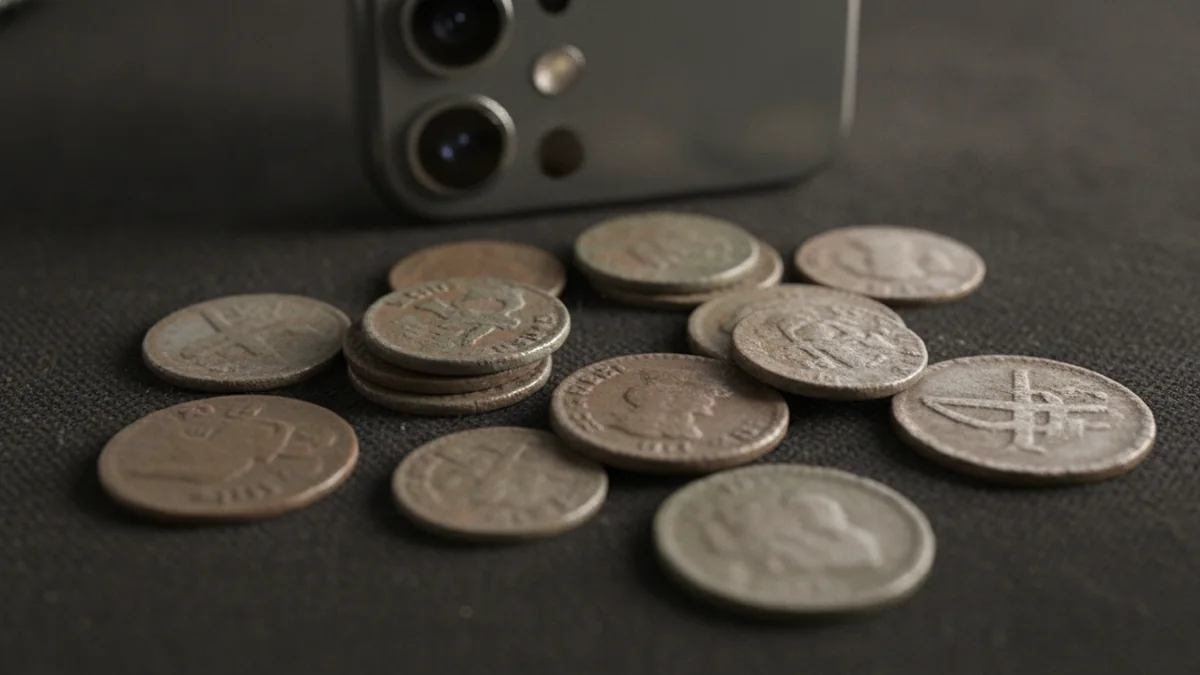
Check a Coin Before You Sell, Store, or Spend It
A coin value checker uses visible details such as denomination, date, mint mark, design, and wear to narrow down an identification and estimated range. It can help separate ordinary circulation coins from silver issues, collectible dates, varieties, and possible errors. The result is a research starting point, not a certified grade or guaranteed sale price.
How to use this tool
Photograph the obverse
Place the coin on a plain surface and take a sharp, straight-on photo of the side with the main portrait or central design. Keep the entire rim visible.
Photograph the reverse
Turn the coin over without cleaning it and capture the second side under the same lighting. Make sure lettering and denomination details can be enlarged.
Add detail images
Take close-ups of the date, mint mark, edge, and any suspected error. Record weight and diameter if you have appropriate tools.
Review the identification
Confirm the country, denomination, series, date, mint mark, and likely composition. Recheck the image if any identifying detail is uncertain.
Compare the value range
Review melt value and collector value separately, then compare recent sales for the same issue and similar condition. Escalate possible rarities for in-hand authentication.
What a Coin Value Checker Can Tell You
A photo-based coin value checker first tries to identify the country, denomination, series, date, and mint mark. Once those details are narrowed down, the coin can be compared with general market ranges for similar examples.
The estimate should account for more than the design on the coin. Wear, surface damage, metal content, scarcity, collector demand, and whether the coin is a recognized variety can all move the likely value up or down.
For common circulation coins, the result may be close to face value. For an older silver coin, key date, low-mintage issue, or genuine mint error, further inspection may be worthwhile.
- Possible country, denomination, and coin series
- Visible date and mint mark
- Approximate condition band based on wear
- Potential melt value and collector value
- Details that require closer inspection or expert verification
| Checker output | What it means |
|---|---|
| Identification | The likely coin type, denomination, date, and issuing country |
| Condition estimate | A broad wear category rather than a certified numerical grade |
| Value range | An approximate market interval for comparable coins |
| Metal information | Possible silver, gold, copper, or base-metal composition |
Identify the Coin Before Estimating Its Value
Small identification differences can create large value differences. Two coins with nearly identical portraits may have different dates, compositions, reverse designs, or mint facilities.
Begin with the exact denomination and series, then confirm the date and mint mark. If the date is worn or partly hidden, compare lettering, portrait style, edge design, diameter, and reverse details instead of guessing.
For unfamiliar world coins, visible script, symbols, rulers, animals, buildings, and denomination marks help narrow the country and period. You can also use the dedicated coin identifier at /coin-identifier/ when identification is the main question.
- Check whether the edge is plain, reeded, lettered, or decorated
- Look for a mint mark near the date, portrait, or reverse lettering
- Confirm that the obverse and reverse belong to the same coin type
- Record weight and diameter when similar varieties are difficult to separate
Melt Value Versus Collector Value
Melt value is based on the amount of valuable metal in a coin and the current market price of that metal. It is especially relevant for common silver, gold, platinum, and palladium coins, although dealer costs and refining spreads mean an actual offer may differ.
Collector value reflects what buyers may pay for the coin as a collectible. Date, mint mark, grade, eye appeal, rarity, varieties, and current demand can make collector value much higher than the underlying metal value.
A worn common-date silver coin may trade mainly for its metal content. A scarce date in the same series may carry a substantial collector premium even when both coins contain nearly the same amount of silver.
- Use metal composition, weight, and purity to understand melt value
- Use date, mint mark, grade, scarcity, and demand to assess collector value
- Do not assume every old coin is rare or every silver coin is worth only its metal
- Check both measures before accepting an offer
| Value type | Best used for | Main limitation |
|---|---|---|
| Melt value | Bullion and common precious-metal coins | Does not include collectible premiums |
| Collector value | Scarce dates, varieties, errors, and high-grade coins | Depends heavily on condition and buyer demand |
What Affects a Coin's Value
The date and mint mark establish the exact issue, but they are only the beginning. Coins from the same year can have different mintages and survival rates depending on where they were produced.
Condition often creates the widest price spread within one issue. A heavily circulated coin may have flattened details and scratches, while a better-preserved example may retain sharp design elements, original luster, and cleaner surfaces.
Rarity must also be paired with demand. A coin can have a low mintage yet remain modestly priced if few people collect the series, while a popular variety may attract strong competition despite a larger surviving population.
- Exact date, mint mark, and recognized variety
- Amount of wear and remaining design detail
- Scratches, corrosion, holes, bends, rim damage, or cleaning
- Original luster, color, toning, and overall eye appeal
- Metal composition, purity, and weight
- Mintage, estimated survival, and collector demand
- Authentication and professional grading for higher-value pieces
- Recent sales for genuinely comparable examples
Why mint marks matter
A mint mark identifies the facility that produced the coin. The same denomination and date may be common from one mint and scarce from another, so a small letter can materially change the estimate.
Why grade matters
Grade describes preservation, not age. PCGS Photograde provides visual examples that can help collectors compare visible wear, but a photo comparison is not the same as professional in-hand grading.
Why cleaning matters
Polishing, dipping, or abrasive cleaning can leave unnatural brightness, hairline scratches, and altered surfaces. These changes often reduce collector interest even when the coin appears shinier.
Coin Category Examples and the Clues to Check
Different coin categories require different valuation methods. A modern circulation coin is usually checked for an unusual variety or mint error, while a silver dollar requires closer attention to date, mint mark, condition, and metal content.
Foreign and ancient coins can be difficult to identify because dates may use unfamiliar calendars and lettering may not use the Latin alphabet. Bullion coins present a different challenge because authenticity, weight, purity, and the current metal market are central to the estimate.
Lincoln cents and other modern circulation coins
Check the date, mint mark, reverse type, composition period, and any unusual doubling or off-center strike. Most circulated examples are ordinary, so apparent errors should be compared with normal damage before a premium is assumed.
Morgan and Peace silver dollars
Date, mint mark, wear, surface quality, and evidence of cleaning all matter. These series also attract counterfeits and altered mint marks, making authentication important when an apparent key date is found.
Pre-1965 United States silver coins
Common circulated dimes, quarters, and half dollars may trade in relation to silver content. Better dates, varieties, and high-grade examples can carry collector value above the metal calculation.
Mint errors
Genuine off-center strikes, wrong planchets, clips, and certain doubled dies may be collectible. Post-mint dents, flattened rims, tool marks, and machine damage are common lookalikes and usually do not create an error premium.
World and ancient coins
Identify the issuing authority, ruler or country, approximate period, denomination, and metal. Provenance, authenticity, patina, style, and legibility may matter as much as the nominal date.
Photo Checklist for a More Useful Coin Check
Photograph the coin before placing it in a new holder or handling it repeatedly. Use a stable surface, diffuse light, and a camera angle directly above the coin so the shape and lettering are not distorted.
Take separate images of the obverse and reverse at full resolution. Add close-ups of the date, mint mark, edge, and any suspected variety or error rather than relying on a single distant image.
Do not polish the coin to make details easier to see. If loose dirt is present, leave it in place until the coin's identity and possible importance are understood.
- Capture both sides straight on
- Fill most of the frame without cutting off the rim
- Use even, neutral lighting without harsh glare
- Make the date and mint mark sharp enough to enlarge
- Photograph the edge when it has lettering, reeds, seams, or unusual color
- Remove the coin from a cloudy flip only when it can be handled safely
- Include weight and diameter as notes when available
- Avoid filters, digital sharpening, and color-changing edits
| Photo problem | Why it matters | Better approach |
|---|---|---|
| Bright flash reflection | Hides luster, wear, and small marks | Use diffuse light from two sides |
| Coin photographed at an angle | Distorts the rim and design | Keep the camera parallel to the coin |
| Low-resolution crop | Makes the mint mark difficult to confirm | Capture a full-resolution close-up |
| Heavy color filter | Misrepresents metal and toning | Use neutral color settings |
How to Read an Estimated Value Range
A value range is more useful than a single number because coin markets contain several price levels. A dealer's purchase offer, a private-party sale, a retail listing, and an auction result may all differ for the same type of coin.
Compare the coin only with examples that share the same date, mint mark, variety, and approximate condition. An asking price does not prove that a buyer paid that amount, so completed sales are generally more informative than active listings.
Use the lower part of a range when the date is uncertain, surfaces are damaged, or the coin has been cleaned. The upper part usually assumes stronger detail, better eye appeal, verified authenticity, and a suitable buyer.
- Separate sold results from unsold asking prices
- Match certified coins with similar certified grades when possible
- Account for seller fees, shipping, insurance, and dealer margins
- Give more weight to recent sales than older market peaks
- Treat unusually high or low sales as outliers until confirmed
Honest Limits of Photo-Based Coin Appraisal
A photograph cannot confirm every feature that affects value. Weight, diameter, edge construction, metallic composition, surface texture, luster, and subtle alterations may require physical inspection.
Photo tools can also confuse environmental damage with toning, post-mint damage with a striking error, or an altered mint mark with an original one. Counterfeits may reproduce the visible design while failing weight, metal, edge, or microscopic tests.
The result should therefore be treated as an identification and research estimate, not a certified appraisal, authentication decision, or guaranteed selling price. Higher-value candidates should be reviewed by a reputable coin dealer, numismatist, auction specialist, or recognized grading service.
- Photos cannot reliably test metal purity
- Exact numerical grades may depend on luster and surface quality
- Rare varieties can require die-marker analysis
- Authentication may require magnification, weighing, or specialized testing
- Market value can change with metal prices and collector demand
What to Do After Checking a Coin
Save the identification, photographs, dimensions, weight, and estimated range in one record. If the coin appears ordinary, this may be enough to organize a collection or decide whether its value is mainly face value or metal content.
If the coin appears scarce, avoid cleaning it and place it in an inert, correctly sized holder. Compare several recent sales, then obtain more than one professional opinion before selling, consigning, or paying for grading.
For inherited groups, work by denomination and series rather than checking only the oldest-looking pieces. The broader guide at /how-much-is-it-worth/ can help structure the next stage, while /old-coin-value-checker/ focuses on older issues and /rare-coin-identifier/ helps evaluate possible rarities.
- Keep the original photos and identification notes
- Store the coin in a non-PVC holder
- Separate possible silver, gold, errors, and key dates
- Research recent comparable sales
- Seek authentication before making a high-value claim
- Document provenance for inherited, ancient, or historically significant coins
Example value ranges
These broad USD ranges are for triage only. Exact issue, condition, authenticity, and recent sold comps decide real prices.
| Example | Broad range (USD) | Main clues |
|---|---|---|
| Common modern circulated cent, nickel, dime, or quarter | Face value to $5 | Date, mint mark, condition, variety, and possible mint error |
| Common circulated pre-1965 U.S. silver dime or quarter | $2 to $30+ | Denomination, silver content, current metal price, date, and wear |
| Common-date Morgan or Peace silver dollar | $25 to $100+ | Date, mint mark, grade, cleaning, surface quality, and authenticity |
| Scarce or key-date United States coin | $100 to $10,000+ | Exact issue, genuine mint mark, certified grade, rarity, and demand |
| Recognized major mint error | $20 to $5,000+ | Error type, severity, denomination, authenticity, and visual appeal |
| Modern bullion coin | Metal value plus or minus a market premium | Weight, purity, authenticity, spot price, condition, and dealer spread |
| Older foreign or ancient coin | Under $10 to thousands | Issuer, type, metal, rarity, authenticity, provenance, and condition |
Sources for further reading
A Practical Photo Check for Your Coin
For a practical first pass, we recommend Lens AI: Scan & Image Search at LensApp.io. Upload clear images of both sides to investigate the coin's identity, visible date, mint mark, and likely value factors.
Use the result to decide what deserves deeper research, not as a final appraisal. Confirm valuable-looking coins with comparable sales and qualified in-hand examination before selling, insuring, or submitting them for grading.
Related value guides
More value guides: How much is it worth · VHS tapes · Old Pyrex · Beanie Babies · Signs old stuff is valuable · AI valuation vs appraiser · Photograph items for valuation · Most valuable items at home · Pokemon card value · Watch value checker · Jewelry value checker · Antique value checker · Funko Pop value · Vinyl record value.
Frequently Asked Questions
Can a coin value checker give me an exact price?
No. It can provide an estimated range based on identification and visible condition, but the final price depends on authenticity, exact grade, buyer demand, selling method, fees, and current market conditions.
Where can I find the mint mark on a coin?
Its location varies by country, denomination, and series. It may appear near the date, beneath a portrait, beside a building, or within reverse lettering, so check a reference for the exact coin type.
Does a coin without a mint mark have value?
Yes. A missing mint mark may indicate production at a facility that did not use one, or it may be normal for that issue. Only specific documented omissions or scarce issues carry a special premium.
Should I clean a dirty coin before taking a photo?
No. Abrasive cleaning, polishing, and chemical dipping can alter the surface and reduce collector value. Photograph the coin as found and seek advice before attempting any conservation.
How is coin melt value calculated?
Melt value is based on the coin's actual precious-metal weight multiplied by the current market price of that metal. Purity, wear, dealer spreads, and refining costs can affect the amount someone will pay.
Can a photo confirm that my coin has a mint error?
A photo may highlight a possible error, but it cannot always distinguish a mint-made feature from impact, corrosion, grinding, or other post-mint damage. Significant error claims should be examined in hand.
What is the best way to check an inherited coin collection?
Sort coins by country, denomination, series, date, and mint mark. Set aside precious-metal pieces, possible key dates, unusual errors, proof coins, and items already in certified holders before researching values.
Can I check a coin while it is inside a holder?
Yes, if the holder is clear and does not create glare or hide the date and mint mark. Photograph any label separately, but do not assume a handwritten grade or value on an old holder is reliable.
When should I pay for professional grading?
Consider grading when authentication or a precise grade could materially affect the coin's marketability and value. Compare likely grading fees, shipping, insurance, and the coin's conservative value estimate before submitting it.