 Lens
Lens
Translate Portuguese With Your Camera
Point your camera at português text or upload an existing image to extract and translate it. Clear, tightly framed photos help preserve accents, prices, and sentence context.
Drop a photo here or tap to upload
JPG, PNG, WebP, HEIC • Max 50MB

Analyzing with AI…
Matching visual features and similar results


What does a Portuguese camera translator do?
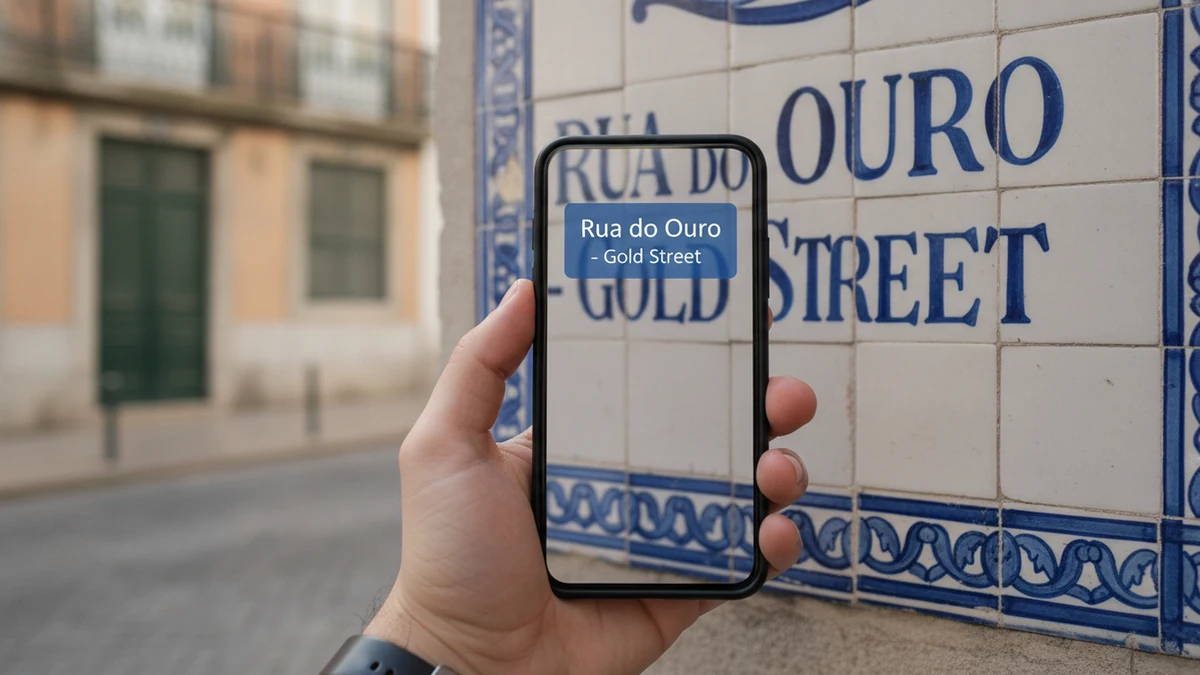
A Portuguese camera translator reads printed text in a photo with optical character recognition, then converts the extracted words into your selected language. It is useful for menus, signs, product labels, receipts, and documents. Results are strongest when the Portuguese text is sharp, evenly lit, and photographed without cutting off words.
How to use this tool
Choose camera or image upload
Open the translation tool and either point the camera at the Portuguese text or select an existing photo from your device.
Frame the complete text block
Keep full words, headings, prices, and nearby context inside the image. For multi-column material, capture one section at a time.
Set Portuguese as the source language
Automatic detection may work, but manually selecting Portuguese can reduce confusion when the image contains short text or several languages.
Select the output language
Choose the language in which you want to read the menu, sign, label, or document.
Check the recognized text and translation
Compare accents, numbers, dates, negatives, and names with the original photo. Crop or retake the image if important details were read incorrectly.
How camera translation reads Portuguese text
Camera translation combines image recognition, optical character recognition, and machine translation. The OCR stage first identifies Portuguese letters and punctuation, after which the translation stage interprets the extracted wording in context.
Image quality matters because the translator cannot reliably interpret characters it does not detect correctly. A blurred ã may be read as a, while ç can become c when the cedilla is small or hidden by glare.
Short text can also be ambiguous without surrounding words. Include a complete sentence, menu description, or sign whenever possible so the translator has enough context to distinguish the intended meaning.
- Use the live camera for signs, menus, and other text directly in front of you.
- Upload a saved image for screenshots, scanned pages, or photos taken earlier.
- Crop to the relevant block when the image contains several unrelated text areas.
- Compare the recognized Portuguese text with the photo before relying on the translation.
Portuguese accents and characters to capture clearly
Portuguese uses the Latin alphabet, but its diacritics carry important pronunciation and meaning. Common characters include á, à, â, ã, é, ê, í, ó, ô, õ, ú, and ç, and an OCR mistake can change a word or make it unrecognizable.
The tilde in não, pão, informações, and condições is especially easy to lose in a distant photo. The cedilla in serviço and açúcar can also disappear against textured paper, while acute and circumflex accents may blend into decorative fonts.
Check capitalization and punctuation as well as letters. Portuguese questions typically use a question mark only at the end, unlike Spanish, so a missing opening question mark is not an OCR problem.
| Portuguese detail | Possible OCR confusion | Practical check |
|---|---|---|
| ã or õ | a or o | Zoom in and confirm that the tilde is visible. |
| ç | c | Check words such as serviço, açúcar, and informação. |
| á, é, í, ó, ú | Unaccented vowel | Retake the photo if the accent is lost in glare. |
| â, ê, ô | Unaccented vowel or another accent | Use a straight angle and sharper focus. |
| I, l, 1, O, and 0 | Similar letters and digits | Verify codes, prices, dates, and reference numbers manually. |
Brazilian and European Portuguese differences
Portuguese varies across Brazil, Portugal, and other Portuguese-speaking regions. Most everyday text remains mutually understandable, but vocabulary, pronouns, spelling choices, and idioms can affect the best translation.
For example, a mobile phone may appear as celular in Brazil and telemóvel in Portugal. A bus may be ônibus in Brazil and autocarro in Portugal, while breakfast can appear as café da manhã or pequeno-almoço.
Regional context also helps with informal instructions and advertising. If the translation sounds unnatural, confirm the country shown by the currency, address, web domain, or surrounding place names, then interpret the wording in that regional variety.
Do spelling differences prevent image translation?
Usually not, because modern translation systems can recognize major Portuguese varieties. Problems are more likely when a photo contains slang, abbreviations, mixed languages, or a very short phrase without context.
Should Portuguese be selected manually?
Automatic language detection is convenient, but selecting Portuguese can help when the image contains only a few words or includes Spanish, English, or French alongside Portuguese.
Translate Portuguese restaurant menus from a photo
Menus are a common reason to use camera translate Portuguese tools. A photo can help explain dish names, ingredients, preparation methods, portion sizes, and service notes without requiring you to type every accented word.
Some culinary terms should not be translated too literally. Bacalhau refers to salt cod in many menu contexts, polvo means octopus, leitão is suckling pig, and petiscos are small dishes or snacks rather than one specific recipe.
Keep prices beside their corresponding dishes when framing the image. Multi-column menus can cause OCR to combine a description from one column with a price or heading from another, so translating one section at a time is often clearer.
- Couvert may refer to bread, olives, butter, or other items placed on the table, sometimes with a charge.
- Dose and meia dose indicate full and half portions, although actual serving sizes vary by restaurant.
- Prato do dia means dish of the day.
- Sem glúten means gluten-free, while sem lactose means lactose-free.
- Frutos secos can refer to nuts in allergen information, depending on the regional wording and context.
Treat allergy translations with extra care
Do not rely on a photo translation alone for a serious allergy. Confirm ingredients and cross-contact risks directly with restaurant staff, especially when a menu uses symbols, footnotes, regional ingredient names, or shared-kitchen warnings.
Translate Portuguese signs and travel information
Portuguese signs often use short commands that can be difficult to interpret without context. Entrada means entrance in many public places, saída means exit, proibido means prohibited, and atenção introduces a warning or important notice.
Transit signs may include platform numbers, service changes, destination names, and abbreviated times. Capture the entire notice rather than a single line so the translation can connect the instruction with its date, route, or location.
Preserve place names in their original form when navigating. A translated district, station, or street name may not match the wording displayed on maps, tickets, or nearby signs.
| Portuguese phrase | Typical meaning | Context note |
|---|---|---|
| Entrada | Entrance or entry | On a menu, it can also mean starter or appetizer. |
| Saída | Exit | Often appears on transport and building signs. |
| Encerrado | Closed | May indicate a temporary or scheduled closure. |
| Não ultrapasse | Do not pass or cross | Meaning depends on road, barrier, or queue context. |
| Puxe / Empurre | Pull / Push | Useful on doors, where guessing from appearance can be misleading. |
Translate Portuguese documents and forms
Camera translation can provide a quick reading of printed letters, invoices, notices, schedules, and forms. Photograph each page flat and in order, keeping headings, labels, and values together so the translated text retains its structure.
Portuguese dates commonly follow a day-month-year order, such as 08/04/2026. Decimal commas are also common, so 12,50 represents twelve and a half rather than twelve hundred fifty.
Official, legal, medical, immigration, and financial documents require more caution than everyday signs. Use image translation for general understanding, then obtain qualified human assistance when wording affects rights, deadlines, treatment, payment, or formal submission.
Watch for document-specific false friends
Words can shift meaning by region and context. Apelido often means surname in Portugal but can mean nickname in Brazil, while propina can mean tuition in Portugal and a bribe in Brazilian usage.
Keep numbers separate from translated prose
Names, account references, tax identifiers, amounts, and dates should be checked directly against the original image. Machine translation may explain nearby labels, but it should not be used to rewrite critical identifiers.
Read Portuguese labels, packaging, and instructions
Product packaging may place Portuguese beside Spanish, English, or French in a compact layout. Crop closely around the Portuguese block or heading so OCR does not merge sentences from different languages.
Ingredient lists are often printed in small type on curved, glossy, or reflective surfaces. Rotate the package until the text is flat to the camera, reduce glare, and take several overlapping photos instead of forcing the entire label into one frame.
Pay attention to headings such as ingredientes, modo de usar, advertências, conservação, validade, and lote. These identify ingredients, directions, warnings, storage information, expiration details, and batch references, but the exact interpretation still depends on the complete label.
- Keep units such as g, kg, ml, and °C visible.
- Verify decimal commas and percentage signs directly from the label.
- Do not crop away warning symbols or numbered footnotes.
- Treat dosage, chemical handling, and safety instructions as high-risk text requiring independent confirmation.
How to take a clearer photo for Portuguese OCR
Start with even lighting and hold the camera parallel to the text. Tap the text area to focus, steady the device, and move closer rather than relying heavily on digital zoom.
Frame the complete words but remove unrelated visual clutter. If the source has several columns, translate one column or section at a time to prevent lines from being read in the wrong order.
Printed text in a simple font generally produces better OCR than handwriting, ornate lettering, shadows, or text over a patterned background. JPG, PNG, and WebP are practical image formats when supported by the tool you use.
- Clean the camera lens before photographing small print.
- Avoid flash when it creates glare on laminated menus or glossy labels.
- Place wrinkled paper on a flat, contrasting surface.
- Retake blurred text instead of trying to infer missing accents.
- Crop after capture, but leave a small margin around each line.
- Use multiple close photos for long receipts, posters, or documents.
Review the translation before acting on it
A readable photo improves the result, but it does not guarantee that every character, phrase, or layout relationship will be correct. Review the recognized Portuguese text first, particularly accents, negatives such as não, prices, dates, quantities, and warning language.
Translate a smaller crop when a sentence looks inconsistent. A second photo taken from a straighter angle can resolve errors caused by glare, decorative type, folds, or a busy menu layout.
Use extra verification for health, legal, financial, safety, and allergy decisions. For private documents, review the selected service's current privacy controls and avoid uploading information that is not necessary for the translation task.
When should you ask a person to confirm the text?
Seek help from a fluent speaker or relevant professional when the source is handwritten, damaged, highly technical, legally binding, medically important, or open to more than one interpretation.
Example value ranges
These broad USD ranges are for triage only. Exact issue, condition, authenticity, and recent sold comps decide real prices.
| Example | Broad range (USD) | Main clues |
|---|---|---|
| Restaurant menu price | Not a valuation | Confirm the currency symbol, decimal comma, portion heading, and the line connecting the dish to its price. |
| Retail label or receipt amount | Not a valuation | Check whether the image shows R$, €, a discount, a unit price, tax, or a final total. |
| Invoice or payment notice | Not a valuation | Verify the original amount, due date, decimal separators, reference number, and payment terms. |
| Travel ticket or fare | Not a valuation | Keep the fare beside its passenger type, route, date, and service conditions. |
A practical option for Portuguese photo translation
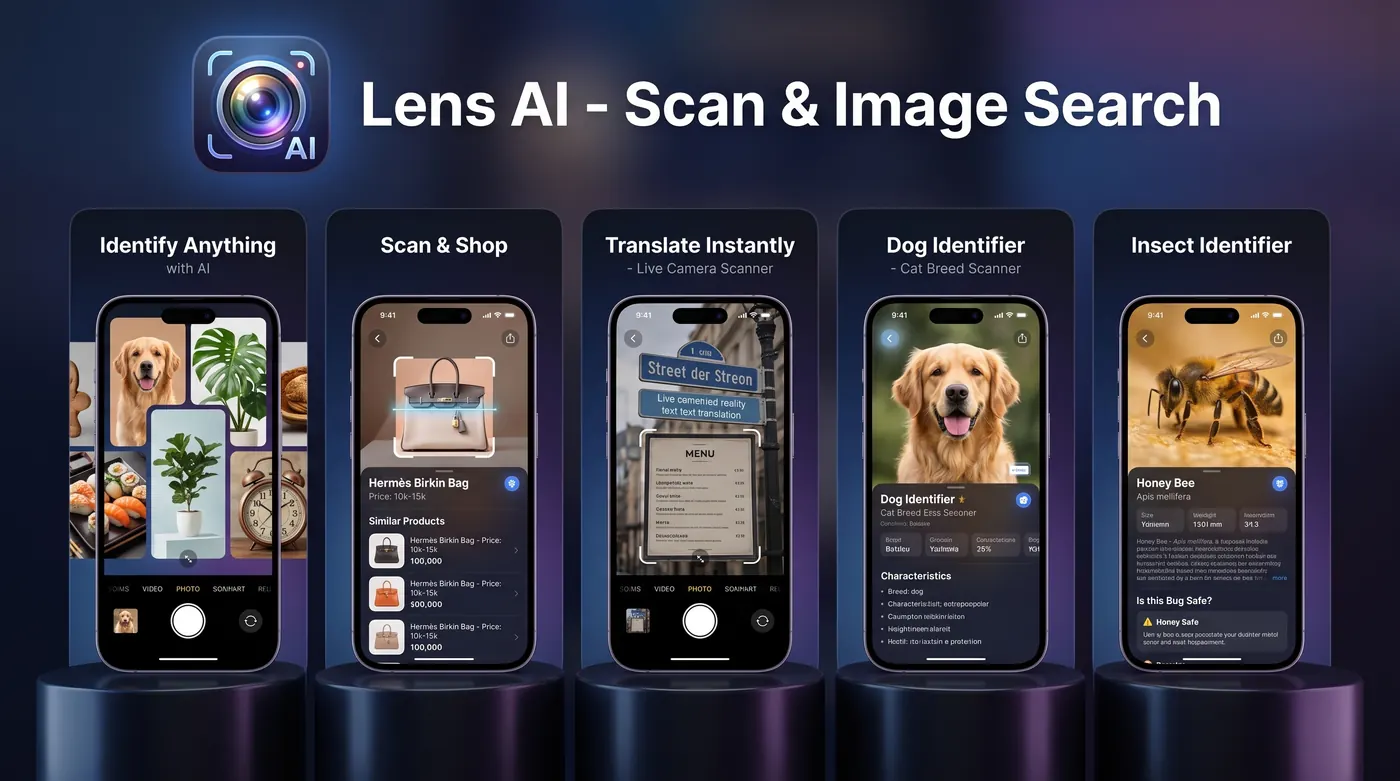
For a direct camera and image workflow, try Lens AI: Scan & Image Search at LensApp.io. It can help you capture Portuguese text from menus, signs, labels, and documents, then translate the extracted wording without manually typing accented characters.
Use a close, well-lit image and review the detected português before relying on the output. Retake unclear text and independently confirm sensitive details such as allergens, medical directions, legal terms, prices, and deadlines.
Frequently Asked Questions
Can a camera translate Portuguese text instantly?
Many tools can process a clear image quickly, although speed depends on the device, connection, image size, and amount of text. A short sign usually requires less processing than a full document or complex menu.
Does Portuguese camera translation work with accents?
Yes, provided the accents are visible enough for OCR to recognize them. Check ã, õ, ç, acute accents, circumflex accents, and à because a missed mark can alter the recognized word.
Can Lens App translate a Portuguese menu photo?
It can be used to capture and translate text visible in a menu image. For better results, photograph one menu section at a time and keep each dish description beside its correct price.
Will it recognize both Brazilian and European Portuguese?
Major translation tools generally handle both varieties, but regional vocabulary and slang may produce different interpretations. Location, currency, and surrounding wording can help clarify whether celular or telemóvel, ônibus or autocarro, and similar terms are intended.
Can Lens App read Portuguese from a saved screenshot?
A saved image can be used when the Portuguese text is legible and not heavily compressed. Crop out unrelated interface elements so the text area occupies more of the image.
Why is my Portuguese photo translation incorrect?
Common causes include blur, glare, tiny print, decorative fonts, curved packaging, mixed languages, missing context, or a multi-column layout. Compare the detected text with the original, then crop or retake the image.
Can I translate handwritten Portuguese?
It may work when the handwriting is large and consistent, but handwritten text is generally harder to recognize than print. Joined letters, omitted accents, and personal abbreviations can reduce reliability.
Is camera translation safe for legal or medical Portuguese?
It can provide a general understanding, but it should not be the only basis for legal, medical, financial, or safety decisions. Have critical wording reviewed by a qualified person and verify all names, doses, dates, amounts, and instructions against the original.
How do I improve Portuguese OCR in Lens App?
Use even light, hold the camera parallel to the page, focus on the letters, and crop to one text block. If ã, õ, ç, prices, or dates are unclear, take another photo closer to the source.